
The advice about understanding one’s writing market seems to be what’s screwing up m y identity as a writer.
My identity crisis started when a developmental editor told me I was writing romance. ‘Ok,’ I thought, ‘I guess that’s what I’m writing.’ But I wasn’t writing the same type of storylines as the romance writers around me wrote. I couldn’t put my finger on it, but my writing wasn’t as outrageous as theirs. No ultra-rich bosses, no reverse-harems, no bad boys saved from a lonely, incorrigible future, and no alpha wolf shapeshifters redeemed by the love of the pack’s reject. No space aliens of exceptional prowess. I will not disparage these, as these genres make buckets of money, and I do not.
The thing, though, is that those topics don’t speak to me. I write fantasy grounded in the real world, with a few variables tweaked. Sometimes there is a romantic subtext; in one case (Gaia’s Hands) the main story line is a relationship framed by unusual happenings and a personal vendetta against the protagonists. There is one commonality in my writing: The fantasy world hides in plain sight among the familiar. I don’t write escapist fantasy or romance.
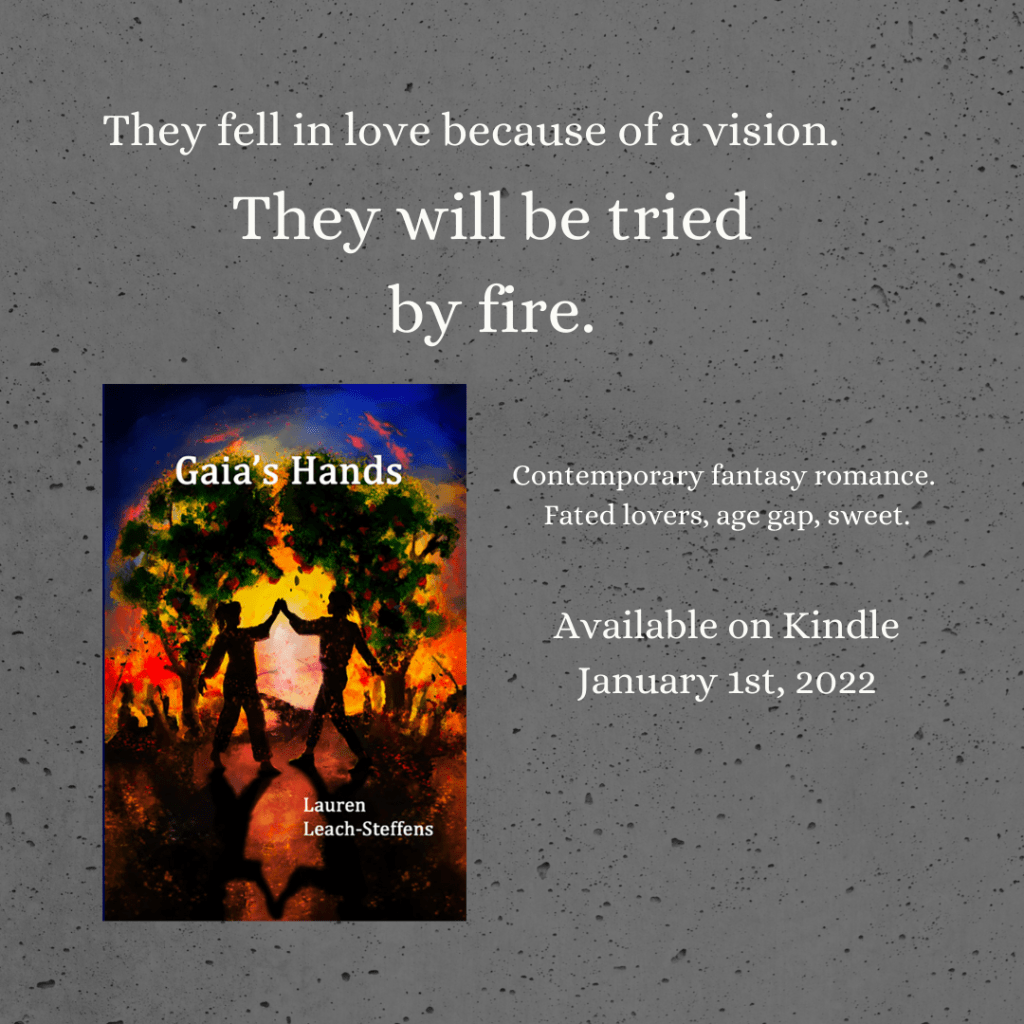
Today I heard the phrase ‘literary romance’ as a contrast to ‘escapist romance’, and suddenly I felt like I had found a home. Literary romance, literary fantasy. Something to hold on to, something to be, after feeling totally out of place in (escapist) romance.
I have a writing market, and I have to learn the rules of the market, once I figure out if I actually belong there. Literary romance, literary fantasy. Now there’s the problem — I don’t know if my work truly fits there. I’m not sure it matters as much to me as it does to the writing markets. At least I hope not.
I guess I haven’t resolved my identity issues yet.
 Words Like Me