
This is an excerpt from my latest short story, Simon and the Gift. It happens in the Hidden in Plain Sight universe, about 10 years after the novel I will be publishing on January 1, Reclaiming the Balance.
Simon Albee had never eaten of the Apples. He had rejected the ritual of belonging to Barn Swallows’ Dance, the collective he had become the sysop for many years ago. He had fought the Apocalypse with them, a low-key event for humanity to hang in the balance. Simon had almost died answering a call from InterSpace, where the Archetypes who could end the Apocalypse came from.
What made me change my mind? Simon thought of the years he watched the others with their Gifts, from animal empathy to spinning illusions. He knew why he didn’t choose to eat from the Trees. It wasn’t just that he didn’t trust things people referred to in capital letters.
He rejected the Gifts because he was afraid they would reject him.
I have always been weird. Neurodivergent was the official label these days; although that included people like Gideon, whose differences lay in the stability of his emotions. Simon’s differences were in how he dealt with the information flowing into him from all channels. He had come to terms with the sometimes overwhelming world, taking refuge in his office when he couldn’t take any more input.
Josh, the keeper of the Trees, had asked Simon earlier that week why he hadn’t gotten a Gift from the Trees. “I don’t like losing control,” Simon said, which was both true and a lie. He didn’t like losing control; he also didn’t see gaining a gift as losing control. A Gift was like any other new competence, and one worked to get better at it. But he, in his strangeness, would not get a Gift.
“I want to go in by myself,” Simon said to Josh as they stood at the edge of the food forest, an oasis of fruit trees and edible plants with a secret in the middle.
“We can arrange that.” Josh paused for a moment, and Simon wondered if he talked to the Trees in that moment of silence. The skeptic in him thought not.
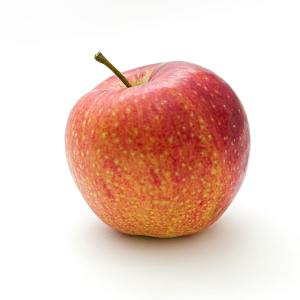
As he walked through the trees toward the Garden, he heard a screech as a woodpecker flew overhead, then the clear, melodic note of a yellowthroat. Various birds chattered, and Simon wondered how anyone would think the orchard was silent.
Until he reached the clearing at the center, surrounded by the food forest. He had been there before, in the Garden with its two Trees, but only in a group. Once, the collective played an improvised concert in the Garden, and once or twice, they sought it in a group for solace. The place was as verdant, green upon green, as he remembered.
Now, the clearing stood in a stunning silence. He thought it glowed faintly, which he accepted without trying to explain. If he didn’t question, just accepted it in the way he accepted the noisy world, it didn’t disturb him. It just was.
He sat cross-legged in front of the Trees, thinking about how he didn’t move as easily as he did when he first arrived at the collective. It had been ten years, and he was almost forty. It was bound to happen. He stared at the Trees for some moments, capturing the improbability of ripe apples in May, one peculiarity of the space. One yellow and one red, hanging from branches as if waiting for him. That gave him goosebumps, because it was not rational. He dismissed it as another thing that just was.
He stood, slowly, and walked to the Trees. The ritual, which everyone at Barn Swallows’ Dance knew, was to pick one apple from each Tree and take a bite of each. One bite was all it took. He wondered if he would like the apples.
One apple in each hand. They seem on the small side, but they didn’t need to be large for one person. He sat back down with his back against one tree. He had forgotten, he realized, to ask the names of the Tree from Josh — their names always changed — and hoped that he didn’t spoil part of the ritual.
He took a pocketknife out of his pocket and peeled the yellow apple. From a young age, he had rejected apple peel; it was tough and had a bitter taste in his mouth. He took the peeled apple and cut it into slices, then took one bite. He remembered the first time he had eaten an apple; he was three years old. His parents despaired of him ever eating healthy food until they discovered he would eat apples without the peel. The apple tasted sweet and tart and juicy, and his teeth made a satisfying crunch as he bit into it. This yellow apple was that apple, that first apple.
He did the same with the second apple, the red one. The second apple reminded him of haroseth, the apples and honey and cinnamon of Passover. But then other things: it tasted the way mint smelled, and violets, with a touch of wood smoke. All things that he liked, but in odd combinations. He hugged to himself the experience.
Then, he took a deep breath.
He didn’t feel any different.
 Words Like Me