I don’t know that I write what people actually want to read. Not a lot of people have actually read my books. I have about 2000 readers of my newsletter, which has gone down by a couple people each month. I have about 25 regular readers of this blog.
I don’t know how to write what people actually want to read. I write from my mind and from my heart, and hope there is an audience that likes my quirky, honest, and optimistic writing. I hope they like my closed-door romantic fantasy and my cozy Christmas romances with a bit of fantasy. I hope my lack of readership is just failed promotional attempts that I can get over and learn to do right.
I write because I think there’s room for my stories.
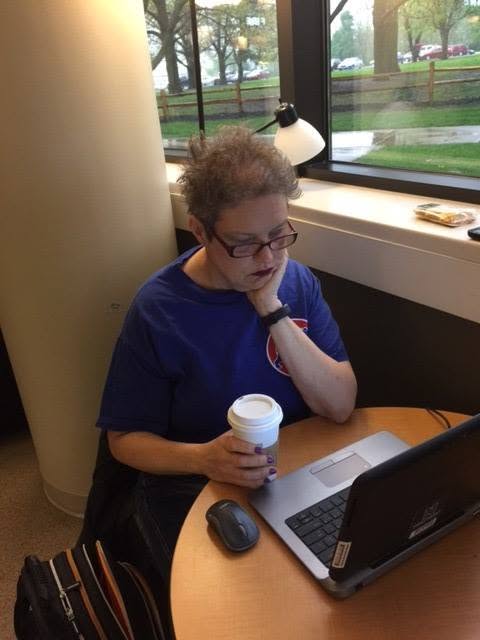
I have been keeping busy on the writing front, if not actually writing. This is a “me” post, which I put in every now and then to remind people there’s a real person behind this account.
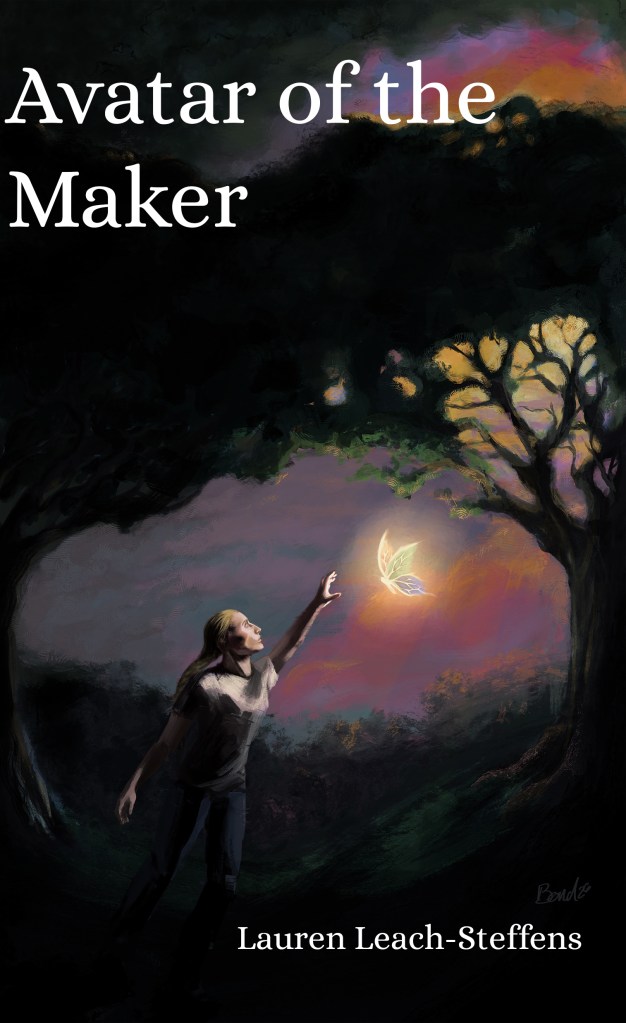
I have been working toward publishing two books, one my annual Christmas romance (Kringle Once More) and the other the latest in the Hidden in Plain Sight series (Avatar of the Maker, cover art by my niece Rachel Bond below). Preparing to publish a novel requires several steps after the final draft, including:
Formatting (in Atticus)
Getting cover art
Laying out the cover
Writing cover text
Getting copyright cleared at the US Copyright Office
Putting cover and text together on KDP (Kindle Direct Publishing)
Setting up the business part on KDP
Releasing the novel when it’s time
I am currently well through this list for both novels with time to spare, except for one problem: The Copyright Office. They have been sitting on the paperwork for Kringle Once More since June 21, and I am supposed to publish it on October 1 (in time for the Christmas season. I’m only partially kidding). It should not take three months to approve. I just turned in the materials for Avatar of the Maker, which is to be published January 1, 2027. Or maybe not. I’m giving plenty of time according to prior copyright approvals I’ve sought.
I would love to have a publication party, but my people don’t go to such things. I have tried to have one online, and my friends don’t get the fuss. I don’t have enough readers who get the fuss either. I am one of those many writers who are not succeeding, but I keep writing because I have faith in something. Myself? Fate? A guardian angel? If I don’t write and publish, I will never succeed, after all.
The prompt says “One skill”. Just one? I would like to be skilled at a lot of things. For example, things having to do with my writing. I would like to be more skilled at writing and definitely more skilled at promoting. And many other things as well — I would like to be more skilled at athletic things (and as I’m starting at zero, there’s no place to go but up.)
But here’s one skill I’d like to have that seems to be out of nowhere — carpentry. I would love to be instantly skilled at carpentry. I am so far away from skilled at carpentry that my friends keep me away from power tools because I might injure myself. This is not an exaggeration — I had three friends yell “No!” When I asked if I could use the chain saw. I took a shop class in high school and the boys in the class did all the bandsaw and sander and router work for me. I was allowed to varnish. That’s it. I have profound hand-eye coordination problems and everyone who has met me instinctively notices this. Probably in the way I can’t walk a straight line when sober.
But I really admire carpentry. To be able to build something that stays together and is useful? Yes, please! I would love to have that power. Christmas presents would be easy from that point on. Everyone needs boxes, and carpentry is based on building boxes, even if some of them actually look like chairs. Or tables.
Of course, if I could do carpentry, I would need lots of equipment to do it. Expensive equipment. Of course I would need it, because when I get a hobby I go all out with it. And then I get bored with it. Writing is probably the only hobby I haven’t abandoned after a couple of years, and even so sometimes I get bored with it. Maybe it’s a good idea I can’t do carpentry. It’s an expensive hobby.
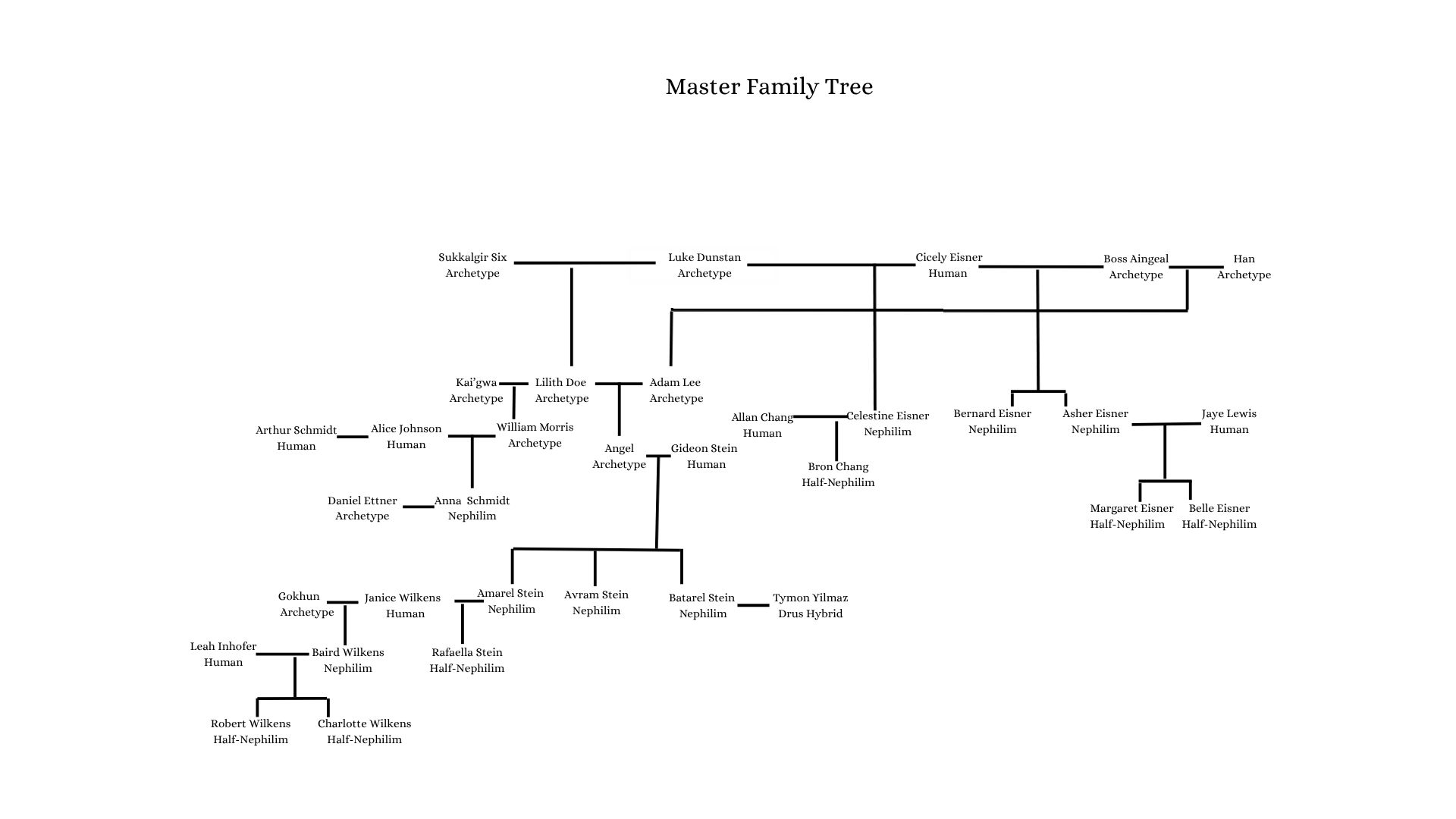
It’s a little hard to see, but this is a family tree for Luke Dunstan’s family from the Hidden in Plain Sight universe. There are other, less expansive family trees that attach to this (I don’t have Daniel Ettner’s family tree here for example, or Jeanne and Josh’s) but this is the big one. Luke’s family gets around.
I made this on Canva, using the whitescreen function, because that was the only document big enough to contain all the family.
Now what? I feel like I’m done too soon. It’s not summer; it’s 62 degrees out and cloudy.
I have 10 interns, and that will give me a bit to do over the summer, but most of them are local and I won’t be doing more than one road trip to visit them. That gives me more summer to try to find something to do. I can’t believe I’m having a problem of not enough to do.
There are things I need to do. For one, sort out all my clothes from the piles they have become. Rewrite my syllabi for Fall semester. Build more posts in Loomly (social media software). Blog every day.
I am avoiding saying I need to write. Writing has been hard lately. I have a novel in mind, but the urge to write hasn’t hit me lately. The last book I wrote didn’t have an urge to write attached. Maybe boredom will help me write.
My husband has reminded me I have to pack my office up for a move across campus. I think I preferred being bored.
I have one exam (literally one exam — I have one student taking it) to give and grade, and then I am done with the semester! The school year has gone so fast, probably because I dealt with it one day, one task at a time. Very much in the present.
This summer, I will be bored unless I start writing. I have already laid out fall classes (including making them accessible) and putting my calendar in place. Other than revising syllabi to be ADA compliant, I have fall semester in the bag. I have 9 interns to visit over the summer, a lot of them local. Therefore, a lot of free time. I estimate a lot of writing and coffee. Hopefully a couple weekends for retreat time.
My husband and I got to Haven Coffeehouse at a little after 8 this morning; my task for the day was to develop my outline for the latest book a bit more.
Two cups of coffee later, I’m a bit closer. I think it’s going to take place in the Spring, four years after Avatar of the Maker. The point-of-view characters are going to be Tisha, the influencer; her husband Rod, the corporate promotions person; and Gideon, the engineer at Barn Swallows’ Dance.
Things I need to remember: The children just born in Avatar are now four years old; Bergeron the cat is about the same age. (Bergeron the cat is an important plot point as he is going to be the representative of the non-standard reality of the place). Tom is still the general manager; Leah is now a vet tech and well on her way to be a vet.
Tisha and Rod are 27 and 33 respectively. Their age difference is going to be important when it comes to how they get along; Rod tends to be a little condescending to Tisha, and this is going to become a point of conflict.
Other important people (besides those named in the above paragraphs) are Jeanne and Josh, as keepers of the Garden; Amarel, as the most obvious (to them) ‘difference’, and Luke, as the lawyer.
And of course, Barn Swallows’ Dance is one of the characters. It’s ’nonstandard reality’ is going to be the invisible elephant in the room — “What elephant? I don’t see an elephant.”
This needs to be plumped out a bit more, but I can see the bones. Sort of.
Goals give me direction in life. They give us all direction in life — that’s what they’re there for. Without goals, our life is without focus.
It could be said that our values give us direction in life, but they do so by spawning our goals. We take our values and ask, “How do I manifest this value?” and we get goals. “If trying new things is a value I have, how do I achieve it? I go to this new restaurant featuring Thai-Italian fusion.”
Goals can be general or specific. Specific goals have singular ways of fulfilling them, such as that goal to go to the Thai-Italian fusion place. General goals give way to a myriad of specific goals one can use to fulfill them. It is more flexible to have general goals because one can fulfill them in many different ways.
I like to have Big Audacious Goals. These, in my life, usually represent big accomplishments (big to me anyhow) that I hadn’t imagined being able to do. Losing 85 pounds has been my latest one; others include writing my first novel, walking 20 miles a day for three days (can’t do that now!) and teaching Disaster Psych. I may have to start that Big Audacious Goal of walking again — maybe walking to Grey’s and back again for salad bar? It’s 8 miles round trip.
My favorite holiday is Christmas, which goes from the day after Thanksgiving through January 1st. (The Episcopal Church says most of that is Advent, which Christmas lasting from Christmas Eve through January 6th, but I am using the secular definition of the season.)
Christmas lasts a whole season, with an aesthetic for everyone. My favorite is Victorian Christmas, with its velvet ribbons and candles. But there’s also Peanuts Christmas, Redneck Christmas, Mid Century Modern Christmas (think bubble lights and aluminum Christmas trees with rotating light wheels), Country Christmas, North Woods Christmas (moose) and many others. There’s an aesthetic for everyone, whether you want bright red and green, burgundy and gold, silver and blue, or muted red and green.
Christmas is full of nostalgia. I’m not a universal fan of nostalgia, knowing that a certain amount of it promotes regressive policies and repression. But the Christmas nostalgia seems harmless, as we all think about our childhoods when we weren’t so skeptical. For those of us who had bad Christmases, we can retreat into the Christmas we always wanted to have and make our own holiday. From there comes nostalgia.
Christmas lends itself well to romances. I write a Christmas romance every year at Christmas time. It’s part of my season. The one year I didn’t write one, I missed it terribly.
My Christmas is very secular, I realize, but these are the things I like about Christmas.
I finally have the latest book laid out. Mostly. I hope. It looks a little slow and a little shaky right now, and I think it needs some thinking about. But here’s the latest on it.
The book is a comic look at influencers, especially tradwives and their idealized views of homemaking. Rod Lewis, PR worker at a health food conglomerate and his wife, Tisha, an influencer sponsored by the same company, discover Barn Swallows’ Dance, an ecocollective nestled among Illinois farmland. They think it would be an excellent space to film some guest spots. The residents think this would be good PR for the collective’s farm operations, as long as the cameras don’t capture the preternatural residents, the esoteric gifts among humans, or the flying cats.
Rod and Tisha bring in their film crews, the size of which alarm the residents. Tisha and Rod, on the other hand, are alarmed by how messy the farm chores really are. A flying cat is captured on film, dismissed as an optical illusion. The Lewises fall in love with the collective and try to move in there.
Meanwhile, the conglomerate sees the footage Rod and Tisha have filmed, and they charge Rod to approach them with a business proposition: to buy Barn Swallows’ Dance and make them a subsidiary of the conglomerate. This doesn’t go so well with the collective, being seen as a sellout. However, it is not completely without proponents, because the collective is at a financial difficulty that may put them in the red soon.
Barn Swallows’ Dance opts out of the buy-out, which makes the conglomerate turn to threats of regulatory harassment and lawsuits. Meanwhile, Rod and Trish are facing some blowback from the collective, which is trying to drive them out. The collective’s strategy: show them all the things they’ve been hiding from the duo. Make them think they’re crazy.
Tisha and Rod confront the collective to find out the truth about the strange things they have been seeing. They see why Barn Swallows’ Dance does not want to become a corporate extension and ask for membership there, and calling off the conglomerate.
I feel like there are holes in here and that this is a shaky plot. I’m hoping that writing this helps me to see the holes and to fill them.