In the Flow

 I’m happiest when I have something to work on, something that catches my fancy. When that happens, I can give it intense focus such that I float within the bubble of my attention and time flies by without me.

This, in the psychological literature, is called flow. Flow takes a person out of time and place, and becomes almost a type of meditation. It requires tasks that one is competent yet challenged in. Flow is good for creating happiness. 

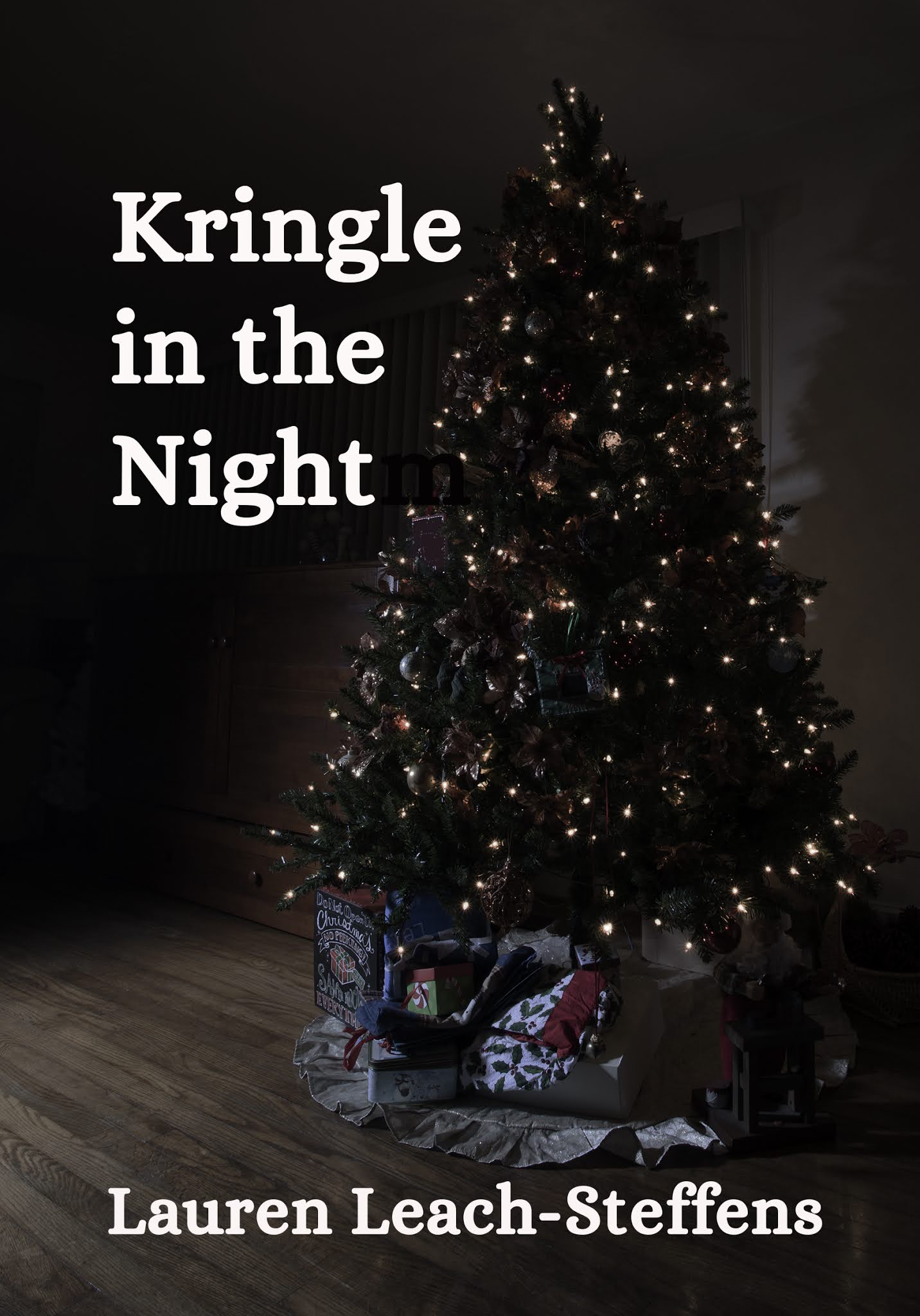
I’ve been creating book covers (both e-book and traditional) for The Kringle Conspiracy, which (depending on whether I feel it needs a dev edit) will be coming out in time for Santa. My favorite beta reader (Hi Sheri!) is on it, and my husband has already given it a good look through. Because it’s so short and so simple for something I write, it may be ready. In the meantime, the cover is ready.

So designing that cover gave me flow. What else gives me flow? Writing, at least in the drafting stage. Reading. Sometimes teaching, but not lately with all the equipment I have to sling around. 

It’s important to have flow, to take one away from worries and stress (like COVID) and the like.

What are your flow activities?

Maybe not a Christmas Present


So I’m editing Kringle Conspiracy, a book I’d put in a drawer for two or three years. My natural pessimism is setting in, and I stew about whether it will be good enough to publish. On the schedule I’m on, I’m going to have to do without a dev edit, and I’m rather uneasy about that. On the other hand, it’s a pretty simple book.

The thing is, I want to get it online in time for the Christmas season, which means October. I don’t think anyone can dev edit in a week, giving me two weeks to fix. I could save it for next Christmas and get a dev edit, which would be the great thing to do if I were patient. I’m working on being patient.

I’ll let you know. I’ll do this rewrite and let it sit for a bit, then decide if I need to hold back for a dev editor. So maybe you won’t see this by Christmas.

Look! I might be self-publishing something!


Yesterday, I was trying to figure out what I would write for NaNoWriMo, which is in November, but it’s never too early. Richard, my husband and partner in crime, suggested rewriting a Christmas Romance novel I put aside in despair thinking it wasn’t romancy enough. 

I thought about that, and then looked for a tool to help it be more romancy (it’s now a word, deal with it) and found Jami Gold’s romance beat sheet. Walking through the beat sheet, it seems that there’s not a huge amount of work I need to do — emphasize some points, make sure the timing is right, fix a subplot. This can be done.

Then I stepped into Facebook and asked my friends if I should be fixing a novel that read a bit like a Hallmark Christmas movie. I got a resounding “Yes” with one of my friends, Heather, suggesting I self-publish it. 

And the bubble up giggle of delight broke out. Maybe this, a low-stakes publication, would be my entry into self-publishing! I don’t think of myself as a romance writer, so I don’t have much ego invested in this if it doesn’t do well.

 So guess what I’ll be doing today? Rewriting, daydreaming, and shooting for a mid-October publication date. 


Any of my self-publishing friends out there, please check in with me!

You are a writer


I believe I’m back from my writers’ block. I don’t know if I’m ready to edit/rewrite Gaia’s Hands yet, and I certainly don’t feel like writing one of those two books I have on debt (Hands and Gods’ Seeds). The former would require me to go to Poland for a few months, and I don’t have the time or the translator. 

But I’m a writer, and I can’t escape this, even if I don’t get published. Even if I feel bad about the fact that I don’t get published.

I hope there are other writers out there who need to hear this: If you set paper to pen regularly, if you see stories out the window of the cafe or in a crowded cafeteria or on the street, or even in a collection of ants on the sidewalk, you are a writer. The world is yours to create with, and even if nobody else has seen your work, you are indeed a writer.


Not getting picked for a team


 Getting no likes at PitMad feels like not being chosen for the kickball teams in grade school. It’s not current trauma, it’s past trauma that complicates the feeling. I tell myself that PitMad doesn’t determine my worth or the worth of my books.

It is a setback, sure, just as it has been with other #PitMads and #SFFPits. But it’s more a testimony on my ability to write pitches, the matter of thousands of pitches flowing across Twitter at the same time, the glut of submissions in fantasy writing. 

I need to find a way around this. Maybe improving my pitches will help. Maybe I should work on making my query letters better (which I am doing). 

I can just quit or I can beat my head against the wall — or I can improve. And, I guess, pray.

Redoing the Query Letter


One of the most important aspects of a query, or the way you introduce a novel or other book to an agent, is the query letter.

Yesterday, I learned that my query letter sucked.

I sent it to The Query Shark, where an agent looked through it and critiqued it thoroughly. So I have an expert opinion that it sucked.

This is good news, actually, because it may be the reason that my queries are bearing no fruit. It’s not an easy fix, but an important one. The query is the introduction to the book, after which the agent will either request more pages or pass. The query letter is the first thing they will read in the query.

In a query letter, you have to accomplish several things: you have to introduce the agent to your book using a synopsis in a couple paragraphs. You must give specifics about the book such as genre and number of pages. You must provide a brief bio.

The problem with my query letter is that my synopsis wasn’t capturing the spirit of the books, nor were they involving the reader personally with the characters’ development. They were bare recitations of the plot, and they lacked the fantasy element. In a way, my query letter didn’t sell my book at all.

I am working on that blurb, and it’s completely different. I think I have the right idea this time. 

Fog


I wish I had seen the fog before it rose.

Fog smooths out all the edges of everyday life, softens the corners of the houses, tangles in the branches of trees, muffles the sounds of automobiles.

Fog obscures the view in front of us, defying even the illumination of headlights, and forces us to proceed cautiously.

Fog whispers secrets, like the witch in a fairy tale, and like the fairy tale, we can walk through the fog and never find the truth.

Fog reminds us that we can’t see everything. We can’t know everything.

Waking up my writing


I am trying to wake up my writing. My hectic schedule and the exhaustion that comes from wading through COVID-19 measures in the classroom, plus the lack of things that energize me (a movie, a writing retreat, something other than work or home) make the inspiration nearly absent.

“What do you want to write about?” No idea.

 I’ve even had trouble writing this blog. I missed yesterday; I’ve missed other days here and there. I started this blog with a desire to write daily, and I’m afraid that if I don’t keep that up, I will just quit.

 But I’m here today, and that’s what I need to do: keep showing up.

I’m doing some things to reclaim my imagination. Debbi Voisey (@DublinWriter on Twitter) hosts online workshops, and right now she’s hosting a prompt workshop, where for the first seven days we take notes on a total of 21 prompts, and then write. I’m hoping to get a short story out of this that I’m proud of.

If you have any ideas about how I can renew my imagination in the time of COVID-19 (and its restrictions on travel) please let me know!

Who I am and why I write

 I haven’t done this for a while, so…

My name is Lauren Leach-Steffens, and I am 57 years old, about to turn 58 in a couple weeks. I don’t feel that old unless I try to sleep on the ground while camping, and then I feel every year of that and more. When I am not writing, I teach college at a small midwestern regional university. I’m an associate professor who has had tenure for the past 15 years.

I am a writer. I write contemporary fantasy, with the philosophy that the unusual is hidden in plain sight for those who know to look. My world, which looks much the same as this one, hides preternatural beings, people with hidden talents, and legends that shape the earth for lifetimes.

I first declared myself a writer at age seven, when my third grade teacher posted my Groundhog Day poem on the classroom door. I remember going home and telling my mother I wanted to be a poet when I grew up. She asked me if I wanted to eat, and I was the sort of person who liked cookies more than just about anything. So I said “Yes,” and my mother informed me that poets starved. It was then I set aside my dream of becoming a poet.

It wasn’t that I quit writing. I wrote poetry and stories all throughout school. In fifth grade, I got roped into writing a poem for a high school neighbor (even though it was cheating) — he got an A. My eighth grade English teacher collected two years’ worth of poetry and gave it back to me to keep when I left eighth grade.

I wrote poems and short stories (although I know now they were more character sketches) throughout my life, even as I was working on my PhD, but I didn’t make much of it. I didn’t revise for publication, I didn’t let people read them, I didn’t publish them.

And then, five years ago, I started writing a series of short stories and character sketches around a general plot line, and my husband said, “If you’re going to write all these stories about the same thing, you might as well write a novel.” 

I didn’t think I could. But as I started writing, I came up with a first draft. A problematic first draft that I am still revising. But then I wrote another and another.

My novels have not been published yet, but I have had short stories and poetry published and recognized — an essay in A3 Review, poems in Sad Girl and by Riza Press, short stories that have won honorable mention by Cook Publishing and New Millennium Writings and Sunspots, to name a few. 

I have dreams — getting one of those novels published, getting published in a more selective journal (even though I write fantasy), getting something to really brag about. But for now, I write, and I continue writing.