The place I’ve been that feels most like home is practically home for me, given that it is only 25 miles away from where I grew up. However, it feels more like home than it did when I was young.
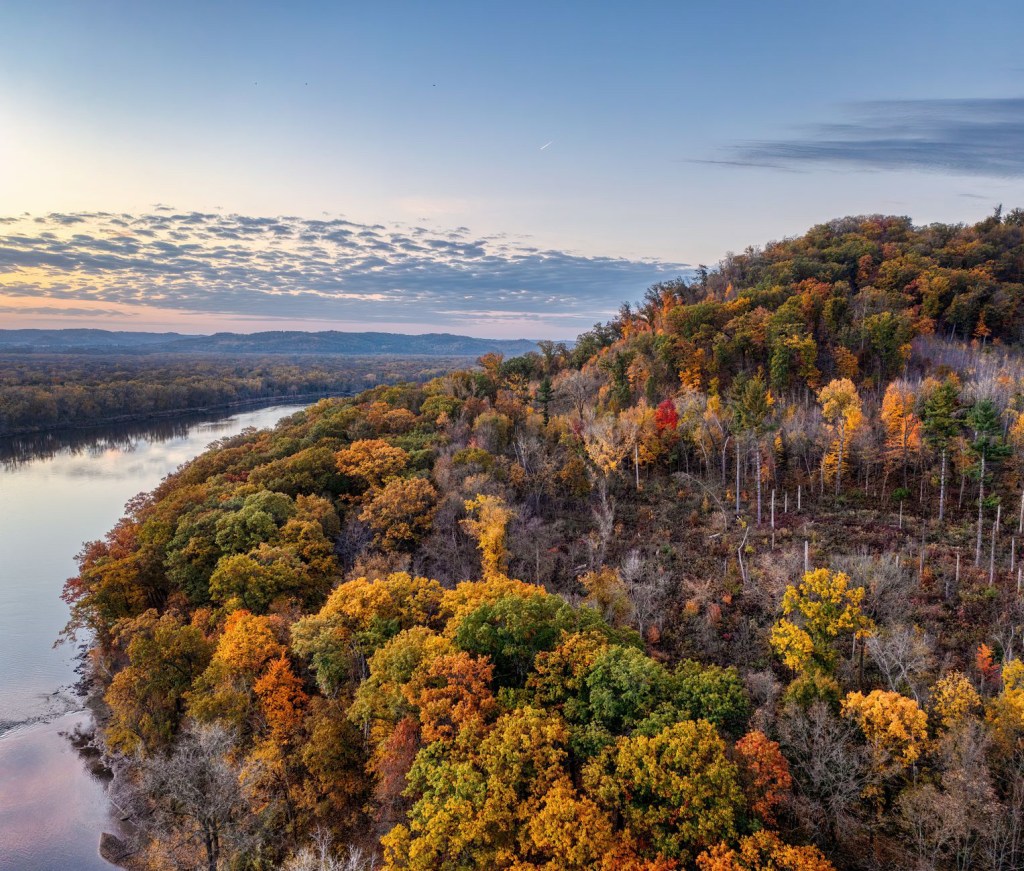
That place is Starved Rock State Park in Utica, IL. It has sandstone canyons that turn fiery colors in Autumn, cabins to stay in, and a lodge from the Civilian Conservation Corps days that would be at home in a national park.
Starved Rock is a place where I go every holiday I can. It decorates charmingly for the holidays, with a double fireplace in the Great Room of the lodge and a large fireplace in the restaurant. Families from near and far gather in the Great Hall for gift exchanges and holiday photos by the fire.
I wonder how I feel so much at home in an obviously public place, but it feels familiar to me in a way that the place I currently live does not.
The nearby towns of Utica and Ottawa feel like home as well, but I grew up next to Ottawa, so maybe that makes sense. I think Ottawa would make a better college town than where I live currently, and it has improved since I left there.
So home for me is a grand lodge in the middle of LaSalle County, IL. I will be there this Christmas to belong again.
I don’t know that I write what people actually want to read. Not a lot of people have actually read my books. I have about 2000 readers of my newsletter, which has gone down by a couple people each month. I have about 25 regular readers of this blog.
I don’t know how to write what people actually want to read. I write from my mind and from my heart, and hope there is an audience that likes my quirky, honest, and optimistic writing. I hope they like my closed-door romantic fantasy and my cozy Christmas romances with a bit of fantasy. I hope my lack of readership is just failed promotional attempts that I can get over and learn to do right.
I write because I think there’s room for my stories.
I don’t believe in the mystical version of karma, where there are cosmic circumstances to the things we do, mostly because I do not see the good rewarded. Bad things happen to good people, and that seems to go against the tenets of karma. But I believe in natural consequences, where actions cause other things to happen.
If someone takes out a beaver dam, the lake goes away as a result of meadowification (I’ve seen that word somewhere.) If one does an illegal act, they are much more likely to get arrested. Natural consequences are not perfect, because there are guilty parties who are never punished, but at least they always have to watch their backs. (Donald Trump, for example. Do you think he’s a happy man? He faces at least some of the consequences of his actions.)
Are consequences always equal to the magnitude of the action? Not always; we talk about people not getting what they deserve. Natural consequences lack a sense of justice that karma gives us. There is no divine retribution possible with natural consequences. But I think it fits the data of daily life better.
I originally thought of this in terms of what I would tell students coming into college. I did not participate in groups when I was in college, and I think it was a grave oversight on my part. I told myself I wasn’t a joiner, when in actuality I was depressed much of the time and afraid of getting rejected. I think that if I had picked a group that fit my interests (and at the University of Illinois there were several such groups even for nerds like me), I would have had less depression and would have gotten over thinking I would always be rejected. The awkwardness finally went away when I found a group that became family to me. We weren’t a university-sanctioned group, just a bunch of people who hung around.
In a more general sense, I have always sought out experiences, so I would say I was a participant in life. My bucket list included things like being in a dunking booth, marching in a parade, and participating in a talent show (all checked off). But, again, I wasn’t a joiner. My leisure activities, including writing, have been a solitary venture.
My psychiatrist suggested I find a group to join in my leisure time because of the importance of being around other people. So I am joining Nodaway Chorale, even though my voice isn’t as strong as it used to be. I used to enjoy singing, and think maybe I can enjoy it again.
So, participate in life. Find yourself a group activity you enjoy. Take opportunities to experience life. What are you doing to participate in life?
I have been keeping busy on the writing front, if not actually writing. This is a “me” post, which I put in every now and then to remind people there’s a real person behind this account.
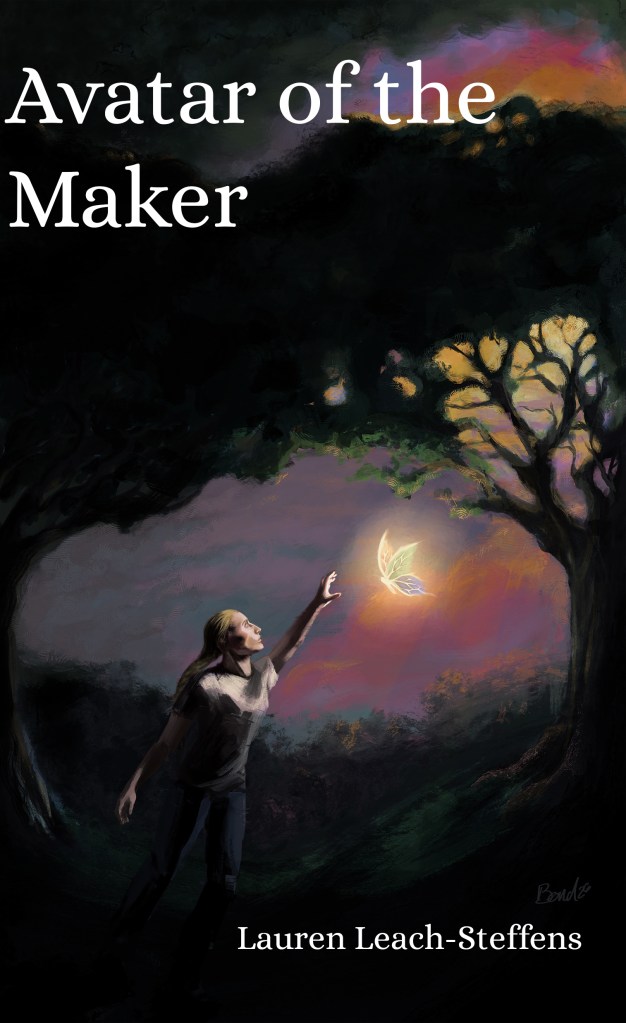
I have been working toward publishing two books, one my annual Christmas romance (Kringle Once More) and the other the latest in the Hidden in Plain Sight series (Avatar of the Maker, cover art by my niece Rachel Bond below). Preparing to publish a novel requires several steps after the final draft, including:
Formatting (in Atticus)
Getting cover art
Laying out the cover
Writing cover text
Getting copyright cleared at the US Copyright Office
Putting cover and text together on KDP (Kindle Direct Publishing)
Setting up the business part on KDP
Releasing the novel when it’s time
I am currently well through this list for both novels with time to spare, except for one problem: The Copyright Office. They have been sitting on the paperwork for Kringle Once More since June 21, and I am supposed to publish it on October 1 (in time for the Christmas season. I’m only partially kidding). It should not take three months to approve. I just turned in the materials for Avatar of the Maker, which is to be published January 1, 2027. Or maybe not. I’m giving plenty of time according to prior copyright approvals I’ve sought.
I would love to have a publication party, but my people don’t go to such things. I have tried to have one online, and my friends don’t get the fuss. I don’t have enough readers who get the fuss either. I am one of those many writers who are not succeeding, but I keep writing because I have faith in something. Myself? Fate? A guardian angel? If I don’t write and publish, I will never succeed, after all.
I received the best piece of advice when I was at my lowest. I was in the process of breaking up with my first husband. I was also having a breakdown in an inpatient treatment program for sexual abuse survivors with complex situations. (Nobody knew I was bipolar, or even depressed, so I don’t know what they thought my complex situation was, but my insurance decided to cover the program anyhow).
The program consisted of a group of women who were in much the same situation: sexual abuse with complicated stories. Many had dual diagnoses of mental illness or substance abuse. Many had been there for months, struggling with the program. I walked in there with my trauma out in the open, a victim of my past and of my husband, and I attracted the attention of the mean girls clique.
I responded to the bullies the way I had responded to bullies my entire life: I fawned. I flopped on my back and offered my belly. “Hey, I’m a victim; don’t beat on me.” I was not my best self. If I were anywhere near my best self, I would not have been having a breakdown.
In retrospect, we all were at our worst. We were safe to be at our worst on the way up to our better selves. We recreated the dynamics of our trauma because that was all we knew to do. We were there to learn another way of dealing with our lives. I threw myself in the path of bullies and tried to make them be my friend. They had been victimized and took the part of the aggressor so they didn’t feel vulnerable again. But I didn’t understand that back then. I only knew they hated me and I needed everyone to like me.
I talked to my social worker about it one day, and she told me, “Not everyone has to like you. And you don’t have to like everyone.” Those two sentences opened up my life. I did not have to ingratiate myself to bullies. I didn’t even have to like the bullies. I didn’t have to love people who abused me. I had a right to my own feelings.
That wasn’t the only thing I learned at Brattleboro Retreat, but it was among the most important. It was my first step to rejecting victimhood. In rejecting victimhood, I could grow beyond it.
I used to worry a lot about how my body looked — fat, thin, and everything in-between. When I was young, I was rather overweight; I was self-medicating bad feelings with handfuls of sugar. When I got into high school, I decided to diet to a mind-boggling 110 pounds, which I didn’t think was enough (I was 5’8″). I had a pouchy stomach even after losing 100 pounds.
I gained weight again through binge-eating (and sleep-stealing food) in my undergraduate days, then walked much of that off in graduate school. I didn’t feel skinny, I didn’t look skinny. I was round and chubby. I knew I still wasn’t attractive, but I wore a dress size I was comfortable with. Then I broke my leg getting hit by a car, and I gained all the weight back and more.
It was easier coping when I was fat, because I knew I was fat and didn’t look pleasing. I lost weight several times in my adulthood, getting within 10 pounds of my goal weight, and I never felt satisfied. My tummy was still round; my arms saggy. I did not like the way my body looked. I knew other people would critique it badly.
This time around, I lost weight for health reasons — that and the availability of Ozempic to shut down my food noise (look up “food noise”. It’s a real thing.) I lost 90 pounds, and I am at my goal weight, and I haven’t been at this weight since High School, on my way down to 110 pounds. My body, quite honestly, is awful. I have a big and saggy belly. My upper thighs are wrinkled. My arms have batwings.
But I don’t care. I bought a swimsuit and will go into a hot tub without apology. I am sixty-two years old, and our bodies don’t bounce back after a big weight loss. I would look less wrinkly if I gained the weight back, but I don’t want to hurt my health. And I like the clothes at this weight. So I don’t care how I look. Much.
I was chronically sleep-deprived when younger, especially through college. Some of this has to do with being untreated bipolar and in hypomania; some of that has to do with being paranoid when I stayed at a boyfriend’s house because my mother would call around looking for me if I wasn’t home by 9. If I got four hours of sleep a night I’d be surprised.
When I was in graduate school, I walked in front of a car which was turning into traffic at a stop sign. If I weren’t chronically sleep-deprived, I think I would have seen the car in time and stepped back. I stepped back, but just a second too late, because I ended up with a badly broken leg.
Now, I work hard on getting enough sleep at night. I do not drink coffee after noon. I go to bed early, and spend at least a half hour before I sleep quietly with a sleep mask on. I don’t surf the internet on my phone right before I go to bed. I take my medication religiously. I have sleep meds I take when I think I am going to have a restless night.
My productivity depends on my sleep. My health depends on my sleep. My sleep depends on good habits.
I’ve probably talked about this before, but not in detail. The time during and around the diagnosis of my bipolar is probably what I would call “The Hard Years”.
I think it was about 17 years ago — I am not good with time, especially during that time. It was not a typical spring semester — I had just learned that my department (Family and Consumer Sciences) was being disbanded, and my future position uncertain. I had tenure, but the university didn’t have to keep me. Most people in my department were losing their jobs. The whole situation was ugly because of how it was done outside of proper procedures for a reduction in force.
Meanwhile, I was not sleeping. At all. Days in a row of two hours’ sleep a night, going from project to project. I felt strung out and enervated. Yet I couldn’t stop myself.
My department chair told me I needed to see a psychiatrist for my sleep. I think she knew what was going on, even if I didn’t. I explained to the psychiatrist what was going on, and he informed me that I didn’t have a sleep disorder, but a mood disorder. He drew the sine wave of my moods onto a piece of paper, the highs and the lows, and described what I was facing.
He tried to stabilize me, and whatever he was doing didn’t work. I lived in the twilight zone of my lack of sleep and my fading mood. We tried sleep medicines on me, and I discovered that Ambien caused me to cook in my sleep, while the others (from tramadol to benzodiazepenes to Haldol) did not work. During this time my best friend died while I was on Spring Break, and it hardly registered to me. (I still don’t feel like I mourned her to this day.)
Eventually, I broke. I didn’t realize how sick I was until the evening when I got the twitches. I woke my husband from a nap and told him we needed to go to the emergency room because I wanted to kill myself. I didn’t feel typically suicidal — I didn’t really want to kill myself; I just wanted the jitters to stop. I just wanted the sleeplessness to stop. I remember lying on the table in the room they had sequestered me in, talking nonstop about my high blood pressure and the fact that I could not sit still.
The staff did a great job of handling me. They did not make me feel crazy at all. They didn’t talk down to me; they let me know that they were going to keep me for a couple of days to stabilize my medication. I felt surprisingly taken care of, even when I had to surrender my shoes for grippy socks (anyone who has been hospitalized for mental health issues knows what ‘grippy sock vacation’ means).
Inpatient care meant sitting through programming about how to deal with moods, art therapy, and discharge plans. The people I was in with had a variety of issues, although they all seemed pretty ordinary to me. The thing about inpatient treatment is that the patient no longer has much agency. You can’t bring your computer or phone. You can’t do work. You go to group even if you don’t want to. It feels like a shock to the system.
I spent a lot of time pacing the halls because of my jitters; I later figured out that I had akathisia from the meds. Akathisia feels like having restless legs in one’s whole body, and one has to move to try to get rid of it. It doesn’t go away except with time and the removal of the medication. Luckily that was only a day or two.
The emotional fallout of being in inpatient for psychiatry was a blow. I felt like I was no longer an ordinary person. I was mentally ill. The bipolar was no longer minor; it was a disorder. I struggle with this to this day, the feeling that I have been branded as other, even though I have not been to the hospital since. I have had a couple episodes since; a few mini-depressions, a minor hypomanic episode, but they have not put me back into the hospital.
I thought I was going to go back to work after my three days in the hospital. Human resources at the university disabused me of that notion; they made it clear that I would miss the rest of the semester and would not take on interns over the summer. That was another moment of reckoning that what I was facing was not minor. They were not kind about it.
In the middle of all this, my husband and I bought a new house. I did not help much with the packing or moving because the medications I was on were knocking me out. I was a zombie for much of the summer until we figured out that the Seroquel was not agreeing with me. My new psychiatrist put me on a new medication and that made me feel more normal.
That was my ‘hard year’. It has shaped who I am; has given me a sense of insecurity that has lasted to this day. I feel I could go back there at any time, if the stressors are bad enough. I feel as though I’ve never left, because the label ‘bipolar’ still applies. I question my past decisions, because I was unmedicated when I made them. I am still steps away from the ‘hard years’.
Chaos is the opposite of order. Order means predictability, knowing what will happen next because that’s what happens next. When life is predictable, our responses to life are predictable. We are in maintenance.
Chaos is unpredictable by definition. When life is unpredictable, we need to respond to it in novel ways, or else cease to function. Growth is possible, because doing something new can be wildly successful. It can foster growth. It can take us to a new place.