
Orange sherbet
melts in my hands
when I try to make it
into a sandwich
or chicken stew.
I am hungry
and all you can give me
is orange sherbet.
A question I asked the other day in my Positive Psychology class: If there was a machine you could hook up to that would give you a medication that would keep you happy all the time, would you?
Almost all my students answered no. When I asked why, they said things like “Would you know you were happy if you were never sad?” “Would you be able to detect a threat?” “Wouldn’t you get bored?” One student said, “I think what you’re describing is called ‘heroin’.”
All good points. The type of happiness we can seek on demand, the type of happiness the machine dispenses, is called “hedonic happiness”. It makes us happy in bursts, much like heroin sends the taker into short-term bliss. Hedonic happiness is short-term and can become addictive. Things like compulsive shopping and other addictions (including the aforementioned heroin) result from a perfect storm of complications in life, including the compulsion to self-medicate with happiness. Who wouldn’t be tempted if their life started to spiral out of control?
I have two characters in two different books, Allan Chang and Ichirou Shimizu, who both fight the lure of perpetual hedonic happiness. Is it a coincidence that both are Asian? That might be just because I think Asian men are underrepresented in literature and demoted as sidekicks or comic relief. It could also be because I think Asian men are cute, as evidenced bythis photo:
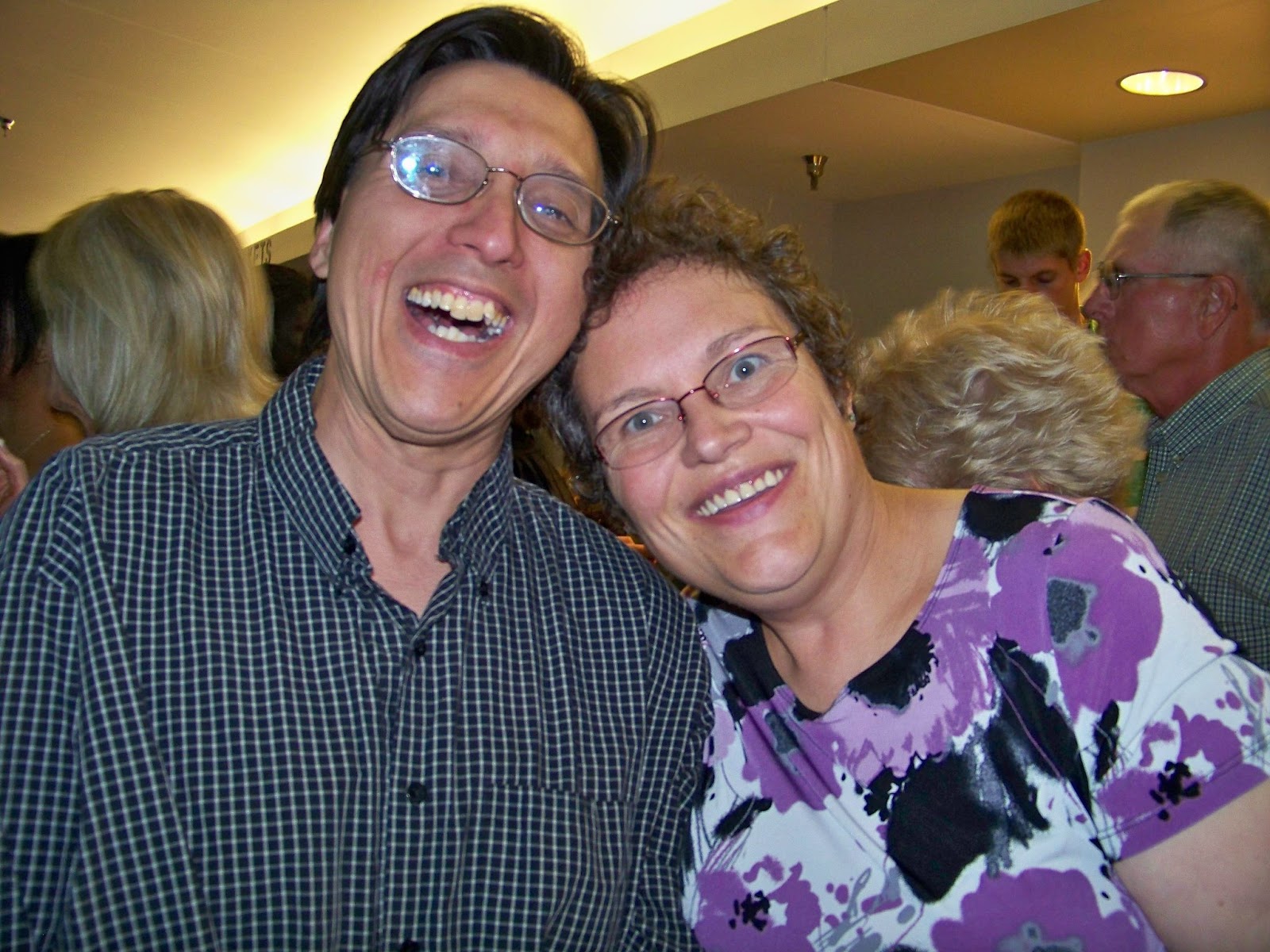 |
| This is my husband, Richard Leach-Steffens, and I. He’s your typical Asian-German mix, brought to you by living in the USA. |
It’s interesting, however, that Asian cultures emphasize balance and harmony, because the hedonic treadmill (represented by heroin for Allan and by a fantasy world for Ichirou) is counter to the values of an Asian society. Yet that harmony is broken for both — Ichirou by a hidden talent and the pressures of being young in contemporary Japan (see hikikomori), Allan by an abusive family situation. I set up the balance/imbalance dichotomy accidentally, but I love the results.
This is the kind of stuff I mean when I say I put the things I know into my books. I don’t want someone well-balanced with no difficulties to be the addict, because research shows that happy rats don’t do smack, but the stressed-out ones do. And people don’t escape if where they’re at is just fine. (I’m not talking about the later stages of addiction, when the behavior becomes the life — just why some people can take drugs and quit, and others can’t.)
By the way, I wouldn’t hook up to the happy machine either. Being at the same level of happiness all the time doesn’t make for good writing.
Every now and then I hear a line which comes off — well, differently — than the writer intended it. It might be because I’m a little off-kilter, and I’m usually the only one snickering when it happens. Some examples and my reactions:
Spring must be coming. My cat Girlie-Girl is standing on my chest while I write, some of my seedlings are coming up for summer, I’m dreaming frisky dreams that are too graphic to write about, and I’m querying again.
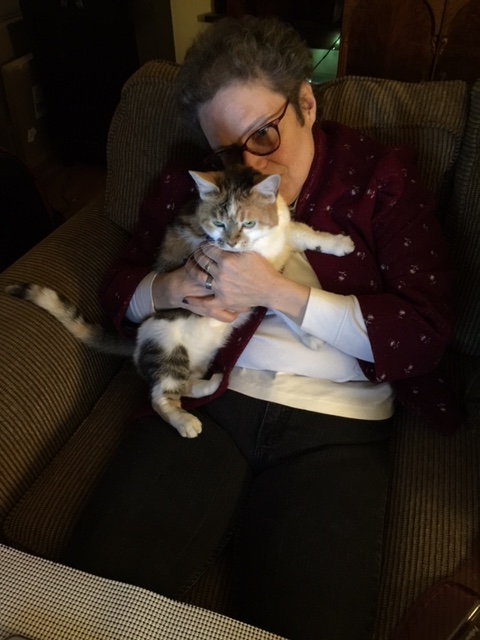 |
| Girlie LOVES being held, doesn’t she? |
I’ve sent four or five out yesterday, and I felt good about it. This is the stage of querying agents that is fun — the part where I get to brag about my novel. This time, it’s Mythos, which starts with a woman’s missing memory and ends with the upcoming Apocalypse.
Here’s the beginning:
Stop me if you’ve heard this one before.
I’m contemplating sending out queries — the packets of synopsis and short excerpt and stuff the agents request — again. Even after the over 100 rejections I’ve gained over the years, I want to try again. Just in case someone’s in a better mood or something.
I’m thinking of trying something different:
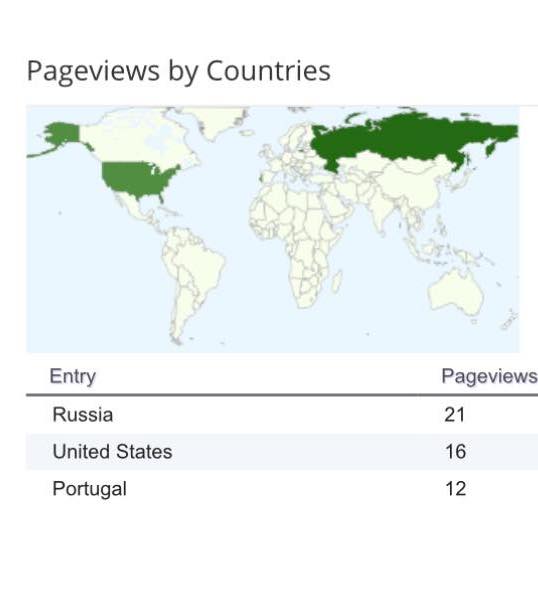
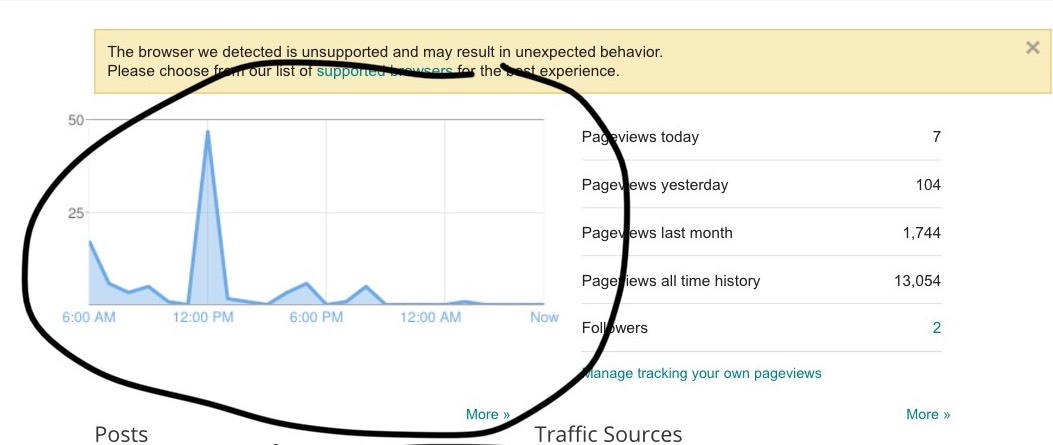
Happy Valentine’s Day everyone! This includes the Russian Bot, the Portuguese mystery, my daily visitor from Ukraine, the one person my sister knows from Germany, the one person I know from Canada, India and Hong Kong, and the charming girl from Poland who might also be Portugal. Oh, yes, and Peru. How could I forget Peru?
And Happy Valentines Day from my fans in the US, which sometimes even let me know who they are.

In a perfect world, this would be my valentine:
We would all go out to coffee together and meet each other, some of us for the first time. Hugs would be optional, but I would work hard to feel the hugs in the spirit of how they were meant. I would introduce all of you to each other. We would talk about what your favorite coffeeshop beverage was, but because this is Valentine’s Day and not Heaven, I would not be able to indulge you in herb tea or samovar or Turkish coffee. That’s okay, because we are all friends. I would tell you what you mean to me. That would be my valentine.
Isn’t fantasy wonderful?
Eighteen feet down where the sun doesn’t touch me
I tumbled, landed hard, the wind knocked from me,
still alive. Screaming for help doesn’t count
in the woods where nobody lives.
Crab-crawling on the walls doesn’t help, nor does
trying to jump, or wishing a ladder or
screaming for help in the woods where nobody lives
and my telephone landed above.
God helps those who help themselves,
says the adage, which implies to me
That this God turns his back on the helpless
and that I will starve to death in this hole.
The dead don’t exhort their God from the grave,
The living give testimony in their churches;
the sample is biased.When I die,
no one will blame God for forsaking me.
This song was written a long time ago about a friend with whom I had a shy, almost mystical friendship with. In real life, I wouldn’t go out with him because there was always a long line of irrational women in front of him, and he had briefly dated all of them. (He was a guitarist). But in my dreams, and occasionally in life, we had great conversations …
My mother-in-law died a week ago at 83 from complications of uterine cancer. I will go with Richard to Kansas for a memorial service in March — possibly March 17, our wedding anniversary.
This seems oddly fitting, because Dorothy Steffens died believing her only son had never married. I will meet Dorothy for the first time at the internment.
Obviously, there is a story behind this. Dorothy Steffens suffered from mental illness and dementia. She was, Richard said, alternately demanding, doting, and delusional during his childhood. Richard was the only son of a Chinese mother and her farming husband, so he got more of his share of the doting — even smothering — behavior. His sisters weren’t as favored.
Dorothy became a divisive character in any household she lived in, setting spouse against spouse with frightening accuracy. Her cognitive decline added to her emotional turbulence, complicated by Type 2 diabetes and poor self-care. Soon the sisters realized that the only way Dorothy could be cared for was to place her in a nursing home.
In the nursing home, Dorothy became fixated on a savior who would sweep her from the nursing home and take care of her forever. At one point she had targeted the doctor at the home. When Richard and I were planning our wedding, however, she had pegged her own son as her knight in shining armor.
Which is why, when Richard sent her a wedding invitation, Dorothy tried to break out of the nursing home to stop the upcoming wedding.
Richard’s sister Linda called Richard — “How could you send Mom a wedding invite?” Richard had assumed that he should give his mother another chance to be the mother he’d wanted; it hadn’t worked that time either. It was agreed that Richard would fly down to Texas and assure his mother that he had broken up with me.
Of course I had fantasies that I would meet his mother and that she would bless our marriage. On the other hand, I am pragmatic, so I sent Richard to Texas to break us up in the eyes of his mother.
I had never met Dorothy E. Steffens when she died. She never knew I had married her only son. From all accounts, she would have tried to break apart our marriage either before or after the fact, and she might well have succeeded.
Strangely, though, I think I understand her. Sometimes, a child grows up in desperation — perhaps during the Chinese-Japanese battles of WWII — and no amount of safety or security will be enough. Because there’s never enough love, never enough food, never enough reassurance, the child demands more and more. The child who struggles with mental illness loses bits and pieces of their safety to the disease and needs even more to cling onto, and it’s never there because we don’t understand the broken glass of their perception.

