More on Retreats and Mini-retreats

Every morning, I participate in my writing ritual —  I write this blog and try to get my writing goal done for the day (somewhere between 1000 and 2000 words unless I get to a difficult part). Early mornings are my time — it’s 6:20 AM Central Daylight Time and I’ve been up for an hour.

You also know that, every now and then, I need a writing retreat — somewhere with a unique atmosphere, someplace that’s a Place. Someplace that’s preferably a short drive so that precious writing time isn’t eaten away by driving time.

My favorite retreat: Starved Rock Lodge. Admittedly, one of its draws is that I grew up near there. However, being a national-park level log and shingle lodge hidden in a state park doesn’t hurt, either. The Great Hall, with its varnished logs and towering ceilings and comfortable chairs and eclectic visitors, stimulates the imagination like little else. I will not be going home this Christmas, to my heartbreak, because in my opinion, Starved Rock Lodge is the epitome of Christmas — for locals as well as for travelers, including the Jewish families from Chicagoland who have reunions there.

One of my other favorite retreats: The Elms Hotel and Spa in Excelsior Springs, MO. A massive stone-and-wood building in a neo-Tudor style on the outside, the inside harks back to the 1920’s with parquetry floors and dark wood. It’s not hard to imagine that it was the stopping place of gangsters and their molls from Kansas City. One time there, I happened to mention to our waitress that I was on a writers’ retreat and she let Richard and I use an unused part of the restaurant, complete with a couch and a sleek black fireplace for ambiance. She also kept us supplied with coffee (thank you, Laura Sanders!) The bonus: Using the spa, for a massage and an afternoon in the Grotto, which features comfortable lounge chairs, a sauna, a steam room, a whirlpool, a steam shower, and an icy shower. Even if you can’t afford the massage, the Grotto alone — $25 a day — works to help clear a writer’s mind.

Sometimes my husband and I can’t afford (timewise, money-wise, or both) a weekend retreat, so we take a day retreat rather than go to a cookie cutter corporate coffeehouse. One exception on corporate coffeehouses — our local Starbucks is located in the campus library, a spacious and warm space which only needs a fireplace to be perfect in its atmosphere. “Meet me at Starbucks” may be the most welcoming phrase you’d hear on campus, and I hold my Friday office hours there. But because it’s so familiar, I don’t use it for a serious “get in the writing mood” space.

Today, we’re travelling 45 miles to a writing space in St. Joe, Missouri. There are two coffeehouses in St. Joe, and although neither of them are Starbucks, one of them works better as a writing space than the other. Hazel’s, the one I don’t take writing mini-retreats at, has good coffee, but has the ambiance of the gift shop at a Cracker Barrel — lots of gifts for sale scattered across shelves and surfaces — lots of visual stimulation I can do without. The other coffeehouse — Mokaska — is closer to downtown, and has a spacious and old-building look to it: high punched-tin ceilings, exposed ductwork and scaffolding for lights, and old woodwork at the counter. We’re going to Mokaska.

Would it be cheaper to have a writing retreat in the home? Yes, but we don’t really have a good room for it. There’s the dining room, which has the ambiance of the Christmas tree we never took down, but the 20’s era dining table proves to be awkward to use a laptop on. There’s the spare bedroom of our circa 1919 home, but it’s long and narrow and full of bookshelves and Richard’s Star Trek ship collection, so the ambiance it provides could best be called “claustrophobic”. My normal writing place is on the couch in the living room with my laptop and a computer desk. All fine and good, unless I need a change of scenery, and then I retreat.

Have a happy Saturday (Friday? Sunday?) all!
Delusion

I look in the mirror and I don’t recognize that person. In my mind, I am a plump witch sitting in the corner of a room that glows with a crackling fireplace, peering over my glasses at you. I am a waif with huge eyes and fairy wings. I stand on the edge of a cliff, my hair streaming behind me in a storm. In my mind, I am never, ever ordinary.

And then I look in the mirror again, and damn it, I see a round woman with hair that curls into a grandma perm without any effort. I see bookish glasses, a tight mouth that turns into too, too much when I smile. A face to be forgotten, like those of a vanguard of women my age.

Do you blame me for preferring fantasy? Do you ridicule me for wanting to be the protagonist of my own life? Do you scorn me for standing here smelling roses and taking up the space a younger, more beautiful woman could be standing in?

Don’t tell me about it. I prefer my delusion.

Words

Sometimes
words weigh heavily upon my shoulders,
and a touch on my elbow prickles for half an hour.

I’m never “fine”,
but swimming in a torrent of words
about my pursuit of one crystal accomplishment.

Sometimes,
I feel my words
fall to the ground without being heard.

Word Sprints

Word sprints help you write fast, hence the name. They may or may not have a prompt to help you with a topic to write on. They can be timed (10 minutes, 20 minutes, an hour); they can be word counts (100, 200, 1000 words); they can be housed on Twitter (NaNo Word Sprints), done in groups or individually, and can even take the form of competitions.

The whole purpose of word sprints is, like NaNoWriMo, to get your words on paper. You can edit later. I may be using more word sprints this year because I’m not having as many conversations with my characters as I usually do. (I need a good amount of time at a coffeehouse this weekend with Richard to help flesh out plot and character.)

Not everyone believes in the common philosophy behind NaNo and writing sprints — that is, that the words need to get put on paper, in whatever form, before you can polish your work into a novel. This columnist is very much against NaNo, thinking it gives less talented people a license to make their friends read their bad work. (I would have welcomed her point of view had she not come off as a caustic snob who likes to piss on others’ dreams).
************

Here’s the result of a ten-minute word sprint for my WIP, with the prompt of “Someone is getting thirsty”:

The next day I’d wished I’d stayed at the curious place where I had dropped off the stranger the night before. The air shimmered with the heat; I sweated until I couldn’t sweat more. My goal was to drive out of Owayee and back toward the larger highways, because everything in this heatbox looked the same — the short scrubby shrubs, the baked-mud ground pebbled with rocks of varying size, the lack of true greens and flowers. Was it simply going back the way I came? Even with a map, I wasn’t quite sure what highway I looked at. 

There was a lake by where I’d dropped off the affable, enigmatic Daniel. If I could get back to the lake, I would be near water and could take shelter with the commune. They had offered me shelter, but I wanted to continue on my quest. 

Of course, my compass, I thought, and grabbed it from the passenger’s seat with one hand. Of course, as luck would have it, the compass couldn’t recognize true north. I thought the commune had been true north from where I was on the road. 

I drank the last dregs of water from my jug, remembering that I’d filled two five-gallon water bags from the commune’s reservoir. They had been generous. Mari, the leader, had smiled at me and said, “We have plenty more where that came from, Annie.” I felt like crying as the nausea hit me. Then I felt the truck shimmy as my front right tire ripped from the rim.

***********

Is this a first draft? Yes. Upon reexamining it, I know it’s going to take some more filling in, and some wordsmithing. I use “of course” two times consecutively to start sentences. I don’t like “true greens and flowers” as a phrase, exactly, because it brings to mind lettuces rather than vibrant green hues. “There was a lake” should read “I recalled there was a lake”. Her recall of the commune could be slightly more descriptive.

But that was 25 words a minute on something I hadn’t thought about five minutes before.

I’m okay with that.

NaNos — your first draft (with footnotes!)

Dear NaNos (and other readers):

The first draft is not the time to polish your manuscript, or second-guess your ideas or get judgy* about your writing. You can do that later, after you’ve gotten 50,000 or so words on the page**. The first draft is the place to get your ideas on the page — whether that is fleshing out an outline (planner) or channeling creative spirit without constraint (pantser***).

You will be tempted to thoroughly read what you write. Don’t do so — keep writing the words. Keep letting the ideas flow. Don’t censor yourself when you write at first draft point — welcome the plot absurdities and scenery-chewing, the mystical subways and talking trees****. You have plenty of time later to decide whether to keep them or not*****.

The 50,000 word first draft is not to make you a novelist. It’s to make your future as a novelist possible through helping you break through the psychological barrier that makes you think you’re not a novelist******.

So go for it! It might change your life!*******

**********************
Footnotes:

* although colloquial, I like this word better than “judgmental” simply because of the sound of it.

** this is not actually the length most novels should be for the market. It is, however, the winning number of words for NaNoWriMo.

*** as in “flying by the seat of your pants”.

**** oops, I’m the one with the mystical subways, not you. You know what I mean, though.

***** hint: If they detract from the plot and character, get rid of them.

****** NaNoWriMo has loopholes one can exploit if one doesn’t want to write a novel. There’s all sorts of other projects one can undertake — a script, an autobiography, historical fiction …

******* or maybe not. But it’s worth trying.

P.S.: The autumn and the faun

 I live at the border between this prosaic world and others of thundering dark and seafoam and terra cotta, the worlds that enchant. I myself am not an enchantment, not the conjurer of wild visions in violet and silvery green and the wispy white of silken web. I am forever in exile from that world, being only a scholar with words.

In the spring, I met a faun, slender and pale as cream, freckled and innocent as a wild beast. Homely as only gingers can be, long-faced and jug-eared under his masses of hair. I asked him for a story.  I had forgotten — nobody can catch a faun in stillness very long. He smiled at me and ran off, no words spoken.

All summer, I played hide and seek with the faun. I would not tame the beast, because one can only live at the edges of those other worlds if one does not try to own them. I just wanted to hear his story, find the source of his fleeting magic. Fauns do not speak — they smile, and then disappear. I will never learn if that smile was meant for me, and the thought of that makes me feel sad, like I do when I get to the end of a book.

Now it is autumn, and I sense he is strolling across a filmy border to where he belongs. I will write in my warm house with chilly sunlight streaming through the window, where I belong. I will never know what words he would have for me. But I have seen him.

Old Hat

I’m not as excited about participating in NaNoWriMo, or that international month of writing 50,000 words toward a novel,  as I need to be.

I’m not sure why. It might be because this is my fourth NaNo, or because I didn’t succeed last year, or because I’ve succeeded two years before that. It could be because there aren’t others in my area to have writing sessions with, or because I’ve discovered that the officially sanctioned NaNo group events seem more about cliquishness than encouragement, or because I suspect I wouldn’t notice it was cliquishness if I were part of the clique (which embarrasses me).

Things are so much more motivating when they’re shiny and new, aren’t they?

I need to fall in love with my ideas:

Anna Schmidt/Annie Smith, an anthropologist, embarks on a quest to find the origin of a post-Fall fairy tale in the ruins of the United States.  She senses the ghosts of a traumatic incident following her as she pursues her quixotic journey through a world of black-market economies, scrapyard ingenuities, border skirmishes, and attempts at law and order.

In the high desert of Owayee, Anna meets Daniel in the nick of time, and he takes her to his home, an underground communal enclave. She suspects she has discovered the people of her fairy tale, who are in fact real but more unusual than she had guessed.  Then her secrets are revealed to the commune, some of which not even she knew. Revealed also is a plot that could cause widespread deaths — and Anna and members of the commune must stop Free White State from accessing a super-lethal virus Anna’s stepfather, a cryptographer, had once locked up.

I need to get a better feel for the characters, perhaps through more interrogation, or through writing a fun part of the story.

Melancholy October

The clock on my computer reads 6 AM, and there’s no sign of light through the window.  The first day of autumn was a month ago, and the leaves of the trees I cannot see in the opaqueness of pre-dawn have shifted to brilliant russet and orange and yellow.

Fall breaks my heart, the way it wrings out the greatest beauty of the leaves before they die and blow away in spicy, earthy drifts. The rustle of leaf piles, the days and nights of rain from delicate sprinkles to sibilant showers to pounding gullywashers speak the truth of autumn, that it’s all about the last hurrah before the earth sleeps through the winter.

Flocks of starlings, like sooty leaves tumbled in a wind, wheel across the sky in everchanging patterns — billows grown big, then small; gathering for their migration south. The unprepossessing slate-colored juncos in their grey and white move in and outnumber the year-round drab sparrows. The cardinals stay through the winter, flashing red against the snow; seeing one seems like a promise that summer will come.

It is time to tuck away my summer fancies for those things that stay, that last through the winter. I will invite those friends to my hearth to drink hot chocolate and tell stories; I will welcome them as my own.

Love languages and your characters.

According to The Five Love Languages (Chapman 1995), we predominantly express and perceive love in one of five ways:

  • gift giving
  • quality time
  • words of affirmation
  • acts of service (devotion)
  • intimacy. 

Now keep in mind that there are many different kinds of love — the ancient Greeks, who remain the experts in categorizing types of love, named:

  • agape, or love for the world
  • ludus, or playful love (this word has the same root as “ludicrous”)
  • phila, or deep friendship (this word has the same root as “Philadelphia”)
  • eros, or sexual/sensual love
  • pragma, or longstanding love (this word has the same root as “pragmatic”)
  • philautia, or love of self.
Because there are different types of love, we can apply the love languages to any significant relationships, from friendships (phila) to old couples (pragma) to passionate lovers (eros) to mutual crushes (ludus). These Greek labels describe types of love, but not how they’re expressed.
Each of these types of love could be expressed in one of the five love languages. In reality, we may use more than one love language, but not be fluent in all five, which causes relationship problems when the other person speaks different love languages. This can cause conflict — both in terms of real life and in terms of a story.
For example, you could have a character whose main love language was acts of service, so he thought he was saying “I love you” when he made the bed in the morning. His spouse, on the other hand, expected words of devotion, and thought his making the bed was just performing the daily chores. Both felt unloved as a result, until they got into an argument:
“What do you mean, you make the bed because you love me? That’s something you’re supposed to be doing! Are you telling me you see me cooking dinner as a sign of devotion toward you?” she screeched.
“Well, yes,” he snapped.
“You gotta be shitting me.”
(Ah, the miracle of love!)
Many romance novels depend on this misunderstanding trope, whether or not the writers are unaware of love languages. The man is silent and devoted to protecting the woman (but does limited service in other areas such as housework), and expresses himself with acts of devotion and intimacy (sexual only, as emotional intimacy seems lost on the strong, silent type).  The woman misinterprets this as “he only wants to have sex” at the same time she’s irresistibly drawn to the sex. The man, because of his devotional love language, marries the woman to protect her from anything from unwed pregnancy to eviction, and the woman interprets this as duty because the man won’t actually admit he loves her, apparently because he believes that uttering words of affirmation before the last chapter will unman him. 
So a word to the wise: understand your characters’ love languages. Understand your friends’ love languages. Watch what they do, watch what they encourage you to do. Don’t expect them to understand your language; learn theirs.
Chapman, G. (1995). The Five Love Languages: How to Express Heartfelt Committment to your Mate. Northfield Publishing. 

New toy

I was lucky enough to have a professor in college who heavily encouraged me to learn to compose assignments directly on the computer instead of hand-writing and transcribing. As I am one of those people whose train of thought breaks down the moment I put an awkward black scribble mark on a pristine piece of paper, I welcomed this suggestion. Thirty years later, I’m one of the few writers out there, I hear, that prefer to compose on the computer.

The problem with computers and their iPhone companions is that they’re inconvenient when waking up and trying to jot down a dream. I have trouble with high tech before coffee. Big electronics are also awkward when I’m in a coffeehouse with Richard discussing sheer ideas, the ones that will flitter away by the time we get into the car.

On the other hand, I also have grown to hate transcribing handwritten notes into my computer or iPhone companion. It’s one of those things that I like to put off till later, with “later” meaning “when the piece of paper is lost or thrown in the garbage”.

I decided I needed to have something to take notes on so I could take story notes on the road and by my bed  — to capture those dreams, you know.  I’d had a student recommend smart pen technology years ago, at about that time my students realized I was as forgetful as they were, but smart pen technology is expensive, although not nearly as expensive as an iPhone X.

So there I was, contemplating a smart pen. Not without qualms — part of me quailed at the thought of having such a bougeois consumer electronic product. On the other hand, I had a boatload of store credit at Barnes and Noble as the result of a class-action lawsuit of some sort, and those points would expire soon. I can’t read 20+ books in that short a time.

With my purchase justified and paid for, I bought my smartpen. (I will not tell you which brand, because this is not an advertisement.)

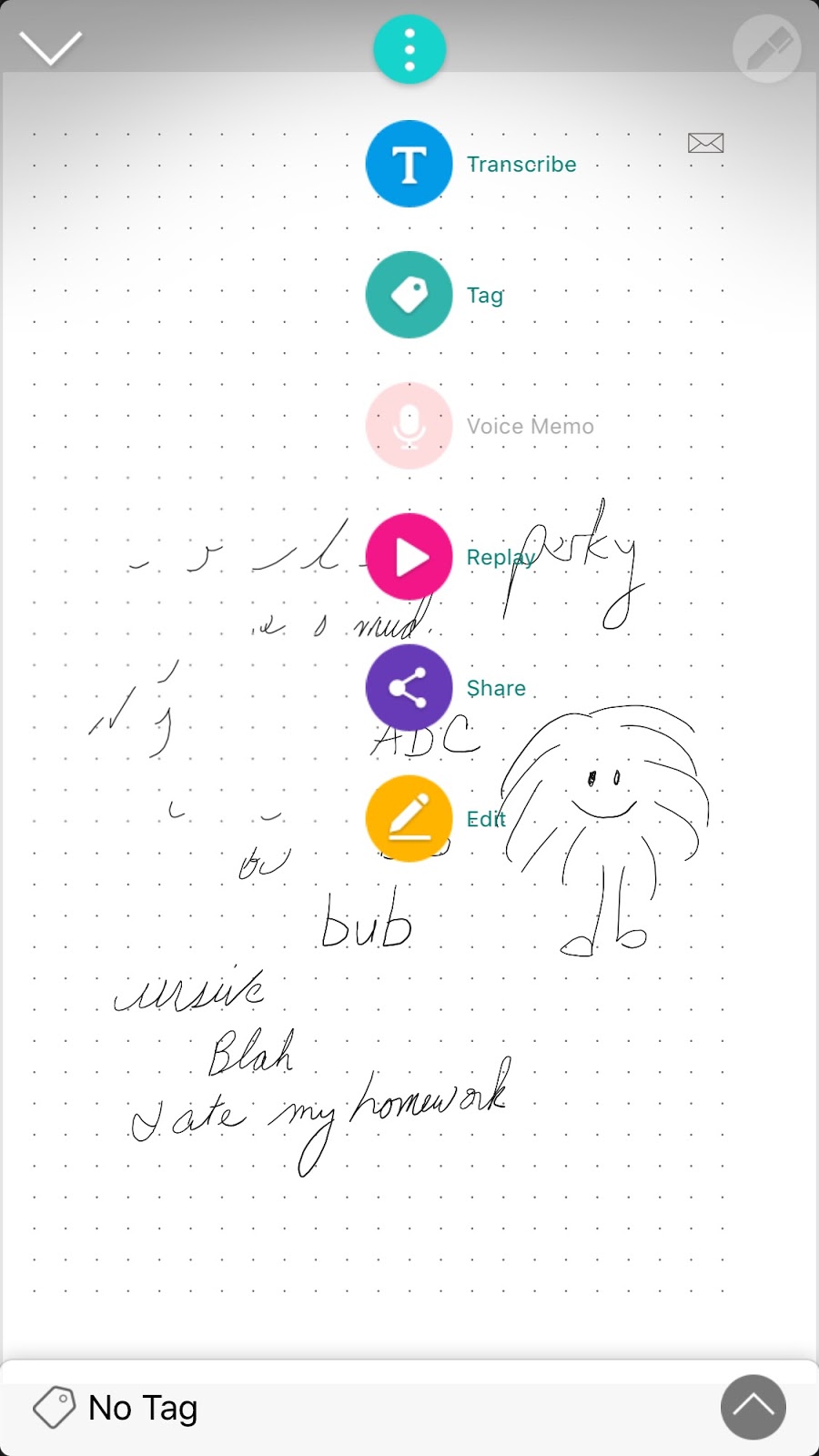
The smart pen technology involves two parts, a special pen and special paper.The pen reads infrared (so make sure it’s charged and press heavy on the pen) and the paper allows it to:

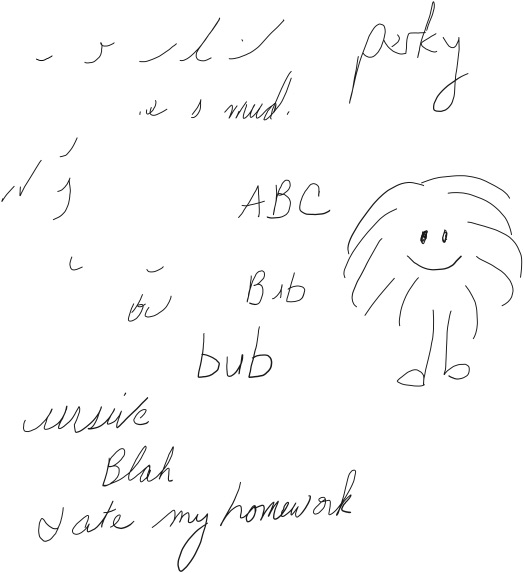
1) Pick up what you’re writing and upload it to the smartphone :


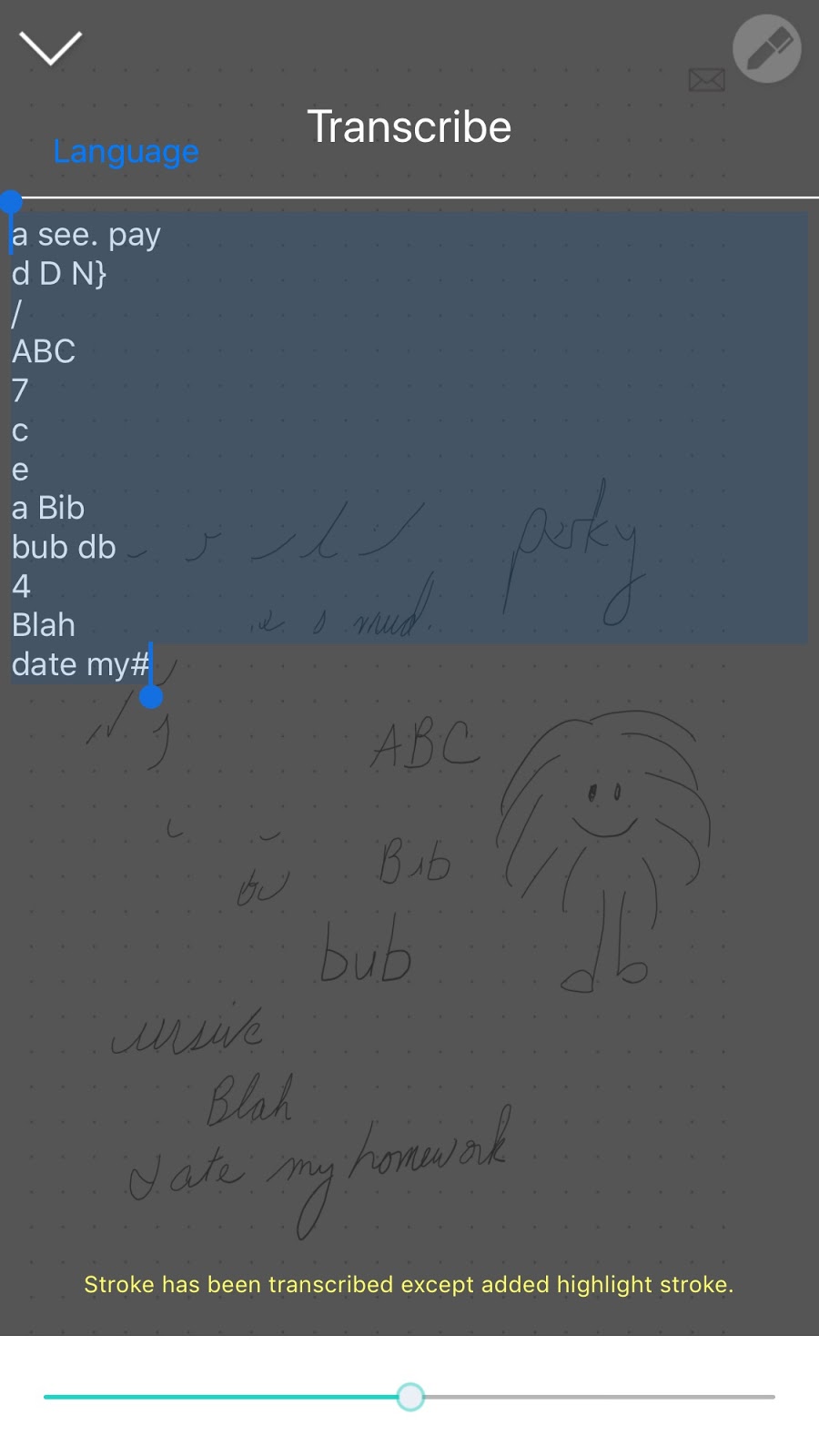
2) Edit, transcribe, replay pen strokes, and share the picture:

3) Copy and paste the transcribed version into another document — I’ve gotten much better on making the pen recognize my handwriting:

So we will see if this helps me with recording more spontaneous ideas over coffee or during naps!