Kittens and kittens and kittens and kittens …

My writing has been heavy lately, as I brood about the state of the world — bigotry and prejudice, hatred, banal acts of evil, etc.
It’s time to talk about kittens again.
My husband needs to publish his first book. In this book, Augustus T. Cat helps his friend Mr. Snail realize his goal to run a marathon.
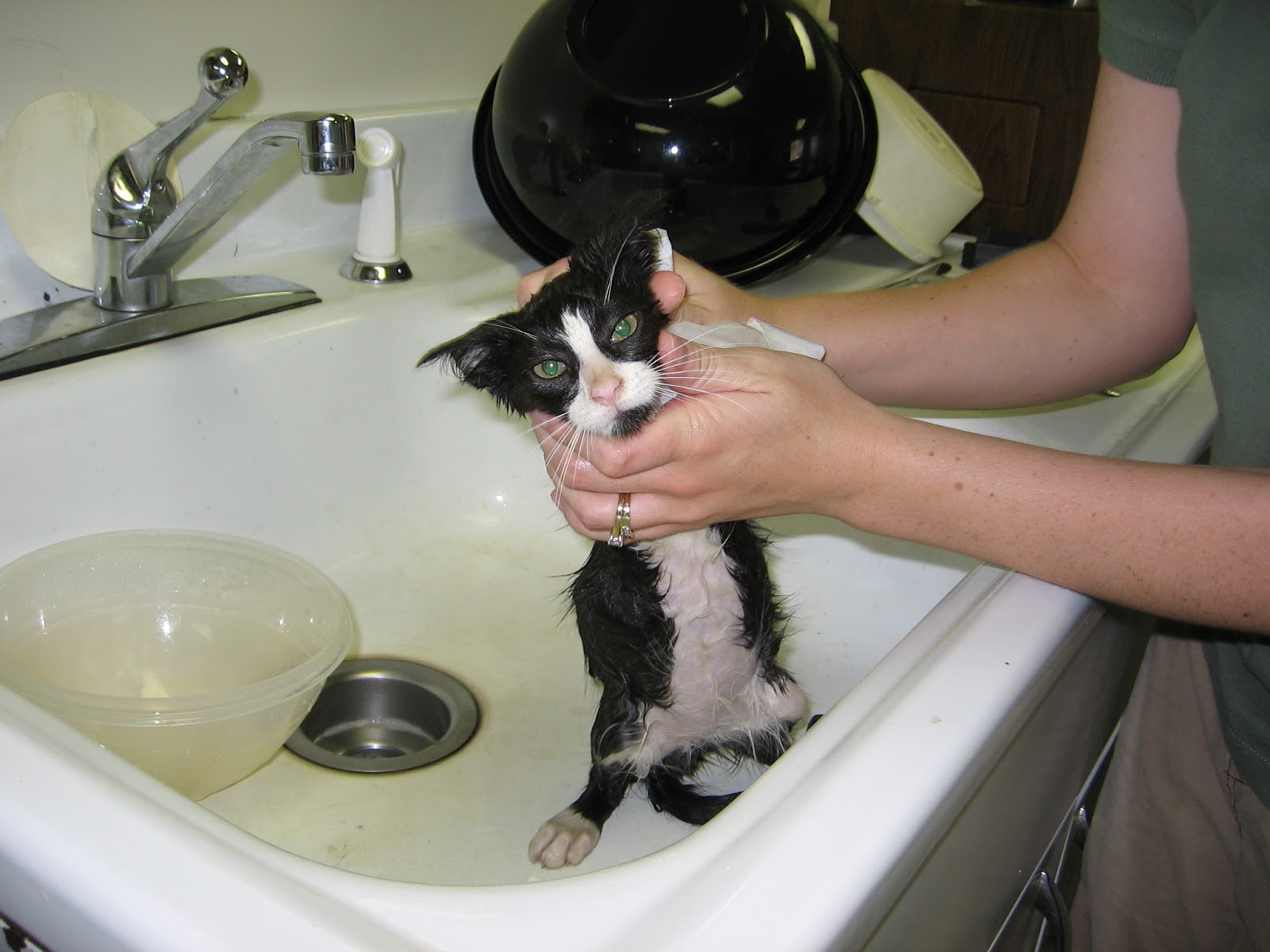
To the left is Augustus T. Cat, who I found under a truck chassis and gave to the Humane Society. Augustus is very practical and concrete in his thinking, as befitting a cat in a tuxedo.
To the right is is Mr. Snail. He’s an imaginary critter. He talks very slowly, and has many daring adventures. He has ADHD, and when he drinks coffee, he falls asleep and falls off the side of the cup.

Kittens aren’t just for kid’s books anymore, nor are they just fluffy and cute anymore. Sure, they’re fluffy and cute, but they can also add to the theme and even the plot.

Exhibit 1. It is suggested you enlarge this, so you can see the utter adorableness that is the kitten Keanu.

Exhibit 2: This cat got her own award-winning documentary: Review: Lil Bub and Friendz (Full disclosure: this is not my cat. However, I have met her and I can attest to the fact that she has an unworldly aura about her that might prove that she’s an alien space cat come to Earth to save the world one cat fan at a time.)

*********

In one of my novels, a kitten with Cerebellar Hypoplasia teaches a life lesson to the protagonist* :

Meeting Jeanne and her father at the top of the stairs, the ginger and white kitten walked with a peculiar stiff-legged and wobbly gait, weaving and occasionally tipping over.

“Isn’t he cute?” Dad asked Jeanne, following her into the oppressively floral nieces’ room.  The wobbly kitten followed them.

“He’s drunk, Dad,” Jeanne commented as the kitten attacked her hand and then unceremoniously fell over. Undaunted, the kitten shifted itself under her hand and gnawed on her fingers. Jeanne pulled her hand back. “Ow! Not too hard, kitten!” The little creature stopped in mid-chomp and began to lick her finger while grabbing it with two little paws.

“He’s not drunk. Poor little guy has something called cerebellar hypoplasia. It means his motor skills aren’t very good, but he’s otherwise very healthy and happy. I named him Weebles.”“Because he wobbles and doesn’t fall down, right?” 

Jeanne recalled a television commercial from her childhood. “But he does fall down.” 

Weebles demonstrated by running three steps forward and tipping over, then cleaning himself as if he meant to fall over. “He gets right back up, though, and that’s the important thing.”

“Dad, he’s not getting up. He’s now fighting with an invisible feather. Is this kitten not very bright or something?” Jeanne looked at her father with consternation. “Dad, you’re what? Seventy-eight?”

“Yes. Why?” Jeanne should have been warned off by the questioning tone of her father’s voice.

“This kitten is – it’s a kitten. And you and mom could go into assisted living or even a nursing home at any time. What’s going to happen to Weebles here if you go into a nursing home?”

“Daughter.” Jeanne heard the steel in her father’s voice, as effective as another man’s shouting. “If I had not adopted this kitten, it would be dead by now. You can’t expect your mother and I to live our lives as if we might check out tomorrow. If we go into a home and they don’t allow us our pet, we will find someone to care for this kitten.  It might even be you for all I know; you need something in your life to give you a sense of perspective. You can’t expect us to sit around and wait to die; life goes on and none of us know how much time we have left so we might as well love little kittens.” 

 Dad stood up slowly from the twin bed where he had been sitting and walked out of the room. Weebles stumbled up to her hand, stood still, and tipped over, purring.

*********

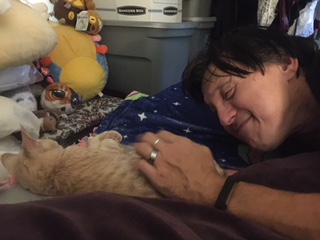
If you want to know what Weebles looks like, here is my new kitten Charlie, who does not have Cerebellar Hypoplasia, but otherwise bears an uncanny resemblance (the cat, not my husband):


*In a way, I cringe at including my writing in the same essay as Lil
Bub and Keanu. I feel like I’ve just said, “And look! My example is just as magificent as this Tribeca Film Festival winner!’ Oh, well.

p.p1 {margin: 0.0px 0.0px 10.0px 0.0px; text-indent: 27.0px; font: 12.0px ‘Times New Roman’} span.s1 {font: 12.0px ‘Courier New’}

Homecoming Day

This is a song I wrote about 20 years ago; I can’t write music; I just sing the tune. This was written years after “Empty Gym” but about the same incident, and it is written from the point of view of an older person to an innocent high schooler who doesn’t know how bad things can get:

#1
Chicken wire and crepe paper
wrapped around a hayrack
towed behind a pickup
in the Homecoming parade
in a town as small as this one,
maybe smaller,
but that was so long ago,
my distant past,
my childhood a charade

Chorus: (2x)
I had a dream last night
you turned around and asked me why
I wasn’t coming home again —
I couldn’t tell you.

#2
Traps set in the corners
of the hallway in the high school
Memories like tigers
crouched and ready there to spring
Always tried my best to be invisible
but that was impossible —
a waste of time,
a waste of everything

Chorus

#3
Tried to tell the people
with their eyes glued to the TV set
to look at something else
outside the color of their hate
I was just a child then,
but I wasn’t —
I couldn’t be —
you can’t go back and change my fate.

Chorus and fade…

Homecoming

I suspect Homecoming, as conducted in high schools and colleges across the US in conjunction with (American) football, is the remainder of ancient pagan fall rituals.

There’s the sense of nostalgia as graduates young and old come back to their alma mater to celebrate their ties to the land as the leaves fall. Two teams vie for the win in a sport than can be barbaric and bloody.  The school crowns a King and Queen, and they preside over the festivities, which include parades and bonfires.

The old year passes, the god is sacrificed in a ritual game, and people celebrate their belongingness to their culture, then drive back home to their new lives, oddly satisfied.

It’s the only way I can understand Homecoming. I took Homecoming for granted until, in high school, I had a conversation with a foreign exchange student named Armin (if you’re reading, Hi Armin!):

“What is this Homecoming?” Armin asked as he searched his preternaturally neat locker for a book.
“Well, it’s a football game.” I rummaged through my less than neat locker.
“Soccer?”
“Football, not soccer. Anyhow, there’s a game, and a king and queen, and we build floats for the parade –“
“Floats are — ?” Armin scrunched up his freckled face.
“Well, you put chicken wire on a hayrack, and then –“
“Hayrack?”

I’m not sure if Armin ever understood, and I’ve been trying to understand Homecoming ever since. As I said before, I can only understand it as the vestiges of a fall pagan ritual. Most of our beloved holidays carry the remnants of the cultures before us, the religions before us, the beliefs of ancient peoples huddling against storms and hoping the crops were enough to feed them. And still, they comfort us against uncertainty today.

PS: For those prepping for NaNo, and for my friends: The Voice of Doubt

This week’s NaNo prep email says:

     This week, figure out what you think your main obstacle to NaNoWriMo success will be. Once           you’ve identified the obstacle, come up with a three-bullet-point plan to overcome that hump.

My main obstacle is myself — or, more specifically, The Voice of Doubt.

I suspect there are many Voices of Doubt out there.

Maybe your Voice of Doubt says, “You can’t possibly write 50,000 words in a month” because you never have before.  You will — if not now, someday. Just keep the good work up.

Maybe your Voice of Doubt says, “This stuff you’re writing is garbage.” It’s a first draft — it exists to get the shape of the novel out on paper. You’ll refine it later in edits.

Maybe your Voice of Doubt says, “Your plot is so stupid.” I have one word for you: Sharknado. Feel better?

My Voice of Doubt says, “Why bother? You’ll never get published.” Every day, I get better and better, closer and closer.

What is your Voice of Doubt? Take away some of its power and make it merely a voice of doubt. Contradict it, or agree with it and turn it around: “Maybe I haven’t had a novel published yet, but I’ve had several academic journals published, and I’ve published a couple personal essays in liberal religious journals. And I have 28 readers on my blog!”

 (And I still want to know who you are!)

Interrogating the Dream Revisited: The Story of Inanimate Objects.

I’ve talked about “interrogating” before — a way to understand characters by asking open-ended questions. In that sense, it’s not truly “interrogating” in the sense of bright lights shining in a captive’s eyes while the interrogator wields a rubber hose.  Open-ended questions (or open questions) help pull a chaaracter’s story from your imagination.

But what about inanimate objects in your dream, or in your subconscious? Gestalt therapy, pioneered by Jung — every writer’s favorite psychologist — suggests that, in interpreting a dream, one must tell the story from every significant object in the dream. Yes, it seems ludicrous to write, “Hello, I’m a footstool. People put their feet on me,” but for a dream, that inquiry provides more insight into the subconscious pressures in your mind — objects become symbols, shorthand for meaning.

For the purpose of writing, you’re not limited to interrogating dream elements. Just as you can interrogate (ask open-ended questions about) your characters, you can interrogate objects you want to put in your story as well, to see if they further the plot or the symbolism or the scene. In terms of Chekhov’s Gun (the object you introduce early to use later), it’s good to know why a gun and not a knife, what kind of gun, who owns the gun, etc. Make your important objects count — not only as functions, but as deliberate items carrying the weight of the mood, the provenance, the scene, the sentimental meaning.

*******

This is a segment from Gaia’s Hands, where Josh has a dream which speaks of his subconscious knowledge of his girlfriend Jeanne’s inner turmoil:

     He and Jeanne stood on a small wooden stage; he wore his gi pants and hakama, but no shirt.               Jeanne wore a white nightgown with a high neck, yet the glaring light shone through it, betraying       her shape. A folding chair stood on stage, his iaito leaning against it. The chair and sword stood           between them, casting shadows.  He walked around to her and tried to touch her, but she turned           and ran. Tripping, she fell to the floor and curled into a fetal position. When he reached her, the           lights went out. “It’s my darkness,” she shrieked. The iaito began to glow like a lightning bolt.

The iaito — the proper name for the type of sword we call a “cheap samurai sword”, was described earlier.  Here is the interrogation:

Me: You’re an iaito, correct? (Yes, I started with a closed-ended question which can only be answered yes or no. This is because I wanted to make sure I was talking to an iaito, and not a wooden bokken 🙂

iaito: Yes, you are correct.

Me: Tell me about your history.

iaito: I have pretty humble origins. I was mass-produced in China, even though I am a Japanese sword, and made to look aggressively Asian. My blade is aluminum, and can neither hold an edge nor cut grass, much less humans. I suppose you could bludgeon someone to death with my blade. I have function, though, if only to hang on someone’s wall as a symbol of what they aspire to. Some people aspire to flashy combat, some to fighting prowess — my owner, a pacifist, aspires to balance his dual nature.

Me: Tell me about your owner’s dual nature.

iaito: Josh has a temper, which he claims comes from his mother. From what I’ve overheard, his father is the origin of the other side of his nature, which is calm and harmonious. Josh wishes not to abolish his temper, but to channel it, which he does through martial arts. I represent both power and beauty — Josh sees me as a reflection of himself.

Me: Could you explain representing power and beauty for me?

iaito: I am just a sword; people define my symbolism.

Me: Explain your phallic symbolism.

iaito: Uhhhh….

*******
In the book, the iaito manifests several times — the first time, Josh hands Jeanne the iaito to examine while they’re alone for the second time in his apartment. The first time in that apartment, they had sex and she pulled back from him. She says she doesn’t trust herself with it (phallic symbolism?)

Then the phallic symbolism accidentally gets exposed when Josh’s best friend Eric asks, “Jeanne, has Josh shown you his sword?”

When Josh leaves for the summer, he leaves the sword with Jeanne so she feels his presence when he’s gone, so its importance changes from phallic symbol to representation of Josh.

Josh’s dream happens over the summer, and the nature of the dream resolves eventually to Jeanne’s long-hidden sexual trauma, so the iaito reflects both Josh’s dual nature and Josh’s sexuality.

Nice destiny for a cheap samurai sword that Josh bought at an import shop.

p.p1 {margin: 0.0px 0.0px 10.0px 0.0px; text-indent: 27.0px; font: 12.0px ‘Times New Roman’}

Me Too

My books were in the empty gym.
I had to retrieve them —
I couldn’t just leave them.
I slid back the door.
The sound of dark and silent
sang back to me,
and chilled me to the core.
I asked the darkness
if anyone was home;
there was no answer save the echoes.
I wanted to shout,
let my voice ring above the rafters
in mighty trumpet tones!
I grabbed my books and scuttled out,
alone.

********
I wrote this my freshman year in high school; a year after an event that left a hole in my memory for ten years. This poem is about the hole in my memory, and about PTSD.

Cross-training in creativity

I have been quiet lately, as I’ve warned, because I’ve just finished one of the most rewarding events of my year: Missouri Hope, the major Emergency and Disaster Management training where I live. As I’ve said before, I’m the moulage coordinator, which means I supervise a half-dozen people in making our roleplayers look suitably injured. I also moulage, usually the most complex injuries — although this year, my crew did me proud by simulating impalements, open fractures, and eviscerations on their own.

I’ve been thinking about cross-training. Cross-training is the practice of incorporating physical exercise in areas other than one’s primary sport or exercise regimen. It’s incorporating cardio with weightlifting or walking with running. Without cross-training, one set of muscles can overdevelop while another set weakens, destroying stride, balance, and strength.

Do writers need to cross-train? I think so, especially when suffering from writers’ block. There are many creative arts, some soothing, some complex, some simple. I would suggest activities that have a little bit of challenge so as not to be boring, while providing a sense of mastery, because these activities add an important quality to your life — that of flow, a type of active meditation.

I don’t want to put journaling in here, because that exercises the same muscles. But how about knitting or crocheting, fingerpainting, sketching, sidewalk chalking, dancing, karate, crafts, mask-making, improv, or — or moulage? 🙂

Feedback and Creativity

This is a quick entry before I go off to make volunteers look like victims:

Last night at the Missouri Hope (disaster exercise) training, we discussed the model of learning we use in the exercise: Put the team into an unique and overwhelming situation, step aside to see how they handle it, and advise when they get stuck.

The key, however, is that how you give the feedback is vitally important, because insensitive feedback can create problems in the disaster scenario and, worse, hinder learning and the willingness to develop further.

For example, “You could do better” is content-free, offering a judgement without supplying any advice.

Obviously, “That was a stupid thing to do” merely insults the learner and suggests they may as well not try again.

“That was good, but …” People ignore everything before the word “but”, so it sounds much like #1 above.

“Don’t do that?” Just don’t do that.

Good critiques inform the client factually of corrective actions. “It would work better here if you would …” or “Think about …”

The training session had me reminiscing to that moment in my college poetry class where I quit being creative for many years: The time my poetry professor called one of my poems “greeting-card trash”.  Now that I’m older, I realize that not even professors are infallible, and many are just plain mean and ugly. But at age 20, I took it so hard that I didn’t let anyone read my work for years.

I still wrote, but in hiding, only lsharin my stuff in that brief stint as singer-songwriter (until I divorced my guitarist). I had lost the joy of creating, and I started my career as a professor with very little balance. I had become half of myself.

It took marrying Richard, I think, to bring me back to my creative self. The strange thing is that Richard is an aspiring writer, but doesn’t think he’s creative. He is; just not as flamboyant as I am. He loves being silly, and I think he should write children’s chapbooks with illustrations for the rest of his life. In that atmosphere, my creativity came back, because I could try new things in a safe atmosphere and use feedback to hone my skills.

Traits and States and Characters

Note: Tomorrow through Sunday I will be busy leading and doing Moulage at Missouri Hope, a grueling schedule out in the middle of a county park’s low maintenance/challenge course area. I don’t know if I will have the time, energy, or bandwidth to write installations. I’d love to find the time, because life in the moulage tent tends to be a gruesome party as well as a learning experience.
***********

In psychology, particularly in personality psychology, behaviors and feelings can be categorized in two ways: traits and states.

Traits are behaviors and feelings that are stable over time; they are patterns and behaviors. For those of us who write, traits are items that we document in a character sheet. So we have characters who are introverted or extroverted, quiet or loud, amused or hostile, mellow or excitable (all of these actually fall on a spectrum; there are few total introverts or total extroverts). These are modes we see our characters in day-to-day, and that we describe often through actions, facial expressions and body language, and verbal expressions.

States are behaviors and feelings that result from situations and motives at one point in time. They’re fleeting. When the situation resolves, or the motive is realized or released, the state resolves as well. Again, as writers, we express these through actions, facial expressions and body language, and verbal expressions. (Note: It’s better to show feelings in writing by describing than simply stating “I’m mad”.)

One way to think of states is that they’re the behavior that results from challenge, whether that be conflict, threat, or change.

A demonstration of traits versus states:

     Jill sat on the floor in the living room in sweats and bunny slippers, her legs sprawled out in front       of her, her back propped up against the couch. She sat with a bowl of popcorn in her lap,                     watching Next Generation on Netflix with her roommate Emma, who sat on the couch.

     “Data,” Jill sighed as she passed the bowl up to Emma, “I want to marry Data.”

     “Jill,” Emma pointed out dryly, “Data is an android.”

     “Yeah, but he’d never piss me off, would he?” Jill joked.

*****

Jill doesn’t face any sort of challenge. Her natural personality — the traits — show up here. She’s laid-back (her posture on the couch, her happy sigh), her bonding with Emma (the popcorn bowl), her sense of humor (wanting to marry Data).

Let’s introduce a challenge:

     Jeff strolled in on his lanky legs, puppy in tow. The scar on his cheek accentuated the cold look in       his eyes. Jill stiffened up as Jeff towered over her.

    “Jeff, do you have the rent for me yet?” Jill asked after a deep breath. “You owe three months               now.”

     Jill glanced up to see Jeff scrutinize her little black cat sprawled on a chair. She felt a chill as               Jeff’s face twisted into an arrogant pout and he casually offered, “It would be a shame if that cat           wound up dead one morning.”

     Jill felt herself stand as if pulled by strings; she strode up to Jeff and got in his face, spearing his         gaze as if she was his long-ago drill sergeant. Her voice turned to ice despite her internal                     trembling: “If you so much as lay a finger on my cat, I will take your puppy, I will strangle it, I           will cut it up and feed it to you, and you will think it’s chicken.” Jill turned on her heel and stalked       out before Jeff could see she was bluffing.
******

Jill has just gone from easygoing to menacing because of a threat to her cat. She carries it off despite the fact she is shaking internally, almost as if she’s possessed. But this is not her normal state — it’s just what she’s pressed to do.

******

When focusing on state-based behavior (i.e. behavior as the result of a challenge), it has to be believable — wrapped in trait behavior and an incident that proves the change has a reason.  It also helps if the character has to examine the change in the behavior:

     Jill stood in the bathroom, staring at herself in the mirror. She saw her pale face, but she knew t           that was not the face that had faced Jeff. She had felt only fury, fury she didn’t know she had, fury       that she could channel into lethal ice. She knew she would never kill the puppy, much less cook           him for dinner. But she would never let Jeff know that, or else she would fall into danger again.

******

Study yourself. What would you consider your traits? What are some situations that have had you “not acting like yourself” — in other words, personality states?