Writing What You Don’t Know

One of the enduring pieces of advice writers are given is “Write what you know”. There’s a lot of sense to that — a British veterinarian named James Herriot made a second career writing memoirs of his cases as a country vet. (The first was titled “All Creatures Great and Small”, and I loved it as a child.) Ernest Hemingway wrote about taciturn, disaffected males drinking and doing manly things like going off to war. Hemingway wrote what he knew, although he didn’t write enough cats into the plot.  Laurell Hamilton writes about vampires and werewolves in St. Louis — I have second thoughts about going to St. Louis now.

I would argue that writers incorporate what we know into our stories, but that our stories contain more than what we know. Otherwise they’d be called autobiographies. And, face it, life so often doesn’t have a clear plot. (“Day 3: Push cat off the kitchen table. Day 4: Push cat off the kitchen table.” Of course, I just got a great idea for a short story in which the cat trains their human to push them off the kitchen table daily as a form of exercise to save the human’s life.)

The thing with writing what you don’t know is that it requires research. I remember reading a Jayne Ann Krentz (romance) novel set in wine country. In one section, the male protagonist walks through his successful winery supervising the process. That’s about all the detail this scene provided, and that frustrated me. I’ve toured several wineries in my life and at one point considered running a small winery in Northwest Missouri. A winery has a production room with big metal or plastic vats and a concrete floor, spacious and white and silver. There’s a small, glass-windowed lab nearby where must can be tested for sugar level (brix) and wine can be tested for pH and alcohol level.  For big oaky red wines, racks several feet tall hold barrels of wine for aging. There’s a bottling setup where bottles flow down an assembly line to be filled, capped, and labeled. The crushers and destemmers sit outside, where in season they’ll prepare grapes into must.

The point here is that, if you are going to incorporate what you don’t know into a story, you have to research it. First, as I point out above, readers who know more about the topic than you do will get annoyed at the lack of detail or at wrong details. Second, details can enhance your plot — when I researched the all-night pierogi place on the Stare Misto in Krakow, I got to put in a running joke about a featured dish with an odd name — “Krakow Misalliance” (salmon and potato pancakes, actually). This became not only a symbolic reflection of the misalliance of the antagonists, but later becomes a password that proves the identity of one of the characters.

How to research? I have to admit I spend a lot of time googling. Google and wikipedia won’t help me write a research paper, but they are invaluable in pinpointing details that I want to put in a book. There’s still room for a little substitution — I found a perfect place in Michigan for a future plot twist, but the cabin there is a bit nicer than I’d like, so I have to downgrade it a little in my writing. (I’m also a stickler for detail — the writers for the old TV show The Pretender admitted to creating a Greek Goddess and a deadly virus, while I would have looked up an appropriate goddess and studied the Marburg virus for consideration in the plot.)

I would love to travel to do some research, and I know I can use it as a tax writeoff, but on a professor’s salary I’m not getting to Karlskrona any time soon. Maybe someday.

Why I Write (this blog)

When I began writing this blog, I did it because I wanted to muse. Aloud. Like if Juliet in her balcony scene was a vaguely neurotic mystic — “Oh Romeo, have you ever considered that words shape our destiny?” (I would consider casting Felicia Day, perpetual Manic Pixie Dream Girl, in the movie role.)

Then I realized that I wanted to demystify being a writer. For years, I’ve tried to demystify being a professor to my students, because colleges will run out of professors if students think we’re all like the enigmatic and magnificent Dumbledore. It was easy demystifying professorship, because I am neither enigmatic and magnificent. If I am like anyone at Hogwarts, it’s Sybil Trelawney — eccentric, a little unkempt, and seemingly absent-minded. (For my international readers — Harry Potter references).

Writers cultivate a certain amount of mystery, with their specialized language (plot twist, plot bunny, query, Marty Stu, McGuffin), their rituals (coffee, lucky pen, writers’ retreat) and their bizarre actions (killing their darlings, writing their friends into a story, talking about their characters as if they’re real people). There’s really no mystery here if you can see the world through a writers’ eyes. This is what I hope to do in this blog — help you see through the eyes of a writer even if the writer is writing through down times, lack of inspiration, and not enough coffee.

And then maybe I will get published someday, and you can celebrate with me.

Another excerpt — and a request for help

This is an excerpt of Prodigies (Prodigy?) — probably Prodigies. Our protagonist and her partners are on the run from pursuers who may or may not be from Second World Renewal. They have traveled from Grace’s residential high school (Interlochen) in Michigan to an isolated cottage in northern Michigan. They’re about to leave because Greg has texted an alarm to Ayana that assailants are closing in. (Note that only Grace has met Greg at this time).

Polish-speaking visitors — this is Google Translate’s best effort. I do not speak Polish, but I can see these two characters using Polish to talk over Grace’s head. PLEASE give me more accurate translations, and I will include your names in the acknowledgements if I get published!

******

“Gracie! Behind you!” I heard Ichirou’s voice in the distance, and I idly noted that his voice had deepened since our ordeal in Poland. I turned to look behind me, and –
I saw the man in camouflage up the grassy hill, his rifle to the ready. I turned around and ran, cursing myself as I felt the sharp sting of the bullet as it pierced my back.
Consciousness exploded in an undifferentiated blur of noise, light, blurred images. I shot upright, only to be arrested by a strong grip pulling my shoulders to the ground. I caught a glimpse of camouflage, and I fought –
“Krakow Misalliance?” a low voice swam out of the cacophony of nature. It pronounced Krakow correctly.
“Grze – Greg?” I murmured, wondering why my voice sounded so weak.
At that moment, I heard other voices but struggled to identify them. “Let go of her.”
My vision cleared, and I saw Ayana and Ichirou pointing tasers. “No,” I muttered. “This is Greg.”
“Oh,” Ayana breathed. “Oh.”
I noticed she stared at him.
They wouldn’t let me walk, and I decided that was a good idea. Ichirou and Greg did a two-man carry on me, which didn’t hurt my chest as badly. I tried to wiggle out, only to receive a stern look from Greg and a concerned look from Ichirou.
We plodded up the hill, which looked unusually verdant, toward the log-clad cabin. My chest hurt, but not nearly as much as expected. Still, I felt heavy in body and in soul.
“Be still; we will not let you walk,” Ichirou grumbled when I started to wriggle out of their hold again.
With effort, the three settled me on my bunk, and I heard its metal springs grate as my weight settled into it. Ayana took off the jacket or blanket or something that Greg had draped over me (it smelled clean for all it was scratchy on my arms). She gasped and turned to Greg, her eyes flashing. “To szkoda śmiertelna, Grzegorz! To przeszło przez serce!” I wondered idly how Ayana had learned Polish.
“Pytałeś mnie o moim talencie,” murmured Greg, bowing his head down.
“Oh, żołnierz,” Ayana took a deep breath.”Jakie brzemię ponosisz.”
“Jestem w porządku,” Greg glared, his lip trembling slightly.
I wanted to learn Polish at that moment to know what they spoke of so passionately.
My chest still ached as if I had been punched in the sternum, and after more unintelligible back-and-forth between Greg and Ayana, they gave me a good dose of aspirin and a glass of water, and Greg supported my back so I could drink without choking.
“Food?” I asked, and my voice sounded strained and weak.
“No,” Greg growled, then softened. “You’re on chicken broth and rice for the next couple days. “
I shrugged, even though I felt twinges in my chest. It didn’t matter to me.
Eventually, after everyone had left and I was left staring at the bunk directly over me, I dozed. I dreamed in fragments, starting with the impact and stabbing pain. I pitched forward, but did not hit the ground. Then I sat up and felt the grass under me. I expected the grass to slide through my fingers, but it grasped my hand, which glowed like fireflies in the gathering dark.  A rabbit nestled against my leg, something I felt blessed to witness. I idly petted the rabbit.
Suddenly, my heart ached. My grandparents, my parents all dead. Nobody to sit here with me – but then a group of people crested the hill, surrounded by the same firefly glow that I was. They walked at a stately pace, feeling like wisdom, and I hoped they would sit with me. When the huge moon rose, I recognized the long, straightened hair of my mother and the sedate walk of my father, and I cried out to them —
A force slammed me back to light, distorted sound, pain. Life.
I shot upright, sobbing. I had died. I had died when the bullet hit me. I saw my dead parents and grandparents walking toward me —
I had been dead, and now I was alive, aching and confused. Life had taken me from my parents, just as death had taken them from me before.
I huddled in my bunk, letting my hot tears soak my pillow.
Ichirou crept in quietly; I would not have noticed except for his hand touching the arm that hugged my pillow.  “Gracie, I’m here,” accented words in a low uninflected voice.
“I was dead,” I sniffled, removing the pillow from my face and treating him to my doubtless tear-swollen eyes. I didn’t care at that moment if I looked ugly – I had been dead. I now was alive.
“Yes, I know. I convinced Ayana and Greg that it was impolite talking in Polish in front of me. Greg – he was the waiter in the all-night pierogi place? – said he had used his talent to heal you. You’d been shot in the heart. You died instantly. He moved your body back to its state just before you were shot. Only the blood on your shirt told what happened.”
I sat up in bed and pulled the blanket away from me. I glanced down. I still wore the shirt – I assume that everyone was too polite to take it off me. A huge, dark red stain bloomed between my breasts. Ichirou looked at it, then looked away quickly. “Chikushō,” Ichirou muttered under his breath.
“What did you say?” I asked.
“It means ‘shit’, ‘damn,’ etc., and I should never say it in polite company or around women.” Ichirou put his hand on the back of his neck and hissed through his teeth. “Resurrec
tion seems like a good time to swear, though.”
Ichirou stayed with me while I dozed – I think the whole resurrection thing freaked him out, and he may have feared I would die again. I knew I wouldn’t, but wished I would, because the vision of my family called me back to that comforting night.  I thought I would not tell anyone until Ichirou asked in the middle of the silence, “What is it like to die?”
I closed my eyes and answered thoughtfully. “It’s strange. When the bullet hit me, I felt pain, then no pain. I thought I just blacked out and didn’t remember. But when you brought me in and I fell asleep, I had a dream that I think came from being dead. I sat on that hill in the moonlight, and I glowed like fireflies. I had a rabbit sit beside me. Some people came up over the hill, and they glowed like I did. I saw their faces, and recognized them as my family, and they walked toward me. And I got pulled back here before they could meet me.”
“Your family is dead, aren’t they?” Ichirou inquired.
“Yes. I guess some people see the Light calling them; I see Heaven as a vast green place.” I remembered my parents and how they hadn’t yet seen me.
“That’s a very Japanese way to see things. The moon and the rabbit both symbolize fertility –“
“I’m not having any babies!”
I heard a chortle in Ichirou’s voice. “I’m not asking you to. It’s the concept. The creative force doesn’t have to be …”
I understood where Ichirou was going, and followed his thought to a conclusion: “The vision means it wasn’t my time to die because I still had to create. With my music and my talent. But my parents – do I have to do this alone?” I heard the edge in my voice which betrayed my desire to reunite with my parents, the same parents who kept me locked in music schools. I had always had to do this alone.
“You have us,” Ichirou said. “And you have your rabbit.”

Retreating to a Writing Place

Sometimes, a writer just needs to retreat.

Many writers take occasional retreats just to get away, to have a change of scenery. The words “writer’s retreat” evoke fond sighs in writers.

Overseas writing retreates involve international travel and cost. If the writer travels to a foreign country for research and writing, they can combine both optimally if they’re careful. Most writers don’t make enough money on their writing to take overseas trips. In addition, most don’t want to hide in a room writing when there’s SO MUCH OUT THERE —

“What did you do on your trip to the Aegean?”
“Oh, I locked myself in a room to write.”
Frankly, I envy those who have the money to travel and write.

Hotels, near and far, can serve as retreats. Hotel visits must be used very sparingly because of their cost. In my favorite hotel, The Elms in Excelsior Springs, I told a waitress I was on a writing retreat — not only did she treat me like a published author, but she smuggled me upstairs to an unused part of the restaurant, turned on the stylish black-tiled gas fireplace, and made sure I remained undisturbed. I lived out my fantasy of being An Author! In addition, I spent a day being pampered at The Grotto, with steam baths, hot tubs, and rose scented body scrubs. Note: By hotels, I mean the accomodations that don’t have convenient parking right outside the room. Hotels have decent desks to work on. Motels, on the other hand, do not.

Some writers find that quiet place locally. This choice combines new scenery with savings. I’ve stayed in every bed and breakfast in a 45-mile radius, and a few others. The challenge with staying in a bed and breakfast becomes obvious to anyone who has stayed in them — not all of them are suitable for writing. In one B&B retreat, I had no time to write because the proprietor kept me to gossip about all her neighbors. Although I didn’t get to write, I got character sketches for months of writing. At another B&B, the desk in my room was a exquisite little Victorian letter desk — which I could not sit comfortably at. Victorians, it turns out, were smaller than me. If the writer finds a comfortable, quiet bed and breakfast, they’ve found their retreat.

One last resort is for the writer to set up a writer’s retreat in their own home. Virginia Woolf asserted this in her essay “A Room of One’s Own”. I have an office that would work as a writer’s retreat — if it weren’t so cluttered.  So I continue to write in the living room, on a couch, putting the computer on a computer desk, pestered by cats every twenty minutes, and drinking coffee and Chinese tea.

Maybe that’s not a bad writing spot after all.

You Are a Writer

Dear Readers — this is for all of you. All of you are writers whether or not you think you are.

Becoming a writer requires only one thing: That you write.

You suspect it’s not as simple as that. You’re right, of course.

You may stare at the page, clutching your lucky pen, but no ideas come to mind.  There are many ways to break that impasse: take the pressure off and just write, freeform, on whatever comes to mind. Interrogate a dream (my favorite method). Do word sprints — a method where you use a prewritten suggestion and write on that topic, exercising your mind in a non-threatening way. Because writing is threatening — you risk internal reflection, growth, exploration of disconcerting topics. And maybe, possibly, recognition. Give yourself a pep talk — you are a writer! You can withstand the threats of reflection and exploration.

Then, you follow the flow of writing, and you feel the flow of ideas — until you don’t. You stare at the page in front of you, where words abruptly stopped in the middle of the page. You have several options at this point: create an outline and fill in the plot points so you know where to go. Write what you know. Research the details you’re not sure of. Take a break. Think of a future, more exciting scene and write that.  Give yourself a pep talk — you are a writer! All writers face that moment when ideas run dry.

When you’re done with your manuscript, you face the most important and most difficult part — editing. You need to edit because, while your words flowed, your grammar, punctuation, and continuity did not. You may find that your characters ended up on a yacht with no indication why. Or one of your characters practices “elf-defense” and there are no elves in the story.  Maybe your protagonist changed race. Little things like that. This part of editing you may be able to do yourself. Give yourself a pep talk — you are a writer! Tedious as this is, you can do it.

The other type of editing you will find more challenging, and that is reading for plot, flow of ideas, and readability. You may be so used to your story by then that you can’t recognize problems with description, plot holes, characterization, and other aspects that will make or lose the reader’s interest. You may feel threatened by someone else reading your manuscript — “oh, G-d, what if they don’t like it?!” Give yourself a pep talk — you are a writer! You can bear the criticism and use it to make yourself better.

Writing is not just a creative process — it’s a journey of growth. Few writers get their first work published — I thought I would, but I have since edited it so many times, it’s no longer my first work! I sent that revised, revised, and revised document out on queries later this week, and I’m holding my breath that an agent takes the hook. I’m giving myself a pep talk — I am a writer! I can withstand rejection again!

Thank You, Readers

Last night, I gathered the courage to send some queries out to agents, and I have you, the readers, to thank. 

For the non-writers out there, think of a query as a “please consider me” package, which basically consists of a cover letter, a synopsis of one’s novel, and a sample of the manuscript. Different agents have different rules for what they want in the query, so no two queries are the same.
Agents take care of the business end of being a novelist — providing assistance for editing and marketing, sending queries to publishers, arranging book signings, and hectoring the author to write more novels. Many publishers won’t take queries unless sent by an agent.  Authors generally don’t like to mess with the business end of being a novelist, so they treat finding an agent as a blessing.
Because agents get paid from the a percentage proceeds of novel sales, they will not take on an author who they perceive will not sell books. When an author rejects a manuscript, they’re saying they don’t trust it to sell in the markets they serve.  This, of course, is based on the agent’s opinion rather than actual metrics about what kind of books sell. This means the author keeps sending queries until either they find an agent or give up.
I had been on the verge of giving up.  I have racked up about 20 rejections in the five years I’ve been writing. Much of it was my fault, because I didn’t know how to polish my writing (“Looks fine to me”) and out of sheer arrogance (“What do you mean this novel doesn’t fit your standards?!”) Some of it, I suspect, was my subject matter — the novel I sent out involves an ecocollective, a power-hungry corporation, alternative belief systems, and a semi-sentient bean vine named JB. Oh, and I forgot the love affair between a 20-year-old man and an older woman who doesn’t want to be a cougar.
What made me decide to send out some queries to some more adventurous agents? You, my readers, and the ability to write for you have helped me decide to risk rejection again.
Thank you.

Cats and the Writer

Someday I will write about writing about sex — but today is not that day.  I’m feeling silly today, so instead, I’ll write about cats.

If I believe the memes on Facebook, all writers have cats. I’m pretty sure not all of them do, but the number of cat/writer memes far outstrip the number of dog/writer memes.

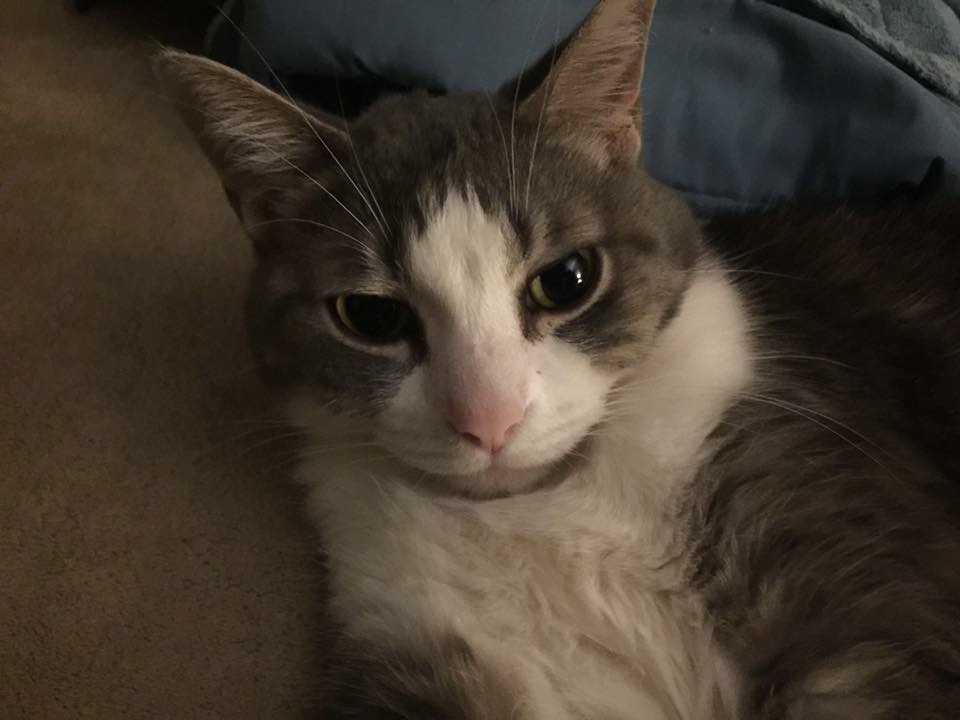
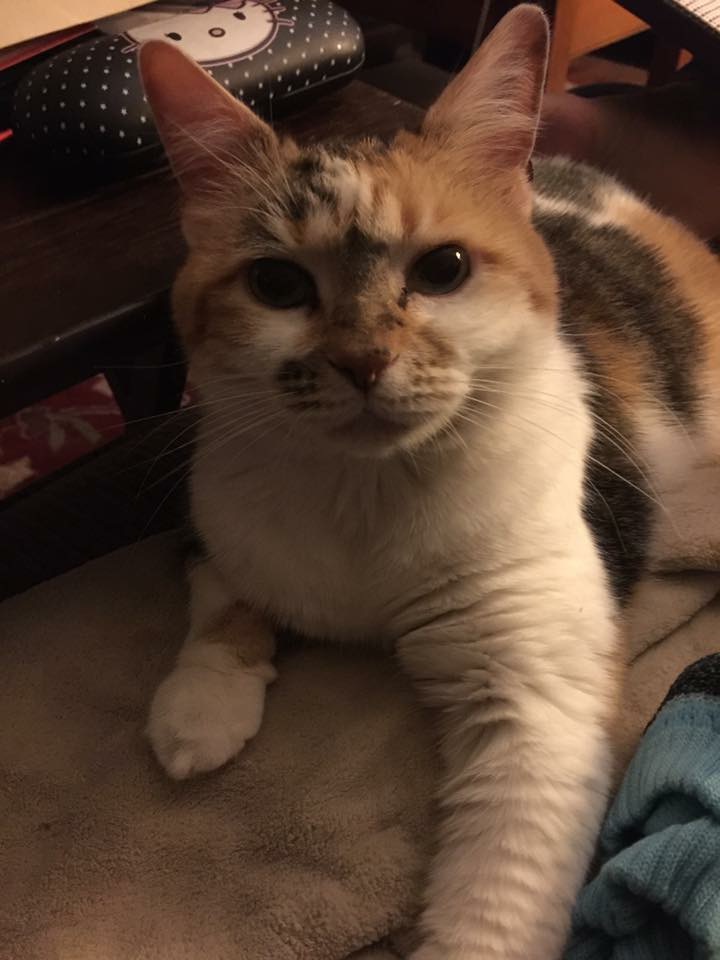
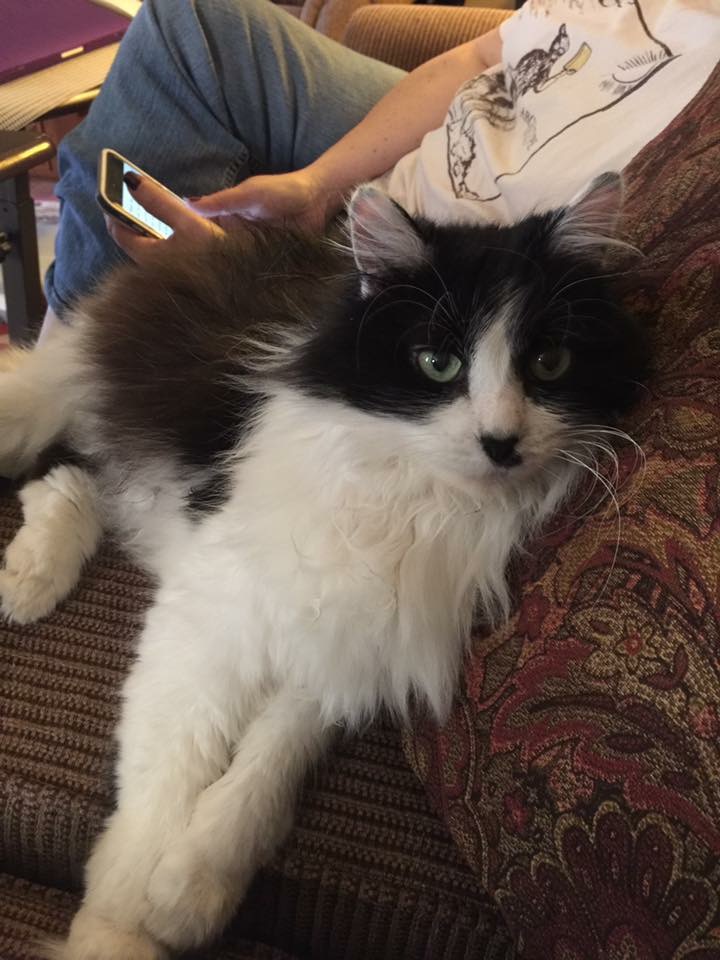
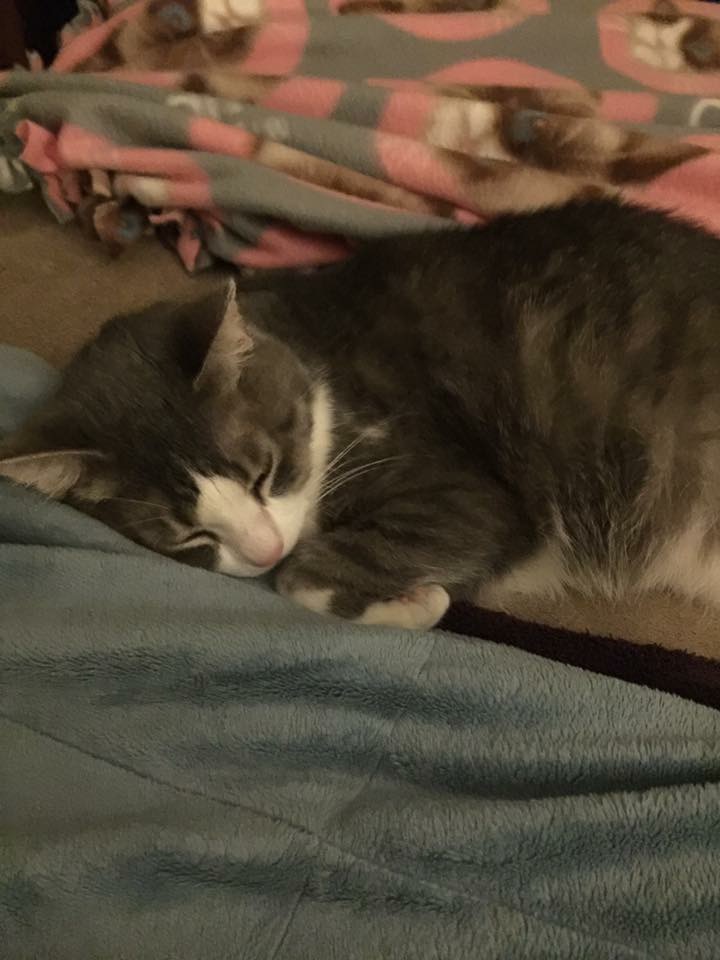
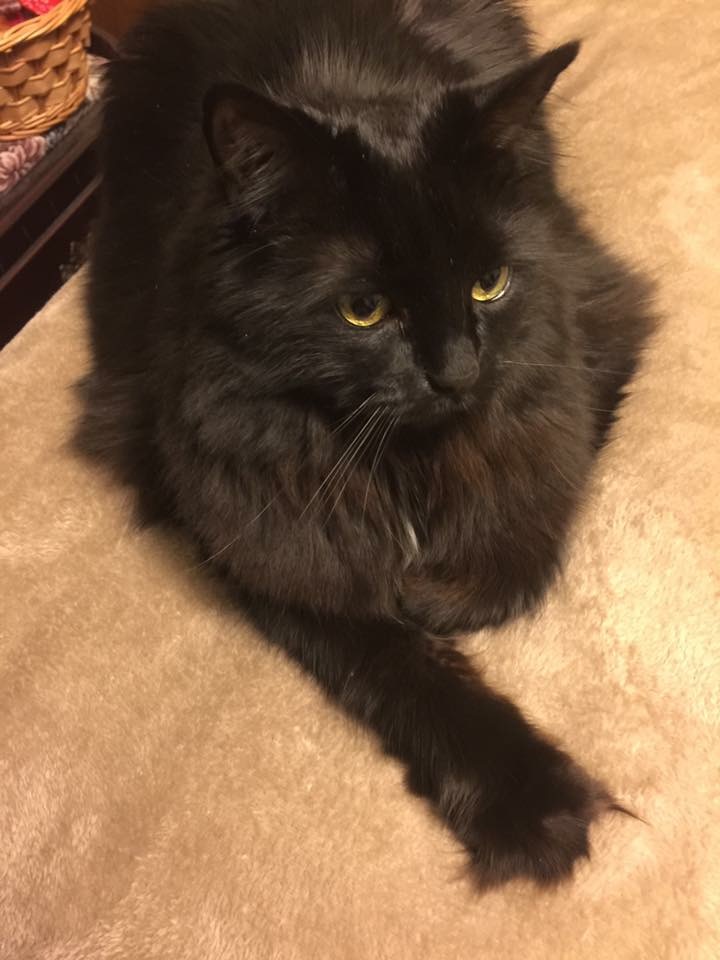
I have four cats — the luxurious Snowy (pure black; named for the irony value); the mischievious Me-Me,  a petite grey and white; the caterwauling calico Girly-Girl, and the rotund black-and-white grump Stinkerbelle. They help me write as you might imagine — when I sit in the living room at my computer desk, they interrupt me by biting my toes (Me-Me), butting my arms (Snowy), and yelling at me (Girly). Think of these as enforced work breaks.

Exhibit 1: My cats: Snowy, Me-Me, Girly-Girl, and Stinkerbelle

I thought I could involve them in the writing process — “Me-Me, could you proofread this passage for me?” (Me-Me stares at me with her huge, adorable eyes and licks my nose.) Ok, maybe not.

Many writers love cats. My favorite example was Ernest Hemingway, who loved cats so much he let them wander his estate. Due to the high number of polydactyls (extra-toed) cats on his estate, extra-toed cats became known as “Hemingway Cats”.

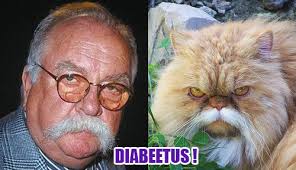
Perhaps cats inspire writers to imagine. After all, their faces — darling, elegant, curmudgeonly, bewildered — display character traits that can be used in our stories. People personify cats in cat memes — for example, Diabeetus cat (who looked like Wilford Brimley, who starred in commercials about diabetes.)

Exhibit 2: A picture of Wilford Brimley and Diabeetus cat:

Writers even sneak cats into their stories. Robin D. Owens, in her Celta science fiction, writes a collection of telepathic cats who pick their owners. (She also has other animals, but I’m ignoring that for the sake of my thesis here). Cats have become detectives, as in Lilian Jackson Braun’s The Cat Who… series. The same things that drive cat-haters up the wall — their fickleness, their curiosity, their dignity, their mischief-making — make them good characters.
Why cats and not dogs? Dogs have different characteristics — they are usually perfect companions, and we associate them with hunting and with sitting by the fireplace. We don’t associate them with something that will break open a plot or withstand being gifted with anthropomorphic traits (like Diabeetus Cat above. 
I have to go now — Girly-Girl has arrived for my enforced distraction …

World Building Example

This is an example of some world building I had to do for one of my stories. Voyageurs is set in two time periods — the Chaos of 2065, and 2015. This segment is told from the viewpoint of Ian Daiichi Akimoto, a Traveller (time traveler) of the Chaos. (I’m not claiming that my writing is a superlative example of world building or any writing; I’m just showing you how I did it).

Notice that much of the world building is done by 1) description; 2) comparison to an earlier time; 3) things that Ian takes for granted daily. This book also uses the unique vernacular of Travellers and of the daredevil subgroup known as Travellers, but they’re not present in this section.

********
I went to my room and changed out of the shorts into my gauze button-down shirt in plaid and a khaki pair of men’s knee-shorts that I had washed that month. It would be quite hot outside, as it was May. Berkeley had told me once that May used to be on the cool side. Not anymore, not in the time of the Chaos.

I strapped on my walking sandals, because even the bus-trains that had replaced cars were instruments of global warming, and I couldn’t justify the wait for the bus-train for such a short walk. I also strapped on my hydration bladder, because 110-degree weather required precious water. I put on homemade sunscreen against the brutal rays and headed out.
As I walked on 39th Street, I saw nobody on the sidewalks, but full bus-trains motored past me. I saw no cars, because cars had been outlawed in my birth year. My parents had told me that even electric cars had been outlawed because of the violent reactions that the carless had had to the few who could afford electric cars. Hundreds of people nationwide had died because of those riots.
Houses on the path down the hill looked like houses in most parts of town — sagging, crumbling piles of grey with patches of old paint and rags stuffed into cracked windows. Houses in the wealthy part of town had been built underground so they couldn’t be destroyed by mob action. As concrete took a huge amount of water to produce, I wondered how those houses could be built in a time of rationing. 

As I said, the ComfortZone sprawl included a college and many clinics once upon a time. The shells of the college, and many of the clinics, crumbled into dust. I steered clear of the college, got lost anyway, and then stood in front of the glass doors of ComfortZone. A sign on the door reminded people that their sacrifice served God and country.
A helpful greeter who thought I looked hopelessly lost steered me to the elevators with instructions to the oncology wing. Oncology’s walls, like most walls in the complex, were pasty and scuffed, with signs of peeling paint. At the reception desk, I asked how Carlie Peterson fared, and a big redheaded nurse said tersely, “I cannot give you that information under CIA,” which I interpreted to be the Citizen Information Act. I suspected that if I had been Homeland or the local Police, I would have been freely granted the information. The nurse then smiled and waited for me to ask another question, one he could safely answer.
I finally settled on, “Is Ms. Peterson taking guests today?” The nurse nodded and said, “She’s in room 324.” He escorted me down a winding series of scuffed, dirty halls.
Once in room 324, I saw a single bed swathed in white against pale mint walls that could have used painting. A gaunt woman with ice-blue eyes sat in the bed knitting. Her patchy white hair failed to hide pieces of pink scalp. She looked up and smiled at me, and I thought that she must have been quite an electrifying woman when young and healthy.
She interrupted my reverie with, “So, are you Berkeley’s pup?”
“I’m twenty-five,” I sputtered.
“I’m sixty. You’re a pup,” she countered. I would have guessed her as much older with the wrinkles and hollows in her face. She squinted at me and said, “You’re the only Traveller I’ve met who wears it in his face.” I knew she meant the comma-shaped pattern of freckles on my cheeks, the ones that transform my face from exotic to boyish. 

“You’re a Traveller, then?” I asked as I sat, sitting in the cracked beige guest chair.
“Yes. You never cease to be a Traveller just because you don’t travel anymore. The doctors marvel over my Blaschko’s lines every time they check my heartbeat. They think I’m simply a chimera.” 

“I’m supposed to ask you about two people,” I changed the subject. “Harold Martin and Wanda Smith. Were they Travellers?”
“They were. Harold may still be alive. I wouldn’t know; Harold wouldn’t contact me unless he had something to gain from me. Last year, he actually tried to influence me to change my will so that a bogus charity of his would benefit from my estate.” She looked up and smirked. “He didn’t succeed.”
“How did you catch him at it?” I asked, curious.
“When he tried to kill me after I had signed the document, of course,” she shrugged.
“How did you get out of that?” I leaned forward.
“Rolled out of his way, grabbed the will, and transported to 2070 to tear it up.”
“Why 2070?” I asked.
“Because I figured that was five years after I’d die, so I wouldn’t cross myself. Things get strange when you cross yourself.” Such as they had with my own parents, who died of a mistake they knew better than to make.
Apparently, Ms. Peterson suspected she would die this year. Given the gauntness of her face and body, I suspected she was correct. She didn’t seem to be perturbed.
“Ian, you haven’t asked me about Wanda.”
“What about Wanda?”
“She died in 2017. She crossed herself. I always suspected that there was something more to that. She had too much skill for such a simple mistake.
“Is this why Berkeley sent me here?” I asked her.
“Yes, we thought that if we set you on this mystery, you might find something. You do see the mystery — Travellers make mistakes they knew better than to make, and they die. Setting you in motion might pay off in other ways. I’m not sure.” She set down her knitting and beckoned me over. She took my hand in hers and said, “I’m glad to see you again.” Again?
As I trudged through the walk home, the sweat evaporating as it formed, I thought about Carlie Peterson’s belief that she had remembered me. I knew all about false memories, which could be add
ed through suggestion, through doctored pictures, etc. Or she might have remembered someone who looked like me many years ago. I had never seen her before, however. 

p.p1 {margin: 0.0px 0.0px 0.0px 0.0px; text-indent: 18.0px; font: 12.0px ‘Times New Roman’} span.s1 {font: 8.0px ‘Times New Roman’}

I glanced up. A dragonfly hovered above me, which seemed impossible after years of drought. Travellers nicknamed them ‘time flies’ from a children’s story. My mother had read the story to me when she was still alive.
********

For you Kansas Citians — ComfortZone used to be called St. Luke’s. There are other sections where Country Club Plaza gets described as a burned-out shell where desperately deprived people live, and the library has been razed to build a garage for police riot vehicles (think MREPs and the like). 

World Building

Hi, I’m back! (Waving at everyone!) Now for the thought of the day:

Writers, SF/Fantasy writers in particular, strive to create a realistic and internally consistent space for their story to take place. (I would argue that all writers do this, even if the space they’re creating is a bar like in the TV story Cheers.)

What makes a convincing world? A world builder works with the following physical :

  1. Geography of the world. Discworld, Terry Pratchett’s long-running comic fantasy series, created a world that was flat, built on the back of a turtle … (avid Pratchett fans can recite the rest of that description by heart. I have not yet had my coffee.) Making a map helps.
  2. Natural resources. The presence or absence of natural resources will drive the characters’ behavior. This item fits with and expands #1. Darkover’s mountains, marginal land and short growing season mean that greens can only be harvested in a limited season except when grown in a greenhouse, and dried fruits and vegetables provide much of the year’s diet.
  3. Level of technology — These will depend on the two items above. Without bulldozers, paved streets take a lot of manpower, often convict or slave. Houses will likely be wood-frame with wood preparation done by skilled artisans (as with the Amish). On a desert island, a house may be built from items washed ashore (Think Cast Away with Tom Hanks). 

Notice how each of the items above feed into more practical things like infrastructure, food, and habitations. You can work on the top-down, or the bottom up, but I prefer working from the top (“what is”) to the bottom (the consequences)

But we’re not done: There are social factors to be considered, too:
  1. Physical form of race(s). In science fiction and fantasy, these could be humanoid or non-humanoid.
  2. History — this may influence holidays, rituals, religion and spirituality — but they’re not the only influences.
  3. Religion and spirituality. In addition to history, religion and spirituality may be influenced by geography, weather and climate, natural resources, and even level of technology.
  4. Culture — influenced by all of the above and more, culture includes arts and crafts, hidden rules, etiquette, music, taboos, and others. 
  5. Language — this may be optional, as at most you’ll include a few words or a short conversation. It’s very hard to make up a language because there’s a lot of structure in language. Examples of well-constructed but minimal languages are Tolkien’s languages (Sindarin, Quenya, Black Speech, etc.) and Klingon.
But the most important rule is:
Internal consistency. All of these items need to make sense together. A planet that has never seen humans probably won’t have Christianity (or the same Christianity) as a planet colonized by space travel with Christians on board. If there is no history of war on the planet, weapons will only be used for hunting and home chores. 
As I said at the beginning, you may be world-building without going to another world in your book. If you have a special minority on earth (like my time-travelers in Voyageurs), they’ll have their own slang, unwritten rules, etc. 
Don’t let world building scare you — it’s a wonderful opportunity to use both sides of your brain at once!

The Dance

I have a friend I’ve never met. I suspect he has been involved in creative/artistic pursuits — acting, modeling, beatboxing, probably singing — since he was born. (If you’re reading this, you know who you are). I suspect he grew up in a family that supported creativity. One of the things I’ve observed about him is how easily he can gather support to help him develop his craft further, to counter the annoying people who would prefer he do something practical.

Watching him and his friend jam on Facebook night before last, I realized that I felt like I literally sat in that jam session, even though I didn’t speak a word of Polish. It wasn’t just watching my friend twiddle with electronic equipment while his friend strummed; it wasn’t just hearing how the sound coalesced into a mood, into a journey — although that was part of it. It was about feeling the joy that emanated from those two musicians, and returning the joy back.

That feeling is what creatives live for — creating for oneself is okay, but creating for community far surpasses that.

This symbiotic relationship of artist and audience has existed since the beginning of time. The Balinese gamelan, an orchestra of bells and gongs, has cultural rules as to how the orchestra is set up — in the village square, on the ground, at the same level as the audience. This reflects that relationship between musician and audience, and the belief that creativity doesn’t happen without audience involvement.

Writers have some disadvantage in finding that support system. We write secretively, and when we tell our friends about what we’re writing, it comes off as “I’m writing — uhh, THINGIE…” Most locales have writers’ groups, but a newcomer walks into the group’s already established relationships and often feels lost in the outskirts. Writers depend on getting published to be heard, and publishing a book is nothing like standing in the town square and playing. Some authors excel at Twitter exchanges, some blogs (I would recommend John Scalzi). Some, like me, are just beginning to explore this.

The exchange between creator and audience, at its best, feels like a dance. The creator invites us to the dance, making us feel welcome to shed a little of our stiffness. Then we dance, not always in a physical sense, but we feel a part of what’s being created.  It feels a little like this —

I shed my clothes to dance in light
again, spinning wildly into sky —
my hand reaches out to touch your face
and touches heat, and touches light —
almost close enough to touch,
almost close enough to feel —
my hand reaches out to touch your face —
I touch your hand, and we are close enough.

Thanks for listening to me. Let’s dance.