Where did my romantic self go?


I’m still struggling with Jeanne and Josh and the whole concept of a romance.


I don’t know why. I know Jeanne and Josh fall in love and get married, because they’re married in a later book. I know they end up tumbling in bed eventually, and then Jeanne gets freaked out about the mystical things they’re doing and breaks up with him. Then they get back together and perform a miracle. I know this. 

But I can’t make it coherent. Furthermore, I am having trouble writing the romantic subtext. When do they start getting affectionate with each other? How do they tumble each other into bed? 

I must be getting old, because I used to be able to write this, no problem. But now I’m having trouble with mechanics. Not “tab a, slot b” stuff, but “How does this progress? How do people actually communicate about the sex?” I doubt it’s as easy as “Let’s have sex”, although I believe that’s how my husband and I did it. This is a romance novel (theoretically) and I want to make it romantic in an understated and modern manner. 

Maybe I need to get a better feel for Josh and Jeanne again. I’ve devoted this morning to trying to write a romantic scene with the two.

Wish me luck.


Submitting my Smaller Works


I got another acceptance yesterday.


A small press called Flying Ketchup Press has accepted my short story “Inner Child” for their issue entitled “Time, Space & Robot Dogs” to be published in 2021.  “Inner Child” is about a therapy session gone bizarrely, humorously wrong. 

This is the second writing I have had accepted in the last two weeks, which leaves me optimistic. The first was a poem about COVID-19 that I have linked to in an earlier page. I haven’t had so much luck with the novels, and I’m hoping the good fortune rubs off on them. 

What is my advice to anyone with short stories, poems, and the like who want to get published? 
  • Get yourself a copy of Submittable or find the Submittable website
  • Set a budget for how much in readers’ fees you want to spend a month (most submissions have readers’ fees to help defray the cost of reading, publishing, etc.
  • Find some calls for submissions that fit your writing
  • Check the calls out before submitting!
    • Check to see if they have a web presence
    • Look at their mission statement
  • Make yourself a strong cover letter. Here is an example of how to do this
  • Submit using the forms in Submittable
Many times, when I get a rejection, it comes with a critique, which to me is a gift. Anything to help me understand how I can improve my work will make me stronger as a writer. I just got a rejection the other day where two of my three poems would benefit from editing, not even that much editing. And out they will go again. 


Fear of Consummation


I got a poem about COVID-19 published HERE.


I’ve noticed something about my poetry. I do best when given a topic, apparently, because my topical poetry seems more likely to be published. I haven’t had luck with my other poems, and I think it’s because I don’t tend to finish them.

I’m not sure why. Maybe because I’m writing out of emotions and not out of storytelling. Maybe I’m afraid to finish those poems because they’re emotional. (Most of them, it seems, are out of observing someone I’m attracted to, fantasy, etc. Like maybe I’m scared to go out the other end, which is about fulfillment or heartbreak.

This is important, because I’m rewriting this fantasy/romance novel. Jeanne and Josh are going to have to fall in love, they’re going to have to come close and fall back, make love and become estranged. I’m going to have to be less constrained. 

I’m going to have to lose some of this reserve, this hiding how I really experience feeling. You know, at 56, I thought I’d have figured it out by now.

An Excerpt from the Rewrite of Gaia’s Hands


I’m struggling to get back into Gaia’s Hands. I have a rough outline, but no motivation because I’m making a timeline and I’m bad at dates. But here’s the first scene:

*********


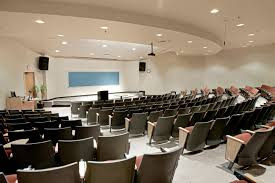
Josh Young crept into the lecture hall with its white walls and rows of chairs that had seen better days. He slipped into a seat toward the front, where few people sat, knowing his passage would go unnoticed. Short, slight men, he considered, tended to be overlooked. That could be a good thing, because his purpose was to study the speaker, Dr. Jeanne Beaumont, associate professor of plant sciences and permaculture expert at the University.

Josh had first encountered Jeanne on the podcast, Green Things and Felicitations, sponsored by the University’s Media Relations, where she talked about home gardening techniques and developed enough of a following to attract the attention of a Chicago tv station that invited her on their morning show a few times.

Jeanne stood near the podium, a Rubenesque woman with greying chestnut hair pulled back in a ponytail. In real life, Josh realized, she wore the same smile, warm and amused. He would love that smile turned in his direction. But he was twenty-odd years younger, not much older than her students, many of them sitting in this lecture for extra credit. She would probably think him cute, and he bristled at being dismissed as cute.
 
Jeanne stepped up to the podium. Her contralto voice carried to the back of the room: “I know this is not a classroom lecture, but I’m used to people talking back to me, and half the people here are my students anyhow, so I’m going to ask questions. I hope you ask them as well.” Josh chuckled, amused.

“This lecture, as you know,” Jeanne began, “involves permaculture, or the use of perennial food plants rather than annual food crops. It’s a different mindset, because the idea is to plant these perennial food plants together. Permaculture depends on mutual relationships among plants —“ Jeanne gestured with interlocking hands; her voice reached to the back without amplification. Josh wondered how she could do that.

“What kinds of relationships do plants have? One-night stands?” a wag inquired. White-blond hair topped his smug expression.

“I can get back to you later about plant reproduction if you give me your name and email,” Jeanne smiled, then continued. “And CC your prof because I think he’d be interested in hearing about this.” Bravo! Josh thought, stifling a laugh. 

“Permaculture scientists and developers create guilds of plants based on mutualistic relationships in the wild. First off, not all plants get along together. Does anyone know what garlic mustard is?” Jeanne gestured to a woman at the front of the class who sported a head full of red and black braids. 

“You’re thinking about the plant with the white cross-shaped flowers, right?” the woman inquired.

Jeanne stepped to the podium for a moment; a large picture of a white-flowered plant with triangular, jagged leaves popped up on the screen. “This picture does no justice to the smell.” A few people laughed.“Yes. That’s how you can tell a mustard, by the way, which is why the mustard family is called Cruciferae, Latin for ‘cross’.”
 
“What do you see growing near it?” Jeanne asked, smiling.

A pause, then: “You don’t see things growing near it. It just takes over.”

“Exactly,” Jeanne continued. “Garlic mustard is negatively allelopathic. It doesn’t attack other plants directly. It evolved to reduce the amount of mycorrhizal fungi in the soil.” Jeanne clicked again, and the picture showed roots entwined with a fuzzy mold. “Those mycorrhizal fungi share a symbiotic relationship with plants to help them utilize soil nutrients. What does symbiotic mean?”

“Mutually beneficial relationship.” Josh looked back at a young man with wispy blond hair and glasses. 

“Yes and no. Not all symbiosis is mutually beneficial — for example, dodder, a parasitical plant, is symbiotic with its host, which it eventually kills.  It’s a parasite. The relationship between mycorrhizae and plant roots benefit both the fungus and the plant so it is a type of symbiosis we call mutualism. Some edible plants like to crawl up trees – for example, climbing spinach, vine asparagus, hardy kiwi, thicket bean, and even kudzu. Some of those climbers, like thicket bean or kudzu, fix nitrogen to the soil with the help of beneficial bacteria.”

Jeanne spoke about her permaculture gardens in terms of their relationships, almost as if they were a community, and Josh guessed that to Jeanne, they were. Had he ever looked at a group of plants as a community? He didn’t think so. 

“Some edible groundcover plants live in the shade from the tree. They provide natural weed control. Understory bushes grow in dappled shade and give us berries. Herbs attract insects that pollinate and that eat destructive bugs. Finish that off with root crops that keep the soil from compacting and perennial leaf crops that provide lots of greens. That is a permaculture guild, from the rhizobium bacteria to the top of the fruit tree.”

“So all these plants have to be edible?” a tiny, dark-haired woman in all black garb near him asked. 

“That’s the point. We eat stuff at the grocery store that’s mass farmed – farmers pump artificial fertilizer and pesticides into the field, biologists breed plants for their shipping capacity, and we end up with a tomato that tastes like a third-grader’s art project.

“This process does not sustain the ecological balance – the soil burns out from lack of soil-building decayed plant material called humus, and artificial chemicals replace the natural minerals from humus. The pesticides kill the natural predators for harmful insects and the pollinators. The fruits and vegetables become less nutritious and contaminated. And now we’re finding some of these chemicals cause cancer.

“If you talk about permaculture without the science, people think you’re a crackpot. Think about it this way – the current system works to get a lot of people fed as efficiently as possible. Its advantages are visible, and its disadvantages are invisible. You can’t preach a system that isn’t proven to the average person. You can’t change people’s habits unless you make the change easy. Knowing that, my mission isn’t to talk, but to breed plants and design permaculture guilds that are high yielding, perennial, and tasty to consumers. Like a grocery store in every backyard.”

“That’s why you needed to improve the size of the Jeannie Beans.” The grey-haired man who spoke sat toward the middle of the room. 

“Honestly. Jeannie Beans?” Jeanne asked with comical dismay, as people laughed. “For those of you who don’t get the joke, I have a plant patent for an improved thicket bean that bears larger beans that are easier to harvest. The patent name is ‘JB94’ but someone in Media Relations nicknamed it for me.” She shrugged dramatically, and Josh chuckled. “But yes, that’s why. Even though permaculture reduces the tillage of soil and improves its health dramatically, it needs to be marketable as well as beneficial. People don’t drastically change their habits just because it’s good for them.”

When the lecture ended, a small group of people, mostly older, clustered at the front of the room to talk to Jeanne. Josh considered joining them for a second, hoping to greet Jeanne, but didn’t want to look like what he actually was: a puppydog. He felt the pull as he looked over his shoulder one more time, then walked away, dissatisfied.

At the front of the lecture hall, Jeanne looked over from her throng of well-wishers for a moment, thinking she had missed something. She found herself looking at a young man who looked over his shoulder, shrugged expressively, then walked away. He wore his frustration in his graceful posture, moving like a dancer. She wished he had stayed to talk for even a moment.

Later, Jeanne sat in her living room, an inviting place in pale gold and burgundy. In her favorite chair, she reviewed the presentation she had just given. It had worked out well, and people had asked questions, which surprised her. Pleased, she tucked the memories in the back of her mind – or tried to. Because there was that one man, graceful, with black hair falling into his eyes. The one who had looked back at her.

He looked familiar – she had seen him around town, at the café she frequented. She recalled him – one of the slam poets, with dark eyes and ivory skin, and the straight black hair he had to push back now and again. A slender build, a weakness of hers, especially with that grace of his.

Jeanne wished she had gotten to talk with him. She pushed that thought away, because she was old enough to be his mother.

PitMad


Hope, I hear, springs eternal.


I have prepared my pitches for #PitMad today. #PitMad, for those of you who don’t know, is an opportunity for un-agented writers (like me) to tantalize agents with 280-character pitches for the books resting uneasily on our computers.

I have had no luck so far on #PitMad. I think part of the problem is that I’m not easily sorted into a niche. In PitMad parlance, I write paranormal, but I don’t write about vampires or werewolves, just immortals. In regular querying, Query Tracker doesn’t even have a category for Paranormal. Maybe Contemporary Fantasy, because I don’t write about medieval chain mail battles with dragons. 

I’m feeling skeptical about PitMad as usual, but if I don’t try, I’ll never know if it works.

******
My pitches:

Anthropologist Anna Schmidt must chase the origins of a folk legend in the aftermath of the United States’ collapse to keep her sanity; instead, she finds the truth behind her missing childhood – and her role in stopping a genocide. #A #F #P #PitMad

Grace Silverstein, an eighteen-year-old viola prodigy, hides her secret talent, even from herself, until she and her friends are sought by a shadowy consortium who would destroy the United Nations and hundreds of lives with it. #P #F #A #PitMad

Dreaming of the Pandemic


I think this social distancing thing is getting to me.


I dreamed last night that I was at my alma mater, University of Illinois, and I was teaching there. And I had forgotten my mask and was wandering across campus — out of Noyes Lab into the Union, looking for something to drink. Nobody was wearing masks or social distancing. People sat on the Quad together, having picnics and playing Frisbee. In the Union, I stood in line with a bunch of people, and the line grew so long they shut the door behind me. 

Back into the halls of the Union (and, alas, this was the new Union, the one that no longer had the beautiful hotel lobby in the front entrance), I run into a tall, bulky man with long red hair and a beard, dressed in Renaissance garb, and we give each other a big hug. I gave another man a hug — he was more my height, skinny and blond. 

As I walked out to the Quad, I knew I would have to explain to Richard that I had broken social distancing big time. I couldn’t help it, I told myself, because I had walked out of my house into this new bacchanalia, where we lived life in abandon, waiting for the contagion to take us. 

When I woke up, I had a little bit of a sore throat, and I felt guilty, thinking I had caught the virus, until I realized that my social freedom was just a dream.

A Call to Action: Beyond Hatred


It occurs to me that most white people don’t identify with their latent racist thoughts and assumptions because they don’t identify with the word “hate”. For the middle-class white person, “hate” is too strong a word. 


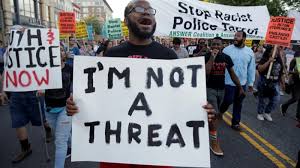
Instead, what we experience is labeled “distrust”: A black person in a white neighborhood must be up to no good. Two black people, and they’re definitely up to no good. A black person knocking on the porch door — a danger. A group of black children — disruptive. A black person in power — must have a racial agenda. A black person reaching for his drivers’ license — a threat. A group of black people congregating in the street — a riot. A group of black people arming themselves and standing in front of the state capital — an insurrection. Distrust may be more dangerous than hatred here, because it’s easier to justify to ourselves.


We have to face ourselves and question the assumptions we make every day. We have to question the reflexive fear of the Other. Would we react that way to a white person in a similar interaction?


Our distrust is digging people-sized holes in the fabric of society and nullifying our fellow humans in this world. It feeds into the hatred of the people we’re comfortable with calling racist. 


We must address our daily mistrust. Humanity is at stake.

Writing Exercise: Welcome back, Josh

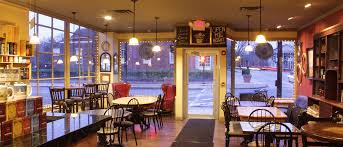
This is the Open Door Coffee Company in Hudson, Ohio. I haven’t been there yet.


I sit at the cafe with my cup of coffee, waiting for something. I’m not sure what — inspiration, perhaps.


Inspiration arrived in the form of a man, a young man who strode up to the table with no wasted effort. He was slender, almost slight. His dark brown, almost black, hair just touched his collar, and his face was boyish, with wide, almond-shaped eyes. He wore a quirked smile.

“You’re Josh,” I said as he sat down across from me. “I owe you an apology.”

“What for?” His face fell into serious, studious lines.

“I’m sorry that I didn’t let you grow up.” It was true — I chose him for the story I had written at a too young age, so he couldn’t show his true potential —

“That’s okay,” he noted. “I’m a writer too. You just got trapped inside the source material.”

“You weren’t supposed to know about the source material,” I growled. A dream — a racy dream — an embarrassing dream that I had written about to exorcise.

“Nothing to be ashamed of,” Josh countered. “We write from dreams. Then we revise. Look on the bright side — you can do a lot more with me now.”

“Josh!” I hissed. “Don’t you even — “

That quirky smile spread across his face.


Struggling for Inspiration


I think I’m getting used to quarantine life.


This feels normal now, spending most of my time indoors with an occasional sojourn on the porch. Spending my days working at the computer at home doing my class work, or reviewing my students’ work.

The only problem is, I’m really struggling with my writing.

When I need to refresh my mind to write, I usually go to a coffee shop. My choice here in Maryville is the Board Game Cafe. Like much of Maryville, it’s closed during the COVID-19 holding time. 

Drinking coffee at home is not the same. Even at my coziest, drinking coffee and listening to classical music, I don’t feel the inspiration. There are no interactions that catch in my ear, no moods except my own. So I’m struggling for inspiration.