Interrogating a dream and finding a poem (Literary Work)


Ethereal boy,
you would kill me with a feather
fine-sharpened to a point,
intended for my heart,
and you would call it art.


Dreams as Fertile Fields of Meaning
This poem, like many of my writings, came from a dream. In the dream, an artist acquaintance from overseas comes to visit me, spending only a brief time with me in O’Hare airport. Then he wanders off. I later read an interview with him in a snippet of newspaper that says that he planned to approach me for a film, which explained the brief interlude. It also said he considered, for the same movie, throwing a feather, quill sharpened into a dart, at my back, and if it killed me, it would be art.

Dreams are symbolic, so I woke up doubting that said acquaintance had any desire to kill me, nor could he kill me with a quill pen. As that was what he described the murder weapon as.

Gestalt Dream Analysis
Because I found the dream poetically compelling, I interrogated it using Gestalt methods, which basically instruct the dreamer to tell the story from the viewpoint of all the major people and objects: 

  • Me: You know my part.
  • The artist: I play with images, I play with image. I play this scene with you, and I will not tell you why. I could stab you with this feather; fear not, it’s all illusion.
  • The feather: I am a pen; from me ideas flow. I am an arrow; Cupid does not miss. 
  • The paper: There are no secrets. I announce success
  • The airport: I am the place where people cross, where people greet and part, the resting place between journeys.
What Does It Mean?
This dream is too complex to define linearly, so maybe I can put in place themes that don’t necessarily contradict each other:
  • The journey: my journey of being a writer
  • The artist: my inspiration/an established artist/personification of mischief/Cupid
  • Cupid: ludus (crush energy) as vehicle for inspiration
  • Brief interlude: a surprise
  • The newspaper: He’s arrived; I have not. Also, an implication that I have importance, but as a abstract concept
  • Feather pen as weapon: Cupid’s arrow, creativity, ludicrousness (see ludus); vague sexual reference but lazily so

In conclusion:
That was fun! If I had to guess, I’d say this poem is about the nature of inspiration and our muses. Ludus, sex, death are all tools of the writer, and of the artist. 

Have you ever used a dream as inspiration for one of your works? Let me know in the comments or at lleachie@gmail.com

An excerpt from Whose Hearts are Mountains (Literary work)

I decided to sleep for the night in a rest stop just outside of Adair, in the former state of Iowa; a place where a giant white monolith stood outside the entrance to an old rest stop. I could see very little; my headlights didn’t cut through the deep night enough.  

I should have known someone else would find the rest stop as a shelter. I spied two such individuals at the Adair rest stop, revealed by the flicker of my headlights — a dark man with long greying hair and a wizard’s beard, and a paler man with hair tucked back in a rasta cap. The two sat on the ground in front of the door. Behind them, I noted the expansive blond brick building with its glass panels in the front, and a dull glow in a back room. I didn’t doubt that the windows would be revealed to be damaged and dusty in the morning.

I considered that, in the post-wars era, the men sitting by the entrance were not truly homeless. They landed on their feet, founded a camp, and called it home.

I pulled up to where they sat and rolled down the window. “May I stay here for the night? I can sleep in my truck.”

“Sure, ma’am. Martha should be back shortly, so you don’t feel scared with just us two men.” I didn’t expect such a considerate offer on the road.

“No, that’s okay, I’ll pull my truck over here — “

“You ain’t sleeping in that truck, are you?” The unkempt white man, who wore socks as gloves on his hands, shook his fist at me. He spoke in an oddly flat voice, and he struggled with eye contact.

“Well, actually, yes, I was going to.” I could recline the seat back and stretch out a little — 

“No, we got a nice warm building. You’re staying,” the black man decided. “Martha will be back soon to be your chaperone. Would be nice if you gave us something to help with supper. ”

I didn’t trust him. I couldn’t. Was this another trap? I searched my mind for something to forestall my spending the night with them. Would they rob me? Assault me? “I have nothing to trade — “

The black man chuckled. “You got stories. Might as well get to know you better,” he said, extending his hand. “I’m George.”

“And I’m Pagan,” the other man said, not offering his hand.

I looked them over in the headlights’ glow. They looked harmless. Famous last words, I realized. On the other hand, I would probably have a good chance against them with my gold-filled backpack, which probably weighed 20 or 30 pounds.  And I was very hungry.


Rejections and Cognitive Distortions

This is probably a rerun from way back when, but:

Sometimes I wonder why I put my books out there.


Ask any writer after a rejection, and you’ll probably hear the same misgivings. I myself been rejected by so many agents that I thought I’d get over this. I haven’t. 

I think the two things that keep me from quitting are: 1) my short memory, and 2) noting the negatives — cognitive distortions — are not real.


Cognitive distortions
Cognitive distortions are statements we make to ourselves to define our reality — but in actuality just make us miserable. (Positive Psychology.com. 2019)

For example, I just went through an online pitch contest where writers try to get attention from agents about their books. I did not succeed. So I combined this with all the rejections I’ve gotten and started talking to myself like this:
“I’m a bad writer.”
“Nobody likes my writing.”
“I’ll never get published.”

These are all examples of cognitive distortions. 
“I’m a bad writer.” — All or nothing thinking. “I’m either perfect or bad.” Also labeling.
“Nobody likes my writing.” — Mind reading. How do I know this?
“I’ll never get published.” — Fortune-telling. If I can predict the future, can’t I win the lottery? 

In reality, I can’t predict the future, Nor can I be the worst writer ever if I got through college. I can name people who have liked my writing. These realizations are known as contradictions.

How to start:
It helps to write this down on paper. Here are the steps:
1) Write down the thoughts that are bothering you
2) Identify the cognitive distortions. If  you look for “cognitive distortions” on Google, you will find many sources. My favorite resource is here.
3) Come up with an alternative thought: 
“I’m a bad writer.” — “There are people better and worse than me”
“Nobody likes my writing.” — “I have had short fiction and poetry published”
“I’ll never get published.” — “Never is a long time; and if you never get published, it might have nothing to do with you”
4) The important question: what is my next action?
When your mind is clear, you can determine your next move to live your life most authentically.

What now?
Get the list of cognitive resources and the PDF journaling sheets at the site below. Do this when you’re feeling negative about life. Keep it up. After a while, you’ll only need to do this as a reminder.


Positive Psychology.com.(2019). Cognitive distortions: When your brain lies to you (+ PDF Worksheets). Available:

Tweetdeck vs Hootsuite — a writing blogger’s take (Social Media)

Social Content Managers
I don’t have the money to have an assistant handling my social media. (And, unless I become the next JK Rowling, I won’t). So I have to depend on social content manager web pages. I use two social content managers — Hootsuite and Tweetdeck. Here’s what you can expect for each and why both can be useful:


Hootsuite: My everyday workhorse
I will be talking about the free version of Hootsuite, as I can’t afford (nor do I need) the full versions, which runs $29/month for the professional (individual) account. The free version does enough for most uses. You can follow your feeds on three different social media sites at once. More importantly, it functions as a launcher for multiple social media sites — three different social media for the free version. I have my Hootsuite working with my Facebook Pages, Twitter, and Instagram, and can send the same post through one, two, or all three sites at once.  Free Hootsuite can be found here.


However, Hootsuite allows for a limited number of scheduled tweets, four in total, in their free version. Sometimes, if there’s a #PitMad or a  #IWSGPit (sessions for pitching a novel on Twitter), I need 12 pitches, one for each hour the contest runs. This is why I turn to Tweetdeck.


TweetDeck: For Targeted Twitter Time
Tweetdeck does more functions than free Hootsuite, but only for Twitter. TweetDeck is free, which makes it tempting if you’re a Twitter-only social media user. 

TweetDeck can follow multiple functions of Twitter at once — home, notifications, messages, trending, and submitted tweets. I think the beauty in TweetDeck is scheduled tweets. As I said above, in the case of a pitch contest, one needs to be posting once an hour. That’s twelve hours with two books I’m pitching, which is 24 posts. Although one has to prepare each post seperately, TweetDeck handled all of them without balking. Free TweetDeck can be found here.

In Conclusion,
Hootsuite is my everyday social media companion. Its free version does everything I need on a given day. But on those special days where I need to tweet a lot throughout the day, there’s TweetDeck. Does anyone use either or both of these? Tell me why at lleachie@gmail.com.

A Moment of Gratitude (Personal Development)


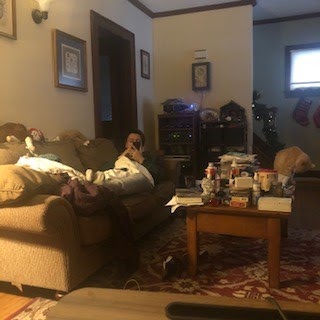
This is a picture of my husband.


Something happened to me yesterday that I couldn’t imagine ever happening — a couple of friends offered to beta-read my latest novel!

This is big, for reasons most writers will recognize. Our  own families generally don’t read our books, much less our friends.  The fact that my friends are actually beta-reading my works amazes me,

I don’t worry about these friends being unable to critique fairly, because they know I need this to grow in my writing. And one’s a Creative Writing grad, one a professor, another a grad in (I believe) psychology. A good mix. 

So pardon me if my feet don’t touch the ground today!

Stretch Goals (Personal development)


A Reminder: All Goals Should Be Smart

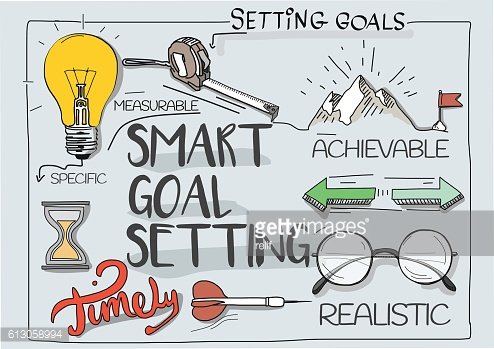
I know I’ve talked about SMART goals — all our goals should be Specific, Measurable, Action oriented, Realistic, and Time-bound. It’s good to write these down to have something to refer to and direct your energy.


Stretch Goals!
But what if we fulfill those goals? We need new goals, and we want them to continue the progress of the met goals. Stretch goals are these next level of goals. They should be as we’re nearing success in the first tier of goals, so we can build them using the momentum we currently have.

Examples:
  • I am nearing 1000 followers on Twitter. Now I would like to see 2k. I now plan I will acquire 2000 followers by June 1 through a combination of getting my name out there by making and following and liking posts, and following others. 
  • I have just finished the developmental edit stage of my WIP. My next stage is to find beta readers, then collect their comments and edit some more. (This goal has not reached SMART goal status; notice I haven’t developed it enough to make it SMART)
What now?
Look at your goals. What’s the next step? Start plotting that! 
If you want help with that or SMART goals, drop me an email at lleachie@gmail.com.

Ode to Developmental Edits (Writing Tools)

I just finished making corrections from the developmental edit of Whose Hearts are Mountains, so I’ve been thinking of all the reasons I’m glad someone told me to find a developmental editor:


Because “good enough” is not good enough
If you think about it, a developmental edit is a brutal thing to put your book and your psyche to. You pay good money (averaging about $800-1200 from my research) to have someone tear apart the novel you’ve spent months or years bringing into existence. You have to read over all those comments and it’s frustrating.

Still, I do it and I swear by it. Why? Because my “good enough” isn’t good enough for publishing. Few people’s are, even after second or third draft. Writers need a pair of fresh eyes; furthermore, we need someone with literary skills to examine our word choice, to make sure our meaning comes out in our words.

Why can’t I just proofread extra good?
First of all, if you didn’t notice the grammatical error in the previous sentence, you probably need skilled help. More importantly, proofreading is not the same as developmental editing. Proofreading picks up grammatical and punctuation errors,and the person who does this is a proofreader or line editor. Developmental editing gets into the conveyance of your ideas itself — whether a sentence or paragraph is clear, whether your passage’s moods make sense, whether your characters are portrayed realistically and readably.

Why can’t I just use beta readers?
Beta readers are very good at letting you know what the average reader will think or do. Some beta readers — the ones with some creative writing skills — might pick up on some unclear sentences or sentences that don’t sparkle.  But they’re reading for enjoyment, not for discernment, and usually not in a higher literary sense.

How to find a developmental editor

  • Ask around. If you have writing friends, they have likely dealt with developmental editors, and have had good and bad experiences. If your sample of writing friends is small, ask on Twitter, a writing forum, or NaNoWriMo. Ask for their feedback in direct message, because they’re more likely to be honest that way. Don’t be surprised if a couple developmental editors find you that way.
  • Comparison shop. Ask the developmental editors questions. Rates, of course, are important. Turnaround time is important.
  • Understand their style — you can have them read and respond to a short excerpt of your writing. A developmental editor should push you but be constructive in their criticism.
  • A very important point — make sure you sign a contract before proceeding. Read it well before signing so you understand what your rights are. 
A developmental editor is someone you should consider having on your team. If you can’t afford one, at least find a beta reader who has a lot of literary skills. The idea is to create the most compelling version of your hard work.

If any readers use developmental editors, share your stories with me via email: lleachie@gmail.com

Saturday Morning at my House (Creative Essay)

Mind the clutter on the coffee table. 


Welcome to my Saturday morning.


It’s 8 o’clock AM, and my husband and I won’t go out today because of the ice and sleet from yesterday and the potential snow today. It’s a good excuse, anyhow.

We lounge in the living room under low light. The fake fireplace and a piney Woodwick candle create ambience. Tony Bennett sings “Darn that dream” and we chuckle at the song’s quaint language. Chucky sits on the edge of the cluttered coffee table, managing to knock only one thing down.

The coffee today is from Burundi, home roasted and ground, and I can taste notes of lemon, cooked apples, and spice. Tony Bennett has segued into a mellow jazz tune. 

I’m in my writing corner on the loveseat typing this. When I’m done I will go back to my developmental edits, which are going smoother than I thought. Today is an enforced retreat day, for which I’m grateful.

Twitter as #writingcommunity (Personal development, Social Media for Writers)

Oh, that’s how you do Twitter!
I just wanted to announce that I’ve figured out Twitter. I even pinned a tweet!


#writingcommunity is my Favorite Place
I have fallen in love with Twitter, especially the #writingcommunity.

Why have I fallen in love with #writingcommunity?
#writingcommunity Twitter is different than mainstream Twitter (although I don’t have much knowledge of other specialty Twitters). It’s surprisingly social. Some of the discussion is about writing, but some of it is simply “tell me how your day went.”  It uplifts, commiserates, and makes people laugh.

One of the activities in #writingcommunity is following each other.There are two reasons: one of the purposes of Twitter for writers is to add to one’s “writer’s platform” or media presence. One of the things many publishers and agents ask is about your writing platform, because that means potential buyers for your book. The more important part, though, is the interaction I mentioned above. 

Is #writingcommunity for you?
If you’re a writer or an aspiring writer, a thousand times yes! Think about it — you have thousands of people who are good with words. Playing with words is a natural consequence. You have people with writing as a commonality; they’ll talk about writer’s block and rejection.

Comparisons (Personal Development)

Wandering the Twitterverse:
I’m spending time on Twitter building my social network there (#Writercommunity is a good start). It’s a great place for encouragement and commiseration and celebration

But there are dangers. I’m an author who has written five books and

haven’t yet gotten an agent or sold one to a publisher, and I refuse to self-publish because the average self-publisher sells 250 books at latest count. 

There are people on Twitter who have agents, who have books traditionally published, who have awards, who have 41k followers on Twitter. In other words, people much more successful than I am. 

It’s hard not feeling inferior. Or bitter. All the ugly emotions that I don’t want to bring into the Twitterverse because people are so nice there.

Comparing yourself to others is toxic. 
Those negative feelings are the result of comparing myself to others, always the more successful ones. This creates a toxic inner voice that says, “why aren’t you as good as them? You should be better. You should try harder.”

Or ” You might as well give up. You don’t have a chance. You should never have been a writer.”

Either way, I don’t like the person I’m listening to. I want to hide from the Twitterverse, from people, from my cats (who don’t care as long as I feed them).

My solution
First, I take a short break from Twitter and have a good talk with that toxic inner voice. Cognitive journaling (Check out this link; )Ragnarson, 2019)) helps with the cognitive distortions I experience. For example, “You don’t have a chance” is an example of furtune-telling, and I know I can’t predict the future (or I wouldn’t be in this mess anyhow). 

Then I go back on Twitter and celebrate those who are successful. I know I would like it if people celebrated me. If there’s such a thing as good karma, I would like to have a piece of it.

Finally I celebrate myself, because I know I’ve come a long way. 

Reference:
Ragnarson,R. (2019). Cognitivejournaling: A systematic method to overcome negative beliefs. https://medium.com/better-humans/cognitive-journaling-a-systematic-method-to-overcome-negative-beliefs-119be459842c [Available: January 9, 2020)