Part 2 Developmental Edit (Personal Development)


“That wasn’t so bad, was it?”
After a certain amount of hyperventilating at the sheer length of the developmental edit notes, I took a deep breath and dipped my toe into the first chapter. It really wasn’t bad with a two-screen setup so I could go back and forth between comments and book. I made it halfway through the second chapter before my eyes started bleeding. Only 29 chapters to go.

Procrastination is not my friend
Honestly, I’m my own worst enemy with these edits. It goes back to my dissertation, where I sat on a major edit for six months, because I thought I couldn’t fix it. It was easy to think that, what with comments like “why should I care about this?” I finally approached the professor who made the remarks, and she said, “Oh, that’s simple. Just explain the importance of it.” I did not respond with “Why didn’t you tell me?! because I was a lowly grad student and she was a tenured professor.

In praise of dev edits
I have a long ways to go on fixing my work in progress, but I wouldn’t go without the dev edit. I have trouble looking critically at my work — I’m either too critical or not at all, and I sometimes get overwhelmed by the sheer number of words. So I need help in the form of an educated set of eyes.

I’m looking forward to seeing more of my work blossom under edit.

Unboxing my Dev Edit (Personal Development)


I’m a bit nervy about this …
I confess — I’ve been afraid to open up that dev edit for Whose Hearts are Mountains. It’s long, it’s detailed, and I’m going to be mortally embarassed by the mistakes I’ve made.

But it doesn’t matter.
My novel deserves an opportunity to improve. It deserves to become great, not just good. And I deserve to have a better book.

Too many excuses
I’ve been avoiding reading this for four days. I had to clean my room, take a nap, write a synopsis of a poster session I want to present research in, nap some more…

But now it’s time.
I need to get the courage to dig into it and improve the story. Anna Schmidt and Daniel Ettner deserve better than to be left in the corner, their story never heard.

An Epiphany (Personal Development)

Happy Epiphany!

In the Christian calendar, today is the Epiphany, which I guess has to do with the Three Wise Men meeting Jesus. I’m nowhere near a devout Christian, so I think of this as the night some good friends hold a Twelfth Night party, complete with flaming pudding.


What is an Epiphany?
According to Wikipedia (yes, I went there) the definition of epiphany is “an experience of a sudden and striking realization.” (Wikipedia, 2020).

How to Recognize an Epiphany
Imagine you’re thinking about an issue that vexes you. Suddenly you have an “aha” and the explanation for the problem suddenly hits you. From there, a solution comes quickly.

Epiphanies take the form: “Oh, that’s why!” or “I get it now.” Or even, “Well, shit, it’s staring me in the face.”

Epiphany and the Writer
Writing is full of these sudden realizations. Insight into a character, a revelation about a story line, a clue to the action — all are epiphanies that writers cherish. Creativity and innovation come from these aha reactions. 


A Happy Epiphany!
Whether you’re a writer or not, here’s wishing you a happy epiphany!

Wikipedia (2020). Epiphany. Available: https://en.wikipedia.org/wiki/Epiphany_(feeling) 
[January 6, 2020]

Putting Together my Writing Platform (Social Media for Writers)


Learning something new
I have been reading through Robert Brewer’s Guide to Literary Agents 2020 (publication date 2019), and I discovered a treasure trove of information on building one’s writing platform.

What’s a writing platform?
According to Writers’ Digest, a writing platform represents a writer’s visibility through their identity, their personal and professional connections, and social media (Carpenter, 2012). 

I’m embarrassed to admit that I didn’t know what a writing’ platform was when I was asked by a hybrid (traditional with self-publishing elements) publisher what my platform was. I didn’t get the contract there. 

Thirty Days to a Writers’ Platform
Brewer’s book contains a thirty-day path to your platform, I have to admit I’ve done the beginning steps already not knowing they were part of a platform. My blog, my author account on Twitter. But now I’m stepping it up. 

More about this as I get more established.

References:
Brewer, R. (2019). Guide to Literary Agents 2020. Penguin Random House. 

Carpenter, C. (2012). The Basics of Building a Writer’s Platform. Available: https://www.writersdigest.com/writing-articles/by-writing-goal/build-a-platform-start-blogging/building-a-writers-platform [January 5, 2020).

A Glimpse at my Novels (Literary Works)


Are you curious about what I’ve written?

I casually mention in this blog that I’ve written five novels and am working on getting an agent and getting published. I very seldom talk about what I’ve written. So here’s a list of my novels with synopses.

I will cover the ones that exist in the same universe first, in chronological order.

Gaia’s Hands
The odd couple of Jeanne Beaumont, biologist, and Josh Young, writer, follow a threat to Jeanne’s livelihood and a path of their own awakening talents. After calling forth a miracle at the collective Barn Swallows’ Dance, they must fight the conspirators who would destroy it — and possibly their lives. 

Apocalypse

Laurel Smith, a woman without a past, works as a laborer at the ecocollective Barn Swallows’ Dance, unaware of her part in a 6000-year-old myth. Adam Lee is an immortal Archetype who holds the patterns which allow Han Chinese men to survive. He’s been sent on a mission to help Laurel find her legacy and bring her memories back.

An army assembles to kill Laurel to collect on a millennia-long vendetta. Laurel’s memory loss isn’t an accident, though, and three dangerous Archetypes more ancient than even Adam are determined to keep her in the dark. If Adam and Laurel can’t collect enough allies to stop the approaching army, they will build an army to wipe out all women on Earth, and with them, all future generations of humans.

Prodigies
Grace Silverstein, an eighteen-year-old viola prodigy, flies to Poland to participate in an international assembly of prodigies. However, her hosts have hidden their plans to coerce the prodigies under a flimsy mask of hospitality. Grace’s new friend and fellow prodigy Ichirou can influence people’s emotions with his computer graphics, and they figure out that his talent is what their hosts want to capture. Grace smuggles him out of the country with the help of his chaperone and her mysterious accomplice, but their escape has not gone unnoticed.

Back in the US and under pursuit, Grace discovers her own talent of manipulating emotions through her beloved music. The chase continues as both foreign agents and Homeland Security close in on Grace and her compatriots, who uncover a terrorist plot by the prodigy organization. Grace can keep herself and her friends safe if she never reveals her gift but exposing her talent could save many more lives. Making the right decision while avoiding capture may be the hardest thing Grace has ever done—and could have long-lasting effects on the entire world.

Whose Hearts are Mountains
In Whose Hearts are Mountains, Annie Smith escapes the smoking ruins of her university and heals in a remote Canadian town, where she hears stories about a fair folk who help humans and then disappear. These tales resonate with the stories her mother told her as a child, and she seizes the opportunity to research the spread of these tales – until she comes home to find that the United States has crumbled under sectarian turmoil.

Annie chases the stories through a drastically changed landscape, and begins to experience unsettling dreams and strange phenomena. The stories lead to an oasis in the middle of the desert and a people who present mysteries. Pieces click together, and Annie finds out that her identity is tied in with the tales and with a frightening act of terrorism that only they can stop.

This next one is not in the same universe as the others:
Voyageurs
Ian Akimoto, Traveller, jumps through time from the environmental catastrophe called the Chaos to 2015 Kansas City to help Kat Pleskovich, time-jumping daredevil, solve the mystery of who wants to kill her mentor.  Soon their own lives are in danger as they piece together clues involving everything from time physics and falsified records to multiple Kats and gruesome deaths in Kat’s daredevil game Voyageurs. 
Their search reveals that a rogue time traveller broke the timeline at crucial points with a goal of winning Voyageurs with the greatest stunt of all – destroying humanity. Kat and Ian must decide whether to risk their lives toward setting the future right. 

Enjoy and give me feedback!
If you have suggestions for synopses or just want to comment on the storylines, please let me know! My email is lleachie@gmail.com.


Trying to get Twitter

So I’m trying to up my Twitter game …
My guide to building a social media platform for my writing has been challenging. I find Twitter to be overwhelming.

Ok, Boomer
I’m aware that a good part of the reason I’m overwhelmed is because I’m getting older. As much as I hate this fact, it’s unavoidable. And everything I’ve heard says that the older generation has to explain technology to the younger generation.

The overwhelming factor
What I find overwhelming is the sheer size of the Twitterverse. How do people have time to read all these posts? It seems like posting is akin to throwing the message-in-a-bottle out into the endless ocean and hoping someone sees it.

It’s not so bad, people assure me. There’s always hashtags. If you can figure out the hashtags, people will read you. If. You. Figure. Out. The. Hashtags. 

My husband just explained hashtags: You make a post; you create a hashtag. Other people notice the hashtag, and it trends, and then people notice, and then you get likes and retweets. Except this is the Twitterverse, which as I pointed out is a vast sea of hashtags. 

To my relief, I know one of the hashtags people use to promote writing, or at least being a writer: #writingcommunity

All is Not Lost
I did the thing I should have done a long time ago — ask people in #writingcommunity what hashtags I should use as a writer. I also participated in a #writerslift thread. 

Maybe I’ll get the hang of this.

If you can help me get the hang of this, please email at lleachie@gmail.com

PS: My reaction to this new blogging style


How’s that new blogging style going for me?

In this new blogging style I’m working with (outlined in this post), I’m finding pluses and minuses that I want to talk about. 


Pluses:
  • The short sentences/headings/short paragraph form is familiar to me, because it’s close to academic style writing. I could even improve my academic style game with subheadings and APA style, but that might be too much for a blog.
  • This format is probably the easiest and best for followers to read. People don’t have long attention spans on the Internet.
In other words, this is how I should be writing for the blog, according to the source I read.

Minuses:
  • This method forces my writing into a factual format rather than a creative one.
  • I don’t know how a more creative essay could be done in this fashion, because it wouldn’t be an essay.
Questions:
  • Do people actually read my lyrical/essay posts??  
  • Does the headings/short sentences format increase my readers?
  • Is there a possibility of including both types of entries (creative and factual) as blog posts?

Readers, please let me know your take on this. Use the Comment button to reply!


Wishes are the first step


I’ve been thinking about wishes, largely because I tend to look down on them as impractical. The truth of the matter is, the impetus for goals comes from wishes.

What are wishes?
This is easy. Wishes are thoughts about what we want to happen. They are the expression of fantasy. Fantasy is a video clip of our desires, wishes are the sound bite. 

Fantasy, as well as the resulting wishes, come from our values, which in turn come from our emotional and cognitive responses to formative experiences, some of which are transmitted to us by our childhood interactions with caretakers.

I grew up in a creative family — my mother took photographs and designed multimedia projects and my dad did woodworking. Thus I learned that creativity was valued in my family, I learned from my teachers that I had a skill for writing. These developed my value that getting recognition for creativity was important.

I fantasize about getting a book contract. It’s a movie in my head. From it I extrapolate the wish to get published.


Wishes are translated into goals
We have limited resources and abundant wishes, so we have to prioritize which ones we act upon. When we decide to process a wish into steps we can act upon, it becomes a goal. So my raw goal is to get published.


Goals are then clarified
We can’t act upon goals until we’ve clarified two things: 

  1. what resources (time, money, etc.) we can allocate to fulfill the goal
  2. actions to take to fulfill the goal
To make strong goals, we need to answer the queries “who, what, where, when, why, how many, how much”. So I come up with “I will have my first book traditionally within the next five years.”

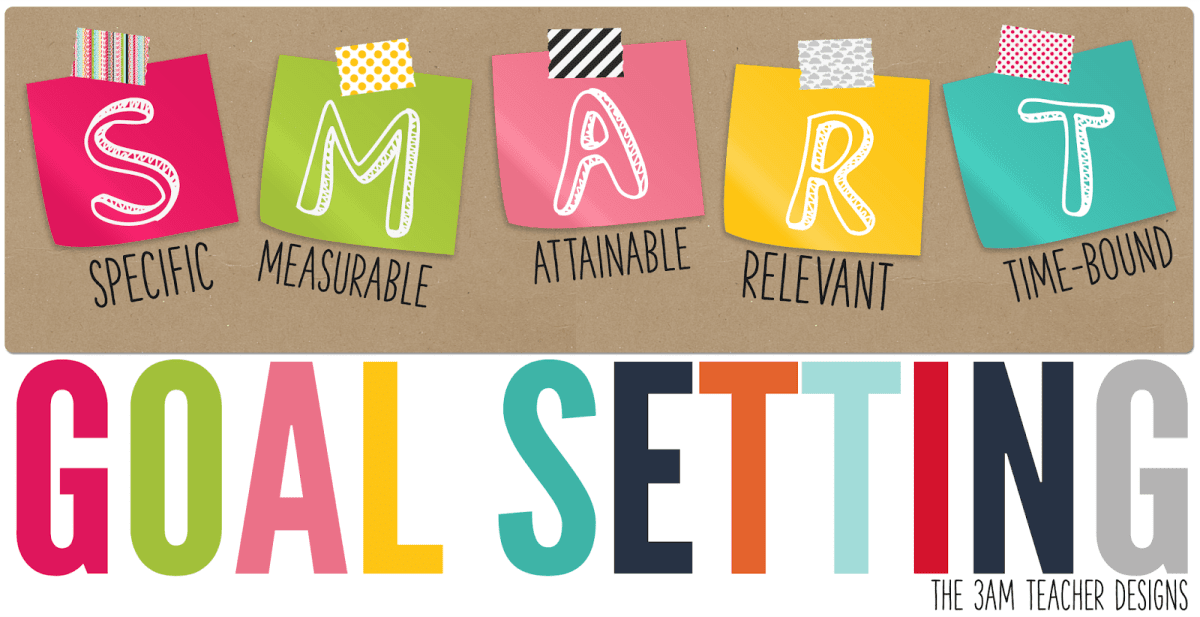
Goals that go through the SMART philosophy (specific, measurable, achievable, relevant, time-bound) become even stronger. When I do this to my goal, it falls apart somewhat when examined:

  • Specific: Yes, I covered the query questions above
  • Measurable: “book traditionally published” is measurable
  • Relevant: I think so
  • Time-bound: Yes
  • Achievable: here’s the big problem. This goal has nothing to do with what I can do, but a result that’s out of my control. I need to rewrite this goal into one or more goals that will be things I can take action on, which I have articulated here


The goal becomes the plan
Because I have done the prior steps, I can act upon those specific goals. The goals inform the plan, which is the series of actions that it will take to fulfill the plan.

Then it’s time to act.
You have a trajectory, a time limit, and the steps toward winning. Now it’s up to you.


Without goals, our wishes flounder. But without wishes, we have nothing to make goals from.


New Year — and changes in the blog

Happy New Year!
Welcome to 2020. I had a pretty peaceful year last year, and I’m hoping this one is more fruitful. How about you? 
  
What’s with the Headings?
You might have noticed the format of this blog post has changed. 
I’m trying to learn a new trick for the New Year, and that is more effective blog posts. I just got a copy of Robert Lee Brewer’s  29th Annual Edition Guide to Literary Agents 2020 (2019)* and I’m using his material to up my social media game.

A couple of things Brewer (2019) suggested in blogging were: 1) shorter sentences; 2) headings 3) clip art. 

How will this affect blogging?
So far, this has been a big change in my blogging, because I have to pause a lot more and think. It’s going to make blogging a lot different, because my almost stream of consciousness blogging will end. But I guess this caters to people’s actual attention spans online.

For you, the reader:

  1. Could you let me know how this is working for you? Like, dislike? I’d love to hear from you!
  2. Check out the book below. Here’s the link: Guide to Literary Agents 2020.


Reference:
Brewer, Robert Lee (2019) 29th Annual Edition Guide to Literary Agents 2020. Penguin Random House.  

* About that discrepancy in dates — American Psychological Association style requires the publication date included, and since today is January 1st, 2020, the book had to be published in 2019.

Goals, Not Resolutions


I don’t do resolutions, I do goals.

Resolutions come from a position of weakness: I’m not doing good enough, I need to fix something. Goals come from a position of strength: I want to make something new happen.

Resolutions aren’t backed by planning. Goals are — and in making the parameters of the goal SMART (specific, measurable, appropriate, relevant, time-constrained). The plan follows, and the plan increases the chances of success.

Here are my revised writing goals for the New Year:

Short-term: 

  • ·       Develop a platform plan by March 1, 2020
  • ·       Write/submit 5 short stories/poems/flash fiction by December 31, 2020
  • ·       Revise via developmental edit by March 1, 2020
  • ·       Send 50 queries for Gaia’s Hands by February 1, 2020
  • ·       Send 50 queries for Whose Hearts are Mountains  by October 1, 2020

 Long-Term:  

  • ·       Get an agent
  • ·       Publish my first book
  • ·       Discuss with agent further books
  • ·      Develop personal sales presence
  • ·      Develop idea for next novel

Notice that my long-term goals are not SMART, largely because they depend on things beyond my control. I put them in as motivational, as a way to envision where I’d like to be. As that trajectory becomes clearer, I will be able to make them SMART.

I have other SMART goals for the year — one is to lose 30 pounds by December 31, 2020 through eating a well-balanced 1500 calorie a day diet and exercising (the development of getting physically fit is in another goal). I will evaluate my goal every month or so and adjust accordingly if I’m not losing 2.5 pounds a month. (If I’m losing more, that’s fine!)

Well-laid plans will beat resolutions every time. Unless they gang aft agley, I guess.