Have you ever gotten a crush on a character in a book?
As a writer, I know I’ve gotten crushes on my characters. That makes sense, as everything I write has a romantic bent, or at least a relationship bent. (My model for writing relationships comes from Elizabeth Scarborough’s Nothing Sacred; specifically the relationship between Viveka Jeng Vanachek and Lobsang Taring. I tend not to write hyperbolic characters or tropes. Sometimes hyperbolic scenes, though.)
What kinds of characters do I get crushes on? Josh Young, the aikidoka mystic in the service of Gaia. Luke Dunstan, world-weary Archetype with a way of getting around rules. Brent Oberhauser, the history professor who wrote A History of Father Christmas.
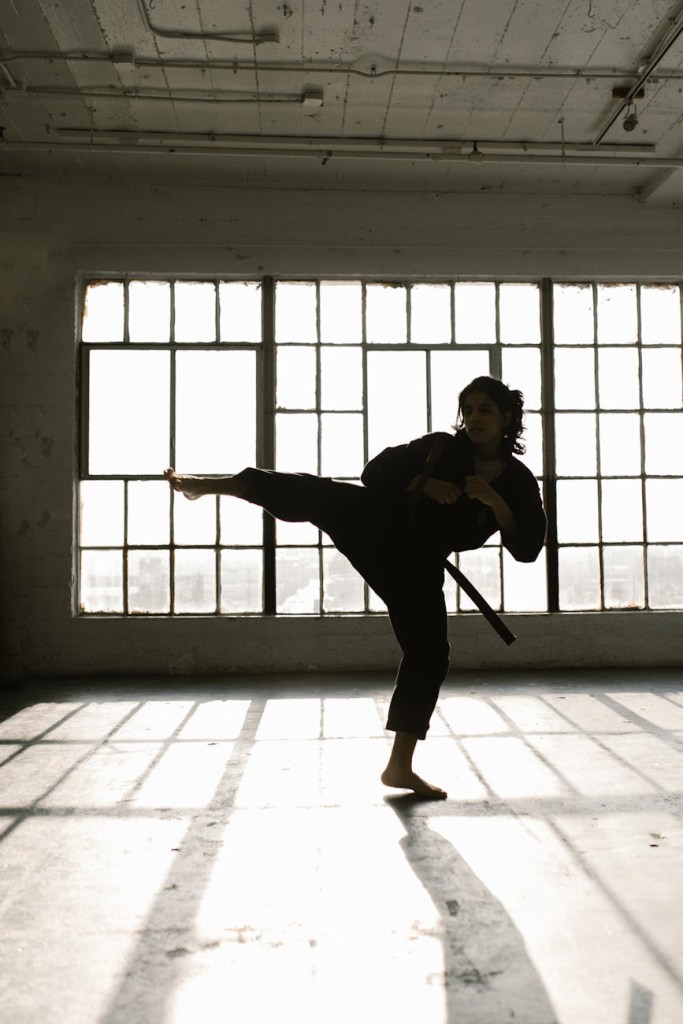
My app says this is aikido. I am doubtful.
When I create a character and live with him so long, I can’t help but be smitten.
On the professing front, all I have left to grade for the semester are two class assignments and one final. Not a bad thing; Finals run next week. I will make it.
Summer might be a light one — I only have 10 interns so far for summer. Normally I have 20. I could use a light summer, because I still don’t know what’s going to happen with my medication. It hasn’t happened yet, at any rate.
That means writing. This means finishing Carrying Light, editing Kringle Through the Snow for October 1 publication, and doing a final edit of Reclaiming the Balance, for Jan. 1 publication. If I get the guts to publish the latter. It’s such a unique book. The conflict is personal and internal to Barn Swallows’ Dance and its residents. One of the main characters is non-binary, so I wrote the book with they/them, so I expect reaction from the more bigoted.
I might also write on Walk Through Green Fire, in which the lead female rescues a prince of Faerie. That one is hard because I expect it to have sex scenes, at least one. Unless I chicken out.
We shall see what the summer brings when it gets here, which is a couple weeks from now.
According to Ken Jennings, there are many misconceptions about the Ides of March, the day that Julius Caesar was assassinated. I’ll try to summarize here.
What is an “ides” anyhow?
An ides was a calendar entry in the Roman calendar used to divide the month into two halves. In most months, it was on the 13th of the month; in others (including March) it was on the 15th. The Roman calendar was odd; all days of the month after the ides were labeled as “x days before the beginning of next month.” Almost as if the second half of the month wasn’t worth much.
What is this “Beware the Ides of March”?
That goes back to Julius Caesar, who was warned by a soothsayer (psychic) to beware the day. Wouldn’t it be convenient to have reliable soothsayers today? “Don’t go to work today.” “Avoid the tuna salad at lunch.” “Beware the Amway Salesman.” I could use someone like that.
Do I have to worry about the Ides of March?
Not unless your name is Julius Caesar.
You also don’t have to worry about the early 70’s American rock band of the same name, famous for the song “Vehicle”.
I’m slow on the uptake, living in my own world where I write, teach, grade, and look at pictures of cats. But today on Reddit, I saw something that shocked me out of complacency and made me start to take a look at NaNoWriMo.
Apparently, a moderator of the Young Writers Program at NaNo was steering some of the young writers toward a diaper fetish website. This is clearly grooming and thus abuse. This, however, might not reflect on the NaNo organization — except that they did nothing about it initially and, when they did, allowed the perpetrator to remain on the forums. NaNo needed to safeguard children and failed.
This brings me to the question: How will I respond to this? I feel I must boycott, but it’s difficult because I have been involved in NaNo for 9 years. I don’t know how to boycott an entity that is free and won’t even know I’m boycotting. But I am thinking of how to vote against brushing a serious problem under the rug.
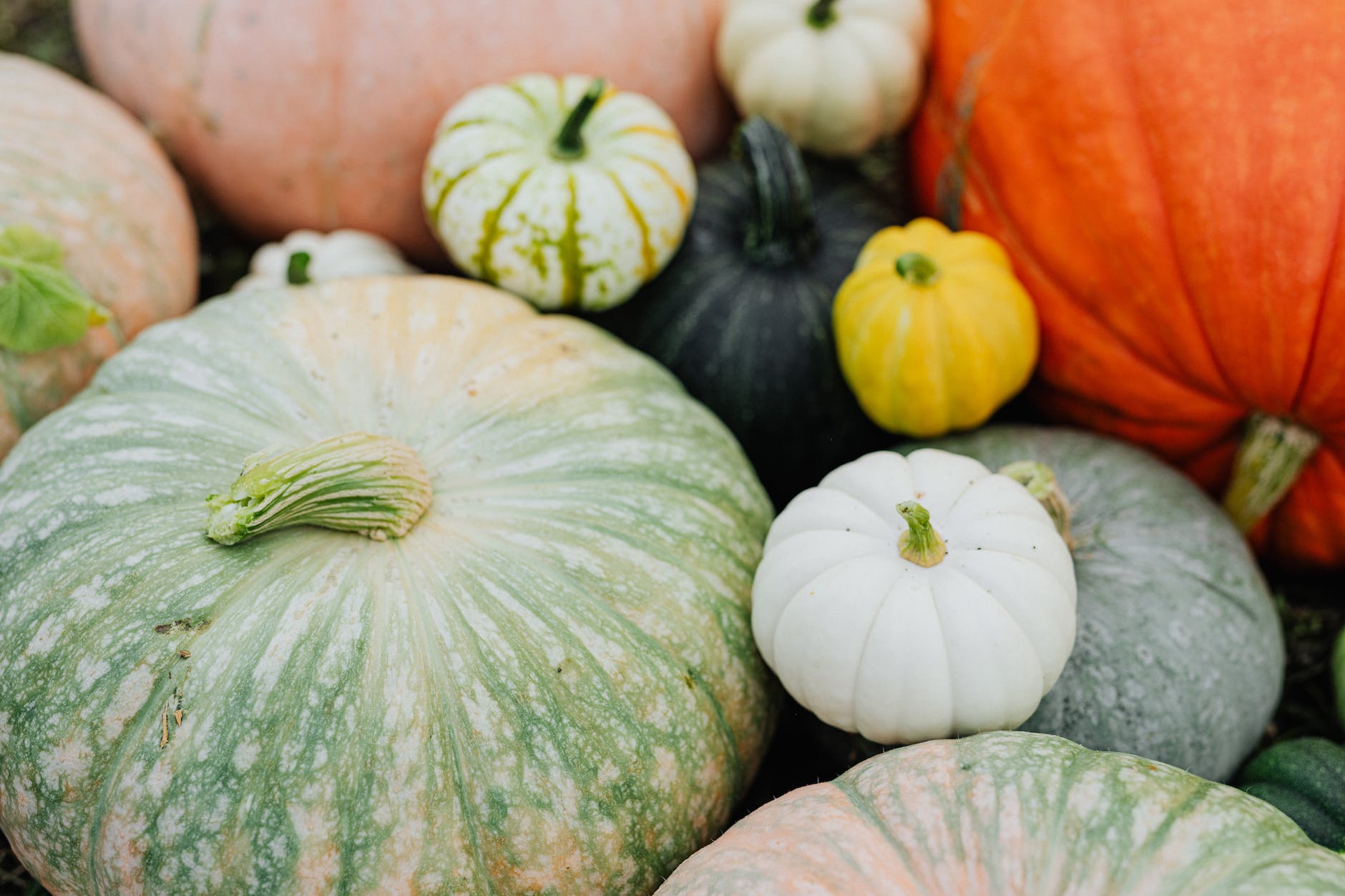
Kitty’s name is Pumpkin, even though she’s pure black. Not sure how that happened, except I called her a little pumpkin.
She’s a sweet cat. She does not like being picked up and emphatically doesn’t like her belly rubbed like Chloe, but she enjoys rubbing against my legs and getting petted.
Richard needs more quality time with her. We want him to have a cuddlebeast in his life.
I wouldn’t mention this before my birthday were it not because I’m turning 60. It’s a big milestone birthday, at least somewhat anticlimactic because I have been a member of AARP since age 55 and don’t retire till 67. I’m already eccentric. I’m now officially old enough to be my students’ grandmother.
But I don’t feel that old.
I feel slower. Despite my intense weekend of book production, I feel like my life has slowed down. I take breaks. I sometimes do nothing, not even read. Sometimes I binge on TikTok, about the laziest thing a person can do. But I’m not rushing about making things happen. Usually.
I think getting old would be different if I weren’t in a fortunate marriage. Or maybe it wouldn’t be different at all. Perhaps single me at 60 would be happily traveling on my own to writing retreats.
I just about avoided this prompt. I have fallen back into what I like to call “Midwestern Female Syndrome” — the internal need to be perfect and the external seeming of mediocrity. Don’t promote yourself, deflect all praise, don’t draw attention to yourself. I don’t know why I’ve fallen back there, except I think it might have to do with my upcoming 60th birthday. Women my age are supposed to be (according to society) invisible.
I decided to answer this question precisely because of the discussion above. I need to fight being invisible. I need to have a favorite thing about myself.
So here goes: My favorite thing about me is my sense of humor.
My sense of humor is dry. And sardonic. And silly. And quirky. And sometimes snarky. In rare moments, a bit dark.
Humor helps me cope through rough times. I find laughter reduces both physical and emotional pain and takes my mind off things that disturb me.
Sometimes I laugh for no apparent reason. I’m laughing at the ludicrous moment that has just passed — an accidental pun, a facial expression, a droll witticism. I find humor in places other people miss.
Sometimes I make people laugh to break the tension that fills a room. It has to be done carefully, so as not to offend anyone or make them self-conscious. Humor does not exist to avoid communication, but to make it easier. Best things to joke about in this situation: 1) myself; 2) something in the surroundings. When I joke in class, 3) something about the class material.
My husband is my partner in humor. We throw funny things at each other, and find things funny that nobody else would because of the context. This is a thing possible among friends.
I don’t know what I would do without my sense of humor. Life is, above all, really funny.
If I had a tagline, it would be the tagline for humans in the book TheHitchhiker’s Guide to the Galaxy, which is “mostly harmless”. I’m pretty innocuous, being almost 60 and overweight and thus doubly invisible to the general public. I write relatively light romantic fantasy (If I weren’t female I don’t know if it would register as romantic at all, given gender biases). I have a silly sense of humor. My only vice is sweets.
I didn’t say entirely harmless. That suggests there is some small fragment of dangerous in me. After some soul-searching, I’d have to say that it’s my ability to argue. I have logic, metaphors, and a great bullshit detector on my side.
I consider my ability to argue dangerous because it can change minds. Sometimes. There are some people who don’t want their minds to be changed, who cling to falsehoods and spurious sources. They want to argue to convince themselves they’re right. I will find the truth in their statements and abridge my arguments, and if they’re right, I will change my mind.
Truth is dangerous. This is why little old me is “mostly harmless”.
I am, as you might have guessed from my content, a writer. As a writer, I have favorite places to write, and not-so-favorite places to write. I don’t pretend to be representative of all writers, but I think I have commonalities with many other writers.
I have three criteria when it comes to writing: comfort, space, and activity level. I look for optimal levels of each, not necessarily maximum level. And when I find an optimal place, I really can write better.
Comfort
I look first at comfort. There is an optimal level of comfort that is neither too little nor too much. That may sound counterintuitive, but there is such a thing as too much comfort. Too much comfort and I fall asleep in my chair, which is not conducive to writing. I find the chairs at my local Starbucks, especially the ones at the round tables, friendly to my back. The other corporate coffee place in town has chairs that are at best indifferent, while the booths are downright hostile. Nothing says “Grab your coffee and get out” quite like those booths. At home I have a Serta desk chair (used; love those bargains!) that makes my office very comfortable, and a couch downstairs that’s slightly less comfortable.
My second criterion is space. This refers both to the confines of the room and the physical atmosphere. Despite the Serta desk chair and the dual large screens, I have trouble writing in my office for very long because of the space. The office is a small, cluttered room where one can’t stretch out without hitting something. The desk (actually a library table) abuts the wall and I find myself staring at the wall when I need to think between words. My eyes take up the clutter and it makes me grumpy. I’m just not going to warm up to the office to write unless this is fixed. The living room loveseat is a far better place to write space wise. I am not crowded unless I let too many books pile up. Coffeehouses have wonderful space, neither too crowded nor too spacious. There is art on the walls, textures in wall coverings and furniture.
Activity Level
Third, I pay attention to activity level, the stirrings of things around me. At home, on the loveseat, there are cats to help me write and short breaks to check the mail or drink hot beverages. The office is quiet and no cats allowed. Music helps, but it gives me nothing to look at during breaks except the Internet, which is a black hole my attention gets sucked into. Writing in public — cafés, hotel lobbies, libraries — usually gives me the right balance of activity level to quiet. Public places, such as my aforementioned Starbucks, can get too noisy at times but overall are just busy enough.
Conclusion
First off, I need to do something with the office to make it more conducive to writing. I’m talking with my husband right now about this. Working with the door open (which increases perception of space and allows cats inside) may be helpful. Playing music may help. Getting a coffee machine in there might be asking too much.
Second, Starbucks will be a regular destination for me as long as they have comfortable seats and coffee drinks (which is part of their corporate mission, so forever).
Finally, I will need to keep going on writing retreats (to places with excellent coffeehouses or lobbies with computer tables).
There are ways around the disaster of an uncomfortable place to write: fix up the place or go elsewhere. I can do some of both.
Everyone I’ve run into today has struggled with today being Tuesday. They must have had a good Memorial Day weekend.
Mine was restful. Almost too restful, as I slept in and read all day. I got a blog post done, some writing, a bit of fretting about writing. I ate grilled bison burgers and some roasted Brussels sprouts. Hence a Tuesday that feels like Monday.
A little kid at the next table in Starbucks just asked “Today is Tuesday?” So it’s even happening to the younger generation. What day is it? It’s Tuesday, isn’t it?
But isn’t it great to discover that it’s Tuesday, and the work week is one day shorter? That extra day off gives an extra bonus at the end of the week when Friday should be Thursday. It’s a new, happy kind of math.
I’m going to go home and get some work done, with an internal smile that today’s Tuesday and not Monday.