Day 3 Reflection: Intention

Every morning, I think and I write with a goal in mind. I write to tell stories, invoke feelings, construct meaning. I write with intent.

The word “intention” is a noun, yet we invoke intent as infinitives: I intend to write this blog, to convey ideas, to speak to my readers. I intend to create, to act, to do. 

In some mystical traditions, intention is as powerful as the act itself, as the intent creates the reality. The intent becomes the enacting of the infinitive. If one’s intent is to wound, to hurt, to steal, one has in effect set the wheels in motion to do so simply by intending to.  If one holds to that mystical tradition (and I do), it’s important to examine one’s feelings before they become motives, and one’s motives before they become intention, because by intending to act one has already acted. 

This is not to say I walk in an oppressive cloud of guilt for thought crimes. It does mean that I’m rather introspective about thoughts that could spawn bad intent. The thoughts serve to inform me of what I need, not to be shaped into intent. I do not indulge scenarios of revenge or retaliation or fantasies of infidelity. The thoughts may drift through my mind, but I let them drift and keep myself anchored in the reality of my intent, the things I want to accomplish.

 

Day 2 Reflection: Vulnerability

 For the #UULent reflection list, look here.

If I make myself vulnerable, I could get hurt. People could laugh at me. I might fall in love and get my heart broken. People will think I’m stupid. I could make a fool of myself.

We fear being vulnerable. The fear likely comes from our most primal selves, where vulnerability meant a life prematurely ended by animal attack or fights with other tribes. Our bodies have evolved to make fear an experience we run away from, ensuring our survival. The experience of this fear makes our shoulders shrink into ourselves, makes our skin crawl, our stomach hollow, our heart pound. Most of us want to avoid that feeling, or at least control the feeling by riding on a roller coaster where we know the risks are limited by the design of the ride.

Focusing on our fear of hurt — and vulnerability to hurt — paints all the potential hurts with a big red brush. Being laughed at is equated to death. Worse, the focus isolates us from the risks we need to take to grow and evolve and flourish.

If I make myself vulnerable, I could get hurt. People could laugh at me. I might fall in love and get my heart broken. People will think I’m stupid. I could make a fool of myself. But if I don’t, I will be lonely. I will not experience love. I will not grow. I will not strive for new goals. I will not embrace my humanity. I will not truly live. 

*****
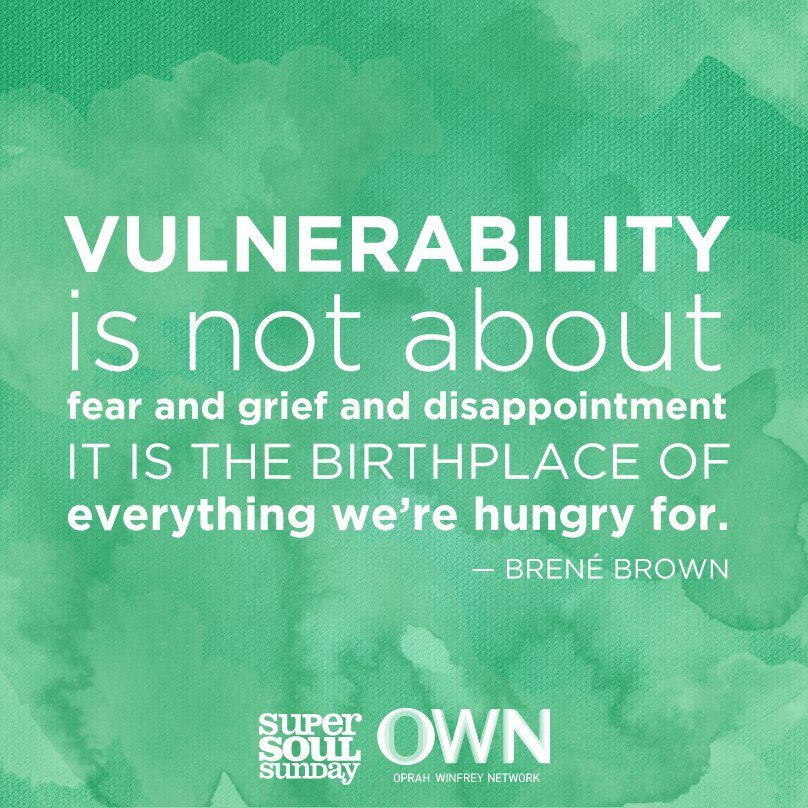
If you want to learn more about the importance of being vulnerable in one’s life, look for Brene Brown’s material on vulnerability.  Here is a good start.

Day 1 Reflection: Dedication

My list of blog posts

I have written 693 blog posts including this post. In mid-April, this blog will be two years old. I write almost every day unless I’m fighting depression, and even then I usually write.

I don’t always feel motivated to write. I would find it easy to devote myself to writing if I received accolades for it, or if I knew my writing impacted someone in some way. Rewarding a behavior results in more of that behavior — that’s called classical conditioning. In the case of my blog, readership and comments and likes would be the rewards for blogging behavior. However, I only have an average of twenty readers per day, and I have no idea whether they like my work. Comments on the blog and likes on Facebook and Twitter are few and far between.

Still, I write, almost every day. 

It takes dedication — in my case, dedication to the craft of writing; dedication to the confraternity of writers; dedication to the concept that it’s important to reflect, to soul-search, to speak truth whether or not anyone listens.

Dedication in the face of obscurity makes me more solid, braced by my convictions that writing is the work of my soul. 

Forty days of reflection

As a Quaker (i.e. member of the Religious Society of Friends, an unorganized religion) I do not give things up for Lent as I did when I was a child in the Roman Catholic Church. I miss the concept of sacrifice, however, at the same time I feel like giving up something doesn’t lend itself to spiritual growth.

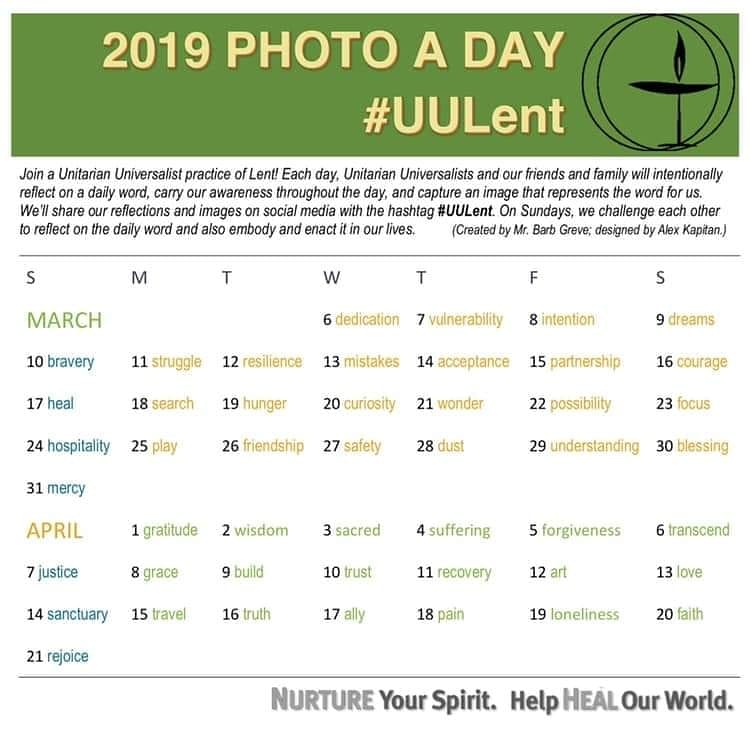
A friend of mine is Unitarian Universalist, and she posted a Lenten devotion of reflections upon words that hook into people’s spirituality. The devotion suggested pictures of each day’s word to reflect on, as shown below:
For the forty days of Lent, I will use these words as the jumping point for my blogs. I will do the day 1 reflection later tonight — the word, it turns out, is dedication. I think I can speak to this. 

Self-examination and the Author

Yesterday, I asked my Facebook friends how to tell the difference between low self-esteem and brutal self-examination.

One of my friends responded with this inquiry:  “Always ask yourself if you are being your own best friend. If you were talking to a friend would you talk that way? If not, that voice doesn’t pay rent for space in your head. Kick her out!”

I thought about this — How do I talk to myself?

I spend a lot of time examining my behavior, a running commentary in my head. But I don’t indulge in negative self-talk. I don’t say “OMG, I can’t believe you put that in your query letter! You’re an idiot!” I say, “That went well, but you could have done better with this other thing.” Which I could have.  

Would I talk to a friend like that? If they asked. Maybe I would emphasize the positive a bit more, which I don’t do for myself. To be honest, I need to point out more of the positives to myself. 

Another friend of mine, a psychologist, pointed out that self-awaqreness correlates with accomplishment but self-esteem doesn’t. This is from research; I haven’t found the study yet to give the citation. It makes sense, though — self-awareness helps people to improve and it also gives them a connection to what they want to accomplish. Self-esteem, on the other hand, may help people feel good about themselves but lies separate from introspection. Self-esteem without self-awareness can become fatuous, a feel good mantra without substance. And self-awareness comes from self-examination.

When I write and I get rejections (which is all I’ve gotten so far), I go through what I’ve done to see where I could improve. This requires me to step back from the story I fell in love with when I wrote it. I think about the publication market versus my topics and ask myself whether I want to write specifically for the market (I want to write and see where the fantasy novel market and I intersect). I improve where I can, honing my skills at editing and using help like developmental editors.

 Brutal self-examination isn’t fun. It’s a familiar commentary of “Have you tried this?” and “Next time do that” and “This would have worked better here”. I have to admit I don’t celebrate my successes enough, and I would have to tone down the post-mortem questions if I were talking to a friend. I need to take more time for “You did this well” and “You’re doing the right things” and “Good job!” 

Another thing to examine myself about.

Hope Springs Eternal or, Sisyphus Was an Optimist

Hope springs eternal.

I sent a query off to DAW Books, one of those other Big 5 publisher imprints that don’t require an agent. If my history with Prodigies is any indication, I should hear nothing from them in 6-8 weeks (they don’t send rejections if I understand correctly) and be done with it.

Why do I do it, even though my chances of being chosen for publication are small?

Because if I don’t do it, I’ll never know.

Because I’m the sort of person who tries, even if I fail.

Because I like to make things happen.

Because I’m an eternal optimist.

Because I think my writing deserves to be read.

Because I don’t want to be the one that gave up too soon on a dream.

Fantasies, Aspirations, and Goals

The average self-publisher sells about 250 copies of their work.

Hearing this statistic floored me. I have no doubt that it’s accurate. It’s just that — that’s not a lot of copies. I thought I was being conservative when I set a goal of 400 copies if I self-published.

I thought I was being realistic when I ruled out thousands upon thousands of copies and the New York Times bestselling list. It turns out that my scaled back fantasies — even the 400 copies if I self-published — are too unrealistic. Without realistic grounding, our aspirations are set by our fantasies, and our aspirations in turn set our goals.  

It’s time for me to figure out how to pare back my goals, fueled by fantasy. My fantasy was that I would have an agent and would find a publisher of size (say, one of the Big 5) and go on a book tour where someone else made the arrangements for me and I didn’t have to buy my own copies to sign and sell. 

In a way, this is freeing. This makes me realize that having 20 readers of my blog is perhaps normal, and that the agents who reject me need to so they don’t starve, given the odds of someone picking up a book and reading it.

It also means that I will never get external validation of my work if I gauge success by my fantasies. How many readers is “enough” if the average self-published book gets 250 reads?  What does a rejection mean if the object is not quality but saleability?

My goals will stay the same:

  • Get picked up by an agent or publisher, avoiding vanity presses and publishing mills
  • If the above doesn’t work, research and develop an effective self-publishing strategy, avoiding self-publishing scams

What changes are the standards for success. I’m still working on scaling down my expectations. This will be difficult.

Writing Superstitions part 2

I’ve written 1200 words so far on Gods’ Seeds* as I tackle the time-honored question, “What is the best way to begin this book?” Beginnings are important, so rather than just letting the writing flow (as I do with the rest of the book), I work harder to make the beginning shine right off.

I think it’s a superstition with me that I need a strong beginning but can just let words flow for the rest of the book and edit later. I do have my superstitions around writing, though. Nothing so obvious as a lucky shirt or favorite chair.

I plan to write in this blog every day, even if I write a fluff piece about coffee or cats** , because I believe that if I give this up, I will give writing up.  So I write this blog in the morning, usually 5:30 AM Central US time, almost every day, even through depressive episodes, because I believe that if I give it up, I will give up being a writer.

Do I have other writing superstitions? As I use a computer for composition, no favorite pen, no favorite shirt, no favorite place in the house (today I’m writing in bed, propped up, with my Surface propped up on a lap desk because it’s Sunday morning and I can afford to be lazy today). Nope, just the one where I stick the beginning of the novel.

Maybe I need more superstitions — where I can’t write without coffee, or I pet my cat 14 times before I write or I have to wear my thinking cap*** or … naaah, I’ll stick to the superstition I have. It doesn’t limit me much.


* I will change the name of this. See yesterday’s blog as to why I haven’t yet.
** Or coffee and cats.
*** I typed this “thinking cat”. 

Writing Titles or, Why I Called my Dissertation ‘Fred’!

Wrote the first 700 words of Gods’ Seeds yesterday. I’m thinking of a new name for it, given that I’m cutting the plot line that necessitates that title.

Writing titles is my second least favorite thing about writing, with getting rejections in first place. Why? Because titles are challenging. You have to capture the essence of the novel in four words or fewer while capturing the reader’s eye and imagination.

In addition, titles go through fashions and fads. An earlier convention in titling required a short comment to edify the reader on the contents concealed by the catchy title. The most familiar example of this is the 1851 classic Moby Dick or, The Whale.  Did you know about the rest of this title before I mentioned it? Did you notice the oddly placed comma? Let me try this: Voyageurs or, The Time Traveling Assassin. No, sounds like Jules Verne. I rather like Jules Verne, and a comparison to him would be flattering, but…

Meanwhile, in the late Seventies/early Eighties, Marion Zimmer Bradley named two novels Stormqueen! and Hawkmistress!  Yes, the exclamation points are part of the titles. It makes me wonder if I should have named that one novel Apocalypse! No, maybe not.

In the late Eighties, at least in academic circles, the joke was that one’s article would be more likely to be published if it had a colon. Let me see: Reclaiming the Balance: A Study of Race Relations in a Pacifistic Ecocollective. Um, no.

So I’m left on my own when coming up with a title, unless a publisher looks at my writing seriously and asks, “Have you considered putting a colon in?” Then I’ll have to give in.


An Epiphany on a Long Drive

Yesterday, I drove past fields of white against a cold blue sky, scattered with wind turbines like ice giants. My playlist, a random mix dominated by the local bands I have known and loved over the years, lulled me into a sense of introspection.

When I was younger, I declared that local music was the salvation of the universe — said in a dry, understated tone for comic effect, of course. Nonetheless, I believed it. The bands I loved ranged from introspective roots rock to bagpipe jazz to Celtic rock fusion, and I loved their energy, their bravado, their desire to create a sound that wasn’t like every other band out there. At the same time I wanted them to become big enough so that other people could enjoy them, I feared what the corporate music machine would do to them.

I hit an epiphany somewhere north of Creston, IA, in the icy white afternoon through which I drove:

Why did I see self-publishing as different from what my friends in local bands went through? 

Why did I see big contracts as something that would kill my friends’ spirit and creativity, but I didn’t see the parallels in my own life?

I don’t know how ready I am for self-publishing, but I am beginning to see it in a different way.