Tired


I’m so tired.

I’m in the end stretch, with final exams to be graded Monday and Thursday, and office hours online all week. It’s not going to be too hard, but I still wish it was all over. 

I get it. I’m getting older, old enough that I reminisce about Christmas past and old music. Old enough that I would like to do nothing except write till January. (And celebrate Christmas). Old enough that I don’t feel younger than my age anymore. Old enough that I don’t imagine younger men getting crushes on me. I have become a more sedate version of myself. And, after this semester, a more tired one.

I would like my heart to be lighter. This may not be the year, and perhaps what I need is a reprieve from work rather than joy. 

There will be Christmas


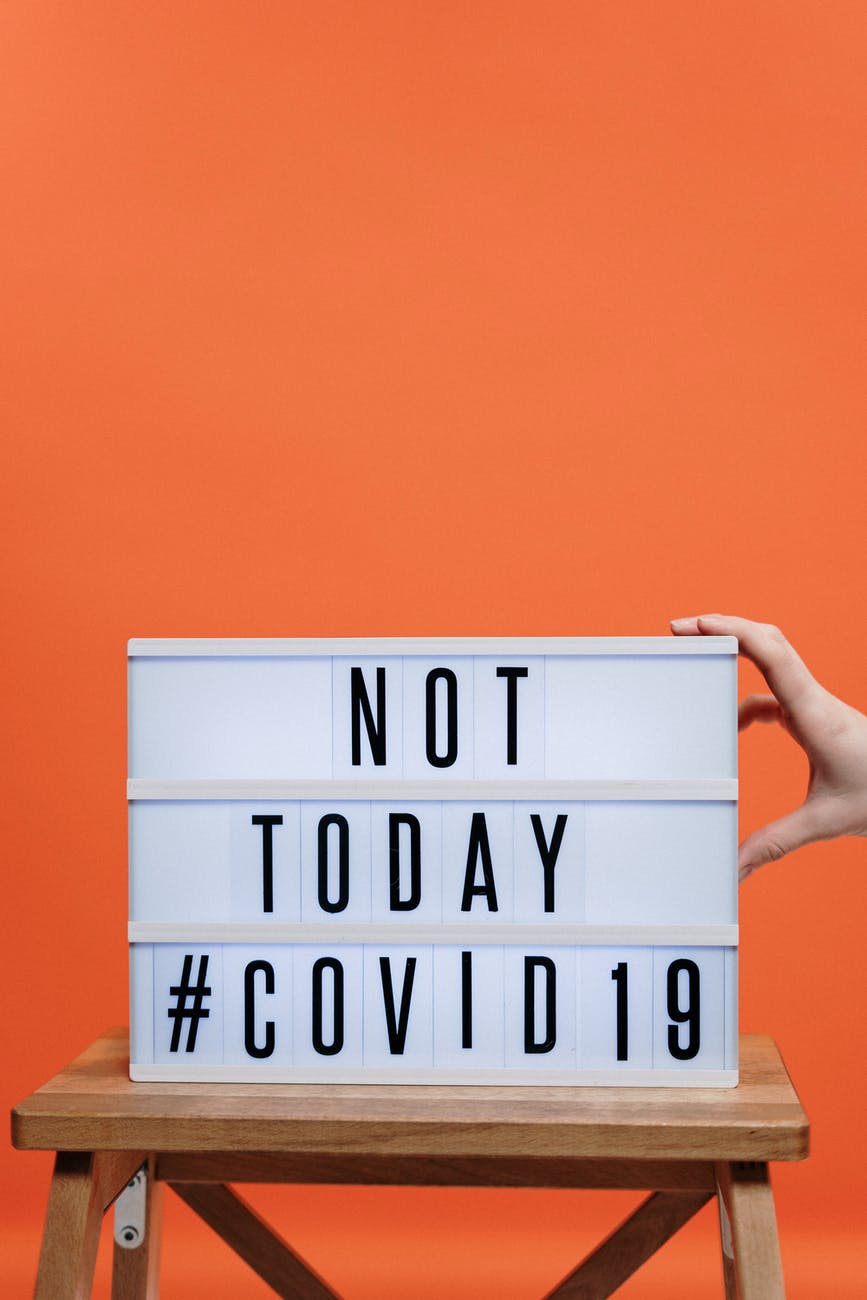
Christmas is our respite from the year of COVID.

Even if we can’t (or at least shouldn’t) visit our loved ones, even if we can’t travel, even if we have lived with this threat for months which has changed our lives, we have Christmas.

Some will have a subdued Christmas because they have lost family or friends, or because a friend or family member has ended up in the hospital because of COVID. I have one colleague with lingering symptoms and another in the hospital. Others I know have seen loved ones die.

Some will have a smaller Christmas because of restrictions on gathering size, the riskiness of travel, and the fact that hotels and restaurants are among the best places for contagion. This has been a big part of why my husband and I aren’t going to Illinois and staying at Starved Rock State Park for this Christmas. 

But there will be Christmas, and there will be workarounds for friends and family. We will put up our Christmas trees, even early, because we need that color and light. We will Zoom with family and friends. We will find a way to celebrate, because we as human beings need that celebration in the grey skies of December. 

Find a reason for joy this season, even a flickering moment of joy, because that is part of our legacy as humans. And if you can’t, let something lighten your heart for a moment and understand that the hurt will lessen and the memories remain.

The Wild West of Amazon Publishing

From what I’m reading, the traditional publishing industry is in trouble because of Amazon.  Given the oligopoly of book publishing giving writers few if no options and putting out a homogenized result (which are the hallmarks of an oligopoly,  or market in which there very few sellers), it’s a hard time if one wants to be traditionally published. The oligopoly takes few risks; writers are often disposed to take risks in writing.

This is where Amazon/Kindle Direct Publishing comes in. Amazon is a free market of publishing. They don’t look at content; they assume you’ve done the work with copy editors, developmental editors, and the like. 

The good news is that the process is easy for writers to self-publish their work almost seamlessly, they can involve themselves in marketing as little or as much as they’d like (understanding that sales will suffer if they don’t market) and their work is out there for people to read. 

The bad news is that many writers haven’t done that work, while others have. Thus the only way a reader can find good quality works is to look at the ratings, and even then there are ways to game the system (although most authors are under an honor system not to do so). 

In a way, Amazon is the Wild West of publishing, but there are opportunities to be had. 

Another #PitMad and a New Way of Seeing

 Wish me luck — I’m doing #PitMad today.

#PitMad is a Twitter competition where writers with unpublished novels try to attract the attention of agents with their pitches, or short blurbs about their novels. Agents will then ask for queries, or the typical packet that is sent to an agent (cover letter, bio, synopsis, first 20 or so pages). 

So #PitMad is going on right under your noses on Twitter and you won’t know it unless you’ve discovered Writers’ Twitter. (#writingcommunity, #writerscafe)

I haven’t had much luck with #PitMad — in other words not a single nibble from an agent. I still try because there’s always serendipity. There’s always the possibility of someone to see my pitch in a different way than they have before. There’s always the possibility that my topics have come into vogue when I wasn’t looking. There’s always a possibility that I haven’t seen yet.

I feel more comfortable with failure this time than I have other times. I know about the disarray that the traditional publishing industry currently suffers from, and I have given up on a Big 5 (oops, Big 4 with the latest merger) publisher in my life. I’ve self-published, which has stilled the clamorous yearning to be published.

I want to see what becomes of my work rather than search the earth for validation. It’s a good feeling

Aside — my writing lately


A poem of mine, “Deep Touch”, will be published soon in Tempered Runes Press’ inaugural issue of


Bluing the Blade. I’m really proud of this accomplishment, which reminds me: I haven’t been submitting short stories and poems lately.

I’m not sure why; probably because I haven’t written any lately, and I’m running out of good poems to submit. I have a lot of poems I’m not that enthused with. As for stories, I have a couple I’m in love with, but they haven’t caught traction. 

Time to think about writing short stuff again, even though one selection of serialized short stories is arguing that it should be a novel. Then again, given the space opera premise of the stories, serialized may be the best use of the material. 

Muse, where are you? I need some inspiration!

To Give or to Take

“Don’t try to take something away from a person, because you can’t give them something they need in return.” That was one of the pieces of advice my mother gave me when I was growing up, and the older I get the more I see the wisdom of it. 


Sometimes we take away a person’s culture and meaning. My grandfather told stories of going to a Catholic mission school for the local Ojibwa tribe (my family had married out and assimilated by then) and watching the Ojibwa kids get beaten by the nuns for speaking their own language. The nuns justified it by saying they were “beating the Indian” out of the children and that they would be better for that. I am wary of proselytizing religion for that reason, because it seems to me a manipulation to take away a culture’s gods.

When we take a problem away from a person, we take away their self-determination and initiative, and leave them with another dependency in their life. This is why therapists and case managers believe it’s vitally important for the client to come to them, so that it’s their wish to exchange the problem situation for something better. This is very hard for families and friends of the person with the problem, because the most they can do is persuade their loved one. The person with the problem has to make the decision to seek help.

So our best intentions may be wrong if we try to use them to take away from others what we perceive as burdens. Those burdens may be their culture or their crutch or their curse, but it’s theirs. Hell might be preferable to loss of their culture, and the devil they know preferable to the one they don’t know. Rather than taking away, we should think of giving, and giving in a way that honors culture and struggle and autonomy.


Decking the Halls

The halls are decked! Well, actually, my husband decked the living room and left the hall alone. I’d get pictures of the living room, but the coffee table is a bit cluttered as always. No House Beautiful home here.

On the bench next to me we have a display of Christmasy stuffed toys — a vintage Coca Cola stuffed bear, two Ty Monstaz (Holly and Tinsel), Velveteen Rabbits male and female, Hello Kitty with a Christmas present, a sloth wearing antlers and a scarf, and Plum Puddy. If Christmas is a holiday for children, I want to indulge my inner child a little.


I’m working from home for the rest of the semester, with a dead week followed by online finals. So having the house decked out and Christmas music playing helps. Right now “It’s Beginning to Look a Lot Like Christmas” plays on the stereo and, well, it is.

Our Christmas celebration, constrained as it is, may be just what we need right now. The pre-Christmas winter celebrations heralded the passing of the longest night and the slow return to the bright days. The Christians held onto many of the customs, knowing that they needed a celebration to get through winter. We hope for a vaccine for COVID in the New Year, so we turn to the brighter days just as our ancestors did. 

Grateful to write again (short entry)

 I think I have fallen in love with writing again.

I hadn’t written for a while, instead editing several works I have that I haven’t been able to get traction on traditionally. (I still have one that I need serious editing on, given that it was my first novel. I’m lost with that one). But I needed a writing project for NaNo, and I needed a sequel to The Kringle Conspiracy, a Christmas romance. 

So I wrote the sequel I’d been imagining for a while, Kringle in the Night, and I’m editing now. And it has been so fun! I’m writing again, creating something tangible from my fantasy and my memory and my ear for dialogue and all those good things. 

It feels good to create again. 

Our Inner Child and Christmases Past

Do we as adults look for touchstones to our childhood Christmases?


My husband and I spoke about this while we were listening to Little Drummer Boy (Harry Simeone Chorale, 1959 version), the harbinger of Christmas in my childhood. I was born in 1963, but the trappings of those late 50’s still lingered in my house, as we listened to the album (33 1/3) on a 1957 Magnavox Continental console. 

This is the exact make/model of our old stereo. I wish I had it because a restoration would be lovely.


My husband grew up in a town smaller than mine that still managed to have a Christmas parade, unlike mine. Both of us remember captivating displays in local businesses. He remembers church choirs, while my childhood was more secular. 

We both remember Rudolph the Red-Nosed Reindeer complete with the GE tie-in commercials, and we watch that and How the Grinch Stole Christmas and other children’s Christmas TV staples, and we still watch those every year. 

We remember the iconic outdoor displays of our home towns — me, the industrial pipe frame-and-lights tree on top of the Nabisco carton factory, and he the star on top of the grain elevator. I remember a whole era of my life where I could look out the dining room window and see the tree lit in green or red across the neighborhood, waiting for my father to get home from his job 30 miles away, waiting for Rudolph to come on TV, worried about my father traveling through the snow.

We’ve made our own traditions — one of those being going to Starved Rock State Park in my hometown area to visit my dad and my sister’s family every year. Starved Rock Lodge was also a piece of my childhood, a massive log construction that existed since the 1930’s. To me it’s the epitome of Christmas, which its Great Hall sporting Christmas lights and families getting together there to open their presents. Again, a part of my past. We will not go there because of COVID, and I will miss that.

This makes me wonder if other people have this sentimentalism for the past when it comes to Christmas. Are we touched by our childhood Christmases and clinging to the traditions to keep our adult selves buoyant? I wonder this especially for this year, when we can’t have those big gatherings because of the contagion, when we put our Christmas trees out early for the colorful lights of hope. 

The Relief


I finally have a break! I’m tearing up with gratitude.

This has been the most exhausting semester I’ve ever had. Not necessarily the hardest, although teaching both live and on Zoom at the same time was somewhat difficult and gave less than stellar results. But long and exhausting, waiting for students to drop in on Zoom, sitting in a empty office, scuttling from office to restroom with my mask on. 

The sunny days out the window seemed so distant from where I sat, even though I have the best view on campus out my window. Then the leaden skies came, and at least they matched my moods.

There was the constant threat of COVID. There was a point where 9 out of 60 students were out over either isolation (COVID positive) or quarantine (contact with a COVID positive). The virus swept through peer groups and Greek life, and although I taught social distanced and masked, the random trips through hallways and in bathrooms worried me.

I focused on the task, knowing that thinking about any of this, much less all of this, would break me. And so I became an automaton, checking off each finished class session, each office hour. Not waiting for break, because that seemed too distant. 

Now I’m here, at break, and I want to cry. After this week, I have a week of waiting for students to ask questions over Zoom (and they never do too much of this) and finals week, where their exams are essay and take home. I will be at home, comfortable, during all of this. So, in effect, I have survived the semester.

And I feel like crying.