What I Discovered from Thinking About Writing So Far

I’m still thinking about it. And I suspect this doesn’t make for interesting reading, but I need to sort it out and maybe crowdsourcing will help.

This is what soul-searching uncovered:

  1. I may be having trouble with my medications (depression/sleeplessness). Keeping an eye on that.
  2. What got me interested in writing part 1: Writing is fun to play with. It turns nebulous pieces of imagination into a captivating work of art.
  3. What got me interested in writing part 2: expressing my emotions. This is why I want to be heard — because expressing them is not enough, as anyone who’s posted a frustrating story on Facebook only to get no responses knows.
  4. What kept me in writing part 1: Learning more about it; perfecting my craft. 
  5. What kept me in writing part 2: The possibility of getting published. I’m a little bit addicted to recognition, and I haven’t been getting much from my day job in oh, say, the last ten years. 
Then I evaluated the status of the above:
  1. I readjusted the dosage of a suspected medication (the label suggests a range of dosage as needed), and have yet to see whether that fixes the depression and sleepiness. If not, other action needs to be taken.
  2. Writing is still fun to play with. Lots of fun. I love subverting paradigms — a romance novel where neither of the characters are beautiful, a battle without violence, a fantasy that involves very ordinary people who have powers and are still very ordinary. This might be part of the reason I’m not ready for prime time genre fiction. I don’t know.
  3. I can still express my emotions while writing. I don’t know how I feel about posting my works not knowing if any live persons read them or what they think/feel.
  4. I still love perfecting my craft. I’ve learned all I can on my own, and it hasn’t gotten me published, so I suspect it’s not enough. Now I need a professional developmental editor. I can’t afford an editor right now because I’m the only earner in the household. I’ve learned all I can from non-professional editors as well. 
  5. I just don’t know where this stands. Agents pick what they like, which is what they know and what they think they can sell. Rejections can mean they don’t like my work, they don’t think it will sell, and/or they’re not familiar with my style. I don’t know which, because the only critique I ever got back was “brush up your query letter”, which I did. There’s no way of knowing with form letters. I still have stuff out there, however.
Deep down, I had a fantasy that people would say “Don’t stop writing! I like your stuff!”, but that’s a fantasy that doesn’t lend itself to adulthood. In adulthood, I have the ultimate decision to continue, or not continue, or give up sending queries and just write novels (six with two partial documents on the way), or go back to just writing poetry for myself. 
I haven’t decided yet. Any comments would be appreciated.

Still thinking about it …

I’ve been thinking some more about whether I should continue to write. What I’ve discovered turns out to be rather complex — but why expect my life to ever be simple?

Here’s my thoughts:
  • I love to write — I always have. 
    • I’ve been writing since (as far as I remember) third grade. I’d like to think I’ve gotten better by then 🙂
  • But I’ve always liked to show people what I’ve written as well. Why?
    • My writing is personal. For example, this is very personal. I want people to know me.
    • As a child, I experienced a certain amount of abuse, with which came what is now known as gaslighting — being told my observations of being abused were invalid.
    • I still silently thank my junior high English teacher for actually reading and liking what I wrote — especially as my mother would always read my writing and say, “I think your sister writes better.” Apparently, she never expressed to my sister that she wrote well, so you can guess what was going on there.
    • My junior high English teacher was my lifeline during those years. Truly. I had spent my childhood bullied (for being “weird” — but not the type of “weird” that encourages teachers to introduce the class to sensitivity training) and this culminated in a horrifying sexual assault which I, of course, didn’t report. I will admit that I was at risk for suicide in eighth grade. I will always see writing as my lifeline, but it’s nice if someone’s holding the other end.
  • When I get really stressed, the importance of the second point outweighs the first part.
    • Believe it or not, I’m not an anxious person. In fact, usually my stress is because I’m wrestling with tendencies of mine, including:
      • need for external validation (probably for the reasons above)
      • need to not feel alone/isolated (probably for the reasons above)
      • wrestling with perfectionistic tendencies (probably for the reasons above.)
So, in other words, the question “to write or not to write?” gets influenced by the stuff above.  Conclusions I’ve come to include:
  • Recognition from “out there” will never be enough. Why? Because nothing that happens to me as an adult can erase the fact that I had that childhood. “Inner child” stuff is extremely real. As an adult, I’m the only one who can reassure myself when I get in these moods. I just don’t know what to say to myself yet.
  • I will never know how good my writing is, so I might as well give up trying to do so via Google Analytics (where I got that stat that the average user spends 30 seconds on my site) or book sales.
Now all I have to do is figure out whether the time I spend on writing is worth it … I’ll get back to you.

Gardens in my Dreams

It’s January, and time for planning my garden.

What does this have to do with writing? A writer writes what they know and what they love, and I love plants. Particularly plants I can eat, because I like food as well. And if they also smell good, that’s a bonus because I like things that smell good. As you might expect, my best friend is named Basil, and he grows in my garden every year.

One of my favorite characters in my books was a garden. Or a Garden, perhaps, because it had begun as a food forest, a planting of perennial edibles modeled after the layers of a forest. The picture below will be worth 1000 words:

from: Permaculture, a Beginner’s Guide, by Graham Burnett

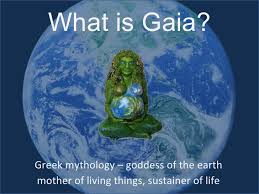
The Garden in question incorporated fifty of these units in a three-dimensional pattern: one canopy tree, surrounded by three dwarf trees, and clumps of the other units as needed. It had been commissioned by a eco-collective (a coop based on ecological principles and striving toward self-sufficiency). Little did the collective know that they had called on an acolyte of the earth-soul Gaia to design the project and direct the work crews. Overnight, the garden grew a foot, and in a few short weeks offered up its first crops. The residents felt unsettled for a long time, because it’s one thing to call something a “force of nature”, and another to meet it face-to-face.

There are other stories about the Garden, but I will not tell them here.

My Work-in-Progress has a collective with greenhouse domes in an ecologically efficient desert habitat. Below each greenhouse is an underground living unit with tunnels to the central unit, where the Great Room/kitchen and workrooms reside. The dome above the main unit holds a grafted tree bearing two different colored apples that came from the central trees of the original Garden. These two gardens, the original food forest and the desert domes, are connected by more than the scion from the mother Trees, but that truth is scattered across several books.

*****
I received another rejection today.

My novels don’t grab agents within a synopsis and three chapter (or less) form, and I have no idea why. I’ve edited, and I’ve polished, and I’ve improved my query letter and etc., but I don’t know if I can write what they want. My ideas are speculative, utopic, ecological, egalitarian, and not very dominant culture. The ideas themselves may not sell — pacifism instead of war? Ecologically sane utopias that struggle with prejudice and discord?

I seem to get better at dealing with rejections. I’m quite calmly considering whether my goal of getting published is worth the time investment. Writing itself is rewarding and enjoyable, but as a hobby it takes about 14 hours per week.  The gardening, at least, yields food; the writing has not yielded readers or income. I know hobbies don’t yield income in most instances, but I don’t get the return in writing alone — I want to share ideas. I want to be read.

Writing is another garden I’ve been tending — and at moments like this, all I can think of is that my back aches and I’m weary, and as is true in all kinds of gardening, I will not know if the effort is worth it until it sets fruit.

The darkest passage I’ve ever written:

From the work in progress:

From the door, I watched Lessa take out out a handsome canister of tea. “We scavenged in the town when nobody was looking,” she nattered on in her childish cadences. The camping store came in handy. We got our sleeping bags there, and the stove. We should have grabbed the jerky, but we went for the mixed nuts instead.”

“I have water here. Can we boil it on the stove for the tea?”

“Oh, yes,” Lessa said. ”There’s Maura. You might want to get away from the door.” I walked toward the truck and watched a taller girl of about fifteen stalk into the building, holding another small lantern. Like Lessa, she looked a little too thin. 

“You’re not parole, are you?” Maura scowled at me after I brought the water a short distance inside the building and shifted back into the doorway to talk. 

“No. To be honest, I don’t think they come around here any more,” I assured her.

“She’s Annie,” Lessa explained. “She can’t come in because she’s afraid she’ll make us sick.”

Maura sighed. “You know how we get food around here?” 

“No,” I said warily, “how do you get food around here?”

“We eat wild dogs. We trap birds. If we’re really hungry, we eat leaves and grass, but they make us sick. You don’t look gay, but if you did, I’d offer to have sex with you for a trade. I definitely would if you were a guy. It wouldn’t matter how sick you were.” Maura popped the last piece of jerky in her mouth.

“Has anyone given you gold for a trade?” I asked, playing with an idea similar to what I had done in other places.

“Are you kidding?” Maura scoffed. “If we had some gold, we could go down to town and someone would take us into the work house. House and feed us for life.”

I was puzzled. “Why would you have to pay them to get them to take you in to make money for them?”

“They say they wouldn’t get a return on us if they didn’t. They want a guarantee against us running away. Lots of people run away from the workhouse, and then they’ve lost all that food they’ve put in the tummies.” I personally thought those people who bought into the workhouse were getting ripped off.

When the water started to boil, Lessa scooped water into each of the dollhouse cups she had set down, and put a pinch of the tea in each. She threw a bag of jerky into the boiling water and fished pieces out with a fork.

“Would you want to go to the workhouse?” I inquired as the girls sat devouring their jerky, almost too fast to chew it.

“I had to kill a man the other day,” Maura shrugged. 

I felt lightheadedness flow over me as I sat down in the doorway. “Why?” 

“He tried to strangle her,” Lessa chimed in. “They were having sex. She flipped them over and banged his head against the concrete one too many times.”

I sat too stunned to speak. 

p.p1 {margin: 0.0px 0.0px 0.0px 0.0px; text-indent: 18.0px; font: 14.0px ‘Courier New’}

“We dragged him into the bushes,” Maura shrugged. She took a bite from her jerky. “We’ve had to fend for ourselves most of our lives. Living like this isn’t much different.”

Muse — a fantasy and writing exercise.

This writing came to me in the middle of a fantasy (I’ve heard women are prone to those). The problem with my fantasies is that I will pick them apart, in the middle of the fantasy, so that they’re not so much a fantasy as a revised-revised fantasy where I act responsible and protect myself from potentially dangerous consequences. Or I put it into a novel where it’s not me it’s happening to.  My imagination is not as unabashed as I would like.

I’m going to play with it here, because 1) the topic is about Muses; 2) it will be fun to see what I learn and can pass along. Imagine that I’ve had a mysterious muse who reads my writing and anonymously gives me compelling writing prompts — no, this is not currently happening. In reality, an anonymous muse would be compelling — and frustrating, because I would spend a lot of time trying to figure out who they were.

Imagine a writing prompt then: Who do you think I am?

I don’t know if it would be fair to you to tell you who I think you are, because I’ve made assumptions, based on societal notions of muses and my own imagination. First, I assume that there are romantic undertones — not in a love and marriage sort of way, but with an assumption of spiritual or emotional attraction. The alternatives would be that you are pranking me with these prompts and a half-dozen of your friends are laughing at me, or that you are a cold, manipulative creature who wants me to hold you in highest regard until you crush me. I don’t want to believe these things about someone I’ve interacted with in an enjoyable way, so I assume that you truly enjoy this exchange with purest motives and that it buoys your spirits.

I have other assumptions. I assume that you’re male, because the current image of a muse is a figure of sublimated sexual attraction, and I prefer my figures of sublimated sexual attraction to be males. This assumption would be unpleasant to you if you were female. Another popular trait of muses is that they be aesthetically pleasing, and if I pictured you as a pale, willowy man with a poetic demeanor and wavy hair, you would feel slighted if you were a tall, raucous, hefty man with buzzed hair. I assume that you are creative, because you would not recognize my creativity if you weren’t. Whoever you are.

To be truthful, this is all about who I want you to be, isn’t it? Who I want you to be is you, and I want you to be clear with me as to who you are. 

********
What I have learned:

  1. I hate societal norms of attractiveness. Notice my muse is not built like most of what passes for male in Hollywood. But my standards are equally random, and tell me nothing about who the person really is.
  2. I would be honestly afraid in this situation that I was being used/set up for someone else’s amusement and malicious satisfaction. Look up the movie Carrie for an example.
  3. “Who I want you to be is you.” That’s probably the most important sentence in this whole exercise. 
  4. I love fantasy.  But I love reality more. The people in reality are more interesting.
  5. I don’t know why I wrote this as if I was from Victorian England.
Happy New Year! And may you be visited by the Muse of your Choice.

Inertia

I haven’t written on my work in progress the past several days because of two things: The need to have my classes laid out and revised by the first day of college meetings (i.e. Wednesday), and the delightful distraction known as planning my summer garden.

I’m done with class prep, so it’s time to write again. However, I’m suffering from inertia of motion — it’s easier to continue what I have been doing (revising classes, planning the garden) than it is to change direction again and start to write. In other words, my mind is stuck.

How can I break inertia and start writing again? Marelisa (2004) suggests some inertia-busters:

  • Shock Myself into Action — Think of a goal I won’t meet if I don’t write.
  • Secure Short Term Wins to Overcome Inertia — Frame my goal as “spending four half-hour periods writing today”.
  • Dangle a Carrot In Front of Myself – Reward myself if I complete the task.
  • Fill My Gas Tank — Rest if I need to!
  • Use a Stick — Make myself do something unpleasant (like cleaning the litterbox) if I don’t complete the task.
  • Create a Clear Vision of What You’re Trying to Achieve — Some people have visionboards. This doesn’t work for me because I have trouble visualizing (imagine a very blurry image that lasts for about a second). But I can think of this as the relationship between my main character and others.
  • Stage It — Have all my writing things at hand, staring me in the face. In this case, it’s sitting in my most comfortable chair with my computer and computer desk.
So now I have goals based on these strategies to overcome inertia and push myself in another direction. Have you noticed my writing has been more technical and less poetic the past couple days? That’s inertia. I need a creative outlet to get my balance back. I need to write.

Marelisa (2004).  Seven Ways to Overcome Inertia and Get Yourself Unstuck. Available: https://daringtolivefully.com/overcome-inertia [Deember 31, 2017].

The New, Unexpected Year (and where I was wrong yesterday)**

I suspect the reason we need rituals for New Year’s Eve is because possibilities frighten us deep inside.

We know we can survive the daily grind, the status quo. We have survived it up to this point. We’ve even gotten skilled in doing the everyday things, we have done them so often. When faced with the possibility of the unforeseen falling into our lives, we hope the unknowns are positive rather than negative. We hope for the promotion, the agent offer, the lottery win*, or the love interest. We fear illness, death, the recession, and unemployment. Many cultural traditions literally try to tempt Fate by eating lucky foods — black-eyed peas (in Southern US), noodle dishes (in Asia), and pickled herring (Scandinavia). Other cultural traditions have superstitions to attract and keep good luck — making noise on New Years (everywhere), wearing colored underwear (Mexico), making toasts (US, maybe others), and kissing at midnight (US). These customs all have as their basis an attempt to influence the flow of the new year to treat us kindly.

However, seeking out novelty is hardwired into the human brain and make us happy. When we see something new, certain portions of our brain light up and secrete dopamine, which sends us out with an itch (figuratively). If we satisfy that need for something new, our brains reward us. What’s more novel than a new year? This might explain New Years’ parties, where we celebrate, make noise, and make toasts with (usually) alcoholic beverages. The alcoholic beverages also function as a method for relaxing us and toning down our apprehension.

The new year also helps us to recreate ourselves because we’ve been given a clean slate.

Now we come to resolutions. Lanetta, my most faithful reader (and the only one who comments for the most part), suggested yesterday that resolutions are pretty harmless, so I did a little background research this morning. I was wrong about this yesterday.** Dr. John Northrup, psychologist, has found in his research that many more people achieve goals through resolutions than otherwise — 46% vs 4%, by moving us into planning to accomplish the goal (hopefully SMARTly.) The power of the resolution, in fact, is in ritualizing a desire to improve.  At any rate, they help us feel like we have control over our future, which does a lot to reduce the apprehension of New Years.

Again, rituals are important to this very day. For the writers out there, rituals help with world-building. For all of us, they help us understand cultures — and ourselves.

*****
* In actuality, most people who win the lottery spend everything within about 5 years.
** You saw it here. I admitted I was wrong.

Goals vs. New Years Resolutions

I’ve taught enough about goal-setting over the years that I can write very solid goals. Goals should be:

  1. Specific
  2. Measurable
  3. Action-oriented
  4. Relevant 
  5. Time-oriented
So, for example, the goal “Send queries*” fails several of these parameters:

  1. Specific?  I don’t know which of my manuscripts I’m sending queries for, nor to whom.
  2. Measurable? Am I done with just one query? Seventy? Querying everyone in Query Tracker**?
  3. Action-oriented? I guess we’re okay here.
  4. Relevant? Is this the action that is relevant to acquiring an agent? Yes.
  5. Time-oriented: When do I need to have this done by?
The SMART (see what I did there?) version of this goal would be:
“Send 3 queries a day, targeting the agents on Query Tracker who handle science fiction, until I run out of agents.” There’s the goal, and I am on day 15 of that. I have thirteen days more of query writing this round. 

*****

I really like SMART goals, but I haven’t warmed up to New Year’s Resolutions.

First, resolutions aren’t goals. They’re not SMART. They’re sound bites that you have to provide to people when they ask:

“What’s your New Year’s Resolution?”
“I plan to marry Viggo Mortensen.”***

Second, there’s a concept in positive psychology called “ironic effects”, where doing something that requires self-control fails because we “know” we’re going to fail. For a good example, stare at a cheesecake you’re promised yourself you won’t eat.  I find setting resolutions a guarantee that I will give up on January 31. And why not? Resolutions set goals without setting up plans.

What else can I do if not resolutions?
Write down my SMART goals!
And tell everyone, “I don’t make resolutions.”

*****

* Queries are the submissions you send to agents and publishers to ask them to consider your work and potentially ask to read the whole novel. All queries start with a query letter, a special kind of cover letter. https://www.agentquery.com/writer_hq.aspx has good instructions for a query letter. Most ask for a synopsis of the book and some segment of the book (first three chapters, etc.)

**I use www.querytracker.com. Writers, you’ll thank me for this.

*** For my foreign (and domestic USA) folks who don’t know, Viggo Mortensen is an American actor. In the Lord of the Rings movies, he played Aragorn.  When I first saw the movie in 2001, almost 17 years ago, I joked about marrying Viggo Mortensen, as did about a million geek girls worldwide.

A little about my day job/All I’ve learned will be useful

I’m running a bit late today, because I’ve been getting stuff put together for my Spring semester, which starts next week with a rash of meetings, followed by classes starting on the 8th of January.

My position in the department is an odd one, because I’m in a Behavioral Sciences — think Psychology/Sociology/Human Services — department at a small regional midwestern college. The oddness is that, although I have many classes in sociology and psychology and some in human development, my degree is neither in sociology or psychology. My degree is in family and consumption economics, which means I study families’ relationships with time and money and things related to time and money. In effect, it means that I’m highly versed in many of the items that human services deals with — resources, decision-making, basic human needs.

The classes I teach show a glimpse of the odd position I’m in in the department. I teach a behavioral economics class — behavioral economics is actually a thing where psychology tears down the belief that consumers are rational (i.e. the basic belief of economics) with lots of experiments showing exactly how irrational people are with their money.

Another class I teach is a human services class, Intro to Case Management, which comes naturally as well, as I have taught resource management classes for years. It’s all about how to build a rapport with the client, help the client plan a set of goals toward getting toward their new life, and arranging linkages with professionals and other services that will help them toward their goal. In other words, it’s all the steps of resource management with a client.

The third class I teach, I only teach in the spring, and I believe I teach it because nobody else wanted to. It’s a really fun class, despite the name — Personal Adjustment. It’s a hardcore psychology class about theories of … happiness and well-being. Because it’s a hardcore psychology class, I need the students to remember that Seligman is attached to the concept of the “Good Life” and signature strengths, Csikszentmihalyi developed the concept of Flow activities, and Diener was the guy who did the beeper studies where he’d randomly ask subjects to report what they were doing and feeling. (I was a student of Diener’s as an undergrad and I so wanted to be in that study!) But I studied quality of life from an economic viewpoint in graduate school, and so now I teach it from a psychology viewpoint.

Do I believe everything is interrelated? Yes, most certainly! I see myself as standing in the middle of a universe of information and pulling out stars and comets of information as I see them (please hold off on the “center of the universe” jokes). I braid the strands of information together, and search for more information to continue the braid into a whole concept, a theory, or even a metaphor. 

Everything I’ve ever learned is in that universe waiting for me to remember it. Nothing is too random to keep — not Existentialism, nor food garnishing, nor the significant of slow blood refill when you squeeze someone’s thumb, nor how soap works, nor Becker’s third theorem in A Treatise on the Family, nor the first snowflake I’d ever seen …

I need to keep learning for the rest of my life. I’m not done at age 54 with a PhD in Family and Consumption Economics from 1991 (Shout out to those of you who weren’t born yet!) I need to learn for my job, I need to learn for my writing, I need to learn for the thrill of standing in the middle of that universe of information…

Ironically, I may get a chance. Higher Learning Commission, our accrediting body, suggests that I need to take 21 hours in a psychology-related field because I’m teaching Psychology without a degree in Psychology.

I’m thinking of a certificate in Disaster Psych, which would add many interesting comets to my universe.

New Years rituals. What are yours?

Do any of you have New Years’ rituals (regardless of when you celebrate the new year?)

I’ll share a few of mine. First of all, I do not go out and party New Years’ Eve, even when I was younger and could drink more than one alcoholic beverage a year. I don’t stay up till midnight these days because I turn into a pumpkin after 9 PM.  But every year, my husband and I do a silent worship-sharing in the manner of Quakers to tuck the old year in to sleep.

The next day, we eat good luck foods — noodles for long life, pickled herring, black beans and greens (I love Hoppin’ John!), things like that. I think Richard is attempting Japchae, a Korean dish, this year.

I also have a ritual in which I do a little work on everything I want to accomplish this year.  So, a little blogging, a little query-writing, a little work, a little play, a little walk, a little writing, a little prepping my seedling room for the winter seed-starting season, a lot of petting cats …

This is a little short today because I’m prepping for classes, which can be nerve-wracking, especially since I need to tweak some classroom material.  This means you can respond with your own New Years rituals!

I love you all.