An excerpt from my work in progress

As we stepped outside into the night, I saw a group of young men standing in the yard, lit only by the odd lantern. I noted that Hakeem’s colleagues from the alliance wore gang colors — in fact, they wore the colors of opposing gangs, one group largely Latino and one Asian. They regarded each other with a wary cordiality, and I wondered if this alliance could blow up into violence at a moment’s notice.

The heads of each group — one wearing a grey bandana tied around his upper arm, one a red bandana tied around the opposite arm, like their followers — came up to shake my hand. “I hear you’re a Schmidt,” the Asian man with short-buzzed hair and acne scars squinted shrewdly at me. “I have uses for a Schmidt.”

“I’m sorry,” I said very politely — and very uneasily. “I have a quest I’d like to go on.”

“We could make it worth your while,” said the babyfaced Latino leader with a tattoo of a teardrop under his eye — a sign he had done time in prison or even killed someone.

“I’m really sorry. Part of me would love to, but I’m haunted by a story.” I felt nervy telling this to a gang leader, but I boosted my bravado with the reminder I had cheated death once already.

“Let’s tell stories later. I might have one you’d like,” the Asian leader shrugged.
I inwardly sighed in relief, because I was likely surrounded by more firepower than I’d been in the hostage situation. 

We moved, with myself the only one not in black, toward the looming refinery. I probably should have been to reduce my visibility in the night. “Break up,” each gang leader whispered to his crew, “two by two.” I stuck with Hakeem, the broker, who looked almost undistinguishable in his faded black hoodie. We drifted, two by two, by differing paths, toward a door in the back. 

When I arrived at the door, I expected to see the glow that distinguished a Schmidt 4000 on battery power. I saw none. Rushing to the lock, I realized that the battery had been stolen. I tugged at the handle dumbly, feeling the others’ eyes boring into my back. Of course, the handle didn’t give, because a Schmidt lock with a stolen battery stayed in the locked position. 

Frantically, I put together all I knew about Schmidt locks from my father. When a battery died in the lock position — ahh, that was it. The wafer drive could be used as an override key, a secret perhaps only I knew. I reached up my sleeve for the — 

No, I couldn’t do that. Any one of the people in the huddle around me could kill me for what I had tucked up my sleeve. They were gang members who were heavily armed, and I was a woman whose only weapon was a shotgun with birdshot back in my truck. 

I took a deep breath. “Are you people of honor?”

An anonymous voice near the back snarled, “Those are fighting words — “

Hakeem jumped in. “The lady has to keep her trade secrets. She’s a Schmidt — “

“I already gave you that secret,” I told the leaders. “You’re the only ones in the world who know I’m a Schmidt. That gives both of us a responsibility. On my side, I will have to answer any call of yours I can if it’s a life-or-death matter with that lock. Deal?”

“We already made that deal with you,” the Latino leader, stocky with curly hair half buzzed, half-curly, intoned.

“This other secret, though, this trade secret, is deadly. It could get me killed if you know, and it could get you killed if you know. It’s Pandora’s box — you can’t put the secret back in. The secret’s like a deadly virus — if you can’t keep it contained, it will kill you.” I hoped to God — mine, Hakeem’s, or anyone’s — that they would listen, because all that I said was in some sense true.

“Can you get that door open with it?” The Asian leader spoke.

“Yes, but everyone has to turn their backs, so they don’t see what I have.” Everyone turned their backs. “Ok — “ I said before turning to the lock, and saw Hakeem turn slightly —

“Hakeem, no,” I yelled. One of the red bandanaed men turned and clocked him. Hakeem spun to the ground.

“Fair shot,” Hakeem groaned, straggling upward. Everyone again turned their back to me.

p.p1 {margin: 0.0px 0.0px 0.0px 0.0px; text-indent: 18.0px; font: 12.0px ‘Courier New’}

I had one frightening moment when the first pass of the wafer didn’t click the lock open. Then I took a deep breath, flipped the wafer — and the locks snicked open.

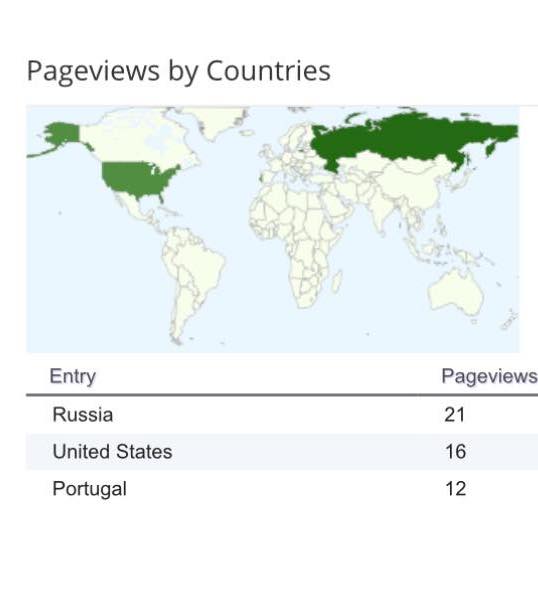
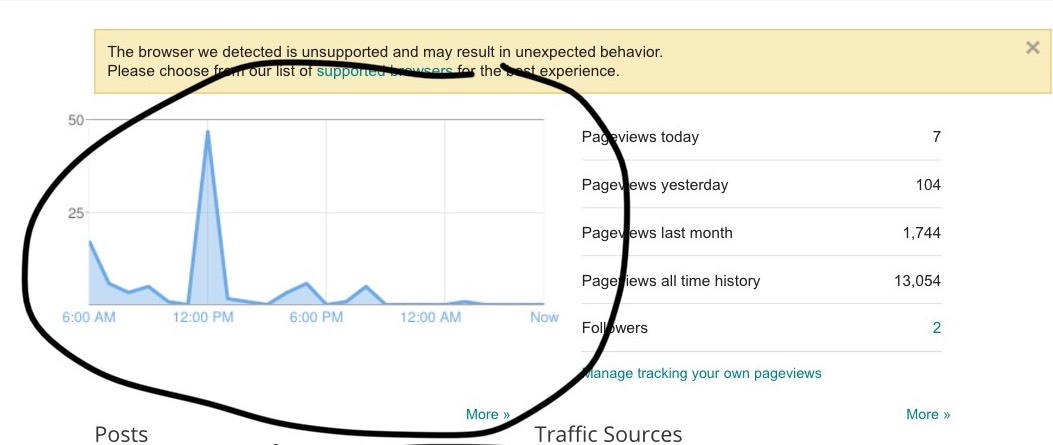
The explosion of visits yesterday — I’m curious.

Yesterday’s post hit 173 readers, which is three times the average amount of reads I get for a post!

Thank you, everyone! Please come back! 
I wish I knew who all of you were so I could thank you personally. 
I wonder how many of you are people I know and how many people came to visit for the first time. I expect that one-third of you are regular readers, and that half of those are people I know. (Hi, Lanetta!) 
That means 2/3 of you visited because you were attracted to the concept of graduation either through my Facebook (in which case you know me), Twitter, or search terms on Blogger, or because you were just bored. Or maybe you were an agent, but I only gave my blog address to one agent so far.
I have no way of knowing who you are, and as they say, curiosity killed the cat.  Each of you has a story. Each of you has a reason to visit — whether it be “Because I’m graduating,” or “Because I was bored,” or “Because I’m a regular reader”, or  “Because it sounded interesting,” or “Because I know you,”or “I have no idea”. Each individual reason has a story.  
I wonder how many of you will be back to read this post. In a way, it doesn’t matter, because this IS the Internet, where we read anonymously and write anonymously, even if we’re writing nasty dreck on Facebook. For all the information-sharing, we don’t really know each other here. 
But what if we started to?

Graduation as a Ritual of Closure

A little story about myself: In the darkest moments of my graduate career, when I wasn’t sure I had the energy to finish, one shining beacon would keep me going — the thought of being able to wear the professorial hood at other people’s graduation. When I received my PhD, after the ceremony where I rented my cap and gown and hood, my academic advisor gifted me with a hood in University of Illinois regalia colors, and I wear it to this very day to students’ graduations.

According to “A Field Guide to College Professors”, this hood belongs to
someone with a Ph.D. from University of Illinois. You can tell from the
navy blue with orange stripes.

I teach three classes and handle the internships in my department, Behavioral Sciences, at Northwest Missouri State University. Between students in my classes, advisees, and interns, I work with about 150 students a year. I can tell the graduating seniors in the class after midterms — this is when they start counting the number of days until they graduate, and they’re extremely accurate. In fact, one class posted the number on the board every class period. A student in another class could calculate the days to commencement to the hour.

When one of my students asks if they should go to Commencement, I say “YES!” Why? There are some downsides to commencement (graduation) ceremonies — for example, they run long, gowns are hot and sweaty, commencement speakers are boring more often than not, and there are big crowds at the cookies and punch.

However, without going to commencement, students may never feel like they’ve graduated. Commencement ceremonies provide a sense of completion and closure through their ritual — the graduation gowns, the processional, the professors in academic regalia, the discomfort of the flat cardboard caps that students often decorate, the selfies with friends and professors.

This selfie with a student was taken right after the final for the class.
Hi, Maggie!

Graduation and its ceremonies create a sense of completion and closure, as I said earlier. More important, they provide a rite of passage, something that is spiritually important. In the US, we have a crisis of rituals for passage into adulthood — high school graduation used to be the rite of passage into adulthood, but we no longer consider it so because of college. However, not all high schoolers go to college, so those teens no longer have a rite of passage. On the other hand, we don’t consider college students as adults, nor do they consider themselves as adults. This might help explain things like street gangs, which provide a sense of family and an initiation ritual that could serve as a ritual of passage.

I try to include rituals in my writing, as they’re so important in keeping a society together. We have religious ritual, academic ritual, holidays. Some of us have individual rituals, like mine of having my annual alcoholic beverage (Irish coffee) on Christmas Eve. Social/community rituals tie us in with our “people”, our community, our society. They give us a definition and a sense of community.

Something to think on.

Post-Mortem of a Crush

Note to readers: I do not have multiple personality disorder. I am just very aware of when aspects of my personality were forged by experience. This is just a writing exercise, thinking of a situation when I had a crush once.

************

Did I mention that I contain multitudes?

My fifteen-year-old self followed you like a puppy, wriggling for a little attention. My seventeen-year-old self, the intense one, stood dumb, disconcerted by beauty. The older and wiser me just wanted to learn what it was like to be artistic, having taken such an analytical career as academia.

My younger selves meant no harm. They didn’t wish to make your body tense up while reading online, wondering if I spoke about you or not. They didn’t mean to worry you. Sometimes our inner selves can be needy. I’m sorry if I was a problem.

You may not have even noticed. I think this is very likely. You have your own needs, your own multitudes, your own shadows, your own occupations. This might just be what dazzled Fifteen.

You may not ever read this blog. That’s okay; I have no idea who reads this. Just know that I needed to say it, being full of childhood Catholic guilt at a moment’s notice (I think Seven takes care of that). But my multitudes need closure.

My Latest Adventures in Querying

I’ve been brushing up my query letter for Voyageurs after having gotten a comment from an agent that I should. (I believe she said “This is a good source for learning how to write a query letter.”) Beautiful response, but I felt the burn across the Interwebs.

Here’s the new, improved query (the generic version; this will get tweaks to personalize it):

Dear Recipient,

My name is Lauren Leach-Steffens, and I have a thought for you to entertain: What if climate change had been accelerated deliberately through manipulation of the past? In the book Voyageurs, climate change becomes a plot hatched by a murderous time traveler. Voyageurs, a book of 89,000 words in the science fiction genre, explores the use and limits of time manipulation in the vein of Gregory Benford’s Timescape.

In Voyageurs, time travelers Ian Akimoto and Kat Pleskovich sleuth a spate of death threats against Kat and her mentor. They discover that a collection of seemingly unrelated threats and deaths lead to a 100-year-long swath of illegal time tampering. At the end of that trail lay the climate crisis that engulfs Ian’s era. Nobody has reversed time before – will Ian and Kat take on the dangerous task to try to reverse the time damage done?

Lauren Leach-Steffens is an associate professor of family economics, and she has published several academic articles. Extensive exposure to economics, psychology, and sociology has greatly influenced her characters and world building.

Warm regards,

Lauren Leach-Steffens
*********

Hope this works.


An Enemy of Creativity — Envy

Last night I had a dream in which I was hanging out with an ex-boyfriend of mine who had had a comic published and going into animation. (Note: said ex-boyfriend failed composition the first time he took it and can’t draw, although his best friend in college had a flair for comics illustration.) He announced his feat to all and sundry, from a science fiction convention to the barista at the coffee house. I was quite getting sick of it, but I was also getting envious because I wasn’t getting published.

The dream segued into an art classroom much like my high school art classroom, where I struggled with great inspiration but the inability to render my imagination into a pleasing reality (just like high school). I was actually trying to sculpt a flower petal-by-petal with shortening and cornmeal, for unknown reasons. I got into an altercation with a woman I know of, who I know to have no small amount of artistic talent. She impatiently flounced around the crowd of tables and made her displeasure known. “What kind of an art room is this! There’s too many people, no room to move — “

“There’s another class in the normal art lab,” I tried to soothe her despite my exasperation.

“Ethics, I’ll bet,” she sniffed.

I envied her the ability to think highly enough of herself and her talent that she could be a disagreeable prima donna.

*********
In the dream, I explained both of these scenarios to my husband, the first one in person, the second by phone. Upon analysis, I decided the dream was about envy — envy of someone who manages to break through and be regarded as excellent in their field. The fact that both were unpleasant about it suggests that I’m afraid to do what they did to get ahead of me — namely self-promotion. I’m envious about that ability to say “this is why you should read me” instead of merely “this is what I wrote”.

I struggle with self-promotion. A combination of Midwestern Humble upbringing, insecurity about my writing, and a sincere desire not to make others feel small makes it hard for me to assertively sell myself. Yesterday I read a primer on “how to write a good query letter”, and it exhorted the writer to mention how they had met the agent previously, and how the author’s book was in the vein of other writers the agent handled. I haven’t met any agents, but I suppose I should see who’s handling the authors I follow, although I don’t know if my books are like theirs. To me, this seems like so much presumption and schmoozing, which I’ve always avoided with all of my Quaker heart.

All that said, envy is an enemy of creativity. Why? Because it twists a writer in knots and flares up all the insecurities they’ve kept buried. It’s hard to be creative when you’re miserable and self-absorbed.

How to deal with envy? Own it, feel it, but contradict the messages in your mind that say you’ll never get published (never is a long time), your stuff is worthless (you don’t know its worth; don’t judge), nobody will ever read it (this is a deep, dark pessimism you can get rid of simply by finding beta readers), agents don’t like it (agents don’t get to read in depth; polish what you have).

I do this all the time. It’s almost become a ritual of cognitive journaling.

Back to the dream, and my husband. I’m also envious of him, because his first book has just the sort of rollicking, light SF in a John Scalzi vein that will raise attention before mine will. I’m encouraging him to finish and market the book because he deserves to be published, all while being envious.  I know that if he gets published, I will have to wrestle with the belief that my calling is to stand at the starting line and watch the runners speed past me. I’ll have to do more cognitive journaling, I guess.

A little happy cry

Today, my colleague Mary Shepherd presented me with the sheet music to the lyrics I showed you the other day. I heard the chords and melody on her music program — it’s simple, yet creates the mood which switches from anxiety to anger to defiance. It’s what it needs to be.

It’s exhilarating to have the final product in my hands. What’s more thrilling is that Mary would like a recording of it if someone ever records it, and we talked about sorting out royalties with a lawyer if it sells. It’s pie in the sky, I know, to think it will make any money or get more than a limited audience, if any. But I want to hear it sung. I want to make it happen.

Does anyone want to talk to me about singing it?

Ready to try again

This morning, I woke up wondering why I write.

It’s been six months since I’ve sent out my query materials to agents. It’s been six months since I received a rash of rejections from said agents. I have learned some about how to improve my writing since then. I haven’t, however, gotten over the dejection I feel when I get rejections, dejection I’ve written about in these pages and that you’ve read.

If I send queries again, I will invariably get rejected.
If I do not send queries, I’ll never get published.

I’m going to have a busy Christmas Break, between tweaking my classes for Spring (I have a day job as a professor in Behavioral Sciences), writing on my book that suddenly became two books, and editing something well to offer up to the agents. I wish I could afford to pay a real editor, but we can’t right now, so I have to limp along and hope my own skills are up to it. I worry that this puts me at a disadvantage.

I’m apprehensive. But I need to have an external reason to write, because writing takes up a lot of my time, and I would like it to pay off in some way — earning money from writing is good, but being heard and being read is a bigger payoff.  I don’t want to think writing is just a time-consuming hobby that I do all for myself while clutter still inundates my office. I want to think the world needs my novels, and that an agent would recognize this.

Executive Decision

Oh no — Whose Hearts are Mountains is now two books, which makes more sense plotwise, given that one book can’t hold “She’s found her goal and it’s a doozy” and “She needs to save the world”. But that means I have to come up with a lot more words.  I’m editing book 1 and adding at least 30,000 words to it, then writing book 2, which has become a lot more potentially interesting.

This will allow me to do what I don’t do enough of — describe, describe, describe and give people space between action moments, which I’m told people want.* I struggle with this, because there’s a fine line between tight and exhausting, and a fine line between detailed and verbose. And then there’s word counts, because 50,000 words is not enough for a novel.

So I’ve changed direction in one fell swoop, giving myself work but different work. Good thing I’m done with everything except giving exams and turning in grades now.

Wish me luck!

*************

*At the same time, I don’t want to give the extensive detail of Lord of the Rings — “and by the Sindar it is called ‘Blah’, while by the men of Dunedain it is called ‘Bleagh’, and to the Hobbits it is called ‘Aargh'”. Don’t get me wrong, I love Tolkien, but his linguistic digressions are like reading through the “Begats” in the Bible.