Revisiting the Goals at the End of February (Goal-setting)

Here’s my writing goals list for the year as of today:

Goal Sheet:
Short-term:

  •  Develop a platform plan by March 1, 2020
  • Revise Whose Hearts are Mountains via developmental edit by March 1, 2020
  • Send 30 queries for Whose Hearts are Mountains by March 1, 2020
  •  Send 30 queries for Whose Hearts are Mountains by April 1, 2020
  • Send 30 queries for Whose Hearts are Mountains by May 1, 2020
  •  Send 50 queries for Gaia’s Hands by December 1, 2020
  • Write/submit 5 short stories/poems/flash fiction by December 31, 2020
    • Inner Child – January 30
    • Kel and Brother Coyote Make a Deal – February 15  

Long-Term:

  • Develop idea for next novel 
  • Get an agent 
  • Discuss with agent further books
  • Publish my first book 
  • Develop personal sales presence


I guess I’m not doing too badly. 

Short-term goals tend to build into longer-term goals, and long-term goals can build on each other. I’m currently working on the “getting an agent” part through queries, and if I get an agent to take me on, the queries section of the short-term goals will likely resolve itself. Publishing the book, on the other hand, will take years once I have a publisher, so it’s really long-term.
Personal sales presence is something I can’t really develop (other than developing a platform, which I am doing).

And I have ideas for a next novel. Almost too many, given that I’ve been advised to focus my efforts on shorter fiction. But I’ll pick one by NaNoWriMo (November), then start writing it.

I may have to come up with more goals at this rate. 
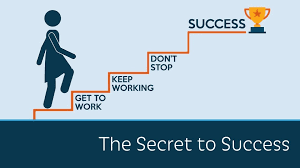


A Glimmer of Success

Yesterday, an agent asked to see my full manuscript for the first time. Mind you, I have sent out hundreds of queries for my five novels. 

Let me be honest — I have sent out queries for books that I hadn’t sent through developmental edit or beta reading. I have sent out queries not knowing how to write a query letter. I have, rightly, gotten rejections.

I have learned a lot from my failures. The visual above doesn’t really show the road to success because it doesn’t incorporate learning from failure. One can work hard but wrong, and all that effort means nothing. 

This is not to say that I will get an agent out of this. I could get rejected by the other 27 agents I have queries out to. The agent who has my manuscript might pass. Hard work and learning from failures may not be enough. The book might just be “not what we’re looking for”.

But it’s a glimmer of hope, a glimmer of success. I’ll take it.

Once Again


Sorry I skipped yesterday, but it was a full working day for me. I sent out some queries for Whose Hearts are Mountains yesterday, and I will send some out today. And again. 

It’s not the first time I’ve sent queries out. I’ve never received a good response on queries, but I keep improving and I keep sending queries out. 

I believe in my work. Maybe I believed in it too much when I sent the first queries, before I discovered dev editors and harsh re-edits. Maybe I believed in my queries too much before I learned to write queries (and I hope I’m doing them right now). 

I hope this time around is the time I get an agent.

Every Good Thing Has Its Cost

This morning I read a note in Facebook from an author who spoke of the time-consuming process of promoting her book. She spoke of the responsibilities of social media, the realities of watching her ranking on Amazon.com, the need for self-promotion.

Reading it, I realized that getting published will have its price. Starting with the process to publication — galley proofs, advanced review copies, building one’s social media platform (which I have been doing as evidenced by this blog post). Then, when the book is published, some or most of the responsibility of promotion falls to the reader through social media, book tours, and sales at conferences.

Am I ready for that? I think so. I have known that being published, especially if I get published by a house with some presence, will be life-changing, and that some of that life change will be work. I’m willing to make that sacrifice.

So You Want to Write a Blog Part 2 (Personal Development)


So, I have a blog now. Do I just write?
Not exactly. You have to think about what you write. It needs to fit your theme and audience — if you’re writing to writers about writing, writing about politics will probably feel “off”. You can be an essayist in your blog and write about whatever crosses your mind, but it may be harder to convey a theme in your blog.  On the other hand, John Scalzi, a science fiction writer with a multi-book contract, writes about everything from writing to politics. His blog, fittingly, is called Whatever. If you’re as big as John Scalzi, you can write whatever.

How do I know what to write?
If you have a theme and an audience, you’re doing them no favor by just free-writing. This is your personal/professional presence on the Internet. If you’re a writer, it’s a chance to market yourself. You can compose directly on the screen, but compose. cut and paste to make the document flow. Proofread. Read it aloud to yourself like any other document you want to write to impress people. 

The blog should not be too long, in order to cater to today’s readers. I’m divided on how excerpts of novels and short stories should be presented in blogs, but I think that short excerpts are the best.

The 29th Annual Edition Guide to Literary Agents 2020 (Brewer, 2019) suggests that one should have a list of topics for six months or a year. This works great if one writes weekly; I write daily (which is insane, but so be it). I do have a list of weekly topics, but intersperse those with more personal observations about being a writer.

Other suggested tricks
The 29th Annual Edition Guide to Literary Agents 2020 (Brewer, 2019) has a chapter that presents several other reader- and SEO-friendly suggestions for blogs:

  • Short paragraphs and headings, as you see here. This works well for informational blogs; not so much for narrative.
  • An SEO tag in the title. I have a few that I use for my blogs, although I sometimes forget these because they’re new to me.
There are probably more tricks, but I haven’t learned them yet. I am still working on getting readership for this blog, but it may increase after I get published (I hope). 


Reference:
Brewer, R.L., 2019. The 29th Annual Edition Guide to Literary Agents 2020. Writers’ Digest Books.

So You Want to Write a Blog Part 1 (Personal Development)


Writing a blog is an admirable pursuit. It’s also a lot of fun. But randomly throwing blog posts into the ether is not rewarding, and the thrill will be gone soon.

Over the next couple days, I want to explore the things you need to do to start a rewarding blog.

First, find a reason/theme/audience. These options have similar aims: to focus your writing. This gives your writing a particular “brand” for people to follow. For this blog, my theme is writing, and my audience is writers and potential readers. (This latter purpose will step up when I get published). Despite this theme and audience, however, I estimate 50% of my readers right now are not writers, but may be potential readers.

Commit to writing. Continuity is one reason that people come back to a blog. Many writers commit to weekly blogging; that’s a reasonable amount. For some reason, I write daily. I’m not sure this is a good thing, but one of my reasons for writing this blog (other than what’s given above) is to warm up and sharpen my writing skills. 

Find a platform. Commonly used platforms are Blogger (where this blog is), WordPress, Tumblr, and Wix. Each has advantages and disadvantages; some have access to more options in the paid version.  I have used Blogger and Wix; I use Blogger because of its simplicity and because, when I tried to migrate to Wix, my readers didn’t migrate with me even though Wix has a superior visual interface. But which one you choose is up to personal preference.

I will explore further blog-writing ideas and tips in the next installment and would welcome your ideas and tips in the comments or by email: lleachie@gmail.com

The Luck Factor


I need more luck. Of the good variety.

It occurs to me that my writing may not be enough to get published.  There are people who get published because they know someone, or because of some random set of events that get them to the right place at the right time with the right person.

I don’t know anyone in the industry, so I’m praying for just that sort of luck.

I know every good thing is a two-edged sword — the lottery bestows money, and with it, tension. A publishing contract would invite paperwork and other life changes into my life. But the status quo isn’t necessarily the best place to live either.

So I am wishing and praying for the kind of luck, the serendipity that changes my life in a positive way. 

Free-Writing


I’m staring at the screen, wondering what to write today.


I have a blog to write. I feel totally uninspired despite two cups of coffee and a LED light block shining at my face. (I just made the mistake of looking at it, and a phalanx of dots is fouling my vision.

I have a short story to write. I promised myself five stories this year, and I’ve only written one so far. I have the idea fleshed out in my head. I just have to write.

So I’m writing about not writing. The irony is not lost on me. It’s something I learned over the years — if you can’t write about something important, write about something trivial and see what happens. It’s called free-writing, and I use it a lot.

Sometimes, to snap an idea out of my head, I write differently than I normally do. I use notebook paper instead of the computer. I write with a fountain pen (mine is pink with pink ink) instead of a ballpoint. Sometimes I write on black paper with bright metallic gel pens.

Free-writing opens my mind to the rhythm of words. Almost like the trance writing of mediums, it opens my mind to ideas. And, worse comes to worst, it’s a great way to practice my handwriting.

So I’m here to recommend a different type of writing for writer’s block — nonproductive writing that’s secretly productive.

I guess I can brag

I don’t have any novels published yet (my big dream). But here’s a list of my writing accomplishments to date (over a time period of about 9 months):


  • Honorable Mention in 48th New Millennium Writing Awards, Runner up in Cook Publishing 2019 Short Story Contest 
  • Published in A3 Journal, by Riza Press (online) and Submittable Stories (online). 
  • Second place in 12 Stories 2019 Contest.       

I’m a little bummed that I don’t land first place in contests, but even in the completely unsuccessful contests, I’ve gotten emails that have said I’m oh so close. 

I think I’ll be optimistic about this.                        

Vision Board (Personal Development)


On January 2nd, I made a vision board — or rather, a vision book, as I didn’t have any place in my room to post poster board. 

What is a vision board?
A vision board is a motivational tool using pictures and sometimes text to render what’s most important to a person into visual form. This can be done in poster or book form or online, and could utilize photos, clip art, or other visual symbols. 

How does it work?
Many proponents of a vision board believe in the Law of Attraction — that we can attract good fortune. I do not, largely because it seems selfish to me. I tend to believe that it helps me to focus on my goals and, thus, helps me to motivate toward what I think is most important.

What does my vision book look like?
It takes up six pages of a larger book that I should be documenting my success in. The pages are: Writing, getting published, marriage, teaching, research, and time management.

Does it motivate me?
When I first made it, it greatly motivated me. It felt like a ritual, and I’m a great fan of rituals. Now, a month out, I feel I need to look at them again, maybe on a daily basis. 

Do I need to make a ritual to look at it daily?
Most certainly yes. Or make an actual board to hang on the back of the door.