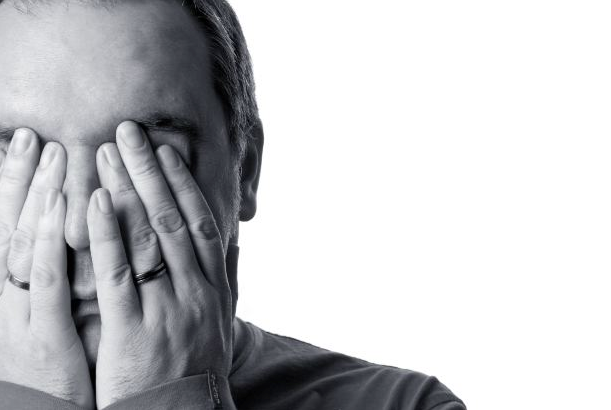
Remorse: Deep regret or guilt for a wrong committed. This is what the dictionary tells me. I look at this definition, and I realize that remorse isn’t the garden-variety guilt we get from sneaking cookies into the movie theatre or taking the last parking lot. Regret exists in the context of having committed some wrong.
Remorse, as the definition says, is also deep. No twinge of guilt for picking up the last roll of toilet paper on the shelf. Remorse drops us to our knees. It is heart-rending.
Remorse is necessary. It exists to spur us into action, into remediation, into restitution. It exists to bring us back into community, as we were meant to be.
Remorse is vital to our lives.
Tag: amwriting
Day 20 Lenten Meditation: Change
Right now, the buzzword is “social distancing” in order to slow the spread of COVID-19. We didn’t know how ingrained our habits were — going shopping, going to classes, meeting with friends — until we were advised not to do them.
Our discomfort is palpable, mingled with the fear of the unknown contagion. The hesitation when we think for a moment of our habits, then realize that we’ve had to change the way we look at our everyday routine.
Change, even anticipated change, hits us this way: discomfort, disorientation. A feeling like walking in the wrong direction, like we are uneasy in our own bodies. Fear of the unknown.
Because of this, we often avoid change. We avoid the messages that we need to change, such as in this COVID-19 pandemic, we avoid making beneficial changes because the status quo is so comfortable.
How do we make change easier? Information — the more we can penetrate the unknown, the more we know what the change will create. An analysis of pros/cons or risk/benefits for each option, change or no change.
We need to choose change by testing that it is the best option, whether it reduces harm or increases good.
Day 19 Lenten Meditation: Resistance
In movies, we root for the resistance, the underdogs who fight unjust systems — Star Wars, for one shining example; The Matrix, V for Vendetta, The Help, Hidden Figures, Remember the Titans, Erin Brockovich, for others.
It’s a popular trope, yet we do not often resist the unjust powers over our own lives. We lament, we grouse, we vent, but do we resist? Resistance requires us to stand up to the power, whether overtly or covertly, and that means to step into potential danger.
There are many understandable reasons why we do not resist. First, because we don’t perceive ourselves in enough potential harm to take the risk. Second, because there are people in our lives we want to protect. Third, we’re just plain tired and it just can’t get any worse, can it?
It most certainly can get worse. Think of Nazi Germany and any parallels to the current state of America. I will not say we’ve become complacent, yet the Democrats squabble over their candidates and the Republicans believe that Trump is their best choice in the primaries. Yet we do not move.)
Resistance, in my opinion, needs to be non-violent as long as possible, so I’m not going to advocate the Star Wars solution until or unless we’re facing destruction from star destroyers.
- It can be protest, which may accomplish something if enough people do it for long enough. I think about protests in Poland, which have prevented some authoritarian actions there.
- It can be subverting the paradigm — I think about the Norwegians in WWII and their use of humor against the Nazis, destroying their morale: https://www.atlasobscura.com/articles/during-the-nazi-occupation-of-norway-humor-was-the-secret-weapon
- It can be refusal to take action, but this must be clearly because the action is wrong and not because the person doesn’t want to do it. And the action has to be clearly wrong. Civil disobedience is my favorite example: occupying buildings and other public spaces, risking arrest to protest war, violence, disruption of rights, and corporate irresponsibility.
- It can be social media, which is the resistance I see the most in America. The issue, though, is the swell of resistance is pitted against conspiracy theories, Russian bots, and other misinformation. We must prove our assertions with truth, even when accurate information seems useless — the truth will out.
- It can’t be offensive — which encompasses everything from riots to mailing dangerous materials to bomb threats to violence. Resorting to violence makes the resister look like an extremist, which means they’ve lost.
- It can’t have worse consequences than what the resister is fighting. I think about people who refuse to vote if their presidential candidate isn’t nominated. By inaction, they may be choosing the greater of two evils.
Day 18 Lenten Meditation: Music
A long time ago, a friend told me, “I don’t believe in God, but I do believe in music. Music is a force holding together the universe.”
Even to this day, I can’t say he was wrong. The music of the spheres in the greatness of the universe, a lullaby sung by a mother, the communal experience of a mosh pit or a church service, the sad song on the playlist — all have the sense of the divine in them.
We turn to music for celebration, for comfort, for commemoration, for unity. We praise, we seduce, we tease, we shout for joy, we share our humanity, we lament — all through music. To quote my friend Greg again, “Music is a force holding together the universe.”
Day 17 Lenten Meditation: Doubt
I thought Doubting Thomas was the most reasonable person in the Bible. I don’t know if I believe the story went as written; so many hands have messed the Bible up. I guess I’m like Thomas.
He had very understandable questions in the aftermath of Jesus’ resurrection. It was a violation of natural rules, observed for millennia, and he pointed this out. In a more educated time, he could have gone to college and become an academic. He had the right to question, and in that, he represents all of us.
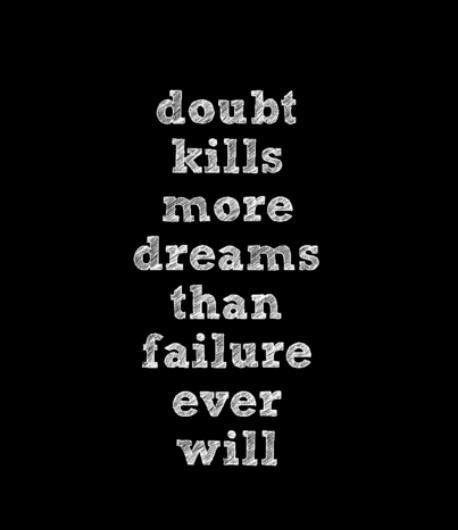
We live with doubt, and for good reason. Because of doubt, we avoid the false cures of snake oil salesmen and the too-good-to-be-true promises of scammers. Doubt is a potent defense mechanism.
There is, however, a point where doubt is counter-productive. What if good research tells you that the doubt is unfounded? What if there’s more true benefit than risk? What if doubt is keeping you from a richer human experience?
We need doubt. We need to know when to let go of doubt.
Day 16 Lenten Meditation: Wisdom
Note: I apologize for missing two days of meditation: I was at a cabin retreating from life for a little while. It didn’t have reliable internet so I didn’t post. I did, however, meditate a lot.
Today’s meditation is about wisdom. Wisdom is not just knowledge, it’s knowledge put into play in the context of the wider world behind it. Knowledge is knowing the facts; wisdom is knowing how to use the facts. Wisdom is the knowledge that comes from experience and learning from experience, and is flexible enough to take everything into account.
Some people say wisdom comes from age, but there are many old fools out there that prove the lie. Some of those fools, unfortunately, are in the government and think themselves very wise. However, knowledge is knowing how to build a nuclear bomb; wisdom is never building it in the first place.
Wisdom doesn’t always follow the status quo; it forges new paths to promote the well-being of human beings all over the world as well as the earth and nature itself. Wisdom requires us to use our knowledge in new ways, evolving with the needs of creation.
Wisdom is what will save us; knowledge is not enough.
Day 13 Lenten Meditation: Dance
If I don’t dance, nobody gets hurt.
It’s true. I’m preternaturally clumsy. I once broke my foot dancing. In Renaissance garb, so I looked twice as impressive in the emergency room. I could just as easily broken my partner’s foot as we took a full gallop down two lines of dancers. Renaissance dancing wasn’t very demanding, even, and I broke my foot.
I’m sure the person who wrote these meditations meant this in a spiritual sense, but this is not my metaphor. To me, “dance” means “spend three months in a cast”.
I’m kidding, sort of. I’m also the person who wrote the lyrics to the following song:
To dance naked in this pool of light
is all the moment requires of me —
eyes closed, as if I were alone
but I know you are there almost
almost close enough to touch,
almost close enough to feel
My hand reaches out to touch your face
and touches air — I am not close enough
I am not close enough
In dreams I dare to touch your face
we dare to look into each other’s eyes
Dreams become connection, become real
In dreams I dare to touch your face
we dare to look into each other’s eyes
Dreams become connection, become real
I am not close enough
Last night I woke up from a terrible dream
I was standing lonely in the wilderness
with no one close enough to hear
but I knew you were there almost
almost close enough to touch,
almost close enough to feel
My hand reaches out to touch your face
and touches air — You were not close enough
You were not close enough
In dreams I dare to touch your face
we dare to look into each other’s eyes
Dreams become connection, become real
In dreams I dare to touch your face
we dare to look into each other’s eyes
Dreams become connection, become real
I am not close enough
I shed my clothes to dance in light
alone, spinning wildly into sky
my hand reaches out to touch your face
and touches air, and touches life
almost close enough to touch
almost close enough to feel
my hand reaches out to touch your face
I touch your hand and we are close enough
and we are close enough
In dreams I dare to touch your face
we dare to look into each other’s eyes
Dreams become connection, become real
In dreams I dare to touch your face
we dare to look into each other’s eyes
Dreams become connection, become real
And we are close enough
Day 12 Lenten Meditation: Inclusion
It is easy to avoid those who make you uncomfortable. Those of a different culture, those who act differently, those who speak differently. It’s easy, but it’s not fair. Or kind. Or right.
It’s easy to ostracize those who are different. Those with disabilities, those of a different color, those who are too smart or not smart enough. It’s easy, but it’s not fair. Or kind. Or right.
Inclusion is difficult. In a classroom, it means having children with disabilities, especially those that get in the way of learning, in the same classroom as other children, working with aides who help them work around their disabilities. In the workplace, it means teaching the majority how to treat the minority with the same courtesy one treats their acquaintances. In everyday life, it means cultural competence and the ability to see the world through the other’s eyes. All of these require effort, discomfort, and honesty to oneself.
Inclusion is necessary. Humans evolved because of their ability to adapt. They evolved from genetic difference that led to more adaptation. We evolved socially with differences among people. We only adapt when there is difference — different attitudes, different experiences. We must include others for the sake of our own future.
And because it’s fair, kind, and right.
Day 11 Lenten Meditation: Play
Play is necessary to life.
Play is a way to engage ourselves with the world in unexpected ways, ways that invite laughter and more play.
There’s a common trope that says we lose our ability to play when we get older, but I see a lot of evidence to the contrary. Cosplay, practical jokes, puns, Internet memes — all of these are evidence that play still exists.
For those who have lost play, I suggest one simple exercise: Find a swing set, and climb into the seat. And then swing, heedless of who might see. Feel the laughter break forth from you, and that’s the result of play.
Then work your way up to fingerpainting, or talking to yourself in silly voices. Engage yourself in the messy, the ludicrous, and feel that laughter again. Get rid of the self-consciousness and just play.
Day 10 Lenten Meditation: Imagination
Imagination is perhaps my greatest gift.
Imagination saved my life in a bleak childhood, when I spaced out in school imagining the dialogue of two princes plotting to kill each other, created story lines where I alternatively saved and was saved by classmates, and envisioned elaborate backgrounds to the music I listened to on my AM radio.
The times when I have had nothing else — times of illness in a behavioral health ward, lonely times in my depressive episodes, times of failure — I have had the ability to create images in my head, create words in my heart. To see what was not immediately there.
Imagination is perhaps the world’s greatest gift. We live in a world of strife, so we imagine peace. We live in a world of climate change, so we imagine solutions. Then we change the world.