
Play is necessary to life.
Play is a way to engage ourselves with the world in unexpected ways, ways that invite laughter and more play. There’s a common trope that says we lose our ability to play when we get older, but I see a lot of evidence to the contrary. Cosplay, practical jokes, puns, Internet memes — all of these are evidence that play still exists.
For those who have lost play, I suggest one simple exercise: Find a swing set, and climb into the seat. And then swing, heedless of who might see. Feel the laughter break forth from you, and that’s the result of play.
Then work your way up to fingerpainting, or talking to yourself in silly voices. Engage yourself in the messy, the ludicrous, and feel that laughter again. Get rid of the self-consciousness and just play.
Tag: amwriting
Day 10 Lenten Meditation: Imagination
Imagination is perhaps my greatest gift.
Imagination saved my life in a bleak childhood, when I spaced out in school imagining the dialogue of two princes plotting to kill each other, created story lines where I alternatively saved and was saved by classmates, and envisioned elaborate backgrounds to the music I listened to on my AM radio.
The times when I have had nothing else — times of illness in a behavioral health ward, lonely times in my depressive episodes, times of failure — I have had the ability to create images in my head, create words in my heart. To see what was not immediately there.
Imagination is perhaps the world’s greatest gift. We live in a world of strife, so we imagine peace. We live in a world of climate change, so we imagine solutions. Then we change the world.
Day 9 Lenten Meditation: Community

According to researchers (Grouzet et al, 2005), community is a universal goal across cultures. It appears not just a goal, but a need. Matthew Lieberman, in his book Social: Why Our Brains Are Wired to Connect (2013) cites thousands of research articles to make the case that we were born craving community.
How do we get community? Some get it through church, others through clubs and volunteer work. Some get it at their favorite coffeehouse or bar. Many of us get it online, but there we have to struggle with antagonism as well, destroying our sense of community.
Against community, we have no way to define ourselves. We have nobody to turn to when we are suffering, nobody to take care of us when we are sick, no one to celebrate with when we triumph. Even introverts need community — perhaps one person at a time.
Where is your community?
Grouzet, F., Kasser, T., Ahuvia, A., Fernandez-Dols, J., Kim, Y., Lau, S.,Ryan, R., Saunders, S., Schmuck, P., Sheldon, K. (2005). The structure of goal contents across 15 cultures. Journal of Personality and Social Psychology. 89. 800-16. 10.1037/0022-3514.89.5.800.
Lieberman, M. (2013). Social: Why Our Brains Are Wired to Connect. Crown Publishing.
Day 8 Lenten Meditation: Silence

How do we know ourselves if not for silence? We only know our outward selves — our careers, our social networks, our consumer-driven wants and needs. With silence we lose our external selves for a moment, and find our internal one. And then we pass beyond self to the big Unity, the center of silence.
There are many ways to find silence. Unplugging from the phone, meditating, silent worship, walking alone in a peaceful place. Anything that quiets not only the external but the internal chatter, our constant defining of the world.
As a Quaker, I am accustomed to silent worship. We believe that in the silence, The Divine speaks to us. Silence isn’t only reserved for worship, but in everyday life. We believe that we must live simple lives so that there’s undistracted space for us to listen to our small, still voice. That’s another type of silence.
A little bit of silence is my prescription to you.
Day 7 Lenten Meditation: Dust

We have a natural antipathy to dust, perhaps because it’s something we can’t control. Dust is ubiquitous. Dust exceeds our ability to clean as it sparkles in the sun drifting through windows.
Dust symbolizes the useless and unclean. In the Bible, the Apostles were instructed to knock the dust of inhospitable towns from their sandals on the way out. (This is especially noteworthy as feet were seen as unclean in that culture.) Dusting is a regular part of housecleaning, and neglecting to do it will raise the scorn of neighbors.
Dust inspires poetry about death and mortality. “Unto dust you shall return …” declares the Roman Catholic mass on Ash Wednesday.
We do not like to think about dust. We will never love dust, and that is fine. We will fight dust, like we fight filth, like we fight against death.
But in the end, it will win.
Day 6 Lenten Meditation: Creativity
Every morning I create the sun,
dandified provider of the morn,
huge and lurid rose against the dawn.
Every evening, I create the moon,
cool and glorious minder of the night,
phasing in and out and back again.
Every midnight, I create the world,
anchor for the stuff of dreams unfurled.

Day 5 Lenten Meditation: Sanctuary

We all need a place to feel safe.
Whether safety means the need to get away from a hard day at work, a sense of loss from trauma, or an immediate threat to one’s well-being, sanctuary is necessary.
Some find sanctuary in a closed door, a meditation session, or a safe community. Some find sanctuary in writing, or art, or other engrossing activity. Some find sanctuary in family or friends, or in religion.
Inside each of us, no matter how old we are, is our memory of childhood, which was safe or not safe, That part of fears the unknown as something dangerous. That young self yearns for sanctuary.
We can’t stay in sanctuary forever, because if we do, we are fugitives from live. Nobody needs to be safe forever. But it’s good that sanctuary is there when we feel threatened.
Day 4 Lenten Meditation: Passion
My idea of a creation story for this earth: The world was created in a burst of passion, with the raw materials for life combining in a great explosion of potentiality.
Passion brings worlds into being.
When I write passionately, I create dystopias at times, but I plant the seeds for reclamation.
Passion makes us reach out for justice.
When I see a kindred spirit, I feel passion for their presence.
Passion to live turns every day into love.
When I am most passionate, I come to know myself better.
Passion infuses us with becoming.
Novel in need of resuscitation.

I’m contemplating scrapping a novel.
Gaia’s Hands, my first book, needs so much help. I can’t even explain why, except that it just isn’t up to my standards. The B story (Jeanne and Josh’s relationship) doesn’t feel quite right. The A story needs a few adjustments. The magic seems intermittent and just wedged in.
All in all, I am frustrated with this story, even though I’ve rewritten it so many times it’s ridiculous.
It’s down to a short novel. Maybe if I cut enough, it can be a novella. I don’t see it getting larger again.
Wish me luck.
The Day I Became an Introvert. (Personal)
All my life I thought I was an extrovert. I loved hugging people, I loved being around big crowds of people, I loved to talk. But then, when I passed through one of my frequent depressions, I felt like crawling into a hole and not talking to anyone.
Fast forward over a diagnosis of bipolar II, and a life change with medication, sleep protocols, and other lifestyle changes (no alcohol), and my moods are stable. However, I’ve discovered what I thought was natural extroversion was actually my hypomanic moods, and my normal state was introversion.
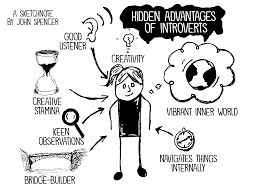
Yesterday, my psychiatrist agreed that I am, indeed, an introvert.
This may be one of the hardest adjustments to make with my bipolar — that some of what I regarded as natural aspects of my personality were actually traits fueled by chemical imbalance. This adjustment is harder than it sounds — I find myself quoting a Myers-Briggs score from 20 years ago that is no longer valid, and it hits me with a small shock.
What will it mean for me to be an introvert?
 Words Like Me