The Best I Can Right Now

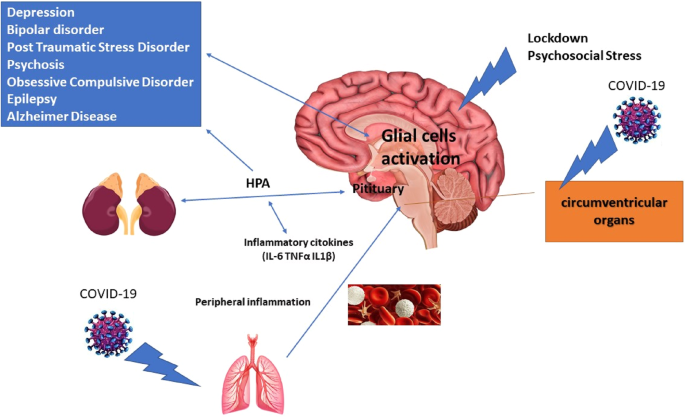
Note on caption — I have not had COVID yet, so much of this diagram is not in play. But the lockdown and psychosocial stress is real. Also, WHAT DOES THIS DIAGRAM EVEN MEAN?!


I’m really sorry I haven’t been talking to you for a while. I’m in a rough place right now, and I don’t want it to get rougher, so I’m focusing on what’s necessary until my brain can catch up with what’s extra.

This is a part of my life. My moods can go smoothly until I hit a patch of extreme stress (COVID rates rising plus the presidential election and its batshit crazy aftermath) and then my sleep goes off, my mind is a fog, and my emotions are all over the place.

It takes me a bit to recover. Usually I manage it without a tweak to my medication, and usually I don’t go into the hospital to manage it. I know what to do to keep myself functional — go to work even if my mind doesn’t think it can, get the important things done, go home to rest. Make sure I’m not avoiding emails. Take bubble baths, do cognitive exercises, not fault myself for not promoting the book.

I will get through this. I always have. But if you’re not seeing as much from me as you have, understand that I am doing the best I can.

My Feelings and Creativity

 According to my horoscope, my feelings today are not going to be mild or even moderate! I’m supposed to let my feelings out through creativity. Good thing I already do that, eh?

That’s why I started writing — to let out a surplus of feelings. As a child, my feelings weren’t mild or moderate and tended to bewilder people. I wrote to keep my feelings manageable. 

Now that my bipolar medicine keeps my feelings more manageable, I write a greater range of emotions, varied plots, different poems. I still, however, write my feelings into my work, shaping the words to my feelings. 

Back to the horoscope. What will my feelings be like today? If the past two days are an indication, I will be impatient and frustrated. Great feelings for a poem.

A Visit to My Psychiatrist


One thing I haven’t talked much about in this blog– I live with Bipolar II disorder. To put it in short and demystifying language: without treatment, I have mood swings. Depressions are deep with thoughts of suicide when I feel things are hopeless. Hypomania is starting a lot of projects, not finishing them, thinking I am especially blessed by God, then swinging into easy irritability. I often manifest with either ultra-rapid cycling or mixed-episode type — it’s hard to tell these two apart, but I can at times go from elated to depressed in a single week.


Diagnosis can be difficult. Especially in its milder version (Bipolar II doesn’t manifest in full-blown mania), mania can look like ADHD, anxiety, or even a particularly charismatic personality. So depression is diagnosed as ordinary depression, and because the mania side is not treated, stability is not achieved. 

Treatment for people with bipolar disorder generally receive a cocktail of medications to treat it. Some people can get away with just one med; I, like many others with bipolar, have to take four medications a day to tweak my chemistry in the right place. It takes a while to adjust the meds correctly, and a few people don’t get good control with medications.

Lifestyle changes are as important as well. Avoiding alcohol helps prevent depression. Regular sleep habits help greatly, and stress management methods like cognitive journaling help reduce stress that can throw off one’s chemistry. Many people need a therapist or social worker to work through the implications of a life-changing disorder. 

Because I’m in good control right now, I see my psychiatrist every two to three months. Generally, he asks me how things are going with the meds and my mood, and then he just chats with me. I sometimes think he gets better information from me by watching me talk than he does with the direct questions because he can observe mania or depression by my tone of voice, pace of speech, and hand gestures. But he also trusts my observations, because I have a good awareness of where I’m at, at least when I’m depressed.

I have to have certain medical tests because of one of the medications I take, lithium carbonate. Lithium can damage the liver and kidneys, so these have to be monitored. It can suppress thyroid, necessitating monitoring of the thyroid as well. In addition, lithium blood levels can grow to toxic levels as a result of dehydration, illness, or even taking ibuprofen or other NSAIDs. I have had mild lithium toxicity; it is not pretty. 

I live with the awareness that stressors can catapault me into an episode, and I need to keep an eye on that. I had a severe episode when I was first diagnosed because my department was being disbanded by the university. The COVID-19 stressors, especially when moving classes online, might have triggered some depression (I’m not sure, so it must be minor). 

So I’ll visit my psychiatrist today. I’ll go to the lab Monday and get my blood tests. And all will be well. 

Day 2 Lenten Meditation: Commitment

This is a hard thing for me to write about, because I feel the guilt of all the times I broke my commitments because of depression.

My enthusiasm (and hypomania) would carry me into trying to do something but the depression would keep me from following up. I overcommitted, I underperformed.

It took the medication for me to see who I wanted to be. I don’t over-commit these days, knowing that the only thing that keeps me from mood swings is a precarious balance of medication. But I do commit — to my job, to my marriage, to the things I believe in.

Commitment defines me. I am not just what I embrace, but what I follow through on.  


melancholy

Things haven’t been going well lately.

I think I’m feeling the emotional toll of losing two cats (the long-time cat Snowy and baby kitten Belvedere) in a week. Strangely enough, Belvedere is the hardest to get over, even though he was only five days old; he had a purity about him with his little milk mustache and his snuffling my hand. 

There’s not much good to balance that unless you count the fact that I’m still writing. I don’t want to go to work today; I just want to sleep.

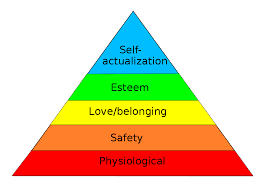
Of course I’m going to go to work. That’s top priority; in Maslow’s Hierarchy of needs (a psychological construct), physiological needs (food, clothing, and shelter) are the foundation that needs to be satisfied before we fulfill any other needs:

And physiological needs cost money, which one gets by working. 

In a deep depression (which I am not in), I have to remind myself of this basic fact because the inertia and hopelessness weigh me down into immobility. In a hypomanic state (which I am also not in), I have trouble concentrating on the need to go into work. In either case, the larger than life emotions of bipolar overwhelm the logic of everyday life. So constructs like Maslow’s Hierarchy keep me focused on the facts of life.

So right now I’m sleepy and sad. It’s an easy day at work today, as I get to watch other people run a poverty simulation. Then there’s the weekend, and time to recharge.


Being Bipolar

I’m feeling a bit down these last couple of days, sleeping a lot, probably a letdown from the really successful first week. I hope it’s that and not my moods crashing.

Being bipolar (bipolar II — without full-fledged mania), I worry about these things. I’m pretty stable on my meds, until I’m not. There are a number of triggers that can knock me off balance — not enough sleep, stress, certain medications (pain meds and Benedryl for example), missing a couple doses of meds, more than a tiny amount of alcohol … some of these things I have control of; others are out of my control. 

Too much sleep is a sign of a downturn, and I’ve done a lot of sleeping the past couple days. On the other hand, I stayed up late Saturday night, and — did I mess myself up there? 

Probably not. There’s such a thing as temporary sadness, or a down mood — 

That’s one of the problems with having a mental illness — having moods, even normal ones, is seen as a chargeable offense. Admittedly, losing control of bipolar can result in mania, which if full-fledged scares others with its unpredictable behavior. Depression is its own disruption — it looks less scary on the outside, but can result in suicide. It’s really hard for a bipolar person to know they’re in one of these states because they feel real.

However, even in a bipolar episode, there are things I’ve learned to do to keep me functional during upturns and downturns. The biggest one is to contact the doctor for a medication adjustment. Making sure I’m getting to bed at a consistent time each night, using cognitive journaling to separate moods from real life, and getting to work every day helps until the med adjustment takes hold. 

So if this ends up being a depressive episode, I know what to do, and that is to manage things as if this were any other illness.

optimism and waiting

Apocalypse is ready for querying, but I’m going to sit on it for a while, until I know what’s happening with Prodigies. If Prodigies gets accepted by either DAW or the remaining agent on my list, it changes the whole dynamic. 

I’m thinking positive. My good Germanic role models on my mother’s side of the family would discourage my positive thinking. The Koenig family motto is “Don’t look forward to anything; you might be disappointed.” The problem with this, though, is that all that time I’m not looking forward to a positive outcome doesn’t make the rejection any easier, and in fact, prolongs the misery.

Optimism always makes me worry that I might be hypomanic; as someone with Bipolar 2, this is not an idle worry. But I’m not being kept awake by disparate thoughts linking  with each other like boxcars in a railyard, so maybe this is true optimism.

So I wait.  

Pessimistically optimistic

I miss the boundless optimism of hypomania, that magic feeling when I step out of the house in the morning, and the sun shines just so, and I just know something magic will happen, because I’m blessed that way

I don’t miss it enough to go off my meds, because without the meds my moods shift from elation to irritability to despair within a few hours. I have rapid cycling bipolar 2, so moods develop fast, like a volatile weather pattern. And that optimism could crash into suicidal ideations with the smallest speed bump in my life. The meds help, but anything from lack of sleep to a major stressor could derail my balance.

As a counter to my hypomanic pixie dream girl optimism, I have how I was brought up in a repressively Germanic family. The motto of my family was “Don’t look forward to anything, or you might get disappointed.” So normal me without the buoyant giddiness or the crushing despair hides in a coccoon of “This enterprise is doomed.”

I have to learn how ordinary people experience optimism. I have a manuscript out to a major science fiction publisher. It’s been there for three months. I expect to hear about it any day now. Because I’ve put so much work into the book I think it has a chance, I feel optimistic — but I don’t trust it because it looks like mania. Because I’ve gotten a number of rejections from this iteration of the novel from agents, I feel I should be pessimistic, but pessimism takes a lot of energy to maintain and optimism feels better.

So I’m waiting for a report on Prodigies, trying to tell myself that I’m going to get rejected and being answered by a bubble of optimism that I don’t trust. My only answer is to hold onto hope and keep trying.
 

Summer productivity

My school year officially ended at noon yesterday, after I finalized my grades and finished my office hours. Now I’m officially in summer mode. 

That means I have some uninterrupted blocks for writing. This doesn’t mean I’ll only be writing this summer. I have a class I’m taking in administration of disaster mental health programs, I have at least twenty interns to supervise, I have research I should do, I have classes to put together for the summer, I have my gardening …

Professors don’t really have the summer off, we just have more freedom to schedule things as we need them.

So, writing. I’m celebrating the end of the semester with a writing retreat in a cabin at Mozingo Lake next week for two nights. I’m hoping the change of scenery will help me get ahead on the rewrite for Apocalypse.  

I’m talking this all out loud because the concept of planning out this summer productivity is new to me. Before my bipolar diagnosis, I pushed myself hard at the end of the semester, usually swinging between hypomanic and depressed, then collapsed on the finish line and slept for two weeks. Or longer. A lot of summers went by when I could barely function to do my summer work. 

Being able to enjoy productivity on my own terms is a very new concept for me. And I plan to enjoy it.


Day 42 Reflection: Truth

Truth sets us free, but often in a way that feels like a wrecking ball. Or the silence just before the tornado hits, with its gut-crawling suspense. The silence after the crash, after the storm, shelters the whisper of two words: “What now?”

My truth: I have been struggling for seven years, ever since my diagnosis with bipolar and the loss of my original department. I have struggled with depression when my medications fail and when I face major setbacks. The tricks I’ve learned (cognitive journaling and meditation) bring me to zero but not above. Some days, I cycle through contradicting my negative talk and affirmations almost constantly. I believe that, because I make mistakes, that I am worthless.

My truth: I need to go back to counseling for a spell.

The silence left by the wrecking ball. I, a shell of a building, waiting for the materials to rebuild.