How are you doing?


I have readers all over the world, and I’m curious. How are you doing in this pandemic?

  • Are you isolating? 
  • Are you wearing a mask when you go out in public? 
  • Is your country doing well in fighting back the outbreak? 
  • Are you safe? 
  • Do you have your job? 
  • Are you hanging on? 
  • Are you fighting depression?
I’m doing okay. I’m fighting a bit of something because life lately has been depressing, what with isolation and all. I’m safe at home. I still have my job as a professor, where I have been doing my work online. Just hanging on.


Daydreaming a Summer Break


Sorry to keep you all waiting, but I had to finish grading final exams for my last class. I’m officially done with my semester, which if you read yesterday’s post, doesn’t feel like an ending at all. I’m wondering if going tent camping in my backyard would feel like a vacation. At my age, it would probably feel like torture.

Honestly, if I could afford a travel trailer, I’d park it out at the nearby park for the summer just to feel like I’d gotten away from people. I like that idea — it would make a perfect writing retreat. Home away from home, and even wifi (not excellent wifi, but passable). 

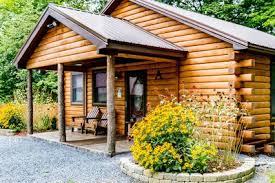
A cabin out in the woods would be nice. If it had wifi. I need to have my internet to monitor students and the like. 

I’m just not ready to break the shelter-in-place and be in space with lots of people. I’m certainly not going to take the face mask off the few times I’m anywhere near people. 

It just doesn’t feel like summer without my little writing retreat.

The Seasonless Year under COVID-19


I can’t tell what season it is.

In academia, we have a defined year with three seasons. It starts in fall with the first day of classes, and fall semester ends with Christmas. In January, the spring semester rolls around, and it’s of slightly different character than fall semester, lacking the tinsel and greens of December and adding the bacchanalia of Spring Break. The school year ends at the beginning of May, and even though I supervise internships and take an online course for my Disaster Mental Health certification, the change in routines — no faculty meetings, flexible schedule, time to take a vacation — marks that a season has passed. Until the end of summer, when we start preparing our classes for the school year.

I have no such thing this year.

We started online classes in March, which made the school year feel like an endless prep period, typing on our computers and missing the face-to-face interaction. I’m answering emails from students at 9 PM and at 5 AM, so I feel like I’m always working. We’re going from that to summer — but the freedom of travel has evaporated with COVID-19’s sequestering.  So I’ll spend the summer working with my interns online using Zoom, and the flexibility of my time will not matter. Days are melting into a sameness, and that sameness is work without any defined boundaries. 

I admit that I’m getting a decent amount of writing done because I have to do something with the time I’m not working on student stuff. And I’m grateful that I can shelter in place, as my age and weight makes me at risk for a more severe infection. But I find my rejoicing at summer terribly muted, because there is no summer. I wonder when there will be a summer again.

A reading that seems to corroborate my current feelings:
https://theconversation.com/will-covid-19-be-the-death-of-summer-vacation-135776

Musing on Mortality


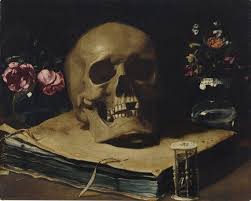
In the pandemic, I’m thinking of my own mortality.

I’m 57 years old with a spate of minor health problems. I’m of the age where I start to fit into higher risk categories. Given my age, I’m closer to the thing that’s going to kill me than I used to be. If it’s not coronavirus, it will be something else.

I’m trying to come to terms with this. It doesn’t help that 70s music reaches deep into my soul and connects with my childhood, and it’s almost 50 years old, or that I actually find myself saying “I don’t like today’s music.” (That’s not totally true; I love ambient and electronica, Beirut, and modern singer-songwriter types.)

I’m going to die someday. I’ve honestly never looked at it that way before. I’m going to die sooner or later. Coronavirus, cancer, heart disease, old age. I’m hoping for the latter, because I have books to edit and write. I’m hoping my death isn’t painful, that it’s merciful, and that I’ve done what I’ve wanted to do before then. I hope I’m ready for it, or that it catches me so much by surprise I don’t have time for regret.

I don’t know if there’s a heaven, honestly; most conceptions of heaven seem very — well, exclusive, like Heaven is a country club where only certain Christians can enter. (This goes with the attitude of “love everyone, even if you’re certain they’re going to Hell). I have fantasies about the afterlife, that it’s the extended family I never knew how to have when I was younger, and we’re having a big banquet in harmony. I know this is a fantasy and that the only way I will live on is in people’s memories of me, unless (as I sometimes hope) my consciousness mingles with the stardust.

I try not to dwell upon this too much — after all, I have things to accomplish and depression won’t get me anywhere. Still, musing on mortality is a sign of the times.

What if (COVID-19 version)


What if things will be okay?

What if we emotionally recover from our losses — always remembering, but still living for the future?

What if we find out that money wasn’t what we were looking for?

What if more of us grew gardens as a result of the shortages?

What if we noticed the air was cleaner after quarantine? What if we decided we wanted to keep it that way?

What if we came out of this enjoying our simple outings more?

What if we will bounce back after this — in a new normal, perhaps, but nonetheless?

What if we find something good out of this — if our lives get a bit smaller, a little more precious?

Experiencing Very Little


Not much to say today. I’m in quarantine as usual. I desperately need coffee as usual. Classical music is playing in the background as usual. I’m beginning not to be able to tell the days apart, except Richard is home all day on Saturday and Sunday. The cats are being bad as usual. The view outside my window is quiet as usual. 

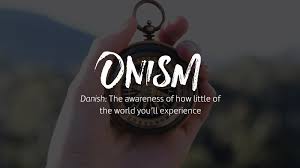
 Although onism is the realization that one will not experience all there is to offer, it’s doubly poignant now with all the ordinary things we’re missing: funerals, weddings, high school graduations. Regular schedules. Daily rituals at the coffeehouse. Extended peer groups. 

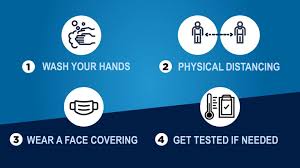
It’s okay to mourn or even resent the strictures put on us at the moment. But stay safe. There’s so much we don’t know about the virus yet, and what we know is sobering. We need these quarantines to control the number of sick who need extraordinary measures so that hospitals don’t get overwhelmed. But have your feelings, and go on practicing safe existence with social isolation, wearing masks outdoors, and handwashing.

I will never be able to experience all things in this world. But I’m making a list of what I want to experience when this is over.

Workarounds


I’m late to writing today because we have intermittent Internet outages here. I’m keeping my fingers crossed because I have two video meetings today — one with one of my colleagues about internships for the summer (which are pretty rocky right now) and one to congratulate some of my interns for a good semester. (This is part of their celebration with a local placement who treats their interns well). 

My home computer is malfunctioning again. Same problem as before (no cursor), except that I haven’t been able to shame it into working again. It apparently has to do with a Windows update. Why is Windows Update killing my computer?

I have become frighteningly tied to my computer during this pandemic. I interact with students and faculty, grade assignments, look up things, surf occasionally for fun, make social contact, write/revise my novels, submit queries … Right now the computer is the only contact I really have with the outside world. Because my files are on Dropbox, I can’t even access them without my fiber connection when the fiber connection goes out.

I am going to have to find some workarounds. I have a wireless hot spot, but it needs some data added to it. We’re going to do that before Richard leaves for work today. I can draft using paper and fountain pen, or even better — I have a livescribe pen that does an pretty good job rendering my handwriting into digital (I bought it for $30 — I highly advise buying gently used high-tech items on ebay or amazon). 

This moment reminds me that there are always workarounds, but sometimes they take effort and money and time to find. Glasses are a workaround for those of us without perfect vision. Insulin is a workaround for people with pancreatic dysfunctions. Cars are a workaround for people who can’t walk 20 miles into work. I’m in a pretty good place for workarounds, although if my computer doesn’t start working properly, there might be an expensive workaround in my future. But one I likely can afford.

We can’t expect people with limited resources to make workarounds without help. This is why the response to quarantine has been so difficult for education. Some of our students don’t have access to computers at home. Some live in large families in apartments and don’t really have privacy. Some don’t have Internet. So we try the best we can to facilitate their education. 

We need workarounds. Because plans aren’t always perfect, because things (and people) break. Embrace the workaround.

Reflecting on six weeks of isolation

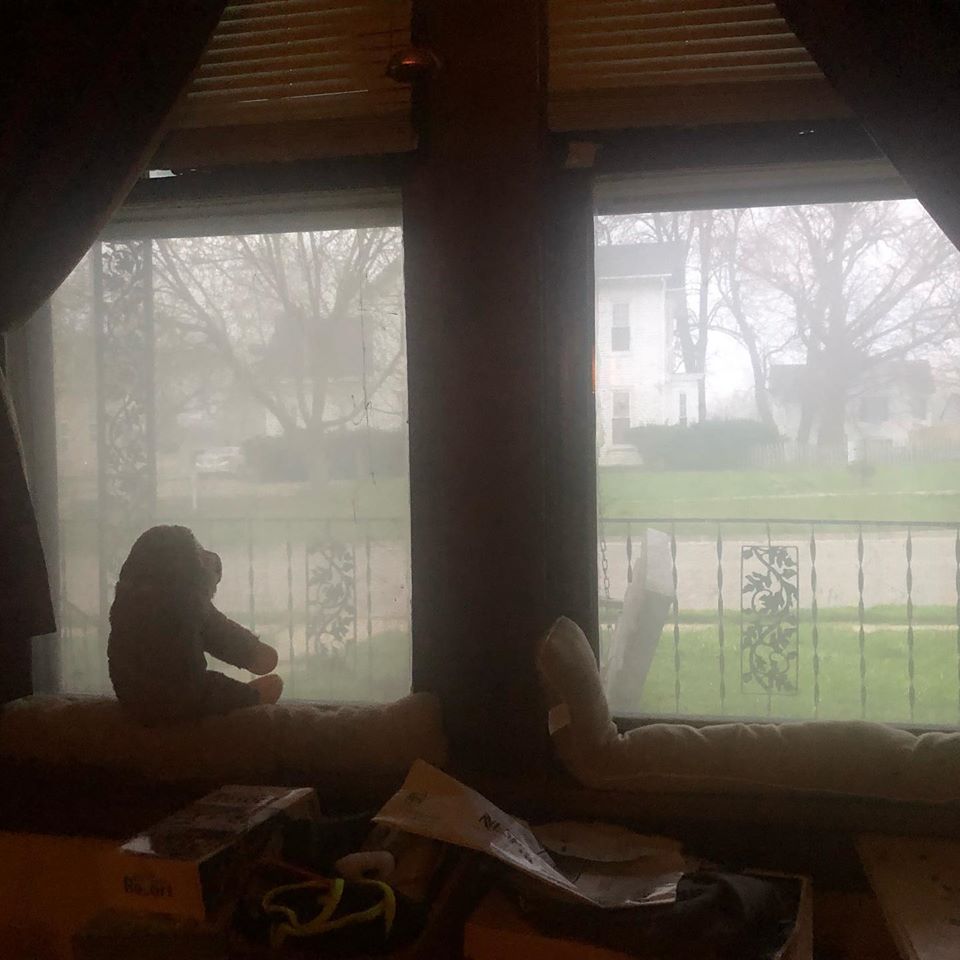
This is the view from my window”


Gloomy, isn’t it. The window is right by my downstairs workstation, however, where I do most of my writing. Sometimes it’s sunny. Sometimes I see people walking past and cars driving by.

This is my life under quarantine.

So are my experiments with sourdoughs. Today, a loaf of yeast water no-knead bread (Henrietta) sits on the stovetop, waiting for its time to bake. (Yeast water is different from sourdough in that you have what amounts to a weak wine working on the bread dough). 

So is my writing. I took a break from adding a stronger beginning to Prodigies yesterday; I should be able to finish that today and then go through the book to adapt things. 

So is coffee. Between my husband’s roasts brewed in a vacuum pot and the Nespresso machine for mid-afternoon cups, I’m covered.

So are the fountain pens I’m collecting — All under $25, mostly Japanese (Pilot Metropolitan, Platinum Plaisir) and German (Lamy Al-Star), and a really inexpensive Jinhao that looks like a Lamy made by Rubbermaid). This and ink is where my allowance has been going the past few months, as I like collecting practical things I can use.

So is my teaching online. And the Zoom faculty meetings. 

I don’t have it too bad, despite the view out my window being very limited. My husband and I still have jobs that allow social isolation. We have money for groceries. We have four cats. We have each other. We’re staying healthy.

This quarantine is so much harder for so many other people.

Lost Rituals

It’s Saturday, and most of the snow has melted. The apple blossoms, however, are not coming back, so there will be no apples this year. It’s symbolic, I think, for all the rituals of American life which will be put on hold this year because of the coronavirus — graduation ceremonies, weddings, birthday parties. Burials go on, but funerals do not. 


I worry about not having these rituals, especially the rituals of transition like college and high school graduations. Without these types of rituals, we feel rudderless, out of sorts. We need a recognition of what we’ve accomplished and where we’re going.

At the college, our students won’t go through graduation until fall, if we are even out of shelter-in-place by then. Our retiring faculty and staff will get no parties. 

I suspect that our changed situation will be temporary, but that temporary could be as long as a year and a half. A cohort of people will not have their rituals to cling to, will feel rudderless, bereft. And although it is a small pain compared to the real possibilities of losing a family member, I will still mourn it with you.