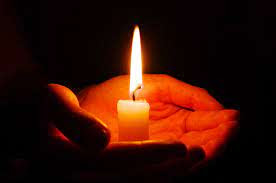
Rest in Peace, Daisy Coleman


I didn’t know Daisy Coleman, even though she lived in my town nine years ago, because I don’t have children and thus was not privy to high school culture. Then news had broken out that she had sneaked out to a high school party here in Maryville, been given a large amount of alcohol to drink, and was raped by one or more of the male partygoers while in a stupor.

I believed Daisy Coleman (and still do). I believe that she intended to be around popular boys, perhaps for social cachet, perhaps because one of the boys “liked” her. Sneaking out to stay up until the wee hours, even to drink, makes her not that unusual — there were several teens drinking in the barn of one of the boys’ parents.

But many in our community didn’t see it that way. The boys in question were on sports teams, and many in the schools championed the rapists. The sheriff and prosecutor did not see any way to prosecute the boys because Daisy was drunk. (The fact that the boys were also drunk somehow shielded them.) Many in the town defended the main suspect, who came from good family and whose grandfather was a legislator. So Daisy faced not only the trauma of rape, but harassment and lack of justice.

I, a survivor of rape myself, felt triggered by the series of events, especially the lack of justice. When I was raped in junior high in a different town, one year younger than Daisy, I decided to say nothing, not even to my parents, because I had spent years being badly harassed in the school district and I suspected how much worse it could get. I instead dissociated and made the memory go away. Living in Maryville, though, brought it back. And made me wary of a town that could behave without compassion.

I wish I could tell you that Daisy overcame the rape. However, Daisy Coleman died Tuesday night of suicide, 9 years after the rape occured. Maryville has blood on its hands, and no amount of Chamber of Commerce promotion is going to wash it off. 


Rest in Peace, Daisy.

If there was justice, the rapists would dream every night of being stabbed in the genitals. The people who taunted her would dream of being doxxed. I know personally there is not justice, and it makes me angry.


Here’s the news article

They Say You Can Go Home Again …

I have a tendency not to look back. When I leave a place, I know it will change and the people I knew will leave. It is the nature of life in academia, where most of the people you know are students who graduate and faculty who find themselves elsewhere.

I went to college at a huge university, University of Illinois, with its 40,000 students. I knew very few fellow students, and it was only when I found a core of like-minded people — a couple faculty members, a few students, a few townies — that I felt an attachment to people for the first time.

When I left Urbana-Champaign for Oneonta New York, I was alarmed at how small the city and the college were. Soon, however, I grew to enjoy the artistic quirkiness of the town, and I got to know people through coffeehouse culture. I had a network of friends — not close friends, but friends I occasionally spent time with, and some who kept me sane when my marriage broke up (for reasons I don’t talk about, but it was much more dramatic than “we grew apart”)

I left Oneonta after five years for a guy. (Not the guy I’m married to). I have always been a “bloom where I am planted” sort of person until I moved to Maryville, MO. After twenty years there, I have not really bloomed. I have grown into a crabbed, stunted plant in hardscrabble soil with little nourishment. I don’t know why I feel this way — Maryville is a college town. It has activities at the university, and my colleagues are quirky. But I have not felt nurtured nor safe here.

Actually, I do know the reason why — Maryville was the town where two underage girls thought they were creeping out to meet a dreamy high school football player at a party. They were plied with alcohol and passed out. One was raped by the dreamy high school football player, who was the grandson of a state legislator. The charges were dropped by the prosecuting attorney. You might have heard of the girl — her name was Daisy Coleman, and she was 14 or 15 at the time.

The fact that some people could say “You didn’t know the whole story” when the girl was clearly underage makes me feel like living in Maryville is one lurking trigger, even years later. Bad things may happen everywhere, but the level of support the young man got, the fact that Daisy’s family was driven out of town, the condescending coverage the local newspaper gave the protestors — Maryville turned from a difficult town to find nurture in to a burg swarming with ugly shadows.

But now, finding myself back in Oneonta, I am looking back. The town has changed; it’s a little bigger and a lot busier and the signs on the businesses on Main Street could use a little beautification. The college has gotten so many new buildings I hardly recognized it. But my favorite restaurants — Brooks BBQ and the Autumn Cafe — are still here, and there’s lots of coffeehouses (I’ve already found my favorite).

I would love to move back to Oneonta someday. I may never find it; the cost of housing is somewhat higher and we’re a one-income household so we don’t have much set back in savings. Oneonta had become home to me, just like Urbana-Champaign had, but maybe I can’t go home again.