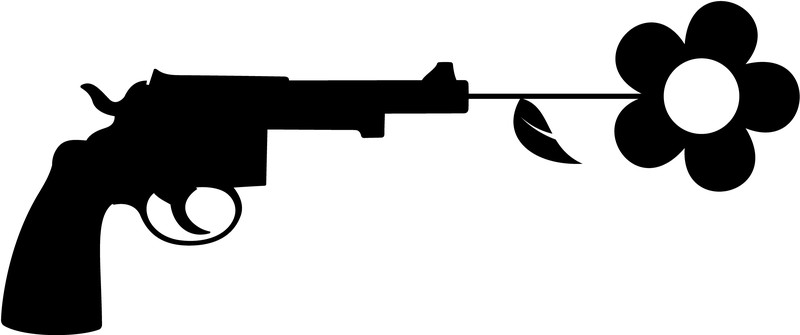
What is Pacifism?
One of the topics I write about is pacifism. Pacifism is the belief that violence is wrong. By violence, we don’t only mean war, but knife and gun fights; not only fights, but belittling and demeaning words. Individual stances reason through situations where violence, carefully tailored, is the lesser of two evils.
Why write about pacifism?
I write about it because I think contemporary fantasy has a responsibility to write about those people not normally written about. In an increasingly militaristic United States, pacifists are seldom heard from and are relegated to the fringes.
Who’s a Pacifist?
It’s a minority belief in the US, held widely by Friends/Quakers (I am one), other peace churches like the Mennonites and Amish, and some Buddhists.
What would you do if … ?
Having a stance like that alarms other people, who counter with what they feel would be “aha” questions. Pacifists have generally reckoned very well about what they’re willing to commit to under which circumstances, so they answer “aha” questions easily.
For example:
“What about World War II?”
I point out the historical conclusion that we didn’t get into WWII to save the Jews; in fact, the US turned Jewish refugees away from their borders. We could possibly have liberated the Jews without all-out war. Wars are fought for political reasons, and people die en masse for political reasons.
“What if a school shooter invades your classroom?”
I’ve thought about this carefully, and realize that the protection of my students outweighs my pacifism. So I plan to grab a chair and wield it against the attacker, throwing it if necessary (and hoping adrenaline will be on my side).
“What if someone attacks you?”
I’ve taken a dirty streetfighting defense class. The idea is debilitate and run. Again, this is an imminent situation and fighting may be the lesser of two evils.
“What about a gun for protection?”
This is the slippery slope. When one has a hammer, everything looks like a nail. When one has a gun for protection, everything looks like an assailant. Child deaths and suicide are more likely in a household with a gun. A gun is symbolic of what we want to avoid in pacifism.
“Why are martial arts different?”
I would distinguish here between martial arts with a philosophy that one avoid conflict if at all possible and more aggressive martial arts. Asian martial arts, in particular, emphasize the former. If I were to learn a martial art, it would be aikido, one which uses the force and impetus of the assailant against him.
In the End
I sometimes wonder if setting Apocalypse in a pacifistic setting (the ecocollective Barn Swallows’ Dance) is a bad idea for publication. As much as writers are exhorted toward originality, the noncombatants trying to save the world might be too much for mainstream audiences. But I have to remain true to myself, and writing what I know is part of that.
Tag: pacifism
Marketability — I don’t know if I want it.
I got three more rejections day before yesterday. Some days are bad.
But I’ve decided (at least for now) that writing to be marketable may not be something I want to aim for. I’ve observed bookshelves and read articles and have noticed what is marketable in science fiction/fantasy. I may be biased (disclosure: pacifist Quaker, pro-diversity), but the trends I’ve found discourage me:
- Military SF or sword and sorcery battle-based fantasy — for example, Lois McMaster Bujold’s Vorkosigan saga, The Lord of the Rings, David Weber’s Honor Harrington series. The battle provides the tension, the climax — the whole plot.
- Male authors — many emerging female writers of the 50’s-60’s used gender-neutral or male names to publish: for example, Andre Norton and Marion Zimmer Bradley. We have obviously female authors now, but many are writing strong male leads (such as in Bujold’s Vokorsigan saga again) This is not unique to SF/F: my terminal degree was in an almost entirely female field, and the most lauded work in the field was written by a male outside the field, who received a Nobel Prize for a piece of work that uses circular arguments and misuses the human sciences knowledge base. There are certainly examples of female authors — but many female authors still are discouraged from writing in SF/F. My favorite authors — Sharon Shinn and Connie Willis — have succeeded in the field. (If you’re reading this, drop a line and tell me how you did it.)
- Male lead characters — preferably alpha male. A strong, accomplished male lead gets tagged as a “Competent Man”– Luke Skywalker from the Star Wars saga; a strong female lead is dismissed as a “Mary Sue” — Rey from the Star Wars saga. Yes, not all fanboys are calling Rey or Black Widow or the female lead of almost every story “Mary Sue”, but agents don’t want to take risks. They want guaranteed sellers, and it’s easier to dismiss a character as a “Mary Sue” than to risk putting their bets on saleability. Women writers report being scared of writing female characters. By the way, in the mostly female romance genre, a true “Mary Sue” like Bella from Twilight is perfectly acceptable.
- No three-dimensional relationships to anchor the tale in humanity — we have the term “love interest” instead. A love interest lives in the background, doesn’t have to be well-developed. The “love interest” is almost invariably female. Or if they’re male, they’re often the savior.
My problem is that I know these trends, and I write to subvert these trends.
- I want to communicate that bloodshed isn’t the only way to settle things. Even the “War is Hell” plots treat war as necessary. I’m a pacifist.
- I’m obviously a female author, although “Lauren” might be gender-neutral enough that agents don’t know that.
- My leads are almost always female with a full range of gender manifestations, and my male characters run the gamut from very alpha male to androgynous. One of my strong characters is a true androgyne genetically.
- The most important thing is that I write these things without treating them as more important than the plot. I assume that pacifism is a possible option, just as military SF assumes war is the only option.
- I assume multicultural and non-white groups are the norm.
- I assume the protagonist can have a supportive relationship rather than a girl back home waiting for him. I don’t preach, I just describe.
But then there are the ideas that go around in my head as I send queries. “Is it worth it? Is my writing good enough? Is my work too strange to be taken seriously? Is it not SF enough? Do I have to start writing romance? (Oh God, no; I hate writing sex scenes. Everyone’s orgasms are over the top every time, and how can you name genitalia without sounding ludicrous?) These alone might be causing my suffering every time I get rejected, because it’s hard to shut the monologue up. The thing is, I won’t know until I work with a developmental editor, because it will take one to help me understand if it’s my writing or not.
********
I have an idea for a shirt: “Writing is my dysfunctional lover”. Anyone want one? A t-shirt, I mean 🙂
