
My husband and I love our coffee, to the point that we actually roast our own. It takes an outlay of equipment and expertise, but for people who like good coffee, it’s cheaper than store-bought gourmet beans and a lot cheaper than a daily Starbucks or Nespresso.
We started with the gateway drug — whole beans and a grinder — and then I found out that one could roast their own beans with an air popper. It’s true; one can roast a pot’s worth of green coffee beans with an air-fired popcorn popper, although there are a couple specs on the air popper that need to be noted. Because it’s tedious to lift the hot lid of an air popper and stick a spoon down the chamber to fish out a bean to see if the beans are done, I bought a simple cylindrical roaster (which isn’t made any more; it was a cheaper version of this). It still only did one batch at a time, but it was a little more convenient.
Both the air popper and the Fresh Roast are what are known as fluid bed roasters. This means that the beans float on a fluid bed (usually air) to allow them to roast easily and not develop hot spots. Fluid bed roasters for the home user usually roast smaller batches (taking a half pound of beans at most) and don’t have much versatility if one wants to experiment with the depth of the roast (light, medium, or dark roast).
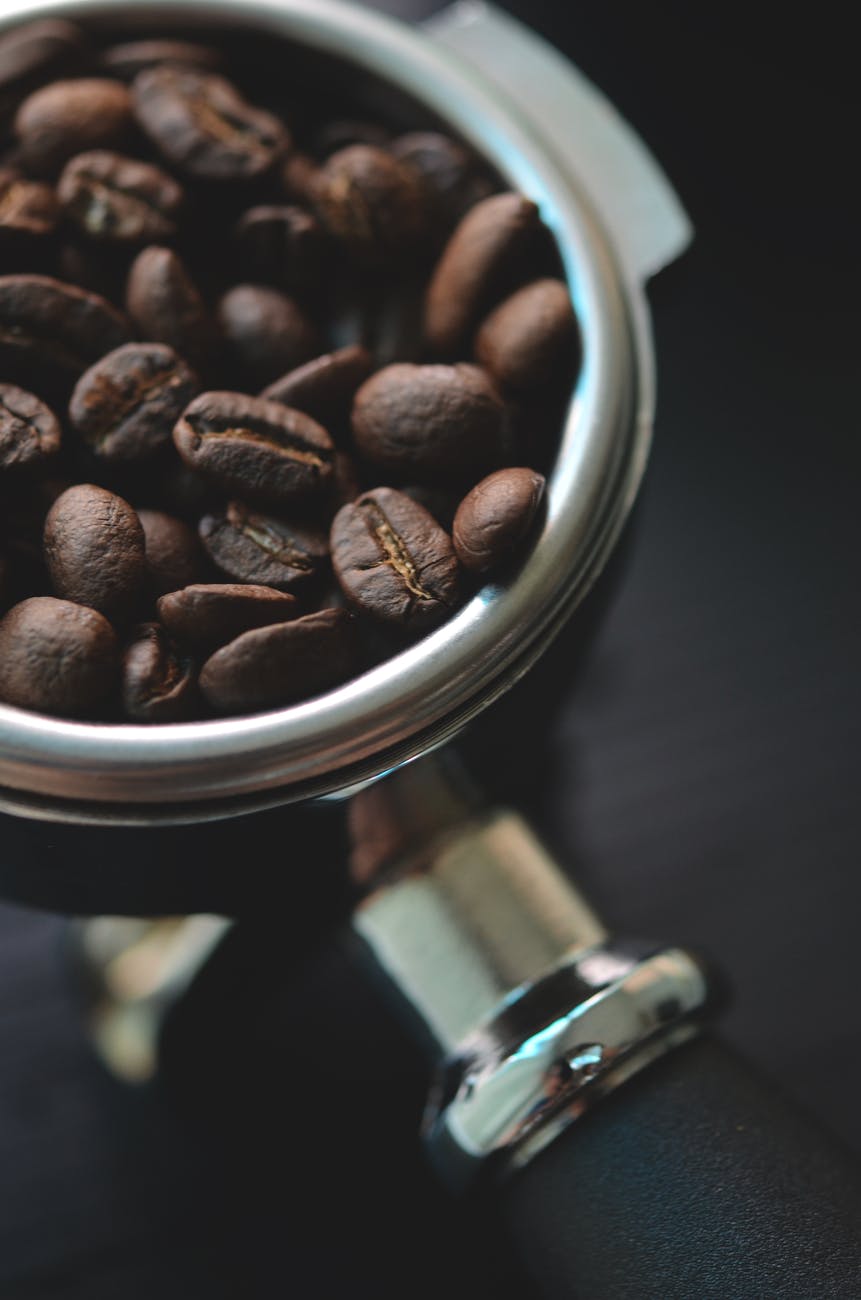
Eventually, as we drink home-roasted coffee daily, we invested in a Behmor 1600 (as they were phasing in the 2000s, it was half the price of the new model) and we roast a pound of green coffee beans a week. The Behmor will roast 1/2 lb-2 lb coffee at a time and uses a drum to move the beans for even roasting. Richard is our roaster now, because one of the important ways to determine roast strength is listening for the cracking of the coffee bean, and my hearing doesn’t allow for that anymore.
Where does one get unroasted beans? We use a source called Sweet Maria’s Coffee, a mail-order outfit with a great variety of beans ever changing with growing seasons in its various sources. We tend toward adventurousness in our beans, reading flavor notes in the reviews and choosing by those. Then when we’re drinking our morning cup, we rate the coffees on a four-point scale:
- I wouldn’t give Grandma this coffee
- Grandma drinks this coffee
- Grandma should be drinking this coffee
- Grandma called: she wants a dime bag to go with this coffee.
We like coffee in the 3-4 range (I’m old enough to be a grandma).
Even with the outlay of the roaster (again, we got it on deep discount because we shopped for sales), we pay a lot less than Starbucks, somewhat less than we would for gourmet beans at the store, and a little less than generic canned coffee, and we get a premium product that’s almost like wine in its complexity.
It’s worth the learning curve.
 Words Like Me