My Qualms about Self-Publishing

I said I would share my reservations about self-publishing.

  • My first reservation — and I might as well get it out of the way — traditional publishing feels more legitimate. Agents and publishers curate one’s work and bestow the title of “author” and all its blessings unto the writer. The reputation of the publisher reflects upon the writer. Traditional publishing speaks of centers of commerce, big cities, a certain cachet. On the other hand, self-publishing feels to me like declaring oneself an author, hoping nobody puts an asterisk after it because it’s not blessed by a publishing house. Do I need someone else to tell me I’m an author? Honestly, yes. It sounds stupid, but there it is. 
  • My second reservation relates to the first — I feel unsuited to self-promotion. There’s a reason I didn’t go into sales; in fact, professoring is the polar opposite to sales. As a professor, my work is judged on its scientific and factual merit, its rhetorical accuracy, and its readability — not its saleability. I fear that promoting myself will consist of getting into people’s faces and disturbing their regularly scheduled Facebook lives and begging them to read my book. I can’t even bring myself to ask my Facebook friends to read my book, much less strangers. I tried putting one of my books on WattPad, and had a total of 21 readers, whereas much more poorly written items had thousands of readers.
  •  My third reservation has to do with resources — how much of my writing time will go into promoting my book? I have a full time career already, and I’m the sole earner in my family so retiring early isn’t an option. I also have little money to put into promotion.
  • My fourth reservation? I have no idea what to do for self-publishing past “Write, edit, find a cover, post on a platform”. Someone suggested asking a published author to make a recommendation — I am acquainted to one, and she didn’t return my request.

What isn’t a concern? Making money. I’m still not in this for the money (although it would be good to break even in terms of editing and promotional outlays). I want to be read; I want people to think my work is good. I’m not expecting a huge number of readers, especially as agents don’t champion my work because they don’t think they’ll get a return on it.

I’m just really, really scared of self-publishing.
Dream or Let Go?

Sometimes I still dream of success.

To me, success in writing looks like:

  1. Finding an agent
  2. Getting a publishing contract
  3. Having a readership and modest sales
  4. Interacting with others on my blog

Given that I haven’t achieved the first yet, and given that the other goals are probably dependent on that first goal. I don’t know if I’m ever going to get there.

This is why I’m considering self-publishing, but I have so many questions about it, such as:

  1. If you self-publish, will people always put a figurative asterisk by the word “author” after your name?
  2. How do you get the word out about your novel?
  3. If my novel doesn’t get accepted by agents, is there really a chance that readers will gravitate to it in self-published format?
  4. Can one get famous (ok, somewhat well-known) self-publishing?
  5. Will I have to spend all my time promoting my book instead of writing?

These questions may be proof that I’m still dreaming and doing a lot of assuming. I’m assuming that my books are good enough to find a following rather than languishing on a virtual shelf somewhere, which is a lot to assume even if I get traditionally published.

My affirmation cards keep saying that I have great ideas, the time is not right, let go of expectations, to the point that the same cards keep showing up in readings.

Our American society says that we should hold on to our dreams. Buddhism, on the other hand, suggests attachment — even to a dream — causes unhappiness. Which shall I do — hold on or let go?

The Plan

I have a plan for how I’m going to handle the whole querying thing. Bear with me:

  1. I will continue dev editing and re-editing my existent books one at a time because that’s just good practice wherever I’m published.
  2. I will wait for six months for this querying cycle on Prodigies to complete, researching self-publishing and self-marketing as I go.
  3. If at the end of those six months I don’t have any takers, I will self-publish Prodigies. You will hear a lot about this and hopefully you will read it. 🙂
  4. I will query other books as they get edited — Voyageurs will probably be the second book in the pipeline, followed by Apocalypse. And so on.

This plan doesn’t include writing. I have not written since I finished Whose Hearts are Mountains, which I am sure needs serious dev editing as do the others.  That’s only been a month and a half. I haven’t been inspired to write lately, but there are various directions I could go — a sequel to Prodigies, a sequel to Voyageurs, another book in the Archetype series, a faerie adventure/romance novel … I have enough books that need to go through the dev cycle, though, that I wouldn’t have to write for a while. But I don’t want to get rusty.

I am hoping, of course, that this hard work pays off. I don’t know why I’m getting rejections from agents except for the usual “…I’m very selective … I don’t know if I can represent this novel with the enthusiasm it deserves.” (Question: If it deserves enthusiasm, why aren’t you — oh, never mind.) But at least I have a plan so that I’m not at the mercy of judgments about “what sells”. I just know that I write for a reason, and I want to see what that reason is.

Inching closer to self-publishing

I am closer — much closer — to self-publishing.

 I would be giving up a dream. Traditional publishing is my big dream, I think, because it’s external validation. Someone gives you a big shiny star, someone picks you for the dodgeball team. I was always the last one chosen for the dodgeball team. This might be why I have a dysfunctional relationship with the whole traditional publishing process — I want to be picked for the team and I still end up on the sidelines.

I’m still not easy about self-publishing, because I don’t know how to get people to read my book. I can’t just plop my book on the virtual bookshelf next to the other million people on the virtual bookshelf and expect people to read it. The quality of the books on the virtual bookshelf vary from very good to very poor, because not all people who self-publish go through the dev editor and beta-reader process like I do. How do people figure out what’s good to read? The rating system. How do books get read in the first place so they can earn those stars? Advertising and self-promotion.

I have to figure out how to self-promote, hoping I can get someone to read what I have to offer. I wish someone could do that for me, but I don’t anticipate having any money to pay for that.  Even offering it for free — you can do this sometimes, but if you make it free all the time people think you’re giving it away because you have to.

I feel a certain peace, now, thinking of self-publishing. My career doesn’t end with the rejections. I am not trapped on the sidelines of the dodgeball game. I will wait out the rest of the queries I still have out — rejections or six months out, whichever comes first. Then, if no agents take me on, I will self-publish Prodigies. And hope for the best.

ISO publishing coach

I am shopping around for a publishing coach, because I don’t seem to know how to get myself published.

I’m serious about this writing thing. Even if I have to self-publish, I want to find a way to get my words out there and not beg my friends to buy my books. I know I’m not going to make a lot of money on this (breakeven from all the coaching and stuff would be nice, though). I dream of being well-known and well-liked, but this may not happen either. But I want to be read.

Jackie Kibler, one of my colleagues and a motivational speaker, has gotten me started on this venture. She, like I, think the traditional agent-publisher route is broken by too many writers vs too few publishers. Like any situation where there’s a limited number of sellers/producers (otherwise known as an oligopoly), competition in the marketplace is that of branding, not of price or innovation. The marketplace of ideas is no exception.

So I am working on something new. Send happy thoughts and encouragement.

reconsidering

Yesterday, the theme seemed to be “find a different path to publishing”.

A colleague of mine who is working on a career as a motivational speaker stopped by my office to chat. She’s been following my laments on Facebook as some of you have, and she said to me, “You really need to find a different way to publish.”

“No kidding?” I responded. “I hear some of these agents are getting upward of 500 queries a day. How does one even stand out with that kind of load?”

So I am trying to mastermind how to go for indie/self-publishing and have people actually find my stuff to read.

The idea seems to be something like this:

1) Find a platform to publish on
2) Publish
3) Find friends willing to read and put reviews on the page
4) Publicize?

I’m still thinking about it. It’s certainly tempting after all the troubles I’ve had being noticed by agents. My writing seems to fit a niche that isn’t being regarded by mainstream agents. It’s not the only thing I’m contemplating — I am going to try traditional publishing until I run out of options there.

I’ll keep you posted. You let me know if you want to review a book, ok?

voiceless

To be a childhood abuse survivor is to exist without a voice.

Nobody hears when you tell them to stop. Nobody hears when you tell them why you’re crying.

The pain of being voiceless gets better, but the desire to be heard never goes away. It permeates one’s being like a curse that has settled into one’s DNA — “Until you get people to listen to you, you will never be whole.”

Sometimes you get people to listen to you, but it doesn’t break the spell. It never will, because it cannot erase the memory of adults saying, “Are you sure?” and shrugging off your story because you are a child and they are trusted more than you.

This is what mixes up with my feelings about getting published, and it has complicated my decisions about publishing. I want to be heard but I want to be true to my experience and ideals as well. The data from Kindle Scout doesn’t bode well for me. The last two days I’ve gotten less than 20 nominations a day; my writing doesn’t grab people. I have to accept this and go on.

My next step will be to self-publish this first work (despite the fact no one will likely not read it in the swamp of Kindle) and I’m probably going to quit querying. I then have to consider whether I will continue writing just for myself.  Writing takes lots of time and I don’t have a muse to energize my soul right now, so my writing is up in the air.

So I hope you’ll stick with me and keep supporting me:

Today’s the beginning

It’s February 28, and my Kindle Scout campaign is up and running! I myself am at the National Preparedness Institute, which is not nearly as impressive as it sounds. I’m setting up for moulage as you read this, possibly. This link should be live now:

https://kindlescout.amazon.com/p/250Q7OJ0R0F8W

But here’s the story again according to Kindle Scout (2018):

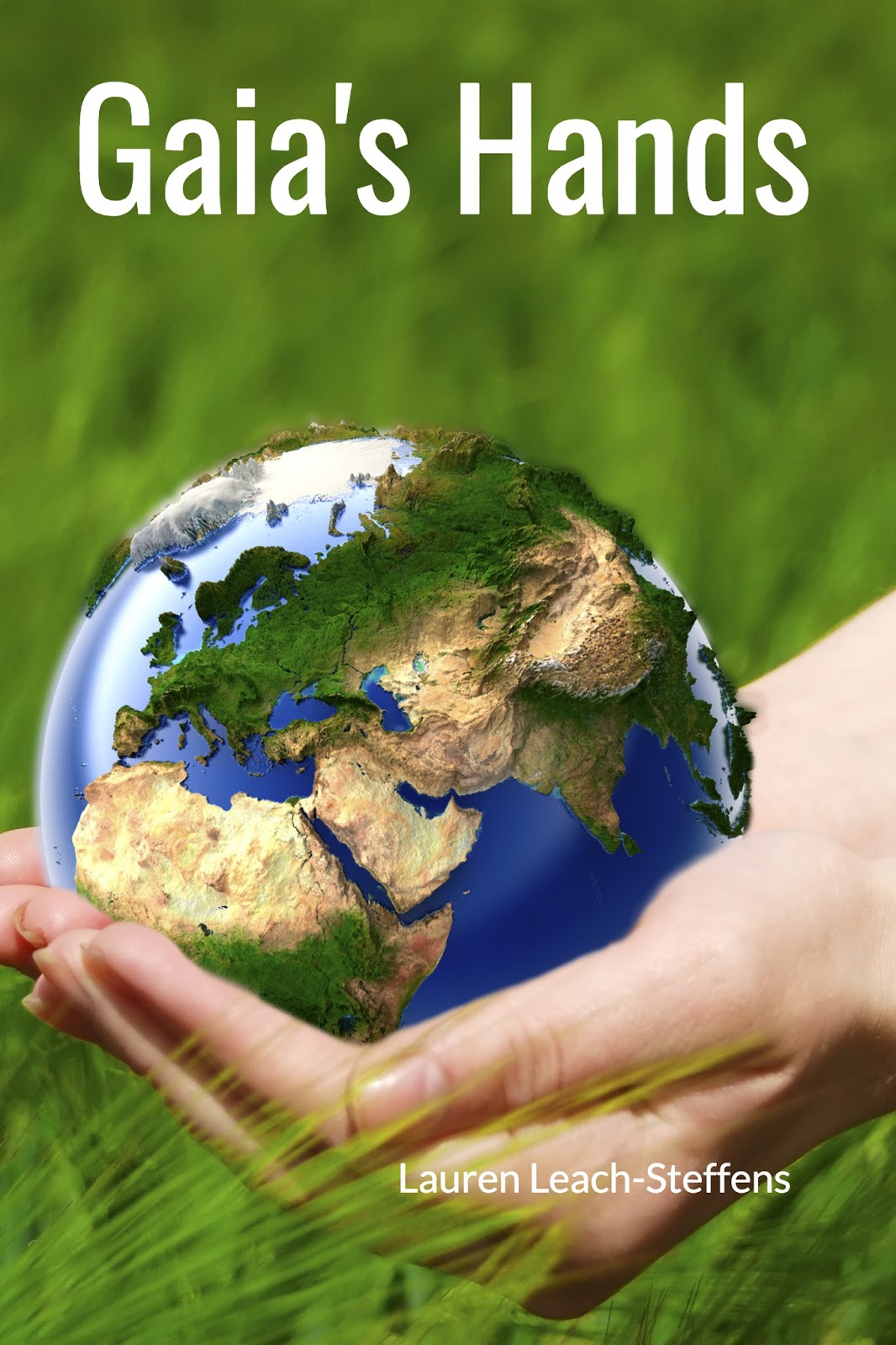
  • A book is a new, never-before-published work of 50,000 words or more that you’d like to see published. In my case, the book is called Gaia’s Hands.
  • An author is the person who has written and submitted a book to Kindle Scout. That would be me, Lauren Leach-Steffens, also the author of this blog.
  • Readers (that means all of you) scout the site and nominate books they want to see published.
  • Nominations are how readers show support for a book. Readers can nominate up to three books at a time. This is what I’m asking you to do.
  • A campaign is a 30-day scouting period during which readers nominate books to be published. Mine is from February 28-March 30.
  • The Kindle Scout team makes the final call on which books are published by Kindle Press. This will depend largely on how many nominations. This is what scares me, because it sounds like a popularity contest and I’ve never been popular.
  • Kindle Press publishes the books discovered through Kindle Scout. This is my goal — not for the $1500 cash advance, or royalties. I want to be read and enjoyed and maybe make people think. (Although I could get a new computer with the royalties, one that can handle graphics so I can map my landscapes using SketchUp without bombing the computer)

My Kindle Scout Campaign — asking a BIG favor

I have been accepted for a Kindle Scout campaign which will go live on February 28, while I’m off at Atlantic Hope doing moulage for a humanitarian exercise (“Atlantica — You’ll have a riot here”)

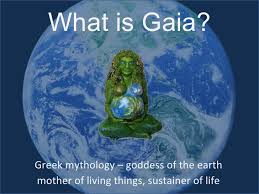
Just in case you didn’t know who Gaia is. 


This link will be available from February 28, 2018 12:00 AM EST through March 30, 2018 12:00 AM EDT:
Kindle Scout Campaign for Gaia’s Hands

The basics are:


Readers scout the site and nominate books they want to see published.

Nominations are how readers show support for a book. Readers can nominate up to three books at a time.

campaign is a 30-day scouting period during which readers nominate books to be published.

The Kindle Scout team makes the final call on which books are published by Kindle Press.

Kindle Press publishes the books discovered through Kindle Scout.
I hate begging my readers for nominations,  because it seems overly needy of me, but this is how Kindle Scout works. So I will not beg — I will only ask that you consider nominating me when this goes live!

One step forward — Kindle Scout

I have taken an intermediary step between agents and self-publishing for one of my books — I have submitted my book details to Kindle Scout, and this is what should happen:

  1. In 1-2 days, I should hear whether they’ve approved the book for eligibility
  2. Then they submit it to a “campaign” where I see how many upvotes I get. 
  3. At the end, if the book gets enough votes, it gets published.
The best book cover free editing software can buy.
Why this process? Because it’s vetted. Self-publishing otherwise seems like throwing the book on the sea and hoping it floats. If it comes to that, I don’t know if I can do it. I don’t dream of being a NYT bestselling author. I dream of someone reading my book and liking it.
Face it, though, I’m afraid of rejection again. I’m confident that I write well, but wonder if my ideas are publishable or whether I can stand up to a popular vote. I’ve never been popular, after all.
The book may be too gentle for people who read things like “The Meth Chronicles” and vampire stories. I’m a flower child at heart. I believe in the Peaceable Kingdom and the strength of small groups to change the world. I love people in both the general and specific sense. 
I’m not going to beg you to support me on Kindle Scout if I get that far. But I want you to think about it, because it’s my dream. And please, please, any support you can give me (preferably something that reaches my eyes or ears) would make me feel better about the process.