Lenten Meditation Day 46: Rejoice

Today is Easter, the day in which (in the Christian calendar Jesus Christ rose from the dead. This year, it’s also Passover, when in the Jewish calendar the Jews triumphed over the Pharaoh who subjugated them. If we go back into myriad European pagan beliefs, Eostre is when the year is released from the captivity of winter.


And we rejoice. 

There seems to be a common theme here, that of being released from an adversity. I think that’s important. So many good stories begin with overcoming barriers, and there’s a reason. We don’t want to think that we’re going to be shackled forever, so we fight against the captors. In all three of these, divine assistance yielded the victory.
I personally think God works differently than in the stories. I don’t think God sends plagues to our enemies or picks winners in football games. That is not to say that God doesn’t intercede. I think God sustains us until we achieve our victory. I think God gives us the strength to persevere, comforts us in our difficult times, clears our minds so that we can find victory. 

But in the end we find victory — not always the victory we wanted, but we find the victory anyhow. 

I leave you a poem by ee cummings that I think captures the essence of Easter:

“i thank You God for most this amazing
day: for the leaping greenly spirits of trees
and a blue true dream of sky; and for everything
which is natural which is infinite which is yes

(i who have died am alive again today,
and this is the sun’s birthday; this is the birth
day of life and of love and wings: and of the gay
great happening illimitably earth)

how should tasting touching hearing seeing
breathing any—lifted from the no
of all nothing—human merely being
doubt unimaginably You?

(now the ears of my ears awake and
now the eyes of my eyes are opened)”
Day 45 Lenten Meditation: Anticipation


Sometimes when we anticipate, we wait for good things to happen. Sometimes it’s a matter of what we’ve earned through hard work, what we will be gifted with through tradition, or what we’ve been promised. We know something good is coming, although we may not know exactly what. This kind of anticipation feels like an invitation to a sumptuous feast.


Sometimes when we anticipate, we prepare for bad things to happen. We make emergency plans and emergency funds, we make contingency plans. We buy life insurance and make wills. By anticipating, we can protect ourselves and our families.

Anticipation requires us to look into the future, for good or bad. 

Day 44 Lenten Reflection: Gratitude


I can’t help but run this topic — gratitude — through a COVID-19 filter, seeing as the pandemic is fresh in my mind.

I am grateful for essential workers. My day proceeds to be relatively normal because of my ability to shop for food online. I would be protected in the hospital because health care workers are still working. The mail gets to me every day because postal workers are considered essential. 

I’m grateful there are not very many cases of COVID-19 here in Nodaway County, Missouri. We seem to take social distancing seriously, we are sheltering in place, and wearing masks when on necessary errands.

I am grateful my job allows me to work from home. I am the main breadwinner in my family, and a loss of my income would be tragic for us.

I am grateful I am an introvert. Other than occasional restlessness, I am pretty comfortable with my new routine. It gives me time to edit my novels.

I am grateful for the collective of ladies locally who are supplying as many citizens as they can with colorful cloth masks. 

And finally, I am grateful that neither my husband nor I have gotten the virus, because we are at the age where it could become risky. 

Sometimes, life goes bad and the only thing we have to be grateful for is being alive. I could be there at any moment; life can change in an instant. I will marshal my gratitude if that happens.


Day 43 Lenten Meditation: Transcend

Transcendent experiences are relatively rare. And this is a good thing, given the emotional impacts of those experiences: We are shaken. We are dwarfed by awe. We question our notions of the world. 

The world around us doesn’t seem quite the same, and we can’t explain what happened to someone else because we can’t find words that suffice.

We try to find words, those of us who are creatives, as the experience informs our work. But words are still too small to capture the perfect moment we were caught in.

Transcendence reminds us that we are more than our flesh and organs, more than our intellects, more than our daily existence. We carry in ourselves stardust and mysteries, our senses tuned to the unseen. 

Transcendence is our legacy as humans and our birthright. 

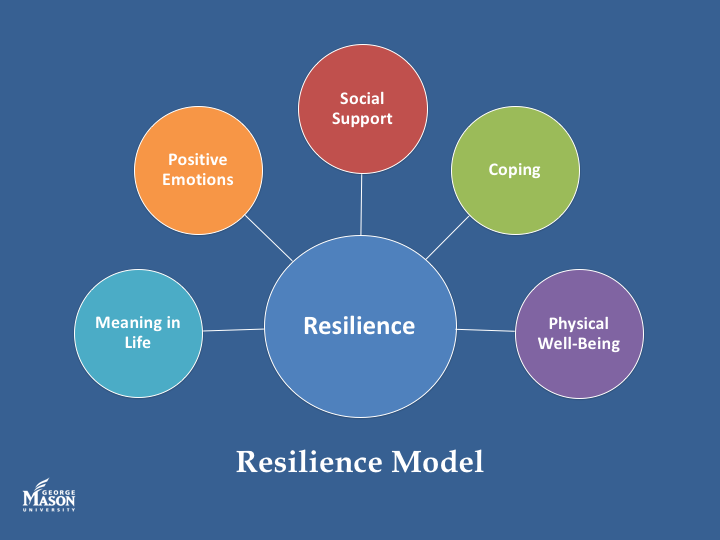
Day 42 Lenten Meditation: Resilience


The human race owes its survival to resilience.


We face the deaths of people around us. We face mental illnesses. We face betrayal by our loved ones. We face pandemics and war, and we get beaten down by these events.

Most of us, however, rise back up, and that’s resilience.

Resilience is more common than we need, but it doesn’t happen in isolation. Resilience is fostered by community, by people who care. Resilience needs other people.

It is unfair to ask someone to rise up if you’re not willing to be there for them. The elderly are too often isolated from life-saving emotional support in this country. Children are left alone in abusive situations.  The mentally ill are shunned.

If we want to survive as a people, we need to be there for each other. It is our legacy as humans to foster resilience in each other. 

Day 41 Lenten Meditation: Bloom

“Bloom where you are planted”. All fine and good, but currently I’m planted in my living room, wearing sweats, in day N (where N = I’ve lost count) of shelter in place during COVID-19. 

Yet I’m still finding ways to bloom. I still write this blog daily. I work on writing in-between my classes. I experiment with sourdough starter. I name my sourdough starters. I wear lipstick with my sweats. I have long literary discussions with my cat Girlie-Girl, who remains unimpressed.

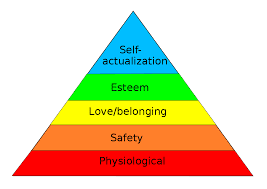
It’s easy for me to bloom, however. When I look at Maslow’s Hierarchy of Needs:

I’m relatively high on the pyramid. My most basic physiological needs are met (food, clothing, shelter); I am safe in my house; I have a loving relationship and feel I belong in my community; I derive esteem from being a professor and writer; and I have enough of these items to feel I can give back to the community (self-actualization). I have plenty of energy with which to bloom, in other words.

Expecting someone to “bloom” when they’re hungry is cruel, as is expecting someone who doesn’t feel safe to express themselves freely. Even I, when I’m in a state of depression or mania, don’t bloom. Sometimes we just manage, and that’s good enough.

We should strive to bloom. We should not make it an expectation, however, because so many people struggle in their lives. Do not judge them if they don’t bloom.

Day 40 Lenten Meditation: Cry


I don’t cry often. I don’t know whether it’s because I’m a basically strong person, or because my bipolar medications keep me calm. But I feel the tears lurk, looking at the world’s situation under COVID-19. 

Highly contagious with about a 2% death rate. That seems small — 98% will survive it — until you look at the number of people in the world. As of this morning, there have been 9100 deaths in the US, half in New York City. And there’s no end in sight despite sheltering in place.

I’m feeling discouraged, and I normally have faith in our ability to surmount nearly everything. I feel tears come to my eyes as I read the news. I don’t read the news much, because of this feeling of despair, the reality of the numbers which still conceal the human cost. 

I can’t quite cry. If I could, I think the sadness would pass for a while, because crying is healing. Crying is like a good thunderstorm, giving us release from the sadness. A good loud cry is what I need right now. I’m not there yet.


Day 39 Lenten Meditation: Mercy


The first dictionary definition of mercy is “showing compassion or forgiveness toward someone we have the power to punish”. This makes me wonder about the Mercy Hospital in the college town where I used to live, as punishment doesn’t seem to be the purview of hospitals as far as I know. 

But that’s okay, because the third definition, and the one most used today is “something performed out of a desire to relieve suffering; motivated by compassion.”  I want to focus on the first definition, however, to make the point that mercy is not simple compassion or simple forgiveness.


    People talk about a merciful God, and that makes sense if their notion of God is one who forgives all. But when they turn around and gloatingly remark about how the “sinners” (i.e. people not like them) will spend eternity in Hell, they have declared their God without mercy. 

    If God is a merciful God, She must weigh the good in everyone as the bad falls away at the end of our days. If God is not a merciful God, I do not want anything to do with him. 

    Day 38 Lenten Meditation: Awe

    I looked at today’s topic with frustration. How does one put words to awe without sounding pedantic? Yet we writers do this all the time:


    • He stared at the great canyon, feeling humbled by its immenseness.
    • They stood in the great, empty cathedral, surrounded by history that took their breath away.
    • She considered the heavens and felt dwarfed by their glory.
    Awe overcomes us at the presence of the unfathomable, the magnificent, the breathtaking. Awe reminds us that there is something greater than ourselves, greater than our personal sense of power. It reminds us of how small our place is in the universe. 


    Day 37 Lenten Meditation: Forgiveness


    I’m not going to accept the common wisdom of this concept, which says that you should readily and automatically forgive those who have wronged you. That advice is simplistic and does hot honor the situation of those who have been wronged.

    Forgiving means to stop being angry for some harm or fault. For everyday mistakes and small infractions, forgiveness is merited because the need is to move on with life.

    However, for victims of aggression, anger is a powerful emotion that can give power to the powerless. It can motivate toward justice for the wronged. Automatic forgiveness relinquishes power to the wrongdoer. Anger, and thus lack of forgiveness, becomes healing.

    For the victim of great injustice, of abuse, of violence, they need only forgive when they feel their lives are held back by their anger, when they no longer see themselves as victims but as survivors. They should wait until the point where they feel they have personal power without the anger. Until then, they need anger’s power.

    I’m not sure anyone has the right to tell someone else when to forgive. Forgiveness is very personal, and our entreaties to “forgive and forget” often come out of our fear of anger and our desire to smooth over conflict. 

    Forgiveness is powerful, but only if the forgiver finds that forgiveness lightens, rather than diminishes, the soul.