Day 27 Lenten Meditation: Struggle

In this time of contagion, all of us are struggling.

We struggle through anxiety, isolation, sleepless nights. Essential personnel struggle with overwork and worry about their own health. We all suffer uncertainty about whether we can be infected.

We were created or evolved to be concerned about our tribe, to find comfort in each other. We were created or evolved to help each other in times of struggle. In our current case, it is hard to seek comfort in a time of social distancing. Hugs are prohibited, as are gatherings. We make do with the Internet. We comfort ourselves with the belief that this will not last forever. 

In this, we are united with others worldwide — with China, with Italy, with all the world that has been touched by COVID-19. It is a sign of our shared humanity that we can worry, we can sorrow, we can all catch this disease. The world is our tribe, and although we may be powerless to help others through their struggle, we can at least think charitably toward others, even though they are not of our tribe. Because that is how we survive in struggle.


Day 26 Lenten Meditation: Justice


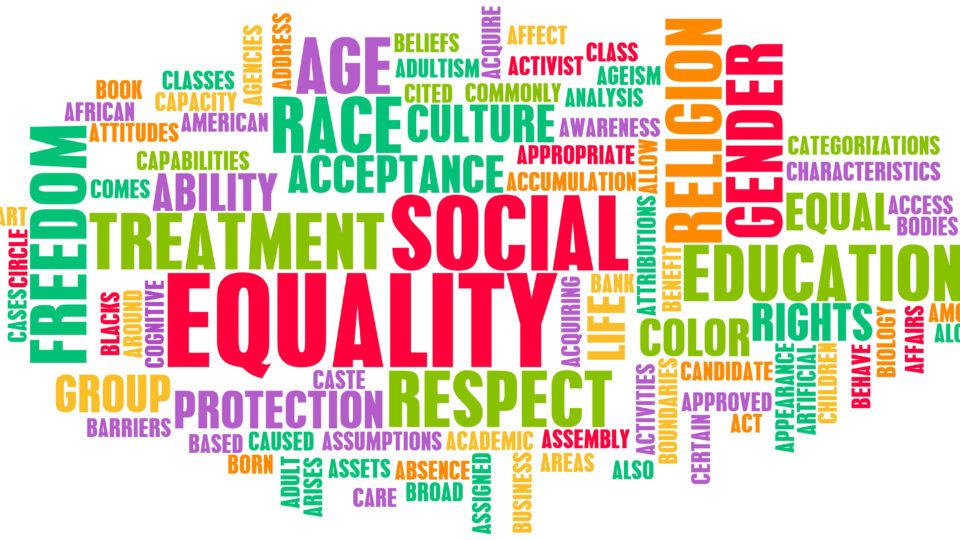
The dictionary defines justice as “the quality of being just; righteousness, equitableness, or moral rightness:to uphold the justice of a cause.” (Dictionary.com, 2020). We can break a discussion of justice down into procedural justice, that is the justice of laws and courts, and social justice, the justice dealt with in society and in philosophy and religion (Beyond Intractability, 2020). For this essay, I’m going to focus on social justice.


Social justice is, de facto, the justice of the “other”. The majority are comfortable, or at least stable in their well-being. Those who need to be brought into equity are the minority. 


In this day, “social justice” is seen as the realm of liberals who agitate for better conditions for those in poverty, those who have escaped brutal conditions in their former countries, those whose differences have marked them as “other”. Perhaps this is because philosophy and religion, to a large part, are failing at their job. 

Religion used to be the force for feeding the poor and caring for the afflicted in hospital; to some extent it still is. But that care often came with strings attached, failing the “other” by rejecting its needs, and that is not social justice. 

It is only social justice if it can be granted to the downtrodden, the sick, the needy who are truly the other, who are not like us. Those who are not practicing social justice need only look to our religious books to see the exhortation to social justice.


References:

Beyond Intractability. (2020). Types of justice. Available: https://www.beyondintractability.org/essay/types_of_justice [March 22, 2020]

Dictionary.com (2020). Justice. Available: https://www.dictionary.com/browse/justice [March 22, 2020].

Day 25 Lenten Meditation: Craft


(Note to readers: I am struggling with intermittent panic attacks over the whole COVID-19 situation. I will, however, give you my best.)
**********

A craft is not a hobby. A craft, instead, represents a set of skills, tools as it were, used to create. We can create with words, with music, with wood or clay, with yarn or fabric. But the key is creation.

A craft requires a human capital investment in one’s creative and maker skills. This takes time and money. Practice, classes, mentoring — all of these are how the crafter hones their skills. This is why those in the crafts get frustrated when someone offers “exposure” for a handcrafted sweater or a sketch. 


A craft brings beauty to the world, as it is an expression of the primal creation.


Day 24 Lenten Meditation: Grace


As ever we needed grace, we need it right now, in the middle of this pandemic.

Divine Grace means “Love and Mercy without us having done anything to earn it.” As a Quaker, though, I can’t help but think of “that of God in everyone”, and concentrate on what we need to do to manifest grace on earth.

In Divine grace, love embraces all of humanity, not because of their pecuniary worth but because they are, simply, a miracle. It extends  a hand regardless of what the other can do for you. It means being bigger than squabbles, greater than divisions.

In Divine grace, mercy means relinquishing power over other people and holding only goodness. It means accepting their faults and looking beyond them at their humanity.*

We need divine grace right now. We need to see ourselves as denizens of a world that is suffering even as we are, perhaps suffering more — a world where we are all nations, all ages, all genders, all socioeconomic statuses, all religions and none. We need to offer love and mercy, not because we will receive it back, but because it is demanded of us.


*Mercy doesn’t necessarily mean becoming a victim. You can protect yourself from harm without denigrating the other. 

Day 23 Lenten Meditation: Freedom


I highly doubt the person at the Unitarian Universalist Church who created these daily meditations counted on COVID-19 and social isolation. For the sake of our fellow humans, we have forsaken our freedom to congregate in groups and socialize in mass events. Freedom, it seems, is defined by not having it.

In these days, we realize that freedom has a cost. Those who speak about the military say “Freedom is not always free”. What they’re missing is that freedom is never free. Freedom to congregate in the days of Novel Coronavirus means the virus will spread faster. Freedom of choice at the supermarket leaves us bewildered. And freedom to choose weapons that can kill tens of people in minutes costs society many more innocent lives. 

If we have freedom, we have responsibility to others. A free market economy requires corporate responsibility to customers and workers, which doesn’t always happen, thus the need for laws. The freedom to bear arms requires responsibility to keep those guns from the hands of children, which sadly fails too many times. We do not handle our freedoms well.

I hadn’t expected this to be such a somber reflection. We usually talk about freedom in lofty terms in the US, leaving the costs of freedom on the shoulders of soldiers who fight for American interests. But we all have a responsibility to make decisions for the whole about how much freedom we should allow.

Day 22 Lenten Meditation: Remorse


Remorse: Deep regret or guilt for a wrong committed. This is what the dictionary tells me. I look at this definition, and I realize that remorse isn’t the garden-variety guilt we get from sneaking cookies into the movie theatre or taking the last parking lot. Regret exists in the context of having committed some wrong.

Remorse, as the definition says, is also deep. No twinge of guilt for picking up the last roll of toilet paper on the shelf. Remorse drops us to our knees. It is heart-rending.

Remorse is necessary. It exists to spur us into action, into remediation, into restitution. It exists to bring us back into community, as we were meant to be.  

Remorse is vital to our lives. 


Day 20 Lenten Meditation: Change

Right now, the buzzword is “social distancing” in order to slow the spread of COVID-19. We didn’t know how ingrained our habits were — going shopping, going to classes, meeting with friends — until we were advised not to do them. 

Our discomfort is palpable, mingled with the fear of the unknown contagion. The hesitation when we think for a moment of our habits, then realize that we’ve had to change the way we look at our everyday routine.

Change, even anticipated change, hits us this way: discomfort, disorientation. A feeling like walking in the wrong direction, like we are uneasy in our own bodies. Fear of the unknown.

Because of this, we often avoid change. We avoid the messages that we need to change, such as in this COVID-19 pandemic, we avoid making beneficial changes because the status quo is so comfortable. 

How do we make change easier? Information — the more we can penetrate the unknown, the more we know what the change will create. An analysis of pros/cons or risk/benefits for each option, change or no change.

We need to choose change by testing that it is the best option, whether it reduces harm or increases good. 

Day 19 Lenten Meditation: Resistance

In movies, we root for the resistance, the underdogs who fight unjust systems — Star Wars, for one shining example; The Matrix, V for Vendetta, The Help, Hidden Figures, Remember the Titans, Erin Brockovich, for others. 

It’s a popular trope, yet we do not often resist the unjust powers over our own lives. We lament, we grouse, we vent, but do we resist? Resistance requires us to stand up to the power, whether overtly or covertly, and that means to step into potential danger. 

There are many understandable reasons why we do not resist. First, because we don’t perceive ourselves in enough potential harm to take the risk. Second, because there are people in our lives we want to protect. Third, we’re just plain tired and it just can’t get any worse, can it?

It most certainly can get worse. Think of Nazi Germany and any parallels to the current state of America. I will not say we’ve become complacent, yet the Democrats squabble over their candidates and the Republicans believe that Trump is their best choice in the primaries. Yet we do not move.)

Resistance, in my opinion, needs to be non-violent as long as possible, so I’m not going to advocate the Star Wars solution until or unless we’re facing destruction from star destroyers. 

  • It can be protest, which may accomplish something if enough people do it for long enough. I think about protests in Poland, which have prevented some authoritarian actions there. 
  • It can be subverting the paradigm — I think about the Norwegians in WWII and their use of humor against the Nazis, destroying their morale: https://www.atlasobscura.com/articles/during-the-nazi-occupation-of-norway-humor-was-the-secret-weapon
  • It can be refusal to take action, but this must be clearly because the action is wrong and not because the person doesn’t want to do it. And the action has to be clearly wrong. Civil disobedience is my favorite example: occupying buildings and other public spaces, risking arrest to protest war, violence, disruption of rights, and corporate irresponsibility.
  • It can be social media, which is the resistance I see the most in America. The issue, though, is the swell of resistance is pitted against conspiracy theories, Russian bots, and other misinformation. We must prove our assertions with truth, even when accurate information seems useless — the truth will out.
  • It can’t be offensive — which encompasses everything from riots to mailing dangerous materials to bomb threats to violence.  Resorting to violence makes the resister look like an extremist, which means they’ve lost. 
  • It can’t have worse consequences than what the resister is fighting. I think about people who refuse to vote if their presidential candidate isn’t nominated. By inaction, they may be choosing the greater of two evils.
There will always be injustice toward people. So resist injustice, even if the injustice is not aimed toward you. 

Day 18 Lenten Meditation: Music


A long time ago, a friend told me, “I don’t believe in God, but I do believe in music. Music is a force holding together the universe.”

Even to this day, I can’t say he was wrong. The music of the spheres in the greatness of the universe, a lullaby sung by a mother, the communal experience of a mosh pit or a church service, the sad song on the playlist — all have the sense of the divine in them.

We turn to music for celebration, for comfort, for commemoration, for unity. We praise, we seduce, we tease, we shout for joy, we share our humanity, we lament — all through music. To quote my friend Greg again, “Music is a force holding together the universe.”

Day 17 Lenten Meditation: Doubt

I thought Doubting Thomas was the most reasonable person in the Bible. I don’t know if I believe the story went as written; so many hands have messed the Bible up. I guess I’m like Thomas.

He had very understandable questions in the aftermath of Jesus’ resurrection. It was a violation of natural rules, observed for millennia, and he pointed this out. In a more educated time, he could have gone to college and become an academic. He had the right to question, and in that, he represents all of us.

We live with doubt, and for good reason. Because of doubt, we avoid the false cures of snake oil salesmen and the too-good-to-be-true promises of scammers. Doubt is a potent defense mechanism.

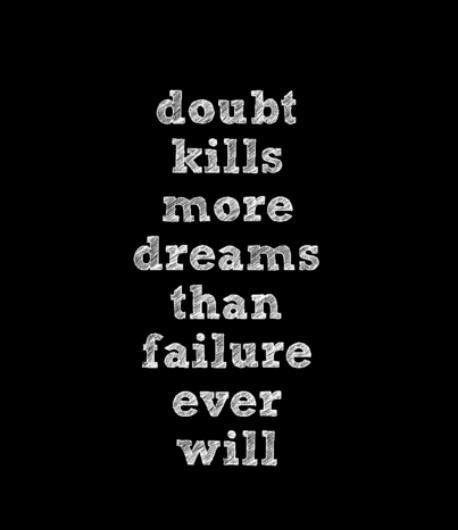
There is, however, a point where doubt is counter-productive. What if good research tells you that the doubt is unfounded? What if there’s more true benefit than risk? What if doubt is keeping you from a richer human experience?


We need doubt. We need to know when to let go of doubt.