Day 7 Reflection: Resilience

Resilience is a concept that has passed from the psychological lexicon to everyday language. The American Psychological Association defines resilience as “the process of adapting well in the face of adversity, trauma, tragedy, threats or significant sources of stress — such as family and relationship problems, serious health problems or workplace and financial stressors” (American Psychological Association (APA), 2019). More simply put, it is the ability to bounce back.

The person with resilience as a trait recovers from being let go from a job by planning to regain employment rather than falling into helplessness. They recover from life-altering trauma stronger than before. They star in our inspirational stories, and we admire them for their blossoming in the face of adversity, their ability to bounce back.

We need to remember two things about resilience. The first one, as the APA (2019) reminds us, is that resilience is a common trait. People in general have displayed this trait countless times, after major disasters such as Hurricane Katrina; terrorist attacks such as 9/11 and Oklahoma City, as well as during common events such as illness, death of a loved one, and loss of a job. 

The other thing we need to remember is that resilience is fostered by a series of internal and external factors. The biggest factor in resilience, according to the APA (2019) is “caring and supportive relationships both inside and outside the family“.  This is not a small thing; people need other people to make sense of adversity and tragedy.

Other factors include:
·       The capacity to make realistic plans and take steps to carry them out.
·       A positive view of yourself and confidence in your strengths and abilities.
·       Skills in communication and problem solving.
·       The capacity to manage strong feelings and impulses. (APA, 2019).
To become resilient, we can work to develop these networks and skills. Those of us with disordered childhoods or other challenges may choose to see a therapist to get coaching on how to develop these skills, and we should view counseling as a positive.
We can also contribute to others’ resilience by providing that community support needed to foster resilience. As such, we need to embrace people in their messiness and neediness, allowing them the process of bouncing back from their crises and challenges. As much as we want to take the pain of the crisis or challenge away from someone, our role may simply be to listen and hold space for that person.
Resilience is not a rare gift. It is a key aspect of our humanity, to be nurtured and developed.
American Psychological Association (APA) (2019). The road to resilience. Available: https://www.apa.org/helpcenter/road-resilience[March 12, 2019].

Day 6 Reflection Part 2: My struggle

I may be moving away from writing. Or at least writing novels.

I just haven’t felt it lately. The thrill of writing hasn’t been there since I finished Whose Hearts are Mountains in December. I haven’t started a novel since then; now I have struggled with proofreading/editing the last of my backlog of novels before developmental edit. 
 
The fantasy of getting published has pretty much died. I don’t know if the average of 250 readers per self-published novel is worth $500 in developmental edit fees and sixty to 100 extra hours of work per novel. I don’t know if I could even get that many readers.  I’m wary of the pitfalls the vulnerable writer can fall into: vanity presses and publishing mills, and will not consider those as choices.

The thing that really worries me is that, when I say “I could quit,” I often don’t feel a thing. No cheer, no relief, no regret, almost like I hadn’t spent five years, countless hours, $2000 and an investment of identity into writing novels and trying to get published.
 
I don’t feel bad about quitting until I write this out: I might quit my quest to be published. When I say that, I feel the death rattle of a dream, but at the same time I wonder if that dream of being published, being read is unreasonable, unworkable, pie-in-the-sky. I wonder if there are more reasonable things to dream about.

This is my struggle. Pray for me, or wish me luck, or whatever you feel moved to do.

Day 6 Reflection: Struggle

I think society needs to be careful about how it views struggle.

Struggle is inevitable. In Genesis, the Judeo-Christian origin myth, struggle results from the fall of Man:  By the sweat of your brow  you will eat your food until you return to the ground since from it you were taken; for dust you are and to dust you will return. (Genesis 3:19, NIV). Other origin myths describe the struggle between chaos and order, with humans caught between the forces, if not put to the test to choose.

The stories bring us to the modern day, where we try to accomplish small and large things, buffeted by external circumstance, burdened by our frail bodies and our baggage and the injustices of our worlds. Struggle is inevitable.

Society has come to believe that struggle, and particularly succeeding in the face of struggle, ennobles people. This admiration of those who succeed in struggle spawns a phenomenon with a name: Inspiration porn. We read about and praise those people who have “risen above” their struggle: the homeless teen mom who finished college, the paraplegic athlete, the lawyer from the ghetto. 

There are many dangers inherent in our idealizing those who have succeeded despite the odds: We make mascots of those who succeed, summarizing them in terms of what they have overcome: “boy from the hood who beat the odds”, “disabled woman who overcame her limitations”, “anyone can become president”. 

More harmful, though, is that we absolve ourselves of the work of addressing inequity. We have our shining examples of those who have succeeded; therefore it’s possible to succeed. Or we see our work as nurturing those shining individuals and becoming the hero in our minds.

Our work is to address the inequities that complicate the struggles of everyday people. If one group suffers more than others, there is an inequity. Systemic poverty, inaccessibility, discrimination all exacerbate an individual’s struggles. Those of us whose struggles are minor are not absolved of the need to address these inequities for the sake of our fellows.

One of the biggest inequities is our definition of success, which we define by a model that looks suspiciously upper-class, able-bodied, white, and male. The college graduate we praise chooses a predominantly male profession. The woman with cerebral palsy competes in a traditionally able-bodied marathon. The man who came from a poor black neighborhood who becomes a music mogul is looked at with suspicion by the mainstream. This just increases the struggle for those who are driven by success.

Struggle may be inevitable. Struggle may be ennobling. But struggle should be eased where we can.

Day 5 Reflection: Courage (originally bravery)

Note: The prompt for today is “bravery”, which technically means acting without fear. Courage, on the other hand, means to act despite the fear. I have changed today’s UULent prompt to courage, as I don’t believe bravery applies here. 
 ************

Speak truth to power.

This is a phrase I learned from my experiences as a Quaker. Speaking truth to power answers wrongs with an appeal to right, answers violence with peace, answers degradation with dignity.

Speaking truth to power requires courage, because power can be used to fire someone from a job or turn others against them. Or to kill someone.

I think of a recent example of speaking truth to power, a very polarizing figure, Colin Kaepernick. Kaepernick communicated his concerns about the mistreatment of black people in the US wordlessly, kneeling at the National Anthem. This set off a firestorm of criticism and ultimately got Kaepernick released from his contract and likely blacklisted from the NFL. It takes courage to speak one’s truth with so much to lose.

People who speak truth to power are sometimes seen as heroes — Martin Luther King, for example. Others, like Colin Kaepernick, are seen as disrespectful, foolish, or dangerous. These views often change depending on whether one agrees with the speaker. 

What truth is worth dying for? I look at my heroes, who sacrificed to speak truth to power — Martin Luther King, Colin Kaepernick, Karen Silkwood —  and I wonder if I have the courage to speak truth to power in a big way as they have. 

Perhaps I am instead called to speak truth to power in a dozen small ways every day, which still takes courage. May I have the wisdom to choose the truth and the courage to speak it today.

Day 4 Reflection: Dreams

It’s hard to write about dreams these days without sounding trite. Whether dreaming big or following one’s dreams, it’s been said before. 

I want to talk about dreams as the cauldron of our subconscious, where our minds process the bits and pieces of our day into scenarios that twist through our sleep. Luxurious scapes, clandestine relationships, twisted corridors with monsters from our id, these are the denizens of our sleeping hours.

When we dream, sometimes we wake with decadent stretches and a purr, a grin on our face. Other times we sit bolt upright in bed clutching our blankets. Throughout the day, we revisit the dream, mulling it over in our head trying to find meaning in it, to use it to inform our day or to banish the tendrils of nightmare.

Or to harness its power in a story. Many years ago, I suffered through a kidney infection for a few days, spending much of the time asleep. I spent the time in dreams — in one long dream that passed for hours, where I found myself in a desert commune after the experiment called the United States had crumbled into city-states. The contrast between the strife outside and the people who pledged to peace, and the hope that peace lent to those the peaceful folk encountered, stayed with me when I woke, as did the relationship between myself as protagonist and a member of the commune.

I wrote what I could remember, the bare bones of a couple scenes, too long for a short story and too sketchy for a novel. I didn’t write novels back then, feeling overwhelmed by all the words needed.

This spring, after four or five novels under my belt, I revisited that dream with all its dread and promise. I was ready for the dream, for its message, for all its words. 

The book, some seventy-thousand words long, waits for its developmental edit. Sometimes we manifest dreams into reality, one way or another.

Day 3 Reflection: Intention

Every morning, I think and I write with a goal in mind. I write to tell stories, invoke feelings, construct meaning. I write with intent.

The word “intention” is a noun, yet we invoke intent as infinitives: I intend to write this blog, to convey ideas, to speak to my readers. I intend to create, to act, to do. 

In some mystical traditions, intention is as powerful as the act itself, as the intent creates the reality. The intent becomes the enacting of the infinitive. If one’s intent is to wound, to hurt, to steal, one has in effect set the wheels in motion to do so simply by intending to.  If one holds to that mystical tradition (and I do), it’s important to examine one’s feelings before they become motives, and one’s motives before they become intention, because by intending to act one has already acted. 

This is not to say I walk in an oppressive cloud of guilt for thought crimes. It does mean that I’m rather introspective about thoughts that could spawn bad intent. The thoughts serve to inform me of what I need, not to be shaped into intent. I do not indulge scenarios of revenge or retaliation or fantasies of infidelity. The thoughts may drift through my mind, but I let them drift and keep myself anchored in the reality of my intent, the things I want to accomplish.


Day 2 Reflection: Vulnerability

 For the #UULent reflection list, look here.

If I make myself vulnerable, I could get hurt. People could laugh at me. I might fall in love and get my heart broken. People will think I’m stupid. I could make a fool of myself.

We fear being vulnerable. The fear likely comes from our most primal selves, where vulnerability meant a life prematurely ended by animal attack or fights with other tribes. Our bodies have evolved to make fear an experience we run away from, ensuring our survival. The experience of this fear makes our shoulders shrink into ourselves, makes our skin crawl, our stomach hollow, our heart pound. Most of us want to avoid that feeling, or at least control the feeling by riding on a roller coaster where we know the risks are limited by the design of the ride.

Focusing on our fear of hurt — and vulnerability to hurt — paints all the potential hurts with a big red brush. Being laughed at is equated to death. Worse, the focus isolates us from the risks we need to take to grow and evolve and flourish.

If I make myself vulnerable, I could get hurt. People could laugh at me. I might fall in love and get my heart broken. People will think I’m stupid. I could make a fool of myself. But if I don’t, I will be lonely. I will not experience love. I will not grow. I will not strive for new goals. I will not embrace my humanity. I will not truly live. 

*****
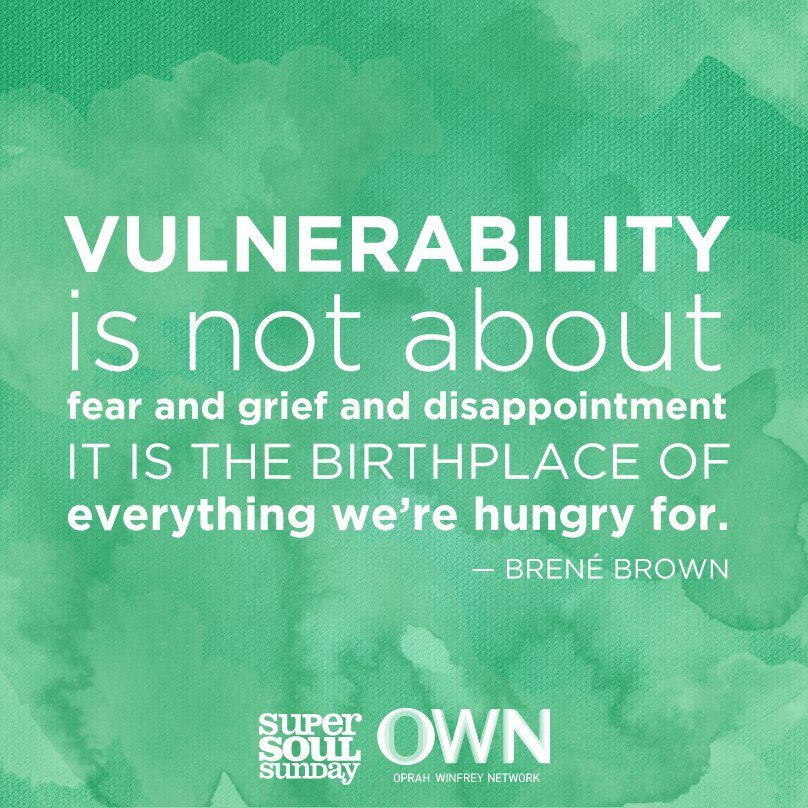
If you want to learn more about the importance of being vulnerable in one’s life, look for Brene Brown’s material on vulnerability.  Here is a good start.

Day 1 Reflection: Dedication

My list of blog posts

I have written 693 blog posts including this post. In mid-April, this blog will be two years old. I write almost every day unless I’m fighting depression, and even then I usually write.

I don’t always feel motivated to write. I would find it easy to devote myself to writing if I received accolades for it, or if I knew my writing impacted someone in some way. Rewarding a behavior results in more of that behavior — that’s called classical conditioning. In the case of my blog, readership and comments and likes would be the rewards for blogging behavior. However, I only have an average of twenty readers per day, and I have no idea whether they like my work. Comments on the blog and likes on Facebook and Twitter are few and far between.

Still, I write, almost every day. 

It takes dedication — in my case, dedication to the craft of writing; dedication to the confraternity of writers; dedication to the concept that it’s important to reflect, to soul-search, to speak truth whether or not anyone listens.

Dedication in the face of obscurity makes me more solid, braced by my convictions that writing is the work of my soul. 

Forty days of reflection

As a Quaker (i.e. member of the Religious Society of Friends, an unorganized religion) I do not give things up for Lent as I did when I was a child in the Roman Catholic Church. I miss the concept of sacrifice, however, at the same time I feel like giving up something doesn’t lend itself to spiritual growth.

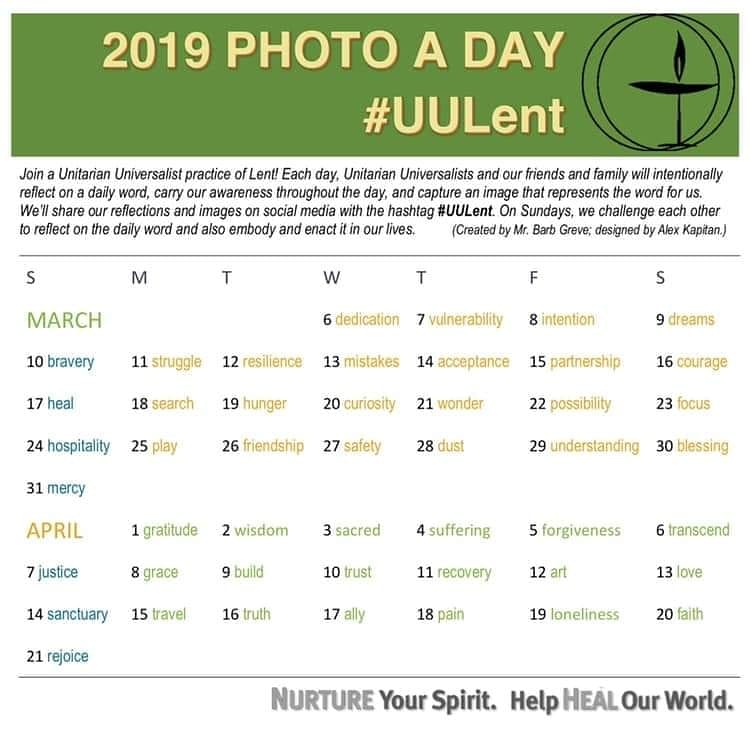
A friend of mine is Unitarian Universalist, and she posted a Lenten devotion of reflections upon words that hook into people’s spirituality. The devotion suggested pictures of each day’s word to reflect on, as shown below:
For the forty days of Lent, I will use these words as the jumping point for my blogs. I will do the day 1 reflection later tonight — the word, it turns out, is dedication. I think I can speak to this.