Rejections and Cognitive Distortions

This is probably a rerun from way back when, but:

Sometimes I wonder why I put my books out there.


Ask any writer after a rejection, and you’ll probably hear the same misgivings. I myself been rejected by so many agents that I thought I’d get over this. I haven’t. 

I think the two things that keep me from quitting are: 1) my short memory, and 2) noting the negatives — cognitive distortions — are not real.


Cognitive distortions
Cognitive distortions are statements we make to ourselves to define our reality — but in actuality just make us miserable. (Positive Psychology.com. 2019)

For example, I just went through an online pitch contest where writers try to get attention from agents about their books. I did not succeed. So I combined this with all the rejections I’ve gotten and started talking to myself like this:
“I’m a bad writer.”
“Nobody likes my writing.”
“I’ll never get published.”

These are all examples of cognitive distortions. 
“I’m a bad writer.” — All or nothing thinking. “I’m either perfect or bad.” Also labeling.
“Nobody likes my writing.” — Mind reading. How do I know this?
“I’ll never get published.” — Fortune-telling. If I can predict the future, can’t I win the lottery? 

In reality, I can’t predict the future, Nor can I be the worst writer ever if I got through college. I can name people who have liked my writing. These realizations are known as contradictions.

How to start:
It helps to write this down on paper. Here are the steps:
1) Write down the thoughts that are bothering you
2) Identify the cognitive distortions. If  you look for “cognitive distortions” on Google, you will find many sources. My favorite resource is here.
3) Come up with an alternative thought: 
“I’m a bad writer.” — “There are people better and worse than me”
“Nobody likes my writing.” — “I have had short fiction and poetry published”
“I’ll never get published.” — “Never is a long time; and if you never get published, it might have nothing to do with you”
4) The important question: what is my next action?
When your mind is clear, you can determine your next move to live your life most authentically.

What now?
Get the list of cognitive resources and the PDF journaling sheets at the site below. Do this when you’re feeling negative about life. Keep it up. After a while, you’ll only need to do this as a reminder.


Positive Psychology.com.(2019). Cognitive distortions: When your brain lies to you (+ PDF Worksheets). Available:

Tweetdeck vs Hootsuite — a writing blogger’s take (Social Media)

Social Content Managers
I don’t have the money to have an assistant handling my social media. (And, unless I become the next JK Rowling, I won’t). So I have to depend on social content manager web pages. I use two social content managers — Hootsuite and Tweetdeck. Here’s what you can expect for each and why both can be useful:


Hootsuite: My everyday workhorse
I will be talking about the free version of Hootsuite, as I can’t afford (nor do I need) the full versions, which runs $29/month for the professional (individual) account. The free version does enough for most uses. You can follow your feeds on three different social media sites at once. More importantly, it functions as a launcher for multiple social media sites — three different social media for the free version. I have my Hootsuite working with my Facebook Pages, Twitter, and Instagram, and can send the same post through one, two, or all three sites at once.  Free Hootsuite can be found here.


However, Hootsuite allows for a limited number of scheduled tweets, four in total, in their free version. Sometimes, if there’s a #PitMad or a  #IWSGPit (sessions for pitching a novel on Twitter), I need 12 pitches, one for each hour the contest runs. This is why I turn to Tweetdeck.


TweetDeck: For Targeted Twitter Time
Tweetdeck does more functions than free Hootsuite, but only for Twitter. TweetDeck is free, which makes it tempting if you’re a Twitter-only social media user. 

TweetDeck can follow multiple functions of Twitter at once — home, notifications, messages, trending, and submitted tweets. I think the beauty in TweetDeck is scheduled tweets. As I said above, in the case of a pitch contest, one needs to be posting once an hour. That’s twelve hours with two books I’m pitching, which is 24 posts. Although one has to prepare each post seperately, TweetDeck handled all of them without balking. Free TweetDeck can be found here.

In Conclusion,
Hootsuite is my everyday social media companion. Its free version does everything I need on a given day. But on those special days where I need to tweet a lot throughout the day, there’s TweetDeck. Does anyone use either or both of these? Tell me why at lleachie@gmail.com.

A Moment of Gratitude (Personal Development)


This is a picture of my husband.


Something happened to me yesterday that I couldn’t imagine ever happening — a couple of friends offered to beta-read my latest novel!

This is big, for reasons most writers will recognize. Our  own families generally don’t read our books, much less our friends.  The fact that my friends are actually beta-reading my works amazes me,

I don’t worry about these friends being unable to critique fairly, because they know I need this to grow in my writing. And one’s a Creative Writing grad, one a professor, another a grad in (I believe) psychology. A good mix. 

So pardon me if my feet don’t touch the ground today!

Stretch Goals (Personal development)


A Reminder: All Goals Should Be Smart

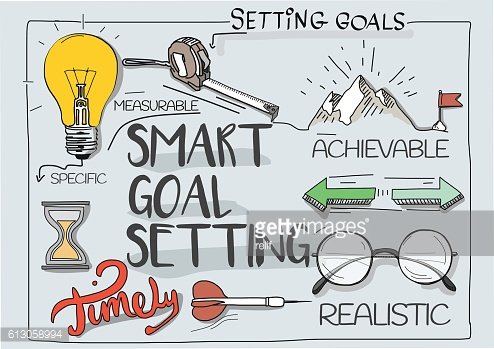
I know I’ve talked about SMART goals — all our goals should be Specific, Measurable, Action oriented, Realistic, and Time-bound. It’s good to write these down to have something to refer to and direct your energy.


Stretch Goals!
But what if we fulfill those goals? We need new goals, and we want them to continue the progress of the met goals. Stretch goals are these next level of goals. They should be as we’re nearing success in the first tier of goals, so we can build them using the momentum we currently have.

Examples:
  • I am nearing 1000 followers on Twitter. Now I would like to see 2k. I now plan I will acquire 2000 followers by June 1 through a combination of getting my name out there by making and following and liking posts, and following others. 
  • I have just finished the developmental edit stage of my WIP. My next stage is to find beta readers, then collect their comments and edit some more. (This goal has not reached SMART goal status; notice I haven’t developed it enough to make it SMART)
What now?
Look at your goals. What’s the next step? Start plotting that! 
If you want help with that or SMART goals, drop me an email at lleachie@gmail.com.

Twitter as #writingcommunity (Personal development, Social Media for Writers)

Oh, that’s how you do Twitter!
I just wanted to announce that I’ve figured out Twitter. I even pinned a tweet!


#writingcommunity is my Favorite Place
I have fallen in love with Twitter, especially the #writingcommunity.

Why have I fallen in love with #writingcommunity?
#writingcommunity Twitter is different than mainstream Twitter (although I don’t have much knowledge of other specialty Twitters). It’s surprisingly social. Some of the discussion is about writing, but some of it is simply “tell me how your day went.”  It uplifts, commiserates, and makes people laugh.

One of the activities in #writingcommunity is following each other.There are two reasons: one of the purposes of Twitter for writers is to add to one’s “writer’s platform” or media presence. One of the things many publishers and agents ask is about your writing platform, because that means potential buyers for your book. The more important part, though, is the interaction I mentioned above. 

Is #writingcommunity for you?
If you’re a writer or an aspiring writer, a thousand times yes! Think about it — you have thousands of people who are good with words. Playing with words is a natural consequence. You have people with writing as a commonality; they’ll talk about writer’s block and rejection.

Trying to get Twitter

So I’m trying to up my Twitter game …
My guide to building a social media platform for my writing has been challenging. I find Twitter to be overwhelming.

Ok, Boomer
I’m aware that a good part of the reason I’m overwhelmed is because I’m getting older. As much as I hate this fact, it’s unavoidable. And everything I’ve heard says that the older generation has to explain technology to the younger generation.

The overwhelming factor
What I find overwhelming is the sheer size of the Twitterverse. How do people have time to read all these posts? It seems like posting is akin to throwing the message-in-a-bottle out into the endless ocean and hoping someone sees it.

It’s not so bad, people assure me. There’s always hashtags. If you can figure out the hashtags, people will read you. If. You. Figure. Out. The. Hashtags. 

My husband just explained hashtags: You make a post; you create a hashtag. Other people notice the hashtag, and it trends, and then people notice, and then you get likes and retweets. Except this is the Twitterverse, which as I pointed out is a vast sea of hashtags. 

To my relief, I know one of the hashtags people use to promote writing, or at least being a writer: #writingcommunity

All is Not Lost
I did the thing I should have done a long time ago — ask people in #writingcommunity what hashtags I should use as a writer. I also participated in a #writerslift thread. 

Maybe I’ll get the hang of this.

If you can help me get the hang of this, please email at lleachie@gmail.com

Wishes are the first step


I’ve been thinking about wishes, largely because I tend to look down on them as impractical. The truth of the matter is, the impetus for goals comes from wishes.

What are wishes?
This is easy. Wishes are thoughts about what we want to happen. They are the expression of fantasy. Fantasy is a video clip of our desires, wishes are the sound bite. 

Fantasy, as well as the resulting wishes, come from our values, which in turn come from our emotional and cognitive responses to formative experiences, some of which are transmitted to us by our childhood interactions with caretakers.

I grew up in a creative family — my mother took photographs and designed multimedia projects and my dad did woodworking. Thus I learned that creativity was valued in my family, I learned from my teachers that I had a skill for writing. These developed my value that getting recognition for creativity was important.

I fantasize about getting a book contract. It’s a movie in my head. From it I extrapolate the wish to get published.


Wishes are translated into goals
We have limited resources and abundant wishes, so we have to prioritize which ones we act upon. When we decide to process a wish into steps we can act upon, it becomes a goal. So my raw goal is to get published.


Goals are then clarified
We can’t act upon goals until we’ve clarified two things: 

  1. what resources (time, money, etc.) we can allocate to fulfill the goal
  2. actions to take to fulfill the goal
To make strong goals, we need to answer the queries “who, what, where, when, why, how many, how much”. So I come up with “I will have my first book traditionally within the next five years.”

Goals that go through the SMART philosophy (specific, measurable, achievable, relevant, time-bound) become even stronger. When I do this to my goal, it falls apart somewhat when examined:

  • Specific: Yes, I covered the query questions above
  • Measurable: “book traditionally published” is measurable
  • Relevant: I think so
  • Time-bound: Yes
  • Achievable: here’s the big problem. This goal has nothing to do with what I can do, but a result that’s out of my control. I need to rewrite this goal into one or more goals that will be things I can take action on, which I have articulated here


The goal becomes the plan
Because I have done the prior steps, I can act upon those specific goals. The goals inform the plan, which is the series of actions that it will take to fulfill the plan.

Then it’s time to act.
You have a trajectory, a time limit, and the steps toward winning. Now it’s up to you.


Without goals, our wishes flounder. But without wishes, we have nothing to make goals from.