My Problem Child


My first novel has always been my problem child. I wrote Gaia’s Hands based on a dream/fantasy I had of a May-December relationship, only the female was the older one.  Because I didn’t want to write a romance novel (plus I couldn’t see an audience for this one), I developed a quirky fantasy line involving the most high-powered   version of a green thumb you can imagine. There’s always seemed to be something missing, or something awkward about it, and I’ve tried many ways (usually cutting things) to see if that helps. It didn’t. There was still something lacking.


The other day, a book coach with a romance background looked at it, and she said there were two faults — 1) not enough emotion; 2) It should actually be a romance. to be honest (and I apologize to the romance writers who read this) I have read a lot of romances I don’t identify with, with tropes that annoy my feminist sensibilities: the heroine who doesn’t think she’s attractive but she’s drop-dead gorgeous, the male who’s the strong silent type. I don’t want to write those tropes, and I’m afraid I’ll be an unreadable romance writer if I write the truth about Josh and Jeanne — she’s twenty years older and a Rubenesque professor; he’s built like a lightweight wrestler and the most macho thing he does is practice aikido (and has achieved the equivalent of first level black belt).  He writes poetry and stories; she designs permaculture gardens. He is intense and hungry; she’s a bit preoccupied with his research. They both think what they want is impossible.

The trouble is, I have to believe in their romance to write it, and right now I’m like Jeanne, who thinks it’s a biological impossibility that a twenty-year-old guy would fall in love with a 45-year-old woman. I know the other way around is possible sort of — I have gotten crushes on 20-somethings with small builds. But, again, like Jeanne, I don’t know how that could be reciprocated. If I want this book, I have to find a way to believe in that. 
A Time to Write

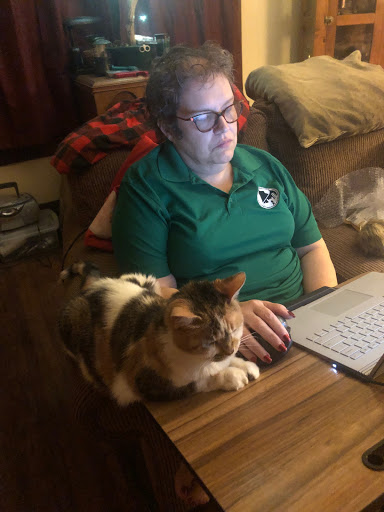
Me during the Pandemic

During the pandemic, I teach at home, and I have plenty of time when I have no emails to answer, to projects to grade, and no meetings to attend. And no distractions from the outside. 


So I write.

I just got done doing another edit of Whose Hearts are Mountains, which had suffered in the querying process. I mainly edited for plotting, using the Save the Cat protocol. I now have that out to my friend Ken (Hi, Ken!) who will be as brutal on it as any developmental editor. Then I’ll tweak and go to my final 30 queries.

Now, I’m working on Gaia’s Hands again, the problem child of my lifetime. I’ve decided, through consult with a writing coach and reading over Save the Cat Writes a Novel, that I’ve been going about it all wrong. First of all, the story is an unusual romance in addition to being a fantasy, which makes me grit my teeth a bit because it’s never going to be marketable as a fantasy. Second, its timing is all off. What this basically means is that I am going to have to rewrite the whole thing. I know I could put it in a drawer and forget it, but it’s foundational to another series. And now that I’m beginning to understand the story, it is compelling.

When I mean “unusual romance”, I mean this: Josh Young has a thing for Dr. Jeanne Beaumont, even though he’s twenty-five years too young and she’s out of his league, what with that Ph.D. and that plant patent of hers. Jeanne Beaumont wishes she were younger and prettier, because she’s become intrigued by the graceful Josh Young.

There’s more to the story, because I have to juggle in the fantasy element. But you get the idea.

I like the fact that I’ve decided to try harder, even if I never get published. I think at this point that learning is more important than getting published. 

I still have my fingers crossed for publication. 

Lenten Meditation Day 46: Rejoice

Today is Easter, the day in which (in the Christian calendar Jesus Christ rose from the dead. This year, it’s also Passover, when in the Jewish calendar the Jews triumphed over the Pharaoh who subjugated them. If we go back into myriad European pagan beliefs, Eostre is when the year is released from the captivity of winter.


And we rejoice. 

There seems to be a common theme here, that of being released from an adversity. I think that’s important. So many good stories begin with overcoming barriers, and there’s a reason. We don’t want to think that we’re going to be shackled forever, so we fight against the captors. In all three of these, divine assistance yielded the victory.
I personally think God works differently than in the stories. I don’t think God sends plagues to our enemies or picks winners in football games. That is not to say that God doesn’t intercede. I think God sustains us until we achieve our victory. I think God gives us the strength to persevere, comforts us in our difficult times, clears our minds so that we can find victory. 

But in the end we find victory — not always the victory we wanted, but we find the victory anyhow. 

I leave you a poem by ee cummings that I think captures the essence of Easter:

“i thank You God for most this amazing
day: for the leaping greenly spirits of trees
and a blue true dream of sky; and for everything
which is natural which is infinite which is yes

(i who have died am alive again today,
and this is the sun’s birthday; this is the birth
day of life and of love and wings: and of the gay
great happening illimitably earth)

how should tasting touching hearing seeing
breathing any—lifted from the no
of all nothing—human merely being
doubt unimaginably You?

(now the ears of my ears awake and
now the eyes of my eyes are opened)”

Day 45 Lenten Meditation: Anticipation


Sometimes when we anticipate, we wait for good things to happen. Sometimes it’s a matter of what we’ve earned through hard work, what we will be gifted with through tradition, or what we’ve been promised. We know something good is coming, although we may not know exactly what. This kind of anticipation feels like an invitation to a sumptuous feast.


Sometimes when we anticipate, we prepare for bad things to happen. We make emergency plans and emergency funds, we make contingency plans. We buy life insurance and make wills. By anticipating, we can protect ourselves and our families.

Anticipation requires us to look into the future, for good or bad. 

Happy Third Blogiversary!


This blog has seen many milestones in the past several weeks. The 1000th post, the 40,000th view, and now the third blogiversary.

I have been writing this blog for three years, almost daily. Some days I write short passages, some long, some funny, some dead serious. I have written about transcendence and depression, of pandemic and boredom, of my ups and downs of writing. But I have written daily.

I am not the most disciplined person, so the fact that I’ve been able to write almost daily for three years is a revelation to me. A commitment I didn’t think I would be able to make.

I hope to write more in the future, at least till my fourth blogiversary, and maybe beyond…

Day 43 Lenten Meditation: Transcend

Transcendent experiences are relatively rare. And this is a good thing, given the emotional impacts of those experiences: We are shaken. We are dwarfed by awe. We question our notions of the world. 

The world around us doesn’t seem quite the same, and we can’t explain what happened to someone else because we can’t find words that suffice.

We try to find words, those of us who are creatives, as the experience informs our work. But words are still too small to capture the perfect moment we were caught in.

Transcendence reminds us that we are more than our flesh and organs, more than our intellects, more than our daily existence. We carry in ourselves stardust and mysteries, our senses tuned to the unseen. 

Transcendence is our legacy as humans and our birthright. 

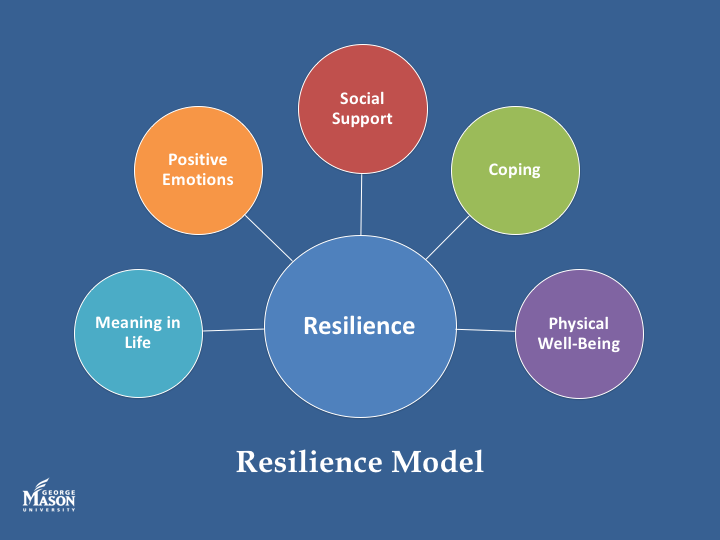
Day 42 Lenten Meditation: Resilience


The human race owes its survival to resilience.


We face the deaths of people around us. We face mental illnesses. We face betrayal by our loved ones. We face pandemics and war, and we get beaten down by these events.

Most of us, however, rise back up, and that’s resilience.

Resilience is more common than we need, but it doesn’t happen in isolation. Resilience is fostered by community, by people who care. Resilience needs other people.

It is unfair to ask someone to rise up if you’re not willing to be there for them. The elderly are too often isolated from life-saving emotional support in this country. Children are left alone in abusive situations.  The mentally ill are shunned.

If we want to survive as a people, we need to be there for each other. It is our legacy as humans to foster resilience in each other. 

Day 41 Lenten Meditation: Bloom

“Bloom where you are planted”. All fine and good, but currently I’m planted in my living room, wearing sweats, in day N (where N = I’ve lost count) of shelter in place during COVID-19. 

Yet I’m still finding ways to bloom. I still write this blog daily. I work on writing in-between my classes. I experiment with sourdough starter. I name my sourdough starters. I wear lipstick with my sweats. I have long literary discussions with my cat Girlie-Girl, who remains unimpressed.

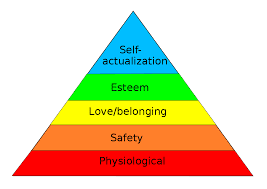
It’s easy for me to bloom, however. When I look at Maslow’s Hierarchy of Needs:

I’m relatively high on the pyramid. My most basic physiological needs are met (food, clothing, shelter); I am safe in my house; I have a loving relationship and feel I belong in my community; I derive esteem from being a professor and writer; and I have enough of these items to feel I can give back to the community (self-actualization). I have plenty of energy with which to bloom, in other words.

Expecting someone to “bloom” when they’re hungry is cruel, as is expecting someone who doesn’t feel safe to express themselves freely. Even I, when I’m in a state of depression or mania, don’t bloom. Sometimes we just manage, and that’s good enough.

We should strive to bloom. We should not make it an expectation, however, because so many people struggle in their lives. Do not judge them if they don’t bloom.

Day 40 Lenten Meditation: Cry


I don’t cry often. I don’t know whether it’s because I’m a basically strong person, or because my bipolar medications keep me calm. But I feel the tears lurk, looking at the world’s situation under COVID-19. 

Highly contagious with about a 2% death rate. That seems small — 98% will survive it — until you look at the number of people in the world. As of this morning, there have been 9100 deaths in the US, half in New York City. And there’s no end in sight despite sheltering in place.

I’m feeling discouraged, and I normally have faith in our ability to surmount nearly everything. I feel tears come to my eyes as I read the news. I don’t read the news much, because of this feeling of despair, the reality of the numbers which still conceal the human cost. 

I can’t quite cry. If I could, I think the sadness would pass for a while, because crying is healing. Crying is like a good thunderstorm, giving us release from the sadness. A good loud cry is what I need right now. I’m not there yet.