Goals vs. New Years Resolutions

I’ve taught enough about goal-setting over the years that I can write very solid goals. Goals should be:

  1. Specific
  2. Measurable
  3. Action-oriented
  4. Relevant 
  5. Time-oriented
So, for example, the goal “Send queries*” fails several of these parameters:

  1. Specific?  I don’t know which of my manuscripts I’m sending queries for, nor to whom.
  2. Measurable? Am I done with just one query? Seventy? Querying everyone in Query Tracker**?
  3. Action-oriented? I guess we’re okay here.
  4. Relevant? Is this the action that is relevant to acquiring an agent? Yes.
  5. Time-oriented: When do I need to have this done by?
The SMART (see what I did there?) version of this goal would be:
“Send 3 queries a day, targeting the agents on Query Tracker who handle science fiction, until I run out of agents.” There’s the goal, and I am on day 15 of that. I have thirteen days more of query writing this round. 

*****

I really like SMART goals, but I haven’t warmed up to New Year’s Resolutions.

First, resolutions aren’t goals. They’re not SMART. They’re sound bites that you have to provide to people when they ask:

“What’s your New Year’s Resolution?”
“I plan to marry Viggo Mortensen.”***

Second, there’s a concept in positive psychology called “ironic effects”, where doing something that requires self-control fails because we “know” we’re going to fail. For a good example, stare at a cheesecake you’re promised yourself you won’t eat.  I find setting resolutions a guarantee that I will give up on January 31. And why not? Resolutions set goals without setting up plans.

What else can I do if not resolutions?
Write down my SMART goals!
And tell everyone, “I don’t make resolutions.”

*****

* Queries are the submissions you send to agents and publishers to ask them to consider your work and potentially ask to read the whole novel. All queries start with a query letter, a special kind of cover letter. https://www.agentquery.com/writer_hq.aspx has good instructions for a query letter. Most ask for a synopsis of the book and some segment of the book (first three chapters, etc.)

**I use www.querytracker.com. Writers, you’ll thank me for this.

*** For my foreign (and domestic USA) folks who don’t know, Viggo Mortensen is an American actor. In the Lord of the Rings movies, he played Aragorn.  When I first saw the movie in 2001, almost 17 years ago, I joked about marrying Viggo Mortensen, as did about a million geek girls worldwide.

A little about my day job/All I’ve learned will be useful

I’m running a bit late today, because I’ve been getting stuff put together for my Spring semester, which starts next week with a rash of meetings, followed by classes starting on the 8th of January.

My position in the department is an odd one, because I’m in a Behavioral Sciences — think Psychology/Sociology/Human Services — department at a small regional midwestern college. The oddness is that, although I have many classes in sociology and psychology and some in human development, my degree is neither in sociology or psychology. My degree is in family and consumption economics, which means I study families’ relationships with time and money and things related to time and money. In effect, it means that I’m highly versed in many of the items that human services deals with — resources, decision-making, basic human needs.

The classes I teach show a glimpse of the odd position I’m in in the department. I teach a behavioral economics class — behavioral economics is actually a thing where psychology tears down the belief that consumers are rational (i.e. the basic belief of economics) with lots of experiments showing exactly how irrational people are with their money.

Another class I teach is a human services class, Intro to Case Management, which comes naturally as well, as I have taught resource management classes for years. It’s all about how to build a rapport with the client, help the client plan a set of goals toward getting toward their new life, and arranging linkages with professionals and other services that will help them toward their goal. In other words, it’s all the steps of resource management with a client.

The third class I teach, I only teach in the spring, and I believe I teach it because nobody else wanted to. It’s a really fun class, despite the name — Personal Adjustment. It’s a hardcore psychology class about theories of … happiness and well-being. Because it’s a hardcore psychology class, I need the students to remember that Seligman is attached to the concept of the “Good Life” and signature strengths, Csikszentmihalyi developed the concept of Flow activities, and Diener was the guy who did the beeper studies where he’d randomly ask subjects to report what they were doing and feeling. (I was a student of Diener’s as an undergrad and I so wanted to be in that study!) But I studied quality of life from an economic viewpoint in graduate school, and so now I teach it from a psychology viewpoint.

Do I believe everything is interrelated? Yes, most certainly! I see myself as standing in the middle of a universe of information and pulling out stars and comets of information as I see them (please hold off on the “center of the universe” jokes). I braid the strands of information together, and search for more information to continue the braid into a whole concept, a theory, or even a metaphor. 

Everything I’ve ever learned is in that universe waiting for me to remember it. Nothing is too random to keep — not Existentialism, nor food garnishing, nor the significant of slow blood refill when you squeeze someone’s thumb, nor how soap works, nor Becker’s third theorem in A Treatise on the Family, nor the first snowflake I’d ever seen …

I need to keep learning for the rest of my life. I’m not done at age 54 with a PhD in Family and Consumption Economics from 1991 (Shout out to those of you who weren’t born yet!) I need to learn for my job, I need to learn for my writing, I need to learn for the thrill of standing in the middle of that universe of information…

Ironically, I may get a chance. Higher Learning Commission, our accrediting body, suggests that I need to take 21 hours in a psychology-related field because I’m teaching Psychology without a degree in Psychology.

I’m thinking of a certificate in Disaster Psych, which would add many interesting comets to my universe.

New Years rituals. What are yours?

Do any of you have New Years’ rituals (regardless of when you celebrate the new year?)

I’ll share a few of mine. First of all, I do not go out and party New Years’ Eve, even when I was younger and could drink more than one alcoholic beverage a year. I don’t stay up till midnight these days because I turn into a pumpkin after 9 PM.  But every year, my husband and I do a silent worship-sharing in the manner of Quakers to tuck the old year in to sleep.

The next day, we eat good luck foods — noodles for long life, pickled herring, black beans and greens (I love Hoppin’ John!), things like that. I think Richard is attempting Japchae, a Korean dish, this year.

I also have a ritual in which I do a little work on everything I want to accomplish this year.  So, a little blogging, a little query-writing, a little work, a little play, a little walk, a little writing, a little prepping my seedling room for the winter seed-starting season, a lot of petting cats …

This is a little short today because I’m prepping for classes, which can be nerve-wracking, especially since I need to tweak some classroom material.  This means you can respond with your own New Years rituals!

I love you all.

Death, from a writing standpoint

Death and the events that surround it are dramatic, mysterious, tragic, chilling, transcendental, tumultuous, and sometimes even humorous. This presents perfect fodder for fiction and screenplays:

Death confronts our fears in a way little else does, because as a whole, we are afraid of death. Edgar Allan Poe confronted our fears of a slow, lingering death in The Cask of the Amontillado, while today’s Saw series does much the same service. Dickens’ A Christmas Carol tells as much about Scrooge’s fear of death as it is about his callous miserliness.

In fantasy, death is not always permanent. Tolkien’s Lord of the Rings and Rudolf the Red-Nosed Reindeer both use a literary device where the hero (Gandalf/Yukon Cornelius), dies while fighting the monster (the Balrog/The Abominable Snowman), and then return alive later in the action while the others mourn them.  Meanwhile, in the Star Wars series,  the Jedis of movies past arrive as ghosts to guide the hero. These plot twists indulge our wish that our heroes and mentors will always be there for us.
Sometimes rebirth becomes a horror. Zombies, golems, vampires, and Frankenstein’s monster remind us of what happens when we go against nature. Both golems and Frankenstein’s monsters are said to have represented fear of technology, zombies today represent tear of contagion, and the Victorian vampire represented fear of sexuality and in today’s Vampire Chronicles represent gay culture. All of these items were regarded as vectors of death, and in all but the Zombie example, they simply represented societal forces for change — which felt like death to some.
We consider constructs of Heaven and Hell in writing. From the Hell of Dante’s Inferno to the movie What Dreams May Come to the proven fictitious God is Real, we test our notions and hopes and fears about the afterlife, because even Hell is preferable to many than the eternal lack of existence. An afterlife is also easier to write about than the eternal lack of existence, I would add.
Death tests the survivors. In the book Ordinary People, a family falls apart when one son dies and the surviving son attempts suicide. At least two Agatha Christie mysteries deal with the murder of a patriarch and a contested will. 
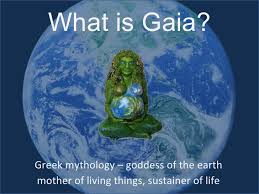
I write about death, of course. Right now I’m wearing a t-shirt that says, “You’re dangerously close to getting killed off in my next novel.” Do writers ever symbolically kill off their enemies in their novels? I don’t really know about other people, but that shady handsy folksinger from my past got obliterated by the preternatural bad guy in Gaia’s Hands
When we talk about death, we really talk about fear, because we are the survivors. Fear of the unknown, fear of change, fear of non-existence, fear of disillusion, fear of discord in our families. It’s no accident I’m writing this the day after Christmas, which represents hope in much of the world.

Merry Christmas!

Merry Christmas and Happy Holidays!

If you are with a large or small family celebrating, I am thinking of you.

If you are celebrating with a friend or two because your family has rejected you, your family is too far away, or you have no family, I am thinking of you.

If you are spending time in a hospital, prison, or other institution, I am thinking of you.

If you have to work today, I am thinking of you.

If you are alone, by choice or chance, I am thinking of you.

If you are missing loved ones who have died, I am thinking of you.

If Christmas is difficult because of an abusive family, I am thinking of you.

If you feel hopeless today, I am thinking of you.

If you feel lonely, even around others, I am thinking of you.

If your Christmas doesn’t look like the Christmas in a Hallmark Christmas movie, I am thinking of you.

If your Christmas celebration includes traditions your neighbors would think are strange, I am thinking of you.

If you are of one of the groups who don’t celebrate Christmas, or observe it in a secular sense only,  I am thinking of you.

All of our experiences of Christmas are equally valid, equally real, equally ours.

May you find what you really need this day, and all the days of your life.

First Snow — postscript

We received four inches of snow here in Maryville, Missouri to give us a white Christmas. Because it didn’t fall until after 10 PM, we could not celebrate First Snow last night, and so we celebrated it this afternoon with a big festive bowl of snow in the living room and a small mug of mighty Irish coffee to share.

It was Richard’s first First Snow, and as he’s the first one I’ve initiated into the mysteries of First Snow in over 20 years, it was fun to hear his toasts. His toasts addressed very concrete realities of our political and social environment, which is not surprising, given his Master’s degree in History. My toasts addressed more creative/mystical/connectedness themes (those of you who have ever known me, your ears should be burning!) 
While Richard poured the last sip of the Irish coffee out into the snow, I followed him out with a snowball in my hands and pelted him with it. I guess we have a new part to the tradition 🙂
********
Merry Christmas, Joyous Yule, Happy Hanukkah (late, right?), Happy Kwanzaa, Happy Birthday to all you Christmas babies. Can you say “Happy Festivus”, or is that a contradiction of terms? Happy Holidays to all. 
As always, I invite you to write back. If you want to do so by Twitter, I’m lleachie on Twitter. I’m also lleachie on Instagram. 
Let there be peace on Earth. 

Waiting

The most mundane of waits: A woman sits in the grimy, poorly-lit waiting lounge of the car repair shop, which consists of two cracked leather and chrome chairs next to a haphazard pile of hunting  magazines. She glances at the coffee pot whose contents have burned to the bottom of the carafe. Finding no interest in Field and Stream, she pulls out her smartphone and gazes at it, grimacing.

A peevish wait: The teen paces, checks her watch again, scowling. Fifteen minutes late. She plops on the couch, which protests with a squeak of springs. She pulls out her phone, checks her voice mail, her e-mail, her messages. Nothing. She plays Words with Friends for a few minutes, checking her voice mail, her e-mail, and her messages in breaks. Nothing. She checks her watch again and sighs, kicking her heels off. Half an hour late, no messages — she’d been stood up.
Lovers wait: She looked out the window of the train as they passed the projects, tall and bleak with tiny windows, scorch blossoming from some, boards blocking the view of others. Past the projects, graffiti bloomed on the smoky walls of brick factories, the quick iconic scrawls interspersed with vibrant murals, all furtively sketched in the night. Then Chinatown, with its bold, ornate gate and glimpse into the ordered chaos of the outdoor market. The train stopped and moved backward, readying itself to start the maneuver to back into the station. At the station, the woman’s lover waited, lean and energetic and foolish in love with her, edgy like the city itself. She smiled.
Waiting for the end: Her mother lay dying, hooked up to monitors, scratching her bruised hand repeatedly and murmuring that something bit her, that there were bugs all over her. Her father, exasperated, reassured her mother that there were no bugs. It was not the tiny cancer in her mother’s brain that was killing her — it was the pneumonia, and her body’s inability to hold onto sodium. It was never the cancer that killed; cancer only disrupted.
Friday: The week had been rough. So close to the end of the semester, students groused about everything, gathering around her like a flock of geese pecking at her, demanding this and that. And she greeted them, calmly answering their questions instead of lashing out at veiled insults. It was not their fault, she reasoned; they were very stressed from proving themselves and falling short, and it wasn’t unusual for students to have external locus of control toward their failures, blaming outside forces. Still, Friday couldn’t come soon enough, and she would relax with a glass of wine in a totally silent living room.
Anticipation: The pristine layer of snow, the glow of her heart, whispered that something, something good, was coming. She didn’t know if it was a little or big thing, if it would make her day or change her life. She wondered if an attack of bliss, of transcendental, edgy bliss, was about to descend on her as it had in the past. She hoped not — she hoped that this time it would be good without the price to pay.
A child’s wait: Tucked in bed, the little girl keeps one eye open, waiting for a change in the air, a trickle of magic that feels like tingles and kittens, that will tell her Santa has arrived. The eye closes, and she falls asleep next to her sister.

First Snow Lives On.

My husband read my passage on First Snow yesterday, and he asked a lot of questions:

  • “Did you get this ritual from somewhere?”  I believe I invented it in December of 1984. There are friends of mine who now have their own rituals. Sometimes they post on Facebook and tell me they miss me. I miss them too.
  • “Do you celebrate it every year?” I’ve missed a lot of years. One time I was in the hospital and missed it. Some years we don’t get snow in November and December, and it seems too late if the first snow happens in February. 
  • “What are the rules?” Funny you should ask:
    • There has to be enough snow expected to cover the grass outside — at least one inch.
    • You need one person minimum, and there’s no set maximum.  However, as you can’t plan ahead of time, the number of participants is limited by who’s available. It’s harder to have guests as you get older or live in a small town.
    • You can either sit in the snow and cold, or bring a bowl of snow inside. 
    • Participant(s) will toast with a beverage associated with wintertime. This includes, but is not limited to, eggnog, hot mulled cider, mulled wine, wassail, brandy, or blackberry brandy.  Regardless of how many participants, there’s only one cup.You can fill the mug more than once.  It’s a ritual; we don’t care about germs.
    • The cup is passed around in a circle. Each participant takes a sip of it and proposes a toast. The first toast is always “To the snow”. The last toast is usually very silly, as all the important things have been toasted to earlier. They get sillier more quickly if the mug contains an alcohol-based fortifying beverage.
    • The toasting ends when all the beverage is gone or all have run out of ideas for toasts. Or frozen to death.
Over the years, I’ve collected stories around First Snow. There was the year (ah! my college days!) when three of us decided to sit on the Old Stone Bridge in Champaign, a small arch over a creek, toasting the First Snow with a mug of blackberry brandy, swathed in an old sleeping bag — and in violation of park rules twice over, with the alcohol and the lateness of the hour. And then the cop showed up. I piped up and told him we were celebrating the first snow and this was hot cider. I babbled out the whole ritual to him. The cop looked down, likely incredulous, and instructed us to finish quickly. It makes me sad to think that if we had not been white college students, it could have ended badly.
The best toast ever was made by Jon Jay Obermark, on a balcony that bravely held eight people and a mug of cheap brandy (E&J, what else?). “To that star up there … and that star there … and that star over there!”
********
It turns out there will be a snow tonight in Maryville. A first snow for the season. 
Richard and I will bring in a bowl of snow as the honored guest, and drink a mug of Irish coffee, my only alcohol for the year. Outside, darkness will press on the windows, and in the First Snow ritual, we will find the light in fellowship. The first toast we will drink will be to the snow; the second, to the people from our past and present, scattered all over the world.
“Through the years, we all will be together, 
if the fates allow … “

First Snow — a Christmas scene

Years ago, I wrote a story called “First Snow”. I searched my crypt of past writing for a copy so I could post it here, but I have no copy. The only copy of the story resided on a computer system/community that no longer exists called PLATO. (For those who spent time on PLATO before there was an internet to play with, I was lleach/pasrf, lleachie/pasrf, laurie/pasrf, and lauren/pasrf. Also mylovelifeis/cursed). If you’re interested in the system that had chat capabilities, advice notesfiles, and serious, unwashed gamers while the Internet slept in someone’s dreams, check out this book: The Friendly Orange Glow

I have the choice of lamenting the loss of a pretty little vignette, or I could try to rewrite it like I am doing with Whose Hearts are Mountains.

***********
Through the years we all will be together,
if the fates allow …

Snugging up my coat and tightening my scarf with mittened hands, I stepped out the door of the computer lab. I noticed it had started to snow while I stared at the terminal typing to wraithlike friends, sharing myself more freely than I did in real life.

The first snow of the season crunched underfoot as I walked under the streetlamp, surrounded by the old, settled buildings of the engineering campus. I had heard the rumor that the University would tear the old University Fire Department down for a shiny Public Safety complex.  I shook my head; the squat, grimy beauty of the current building would be no more. Too many changes. I stepped forward, because there was no way to walk but forward.

The night seemed bereft of people, of noise; nothing except me and the silence. And my thoughts.

My best friends would graduate soon. First, Mike, who would be gone in three days before I could ask him what his family was like. Then Alex would graduate in spring. Others had already drifted away, and I would not hear their stories again. That was the problem with holding people to my heart — they drifted away, and I would let them go.

The snow fell in earnest, shrouding all familiar landmarks in a coat of white. Street lights and phone poles stood starkly against the billows. My footprints stood in stark relief as I turned around and viewed them, the only footprints marring the snow. Each step was into uncharted territory; each footprint showed that I had survived that part of the journey, but that I had survived it alone.

Alone — no, not alone. I held the memories of my friends; I held their stories. There would be no new stories when they left, no new memories made, but there would be what I held now.

As I crossed from the campus to the shady streets of Urbana, I stopped in front of the University High School, its Gothic hulk softened by snow. I glanced up at the streetlight — an old-fashioned globe light — to see the swirling snow fashion it into a star of sorts, close enough, and I let my husky voice rise:

… through the years, we all will be together,
if the Fates allow —
hang a shining star upon the highest bough … 

And that was what I would do when I got home. I would decorate the tree in my tiny apartment, hanging the star at the top, and drink a toast to memories and to the first snow. Like snow, friendships could melt at a moment’s notice, but memories would last.

Time Machine: a 25-year-old first draft of the WIP

I might have mentioned that I started the idea of the current WIP, Whose Hearts are Mountains, twenty-five years ago. I might not have mentioned that the inspiration for it was a long nap necessitated by a kidney infection with no codeine for the pain.

I found my old notes for the jokingly-named Dirty Commie Gypsy Elves, which read more as background notes than as the first chapter it was intended to be:

*****
 I stood at the edge of the desert, wondering if a legend was worth risking my life for.

I was leaving nothing behind. My parents were killed five years before in a Klan raid of the Underground Highway for smuggling blacks accused of “insurrection” out of the white supremacist territories. When they died, I was half a nation away, snug in the coccoon of academia.

Two years later, my coccoon was destroyed in the Blue Collar Riots of 2012. I was taking a coffee break in a faculty lounge discussing fast-food horror stories of the 1970’s as folk legend, when the building fell under siege. After three days of being held hostage by some nameless faction, I was one of five hostages to survive. I did not, however, survive unscathed.

The Blue-Collar Riots were the beginning of the final collapse of the nation. The world economic failures brought the riots and the local wars to a stunned silence. Meanwhile, I had acquired a truck, tooks, and survival gear through barter and black-market trade, and became a wandering anthropologist, studying the drastically-changed society for no one but myself.

I first heard the legends in the District of Columbia, where a shell-shocked militant struggled to keep the remnants of the States together. I had shared bread and cheese with a black transient on the charred steps of the Lincoln Memorial. He told me stories he had heard, in a voice as thick and dark as the nights in Washington: stories of a shining city in the desert, where wild and beautiful folk lived, enchanting people with their soft songs and wild abandon.

*****
Notes from 20 years later:

  1. When I first wrote this, three people thought I was a prophet, and one wanted to rush right out and create the commune. I passed on both. However, I look at the current state of things in the US and wonder if I was just a few years off.
  2. I apologize for my clumsy handling of race. Did I really need to state the transient was black? Does it serve the story any? A description of him would have accomplished the task much more sensibly and sensitively.
  3. Speaking of description — Where is it? This reads more like notes, but my name and address are at the right side of the document as if I wanted to submit it for query! I’m pretty sure that each of these paragraphs is now a whole chapter in the current book, which is why I’m not offering a “then and now”. 
  4. Questions that should be asked: What is the main character thinking? How did the Blue-Collar Riots progress to wars? How did the financial situation worldwide create a “bang” scenario and not a “whimper” scenario — in other words, why did the US fall apart in a few years with bomb damage instead of just wither away? And what was she doing in those three years?
  5. The mysterious folk in this version were supposed to be Sindarin who didn’t go over to where the rest of the elves went. Elves have shining songs, but have the wild abandon of a Presbyterian elder. 
My husband asked me why I didn’t complete this twenty-five years ago, and the answer is stunningly simple: Because I knew it needed detail, and I couldn’t get my hands on it. To be more specific, I didn’t have the Internet and I was totally stymied as to what deserts in the US were like.  And, as a grad student, I didn’t know how I could arrange, much less pay for, an educational trip to the desert. 
So I’m writing it now. With more detail. As two books.