Publication Dates Announced

Both my books for publication are ready to be published. They’re sitting on KDP waiting only for their publication dates. I will release Kringle Through the Snow on October 1, just in time for falling into your Christmas romance TBR pile. Kringle Through the Snow involves an event planner with a secret dealbreaker, a self-professed nerd with a big dog, and a high-class gala with the Grinch. And, of course, snow.
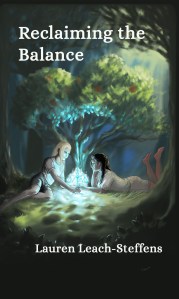
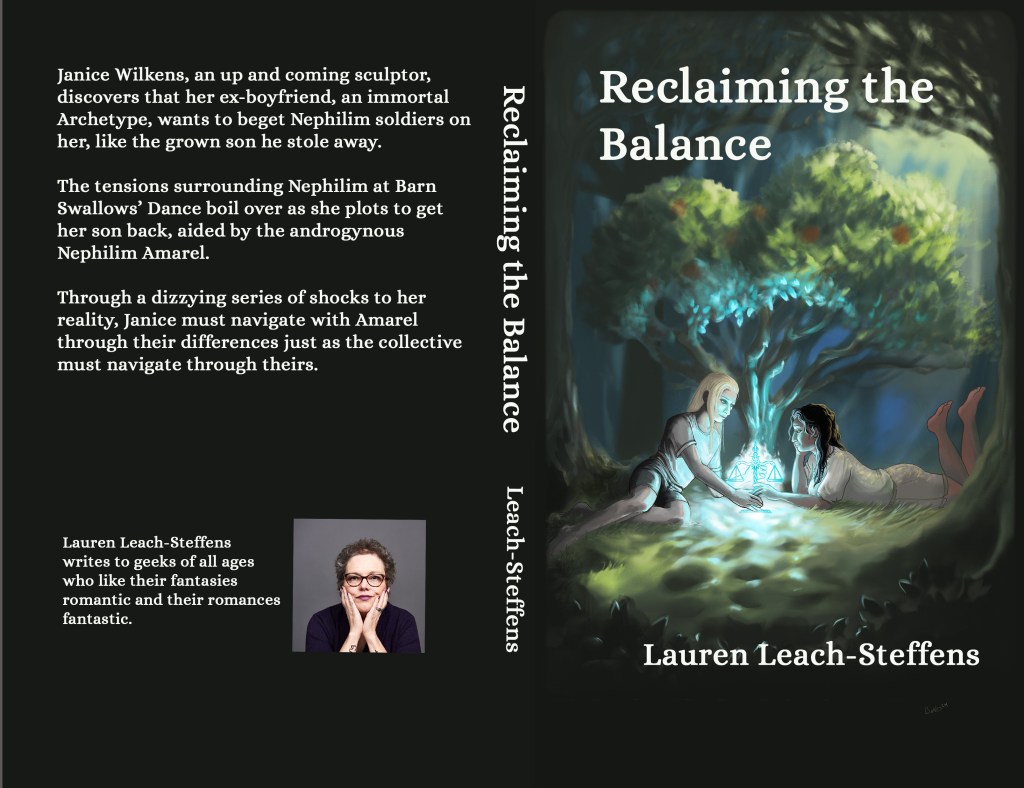
Reclaiming the Balance, a Hidden in Plain Sight novel, will be published on January 1st. I use the New Year as publication dates for this series (even though I could release it today) because of some sort of superstition on my part. This novel concerns Janice, a sculptor who flees her immortal ex-boyfriend with the help of Amarel, an androgynous Nephilim. The two face prejudice from the open-minded people of Barn Swallows’ Dance as they attempt to liberate Janice’s Nephilim son from her ex.

The e-books are available for pre-order; not so much the paperbacks.

Giving up ‘Should’

Daily writing prompt
If you had to give up one word that you use regularly, what would it be?

If I had to give up one word that I use regularly, it would be ‘should’.

‘Should’ is a word full of judgment. Someone else is judging us or we are judging ourselves against some unspoken standards that we are not ourselves claiming. “I should do my homework.” The word ‘should’ always sounds like “I’d really like to do something else, but X says I should do my homework.”

Admittedly, there are things we need to do. But ‘need to’, although it’s two words, is a perfectly good phrase to use here. “I need to do my homework” implies an internal locus of control rather than the external ‘should’. The speaker has a need which they can fulfill. It’s also a positive statement: “I take care of my needs.”

I would feel a lot stronger if I didn’t use ‘should’.

Learning Curve

Yesterday, I put together the cover for Reclaiming the Balance, and it only took me an hour.

This used to be the hardest part of putting out a book. That was back when I didn’t know a thing about Photoshop (the program where I lay out my book covers). There were various parts of the process which stymied me: Highlighting text, working with layers, making some of the writing go down the spine.

Now I remember how to do those, and I made quick work of the cover. I will tweak the cover to make sure that the bleed (the overrun on the edges) doesn’t take out any important parts of the illustration and to align the spine. But it’s mostly completed.

It’s reassuring to know that the hard tasks will not always remain difficult and that I can learn new tricks. I am, after all, an old dog.

Avoiding Plagiarism

I was joking about the concept of Chekhov’s gun the other day, with the example of a cat that showed up early in the action and then turns around to save the day. That, in a phrase, is Chekhov’s cat.

Looking up Chekhov’s cat, I discovered that someone had gotten to the joke before me, a writer on Tumblr named The Bibliomancer, on a blog by the same name (The Bibliomancer, 2023, Nov. 10). They define Chekhov’s cat as when a cat appears in the story, it will play an important role later.

Photo by Pixabay on Pexels.com

It’s important that we credit the original thought of others with citations, such as what I’ve done above. I use American Psychological Association citation style here in addition to a linkback to the original site. Blogs generally use the linkback, but I want to make sure the originator gets the full credit, so I use academic citation style. The full citation will be at the bottom of this page.

I have been the victim of plagiarism. Once, I gave a colleague an assignment of mine as a guideline for structuring her own homework in a class; she published it as her own without giving me any credit. I still seethe over it, twenty-eight years later, because she stole an idea from me by not crediting me.

I think we on the Internet need to credit the sources we use to make our content. That way, maybe people will cite us.

The Bibliomancer (2023, Nov. 10). Chekhov’s Cat. Available on Tumblr: https://thebibliomancer.tumblr.com/post/733615519135039489. [August 28, 2024].

Contractual Obligation

I don’t want to break my 52-day writing streak, so I feel obligated to write a short note. Day 2 of the fall semester and I feel like I’ve been at it for a week. It has been a busy day today; I was on task for six hours straight. Finally, I have nothing on my plate* and I feel a bit let down.

Is work a flow activity? Despite the fact that I got things done like a boss**, I felt like most of my tasks didn’t engage my mind optimally. Teaching is a flow activity most days. Answering emails is not. Revising documents is not. Not everything can be a flow activity!

I’m not feeling like writing right now. My brain is tired and not feeling really creative right now. I’ll sit with my work and see if I feel like I can engage.

Scottish straight baby cat on pink background, closeup

* This is another Americanism for my foreign readers. To have nothing on one’s plate is to have finished all one’s tasks for the day. It’s a good thing.

** “Like a boss” is another Americanism. It’s pretty self-explanatory; it’s also a good thing.

Role Stress

There are many types of stress we experience in life. I want to talk about a type of stress I suspect many writers with day jobs (i.e. so many of us!) have, and that is role strain.

Photo by energepic.com on Pexels.com

Role strain is when the duties of one role conflict with the duties of another. For example, if the requirements of being a writer conflict with those of the regular job. I’m feeling this right now; I want to have a topic to write on, but I’m absorbed with the work duties and there’s no room in my brain for creative writing at the moment.

Both roles are important to me; the work role has higher priority, however, because that’s how I feed my family. Right now, the work role is especially pressing because it’s the beginning of the semester and I need to start the semester strong, which for me means focus.

I’ve scheduled some time today for the other role after my second class today. I can postpone class work for Tuesday when I have a long block of time to do it. This is what’s going to alleviate my work stress: scheduling time for both and minimizing off-task time that doesn’t fit in either roles. Wish me luck!

Getting into the Swing of Things

The above is a very American phrase meaning something like “getting into the rhythm of what’s currently happening.” It’s such an ingrained phrase in American English that it’s hard to define without using the phrase itself.

Photo by KATRIN BOLOVTSOVA on Pexels.com

“Getting into the swing of things” is a descriptor of where I am right now. My fall semester starts tomorrow, and it will take a few days before I fall into the rhythm of life as a professor again. My schedule is much less flexible, I add more necessary tasks for my job, and i have much less free time. Writing time will become scarce and scheduled secondarily to my work tasks.

The challenge is to allow at least a couple hours a day writing, with three hours being optimal for flow. I can look at the schedule right now and see where that will be difficult. Mondays will be the most difficult, as I have meetings after my afternoon class lets out. Meanwhile, Wednesdays and Fridays will be easier — I can schedule 2:30-5 as writing time and maybe even go to Starbucks to write. Tuesdays and Thursdays I work at home, and I can do what I did over summer — get my work done first, and spend that later afternoon block writing. Weekends will be as always. So it’s doable.

The challenge will be to switch gears (another Americanism) from work brain to writing brain. They’re two different modes. Seldom does my work life demand creativity. (My creative life demands a certain amount of critical thinking, though.) Right now I have an afternoon to write before fall semester begins, but I’m not feeling inclined to write because I’m in work brain mode.

I’ve done this transition before — for many years, in fact; I don’t know why it’s a struggle this year. Maybe because I’m in-between projects, and there’s not a writing project currently obsessing me. This, too, will change when I get into the swing of things.

A Round-up of Writing (and Layout) Tools

I haven’t written about writing tools for a while. I haven’t written about them all in one place. Here’s a round-up of tools that take me from first draft to publication-ready. (Note for all my International readers — these are all English language programs):

Photo by RDNE Stock project on Pexels.com
  • Scrivener. This is the program I use to compose my writing. Think of it as a writing environment that organizes your work by chapters, allows a way to outline your work, take notes on it, set goals, and many other things. Even those people who compose using pen and paper will eventually have to transcribe their work on the computer, and this program is the one you want to use. Competitors in this function are programs like Storyist and online services such as Campfire. Skip those; use this full-featured program. You can find Scrivener here; they also have versions for your iOS gadgets.
  • ProWritingAid. ProWritingAid will point out your misspellings, your poor comma usage, and much more. I have learned many writing habits over sixty years, some of which I didn’t know were bad habits. For example, I sometimes use too many adjectives, rely heavily on adverbs instead of the perfect verb, or write subjects and objects that don’t agree. All of those grammar rules I failed to absorb in grade school come back to haunt me in my writing. ProWritingAid has matured my writing these past couple years, and I don’t regret getting a lifetime membership. You can find ProWritingAid here.
  • Atticus. Although you can use Atticus for composing your text, that’s not its strength unless you find Scrivener too complicated. Where Atticus shows its strength is in formatting for publication. You can import a Word document from Scrivener into Atticus, and give it proper page size, section breaks, and chapter titles. It takes a Word document and turns it into the look and feel of a proper book. You can find Atticus here.
  • Photoshop. As an indie author, I design my book covers. I use either stock photos (and pay for them) or original pieces by my talented niece (I pay for those as well). I need to design these into a 5×8 book cover with a front cover, a side spine with book information, and a back cover with a blurb and author information. Adobe Photoshop does this very well. There is a bit of a learning curve, because Photoshop has so many features that are beyond my skill set. But it also does what I need to do. Photoshop is expensive, so maybe you’d be better off hiring someone for cover production, but that adds up after a while. Here’s the link to Photoshop.
  • Amazon KDP. Publication platforms will depend on what publishing platform you wish your book to be on. I use Amazon KDP, which means I place my books on Amazon and occasionally other platforms. I find their interface pretty easy as long as I have done my due diligence on Atticus and Photoshop. The biggest challenge has always been tweaking my book cover to fit the number of pages/width of the book. Here’s a link to Amazon KDP.

Buying these at once can get expensive; I recommend prioritizing these and deciding based on your budget and needs. Scrivener only costs $60 US and KDP is free; the others are priced with annual fees and, often, lifetime purchases. In the US, these are eligible as work-related tax deductions if you are working to sell your books, so you save roughly 25% of your expenditure in taxes.

After publishing eight books (mostly the Kringle romances), I don’t know where I’d have gotten without these.

The Last Thing I Got Excited About?

Daily writing prompt
Tell us about the last thing you got excited about.
Photo by Angie on Pexels.com

My answer to this question is going to be disappointing. I don’t get excited about much anymore. I attribute this to my age (60). By now I’ve seen everything; I’m much more mellow. Time passes, and I get to the next item on the calendar.

That being said, I look forward to things. Soon I will get to work on the cover of my next book. I look forward to this weekend and to the first day of classes on Monday. I will go to Starved Rock at Christmas and I look forward to that. I just don’t have the “I can’t wait” feeling I had when I was younger.

It’s not bad being relaxed about life. It’s a good thing, because my life doesn’t resemble a roller coaster between highs and lows, excitement and doldrums. I would guess former excitement levels were an artifact of the bipolar disorder, and the only reason I don’t seem excited now is because I was SOOOO eager before. So maybe my lack of excitement is a relative thing, and I really am excited for Monday and a once-again change to the routine. I’ll see when I get there.

Hopeful Thinking

I have discussed writing as a flow activity often enough that I’ve made the case that writing for the sake of writing is a worthy pursuit. Even so, I like to get recognition for my writing. I want to know that I am an interesting writer and have some skill.

Photo by Anna Shvets on Pexels.com

Right now, in society, wanting external validation is a weakness. We call it “attention-seeking”* and that’s considered bad. However, external validation shapes our self-esteem, according to sociometer theory. When we don’t get it, we shape our behavior in order to get it.

In some ways, I get the validation I need. My friends know to ask me how the writing is going. That’s appropriate and my sociometer registers positive.

What I wish I had, though, is the readers. This is something most indie authors struggle with. There are so many writers out there, and so many books, and some people use traditional publishing as their judge how worthy a book is to read. What traditional publishing signals, in reality, is how well the idea sells. There are good writers in independent publishing. But they’re hard to find, and there’s a catch-22 that dogs indie writers: People read books that are read by others.

How to get readers? I wish I knew. I advertise mine on Facebook and Threads and Instagram. But the ads are not tempting readers to read, and I don’t know what to do about that. It’s hard sometimes, but I persist in hopeful thinking that I will get a following someday.

* Not all attention-seeking is good, and I can explain this in terms of sociometer theory. The bad form of attention-seeking is that which violates one of the social norms of a group, and that is attention-hogging. We don’t approve of one person getting all the attention, but are often too polite to signal that directly. Wanting positive attention in and of itself is not bad, however; it’s something we’re programmed to do.