How would I describe myself?

How would you describe yourself to someone who can’t see you?

How would I describe myself to someone who can’t see me? I assume they never had eyesight. I would have to rely on other senses, wouldn’t I?

I am round. Plenty round. Here’s a hug. My nose slopes slightly, but it’s pretty average. I wear glasses; I almost never take them off. My hair is fine and somewhat unruly.

I am not considered beautiful. It’s not a big concern of mine. I’m sixty; I have aged out of beauty.

My voice is a pretty good indicator of how I look; sweet, like a sticky bun. You have all you need about me.

On the Road

I’m trying to think about writing as I sit in a van barreling down the rural road. I’ll be here for seven hours or more today and tomorrow, so I might as well be productive.

I want to write some stories not relating to my world (the Hidden in Plain Sight stories). They aren’t coming to me. I seem to be on a hiatus writing-wise these past few days.

If life plays as it usually does, I should get an inspired idea just as I’m in a place where I can’t write, like the middle of applying fake blood on people. I’d rather inspiration show up during idle time.

Wish me a brilliant idea!

Hiatus

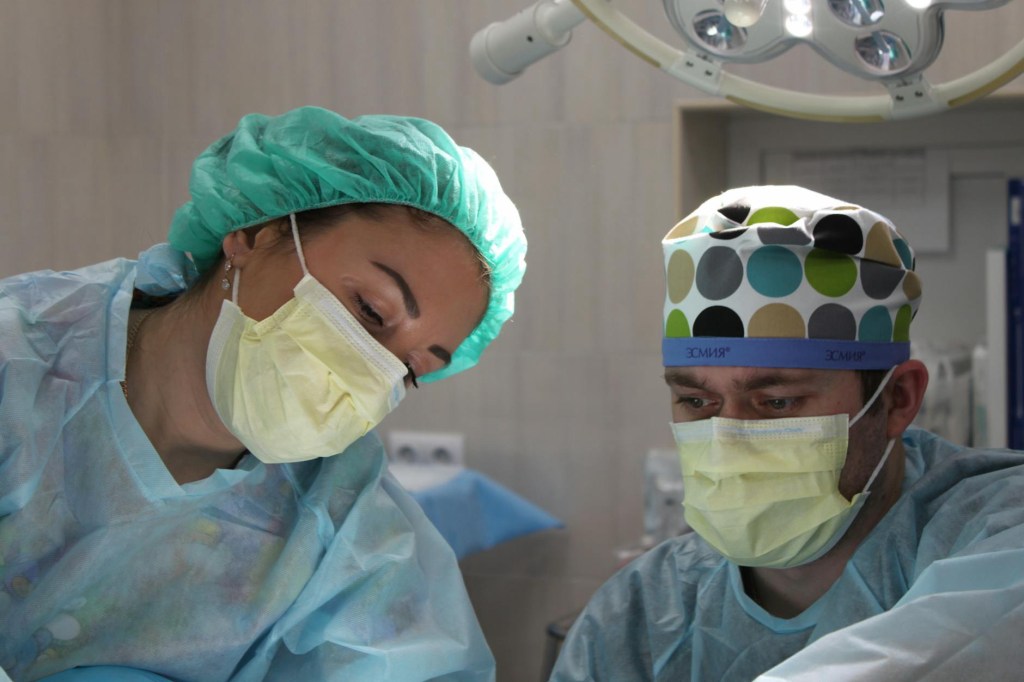
Just a heads-up. Starting on Tuesday, I will be reporting in sporadically at best for a week. I will be at my annual remote disaster exercise, New York Hope. Here, I will be doing casualty simulation (moulage) for a few days. This means that I will be applying theater makeup to volunteers to make them look like victims.

Photo by Slyzyy on Pexels.com

The basic injuries are lacerations, burns, impalements, bruises, and breaks. Moulage artists model lacerations and breaks with skin wax, burns and bruises with paints, and impalements with prosthetic plant-ons. There will be a lot of fake blood, which is made with liquid starch and food coloring. Illnesses are faked with cyanotic blue theater makeup, diaper rash cream, and glycerin water for sweat. Moulage is not for the faint of heart.

I will report when I can, but I will likely not be thinking about writing for the next few days. When I am in moulage mode, I am definitely in another world.

An Excerpt from Kringle Through the Snow:

Photo by Kristin Vogt on Pexels.com

Wade Nelson stretched his 6‘4“ frame over the back of the chair, feeling the tension of a workday subside. He straightened up, realizing he’d made a spectacle of himself. He shrugged and peered at the laptop in front of him.

Wade wanted to type the notes down so he could keep this scenario with the others he had written over the years. To write a dungeon, he had to juggle the abilities of the players’ characters with the statistics of monsters, magic users, and weapon-wielders. The idea was to create a challenge, not annihilation. Sometimes the party got annihilated anyhow. Foremost, in his opinion, he had to come up with a story.

He looked up, remembered he was in the café. He had lost track of time and place. Looking up at the big clock, he realized he had little time before he had to go home to feed his dog. He still had plenty of time before Saturday, when he would try out this new campaign on his players.

He walked up to the counter, where Geena with her red braids stood at the counter. “I’d like another café au lait,” he said.

“Have you ever considered a London Fog?” Geena suggested, wielding a large coffee mug.

“What’s a London Fog?”

“Earl Gray tea, steamed milk, and vanilla syrup.” Geena smiled. “It’s your new favorite drink.”

“I’ll have that.” He rummaged for his billfold.

“You have a smudge on your nose. Looks like a big pencil smudge -”

“It is kinda like a big pencil smudge.” When his work at the battery factory brought him to the bays, sometimes he was in contact with tons of the graphite mixture that went into the cores of the batteries. He excused himself and went into the men’s room to wash the smudge, which turned out to be considerable, off his nose.

He saw medium light hair, very short, and a beard, closely trimmed. He looked, to his eyes, like an engineer. Which he was, a well-polished geek.

When he returned to the counter, his London Fog was ready, and he liked the smell. Maybe the London Fog would be his favorite drink.

He sat back at his computer and flipped through the pages of the book. “Is it time for the Aspect of Tiamat? I think it’s time for that, right in the next room with lots of tempting treasure. And some minions…” He saw the Chromatic Dragon in all its multi-headed glory and grinned. Hopefully, the party would survive.

He figured his players played Dungeons and Dragons for the strategy or for leveling up. To him, though, the game would always be about the role-playing. About the story-telling.

Satisfied with his progress, he packed away his laptop and books and stood up to leave when a woman in a kelly green suit halted him. “You’re Wade Nelson, right? I remember you from the Grinch auditions.”

“Yes. How did you know I was going to be here?”

“Kris Kringle — I mean Kriegel — at the toy shop. He told me you were a regular here on Thursdays. Can I talk to you?”

“Uh, sure.” They sat back down. Wade wondered how Kris Kringle — Kriegel — knew him.

“I’m Sally Perkins from Rolling Hills Improvement Committee. I wanted to tell you that you’re our Grinch.”

“Great, I think. I’m not sure what a Grinch is supposed to do. I was at the interviews because my boss picked me to represent the factory, so maybe you can help me. How do I grinch?”

“Well,” Sally paused. “Well, you are going to attend several community functions. Like the December Chamber banquet and Thanksgiving at BesMart, the parade, and the Charity Holiday Gala. In a Grinch costume.”

“I think you’re going to have to make me a new Grinch costume, then.”

“Why is that?” Wade hadn’t even noticed the clipboard on which Sally took notes, but there it was.

“I’m 6‘4″, a size 2xl, and I’m betting your Grinch costume won’t fit me.”

“Oh,” Sally said, writing. “I hadn’t thought of that. Let me get on that. I’ll see you later,” and with that, Sally had left as abruptly as she had arrived, and Wade had become the Grinch.

Now all he needed to know was what Rolling Hills expected of their latest Grinch.

Knowledge Base and Writing

There is a phrase among writers: ‘Write what you know’. The cop focuses on the precinct, the Parisian on Paris, and the college professor (like me) on college campuses because we have the details in mind.

The above examples all focus on settings. I want to focus more on the knowledge base — where plot points and themes are informed by knowledge of a specific area. For example, I have some basic background in disaster management. I teach disaster psychology and case management. I know how people do triage in a mass casualty event because I have had CERT training. Because of my training in disaster mental health, I can spot the psychological symptoms of acute and post-traumatic stress. (I want to emphasize that I am not a therapist or counselor, and that I can’t treat people with these disorders.)

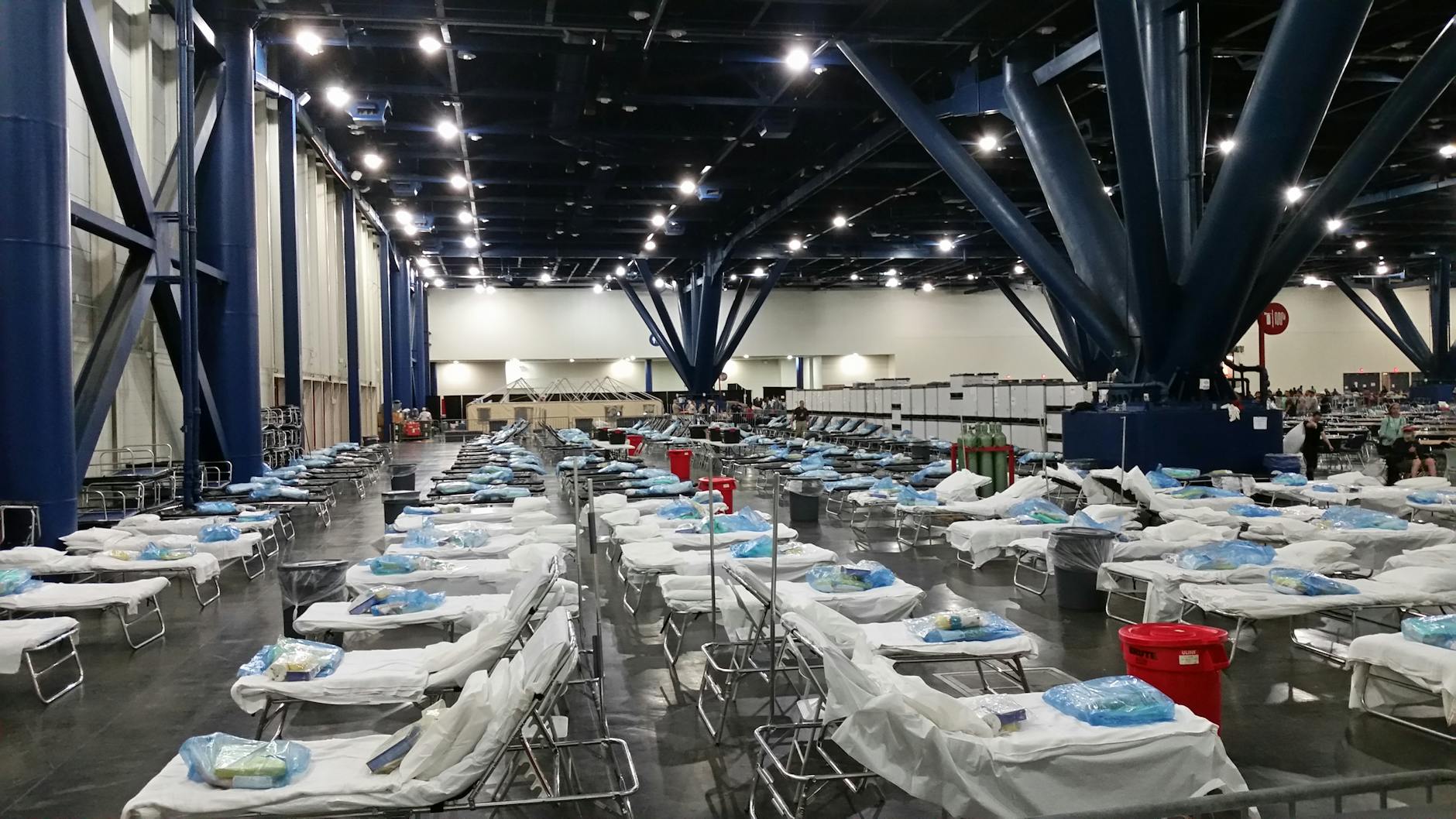
Photo by CDC on Pexels.com

I have written two books where mass casualty events come into play. One is Apocalypse, where an impending battle threatens to cause the loss of all the women of the world. Characters looking at that possibility project how they will react, with both despair and resiliency. In my most recent book, Carrying Light, two mass casualty events happen. Characters have to deal with emergency response, which includes the sobering truth that responders will have to leave some people to die. Acute stress reactions figure in both books.

When I use my knowledge, it provides more than just background knowledge and convincing details. It helps set the plot and the theme of the books. Plot points include recovering from working a mass casualty event; and themes include the toll that extreme circumstances take on those experiencing it. Writing what we know should, in my opinion, shape our stories to add to the realism of what’s presented.

Now, the issue of fantasy needing some basis in reality, or at least a consistent rule book, is an essay for another day.

My Editorial Staff

Despite my middle-class status and that I’m not a full-time writer, I have an editorial staff.

My senior editor, Me-Me.

Chuckie is sitting to my right on the window bench. Chuckie just woke up, and fell immediately asleep again. His job is usually to keep me on my toes. I am not on my toes right now.

Chloe is falling asleep on the job. This is probably because she is a cat, and cats are notorious for their ability to take naps anywhere. She’s on the back of the couch, right behind me. Her editing duties fall by the wayside.

I wonder if the cats are on strike, because the senior editor, Me-Me (at age 17) is sleeping on the couch.

Pumpkin has walked off the job.

I suppose paying my editorial staff in cat food isn’t the best arrangement, but they’re better than not having editors at all. And they have the advantage of purring when I pay attention to them.

The Story Behind My Nickname

Daily writing prompt
What’s the story behind your nickname?

My name is Lauren Leach-Steffens; the Steffens got added when I got married. With a last name like “Leach”, it is only natural that one gets the nickname “Leachie”. This nickname annoyed me all throughout grade school, but I eventually accepted it.

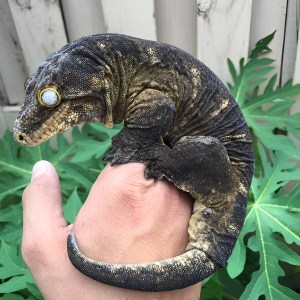
The picture, by the way, is of Leach’s giant gecko (the gecko is not related to me.)So tha The nickname for it is the Leachie gecko. See how natural that is?

Then, in college, I became a denizen of the interactive computer habitat PLATO. PLATO was an educational system, but in addition to lessons, it had chats (called TERM-talk), topical threads (known as notesfiles), and email (called PNotes) — it was a lot like the Internet, only it had been around since the mid-70s. We had signons (what you’d call usernames, but they doubled as email addresses. Mine was lleach@pasrf (as in friend of a PASR programmer).

With a username of lleach, it was only natural to turn it into lleachie.

The name is pronounced in the typical English way: just like ‘leachie’, but spelled with two Ls. In Spanish, I guess it’s pronounced ‘yeachie’. A Polish friend of mine pronounces it ‘ell-ee-otch-ee’. I can’t say that’s wrong.

So that’s it. I have never run into a lleachie on the Internet who wasn’t me.

Keeping my Health and Well-being

Daily writing prompt
What strategies do you use to maintain your health and well-being?

As I have bipolar disorder, I have to work carefully to maintain my emotional balance. I don’t want to become either hypomanic (a state of elation, grandiosity, irritability, and overwork) or depressed. This means I employ a variety of strategies to not only keep in balance, but provide a sense of well-being.

One strategy I rely on is a regular, adequate sleep cycle. I go to bed at the same time every night and wake up at the same time every morning. I do not take afternoon naps, and if I find myself sleeping more than 9 hours a night, I check in with my doctor. Lately, I’ve had daytime sleepiness, and I’m going to have a sleep study done to make sure there are no problems there.

Another strategy is to manage my emotions by cognitive journaling. In cognitive journaling, one confronts cognitive distortions, which are illogical ways we use to explain our emotions. For example, when we’re nervous about a test, saying “I know I’m going to fail the test” (a cognitive distortion known as fortune-telling). Or when we attribute a bad date to “nobody’s ever going to love me” (black-and-white thinking). Cognitive journaling helps us recognize that the response is illogical and helps replace that thought with a more logical one.

I want my balance to be a happy one, so I have a couple strategies that have been scientifically tested to work in increasing one’s well-being. I meditate (although lately, I have been falling asleep during meditation; see my sleep issues above). Meditation is an active brain state that has been shown to increase well-being.

I participate in flow activities (more on flow here). My favorite flow activity is writing. I can lose hours in writing, which is a sign of flow.

I practice gratitude, which in my case means spontaneous thanks to the universe for the things that have helped me in life. A great place to begin with that is with a journaling practice called “Three Good Things”. Here, you write three good things that happened during the day and explain why they happened in your life. This gives you not only gratitude, but a sense of efficacy — “I did something that helped put this into place.”

MSN today brought me an article on self-care activities (some of which are listed above) that will help provide a sense of balance. I could put a couple more of these in my routine; there’s always room for more tools in my toolbox.

I would highly recommend a routine of activities meant to balance one’s life. Work expectations often push us off-balance; family demands and news headlines pull us off our balance. Balance comes from within.

A Little About Politics

I’m trying not to write a lot about politics in this blog, because it’s a blog about writing. But if you read my works, you will get the idea of my political stances. In my writing, they look like this:

  • Diversity is necessary for a healthy society.
  • Compassion, especially for those not like you, is a virtue
  • People should be free to express their opinions, but we should guard against hate speech.
  • Violence starts with words.
  • Self-defense is the only reason to inflict bodily harm, and even that is a last resort.
  • A society takes care of its vulnerable members.

That many of my stories occur on a pacifist collective (that still struggles with these concepts) might help explain as well.

Photo by Sean Whang on Pexels.com

Some might argue that this list is not about politics at all, but about values. But that’s where our politics come from. The political climate in my country (US) tends to act as if one side has values and the other does not, but this is not the case. In some cases I am a political minority (with my pacifism stance, as I am a Quaker) but in others I’m a pretty average Social Democrat (if we had that party in my country.)

I know it’s controversial for a writer to talk about politics, but how can we not? Even in a genre like fantasy, where supposedly we’re divorced from real world matters, politics can seep into the writing. If you read me, it will be obvious where I sit.

Excerpt from Kringle Through the Snow

This is an excerpt from the latest Kringle romance, which will be published October 1, 2024:

Surprised by the visitor, Sierra DuBois stood up from her desk at the Venue Barn, where she worked as general manager and event planner. Sierra looked neat, from her shiny brown bob to her crisp white blouse and slacks, against the room strewn with fabric samples, receipts, and white tulle. The red-headed woman at her door wore an emerald-green suit and carried a clipboard.

“Sierra DuBois?” she asked. “I’m Sally Perkins, head of the Chamber of Commerce and vice-president of the Rolling Hills Improvement Committee.”

“Yes, please, come in.” Sierra noted Sally had already started walking into the office.

The two sat, and before Sierra could speak, Sally introduced her topic. “You know the city wants to start a fun little initiative with the community for the Christmas season. A Grinch initiative?”

“As in, green guy who doesn’t want the neighbors to celebrate?” Sierra had watched the animated TV special about the Grinch since she was Cindy Lou Who-sized.

“Yes. He’s a favorite among kids and adults alike. Quite the thing.” Sally looked down at her clipboard. “We would like to incorporate him into holiday events. He’ll already be riding the fire truck in the Christmas parade, and -”

“What happened to Santa Claus?”

“They’re on the truck together.”

Sierra couldn’t imagine they could both fit in the truck’s basket, given that Santa’s belly was quite jolly. “What can I help you with?”

Sally took a deep breath, and Sierra felt a bit of apprehension. “We would like it if you could incorporate The Grinch into your gala.”

“Oh.” Sierra said. “The charity gala. You know the gala is an elegant event that raises hundreds of dollars for community philanthropies.”

“Yes, I know. The Chamber donates to the setup every year. As I recall, Ray’s Liquors donates 75 bottles of bubbly every year.”

Seventy-five bottles of Cordon Negro wasn’t Dom Perignon, but it was still a hefty donation. And when someone receives that big a donation, one gives back. “Sally, let’s work together on this. How can we incorporate the Grinch into this gala without losing the panache?”

“That’s your job.” Sally stood. “I would hate to get in your way.” And with that, just as abruptly, she left.