I am an associate professor of human services at a regional Midwestern university. I am also a writer of fantasy and romance, hoping to get traditionally published. I have one husband and am owned by four cats.
My first crush was when I was five years old. His name was Randy; he lived out back of us in a grey tar-shingled house by the tracks. He was in my kindergarten class; I think I got a crush on him because of his collar-length hair and his smudgy face. I was a tomboy at this stage in my life despite my clumsiness; he suited just fine.
My mother dealt with this with stoic despair for the entire month of the crush. I don’t like to think of my family as classist, but I think there was an element of classism there. Mom went to visit his mom at one point; I got the impression from her afterward that This Was Not Going to Happen Again. I myself didn’t see the problem with Randy. Our house wasn’t nice either, although it was a lot bigger.
My mother needn’t have worried. My crush dwindled because Randy had figured out I was a girl and quit talking to me. For my part, I quit getting crushes on boys until fifth grade, from which point I made myself quite miserable with them until I was well, well past adolescence. And then one morning, I quit having crushes. I think I’m happy about that now.
When I was younger, I was passionate about a lot of things, so many that I was an exhausting person to be around. So said my mother, anyhow. I have mellowed as I’ve gotten older, and I suspect some of that is the medication I’m taking to keep my moods in check.
I don’t miss being passionate about everything. It’s nice that not everything has the same weight; it’s nice waking up in the morning and not being at 110% for every little thing.
But I’m still passionate about things. Writing, for example. I’m passionate about the process of writing and the results (most of the time; I’m not passionate about the current WIP.)
I’m passionate about getting things done. I like end results and getting there. This mostly applies to work-related projects. I wish I could get passionate about housework. (Does anyone get passionate about housework?)
I’m passionate about diversity. Not just that diversity is fun to be around, but that it’s necessary for a healthy world.
I’m passionate about well-being. Not necessarily happiness in that hedonic sense, but contentment with purpose. Balance and mindfulness.
I like where my life has settled. I don’t need to be passionate about everything, just the things I’m passionate about. 🙂
I continue to pants* this book (Carrying Light) and as I write, there’s so many questions I need to address in the edits**:
This represents the plot holes in the current draft.
Is the collective’s reaction to the chaos outside too much, too soon?
Will they really invest in self-sufficiency when Luke, an Archetype who has seen collapse before, suggests they empty the coffers to buy items that will help them be self-sufficient?
Will they then realize that they can’t be entirely self-sufficient, that they can’t grow all the foods they need to survive given the amount of land they own?
Does the stalemate at the college’s gates last too long?
Do Sage and Forrest do enough drifting apart before they join forces again?
Is all their looking for alternatives to their current lifestyle filler or necessary world-building? (I’d say necessary world-building; otherwise their adaptations seem like magic)
Are there enough fantastical elements in this story?
* Pantsing: writing by the seat of one’s pants.
**This story is taking about two months to write. It will take about forever to edit.
Sometimes I write about writing. I don’t do this nearly as often as I should, because I don’t have meta-thoughts about writing that often.
I could write about exposition, for example. What wisdom do I have about exposition? Only the big one: Show, don’t tell. And the not so big one: Conversations can be a form of exposition if you’re not writing things like “Did you hear about Betty? She ran off with the milkman last week.”
I could write about writing characters. Where do my characters come from? They come from an amalgam of people and stories I have known. Then I “interrogate” the character to see if they feel consistent in who they are. I have conversations with the characters, I put them in situations. I talk to my husband about characters — for example, “Would they talk back to the police?” Gideon would; he tends to be human and somewhat anti-authoritarian. Most of my Archetypes and Nephilim would never talk back lest they be discovered. They’re not quite immortal, after all, and they would alarm the authorities. Luke would talk around the cops, though. He’s a lawyer, after all.
I want to write about this guy next.
I could write about publishing. There are many steps to publishing yourself; some of them go surprisingly smoothly, like most of the process on Kindle Direct Publishing (KDP for those in the know). Others become a great source of frustration, like putting my book cover up on KDP.
I could write about hitting it big as a writer. No, I can’t, because I have not hit it big. Nor is it likely that I will, but that’s okay. I have a story to write, and it nags me at night. My characters (Sage Bertinelli and Forrest Gray at the moment) demand to be written.
I need to write more about writing, because there are so many topics … thank you, Hannah, for obliquely suggesting this!
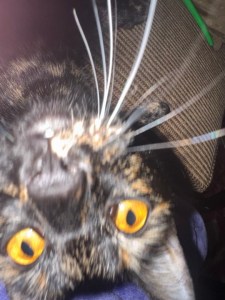
Today, Chloe is helping me write the blog. Chloe is my second-youngest cat at age 4, and she is peculiar:
We adopted her as a kitten from the Humane Society — she was the one who spent her visit climbing all over me, so we knew what to expect.
The kitty we nicknamed “Itty-bitty-bitty-bitty-BABY-BABY girl” has grown into a chubby adult. She sits with me when I’m in my writing spot (a loveseat in the living room) or sits nearby, looking out the window. Often she asks for attention so it takes longer to get things done.
I’m trying to figure out what to write today (if anything). She is not helping any, choosing instead to sit on the back of the couch and read over my shoulder. Just now she ran toward the stairs for no real reason at all.
Do you remember your favorite book from childhood?
I will preface this entry with the caveat: My childhood was a long time ago. A long, long time ago. I will be talking about a book that probably nobody has heard about.
My favorite book from childhood was The Ghost of Opalina by Peggy Bacon. It was about a ghost cat who told stories about the previous residents of an old house. It was, in a word, absorbing. And to a child who read cereal labels, Readers’ Digest, and anything else I could get my eyes on, it was the revelation of a new world.
Textbooks for English class in my childhood were generally excerpts of stories, and it was my great frustration that they didn’t go anywhere. I remember (I think fifth grade) reading an excerpt of The Hobbit where Bilbo chats with Gollum in the murky cave. It has a beginning, middle and end, but it still felt unfinished. Bilbo has the ring. It’s a cool magic ring. what did he do with it?
The Ghost of Opalina is the first book I read that I can remember being a real book, with a beginning, middle, and end. Admittedly, it was somewhat episodic, with stories within the story, but it wrapped up to a satisfying end. And with a ghost!
From that point on, I was addicted to fantasy. My next formative reading experience was The Dark is Rising sequence by Susan Cooper, which was many years later. Before that, I read many books, and also cereal packages, Readers’ Digest condensed books, and anything I could get my hands on.
I read The Ghost of Opalina again recently, and I could see exactly why it enchanted me. It had aged well, and I could see why kids and librarians loved it. I once named a cat Opalina, and she could not have been more unlike the capricious, elegant wisp of a ghost cat. I was ten when I named her; my memory of the book has lasted many years beyond my kitty’s lifespan. Here’s to ghost cats and the power of memory.
Pantsing refers to a style of writing whereas one makes the story up as they go along. It’s part of the trinity of methods, the other two of which are planning and plantsing. Planning the story is just what it sounds like — from using an outline of each chapter to setting up scenes and documented world-building. Plantsing is somewhere between the chaos of making it up spontaneously and organizing everything.
Normally I am a plantser — I have “note cards” (a feature on Scrivener, the program I recommend for writing novels) for each chapter denoting what should happen in the chapter, and I see where those directions and the characters take me. But this time around, I have diverged from the note cards enough that I am most definitely pantsing.
For example, I was writing about how my characters in their collective (think commune, sort of) were going to cope with the potential for communications and shipping breakdown in the oncoming breakdown of American society, and I thought about replacement parts and fuel for the farm. While I was in the middle of writing that, I thought, “Oh my god, what are they going to do about the staple goods they don’t grow themselves?” The collective eats a certain amount of bread, for example, but they don’t raise the wheat themselves because only the wrong type of wheat grows in the Midwest. In addition, they’re vegetarian and bought rather than grew their legumes. They use their farm land for more suitable items for the collective, like fresh fruits and vegetables, as they could always buy the staples through the local food co-op. So they suddenly figured out they could have a food crisis. In striving to be self-sufficient, they blinded themselves to the fact that they were not self-sufficient, any more than other humans. They discovered this at the same point where I thought about it, of course.
I may edit this later, putting the food crisis before the capital goods crisis chronologically. But I may not, because if it occurred to me in that order, maybe it would have occurred to them in that order. Maybe the capital goods crisis they envisioned was the one the collective saw most clearly* and therefore first. Part of the process of pantsing is the harder job of editing down the line.
Photo by u0410u043du043du0430 u0420u044bu0436u043au043eu0432u0430 on Pexels.com
It’s been a wild ride writing this novel so far. I feel like I’m climbing a rock wall without a belayer. If I felt a lot better about my rock climbing skills, I would not feel like I needed belaying.** Ah, well. See you at the edit.
* This is known in cognitive psychology as the availability heuristic, whereas we believe the most readily imagined scenario is the most likely or important one. This heuristic is why young people buy life insurance and not disability insurance despite being 7 times more likely to die than to become disabled.
** I just about used the word ‘balayage’ here, which is a hair-dyeing technique. Oops.
I’m not the sort of person who rests well. I don’t sit and read much or watch television or videos often. I write in my spare time. I’m already working on my new classes for the fall semester (and I have two months before the fall semester starts).
Sometimes, however, I run out of steam. It usually happens when I have worries and work, and I don’t have enough energy for both. How do I know it’s happening?
I have nightmares: I’m not showing up to my classes because everything is detaining me and I’m half-naked and I can’t find the classroom and my mother wants something from me and … And then there’s the one I had last night: I was in a driveway and a garbage truck plowed into me and bounced my car onto my parents’ roof and somehow it was all my fault because I stopped. (My dreams are breathless, run-on sentences.)
I worry more, sometimes even about things that happened forty years ago.
I have trouble sleeping because of the first two points.
I get weepy, especially over one more thing to do.
Taking a break from the overload is imperative for my health because too much stress could put me into hypomania/depression. It’s hard to stop myself from forward motion until my body just puts the brakes on without consulting me. I’ve just had enough.
My first paying gig was as an elf for the Marseilles, IL school district my junior year of high school. I don’t put that on my resume.
My first real job was the summer before my freshman year of college, where I was a fast-food worker. My co-workers once locked me in the walk-in freezer.
Jobs during my undergraduate years: kitchen help at Papa Del’s Pizza; storeroom supervisor for Bevier Hall Cafeteria, all at University of Illinois.
Jobs during my graduate years: Teaching/Research/Administrative Assistant, Family and Consumer Economics Department, University of Illinois (various years); 2nd cook, Y Eatery (Thai/Italian eatery); typist for a Psychology computer lab.
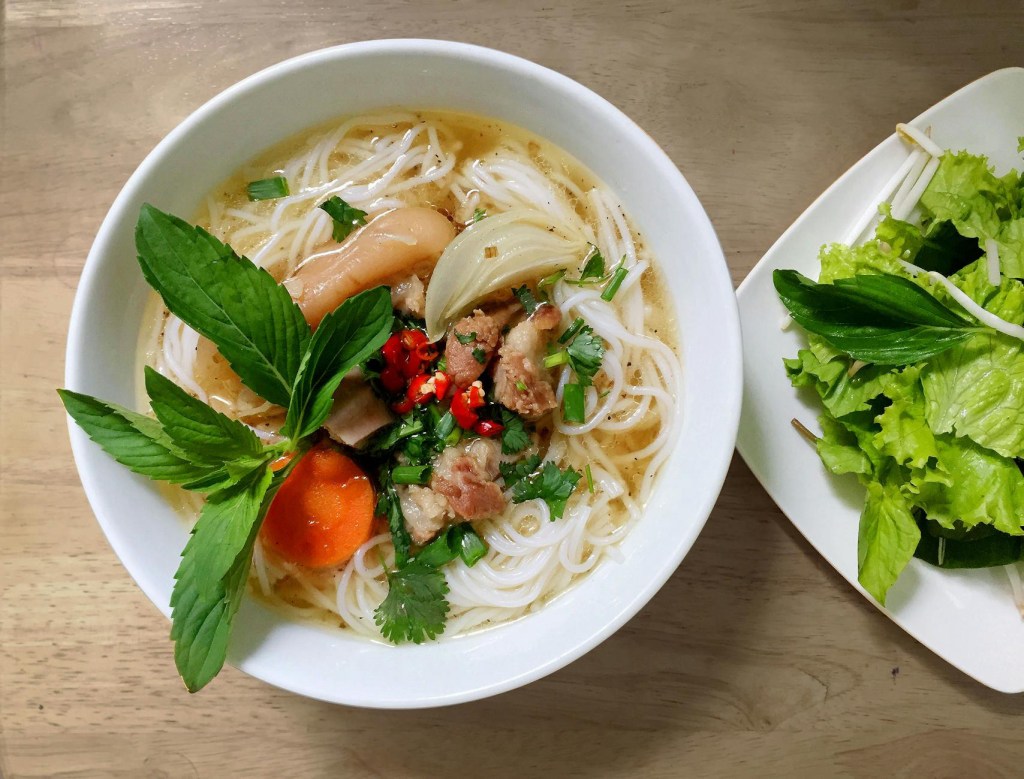
This is what we ate at family-style lunch on Fridays at Y Eatery.
Professional career post-grad: Assistant Professor, Consumer Economics, SUNY Oneonta; Assistant/Associate Professor, Human Services, Northwest Missouri State University.
And I suppose I can count “writer”, even though I’ve made very little money on that so far.









 Words Like Me