Diversity Enriches Life

Daily writing prompt
What is the legacy you want to leave behind?

In my writing, in my teaching, and in my everyday life, I espouse the message that diversity in people enriches life.

People have always considered me “different”. Some of this may be because of my lifetime of bipolar disorder, but much of it isn’t. I am not autistic, so it isn’t that. Maybe I’m just “weird”, being creative, not interested in fashion, awkward, a little loud, and as much at home in my round body as my clumsiness will let me be. I dance in the grocery store when nobody is listening, I find humor in absurdity, and I have an almost encyclopedic knowledge of edible weeds. Oh, and I write, and writers are weird enough on their own.

I believe the world needs diversity. People need to have different philosophies, different bodies, different colors, different customs, different viewpoints, different orientations, different likes, different loves. If they don’t hurt others, their differences are vital for our human ecosystem. Evolution counts on difference; so does personal growth. We grow by coming into contact with people’s differences, if we’re willing to grow at all.

It’s hard to be different, because people fear differences. I think they most fear being found “wrong” or “inadequate” themselves — “If this other person is okay, does this detract from me?” That’s not how difference works. You be you, and I’ll be me, and the world will be richer.

At Kaufman Center for the Performing Arts, Kansas City

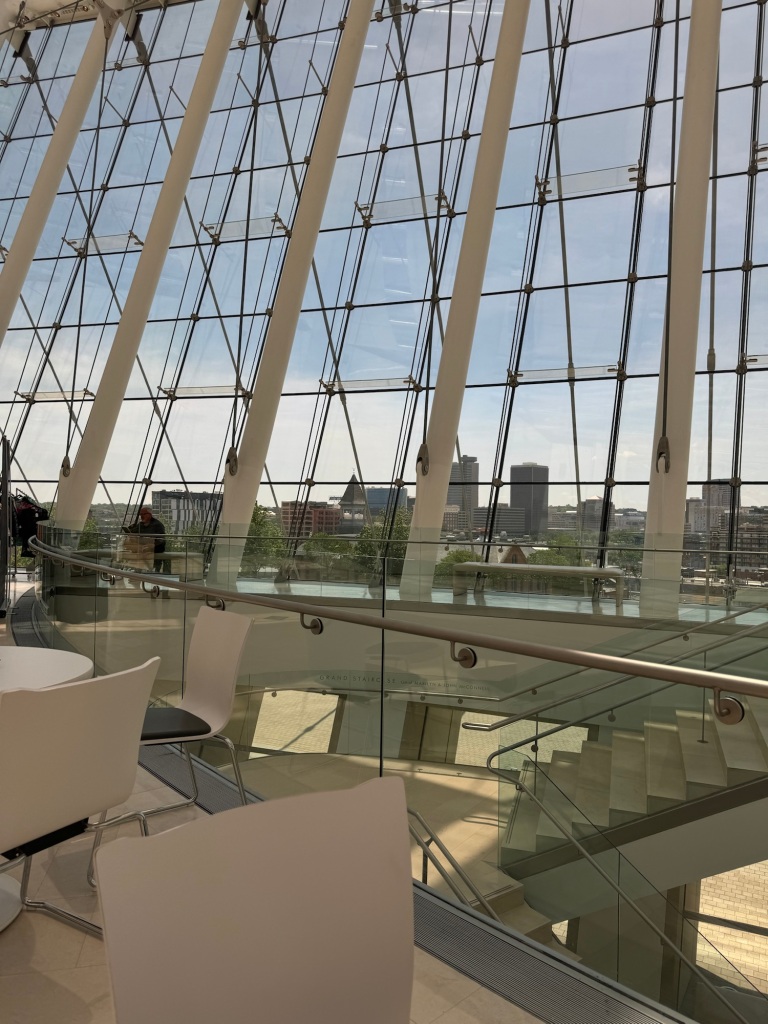
I’m writing live from Kauffman Center, in an atrium filled with light, feeling underdressed for the occasion. I am on the nerd side of the foyer because I’m here for Sci-Fi Spectacular.

Light-Filled Foyer, sci-fi style.

My husband is here for the music; I’m here for a bucket list item; seeing John DeLancie* in person. No, I won’t get to meet him.

In the meanwhile I’ve just had lunch at Jerusalem Cafe, and before that, coffee and editing at Broadway Cafe. Before that, a ninety-minute drive with classical music. A near perfect day. To be perfect, Richard would have to let me blast Adam Ant** full-blast on the way home.

*John DeLancie — Q from Star Trek

**Permission granted. Antmusic!

The bats own my house; I just pay the mortgage.

I’m not totally kidding. Right now, I live in the middle of a bat colony, which seems to have established itself in my attic. I’m not totally kidding about that, either; the Public Health Department considers my house a bat colony. Over the past several years, I have found about 14 bats in the house, having taken several to Public Health to be tested. They’re tired of me — Public Health, that is. (I don’t know about the bats). They have declared my bat colony free of rabies, however.

Photo by HitchHike on Pexels.com

The number of bats that I’ve had to deal with over the years has actually resulted in reducing my fear of rabies in a real-world example of systematic desensitization. Be in the same house with a bat and not get bit? Check. Live with a bat-hunting cat? Keep them in quarantine and then give them a vaccination. Check. Almost step on a dead bat in the living room? Check. Pick up the dead bat with heavy gloves? Check. Worst case scenario? Get the rabies shots. Hasn’t happened yet.

I’m not crazy enough to adopt a bat as a pet, because they’re cute but they carry rabies, which means my attic colony is not without risk. And I want the colony out of there, which will happen soon while we repair the soffits on the old house that allowed this.

Bye bye bats.

Neither a Leader nor a Follower

Are you a leader or a follower?

I think there’s a third choice not mentioned here. I am neither a leader nor a follower, but a — what would you call it in one word — a loner?

That’s not the right word, evoking as it does gunmen in warehouses. What I mean to say is that I go in my own direction, work independently whenever possible. I tend to be an impatient person, and want to get right to business. I used to be in a department where the first 15 minutes of any meeting was spent with conversations that went like:

“I saw (name of former student) the other day. Remember her?” “Wasn’t she related to (this other person)?” “She married that farmer out in (name of town) last year.” That drove me up a wall, especially as a new person who didn’t know who (name of former student) was. But most of all, it bothered me because it was not on the agenda.

Photo by fauxels on Pexels.com

I have been the leader (of a committee in my department) and a follower (most other times I’ve been in groups). As a leader, I tend to feel impotent because I can’t get the group to make a decision. And as a follower, I get impatient. I find myself pretty predictable, on the other hand, and I can brainstorm and chug along to solve problems.

So I’m an independent, happiest solving problems and making plans by myself. How does this work out in marriage? My husband and I have an egalitarian marriage, so we’re neither leaders or followers, and that’s the way I like it.

Waiting for My New Toy

One of the recommended budgeting strategies for couples is what is known as “mad money”, or money allocated to each spouse that they don’t have to account for. They can spend it on anything they want* without recriminations from the other spouse. I have always said there are two different types of discretionary purchases — “mine” and “stupid”.

What I do with my mads is save it. Usually for some big technological marvel down the road. I spent my last accumulated money on an iPad Air 5th Gen, (circa 2022) gently used/refurbished. It does a good job of most of what I need, which is composing novels on Scrivener and surfing the net. It does sometimes seem a bit slow when I’m posting pictures for social media on Loomly, but I’m not sure if that’s my iPad or the wi-fi at Starbucks.

I have had that iPad for 15 months. I know this because I started saving my mads as soon as I bought it, with my goal again being “something technological”. I’m at the age where my knick-knacks are barely contained by curio cabinets, and I am fashion-backward. Therefore my reward to myself will always be technology, something useful and cool.

When I heard of the new iPads coming out, especially that it was going to be an exciting product revamp, I listened for the rollout, and — wow. The new iPad Airs with the M2 chip, the better display, the landscape front camera …

And then, I looked at the iPad Pro with its M4 chip, clearly overkill when it comes to my needs. All the features of the iPad Air, with a few more, and a faster, more powerful chip. Way overkill.

Way within my budget, given that I would be selling my old iPad to my husband and getting a bit of technology budget money. In fact, I thought I’d be paying Pro prices for my new Air. Rationally, the Air was the better choice.

Or was it?

  • I had been replacing my technology at a rate of once every two years because I found myself up against a slight slowdown and my expectation of needing power for graphics (Photoshop, Canva, Loomly) applications. If I could draw, I would be doing the artwork for my book covers, and I delve in Sketchup to draw maps of my settings.
  • I was losing money due to depreciation of the machines (the $600 iPad I bought being valued a year or so later at $180)
  • Because of the prior point, I wanted to keep the iPad for longer, maybe four years, before upgrading and get all the value out of it. The iPad Pro with its M4 chip, from what I could tell from iPad upgrade cycles, would be as good or better than the subsequent iPad Air for at least three years. If the Pro had contained the M3 chip, I probably would have stuck with the Air.
  • Only $150 of the difference between the Air and the Pro of similar specs was paid by my savings.
  • I had saved my money for the new big thing, and the Pro is definitely a new, big thing.
  • I value performance. If I can afford performance and delayed obsolescence, I’m going to go there.

I bought the Pro. It might be that this is my mid-life crisis sportscar, I don’t know. This post might just be wild justification, and in the long run I may regret spending so much on what is, basically, a tool for my writing and an adjunct for my leisure.

It’s supposedly coming in on Wednesday. I’m looking forward to it!

*Except maybe drugs and prostitution, but those aren’t a budget issue per se.

Twelve Years of Writing

I’ve been writing for twelve years. I started, strangely, three months after being diagnosed with bipolar 2, which I hadn’t realized till today. I know I didn’t start writing as a coping mechanism or as character insertion (my first characters were not me) and I didn’t write about being bipolar. I think I started writing because being treated for bipolar helped me focus on continuous tasks instead of pouring all my energy on the whim of the moment.

I was not a good writer at first — I wrote each chapter as if they were separate episodes, like short stories strung together. I didn’t feel like I wrote an overarching plot. The novels (I use the term loosely) I wrote then I have had to revise several times such that only the characters are the same. I learned a lot from revising them.

Things I have learned over the past few years:

Photo by Pixabay on Pexels.com
  • My first draft is not my novel. Over the years, the novels have needed less and less rewriting, but there are always things to fix in second and third (and fourth, and …) drafts.
  • Developmental editors are an important part of your writing toolbox. It is worth paying for them.
  • There are three ways to write a novel: Plotting, pantsing, and plantsing.
    • Plotting: an organized outline at the beginning, and following the outline.
    • Pantsing: writing it as one goes along, without the outline.
    • Plantsing: writing with a rough outline but pantsing through the chapters.
    • I am a plantser.
  • Scrivener is a great program for composing my work, especially plantsing.
    • Scrivener arranges itself around a chapter format and a synopsis form that I use to guide my chapters. I use it like pantsing with training wheels.
    • One can get templates for Scrivener novel-writing that incorporate plotting frameworks, such as Save the Cat and Romancing the Plot.
  • ProWritingAid was another investment I don’t regret — my grammar has improved in ways I hadn’t considered before. I have lessened my passive verb structure massively.
  • Writing is the easy and fun part. I still don’t think I have the hang of promotion (and this blog is part of my proof of that.)
  • My favorite novel is always the one I just finished.

The most important thing I learned? That I can write. The second? That there’s a whole lot of luck in being discovered, and luck hasn’t come to me quite yet.

I feel like I could have learned more in 12 years, and maybe I have, but these are the biggest things I can think of. I hope they’re helpful to someone!

Making my Summer Productive

Usually, summer for me is a free-fall. For externally required work, I have the internships (now up to 13 students) and even then, the class has a huge amount of flexibility. I can grade the assignments (which arrive in dribs and drabs, as everyone has a different time schedule) and set up site visits with some leeway. There’s one conference I’m presenting at a poster session for, at the end of the month. Absolutely required.

Photo by Erio Noen on Pexels.com

Then there are the things I should get done before the fall semester, which are tempting to put off till the end of the summer. I have two new classes I’m teaching (one I used to teach 10 years ago, another I got from another instructor) this fall that I should prep for. It would tempt me to take a vacation for this first part of summer and vegetate. I have done it in the past, usually because I get depressed at the end of the school year.

This year I’m trying something different — I’m structuring my days. In the morning, I do prep for my new classes, refreshing myself with the material. When I’m done with that, I will be prepping the class Canvas (online instruction) sites. In the afternoons, I’m writing. If I get done with the daily task early I do what I’m doing now — blogging, getting attacked by my cats, and surfing a little.

Somewhere in here I have to fit some real vacation time. I don’t know when I’m doing that. I don’t do ‘nothing’ well, and would probably arrange my vacation as writing time anyhow. Mixed with restaurants and coffee. The best part is that my inability to do nothing isn’t my manic state. When I’m manic, I don’t do ‘anything’ well.

I’m looking at the plan, and I need to make sure I have some rest time. I can do that after reading my chapter or my module for the day. Pace myself; there’s plenty of time to do this.

Looking at Disasters

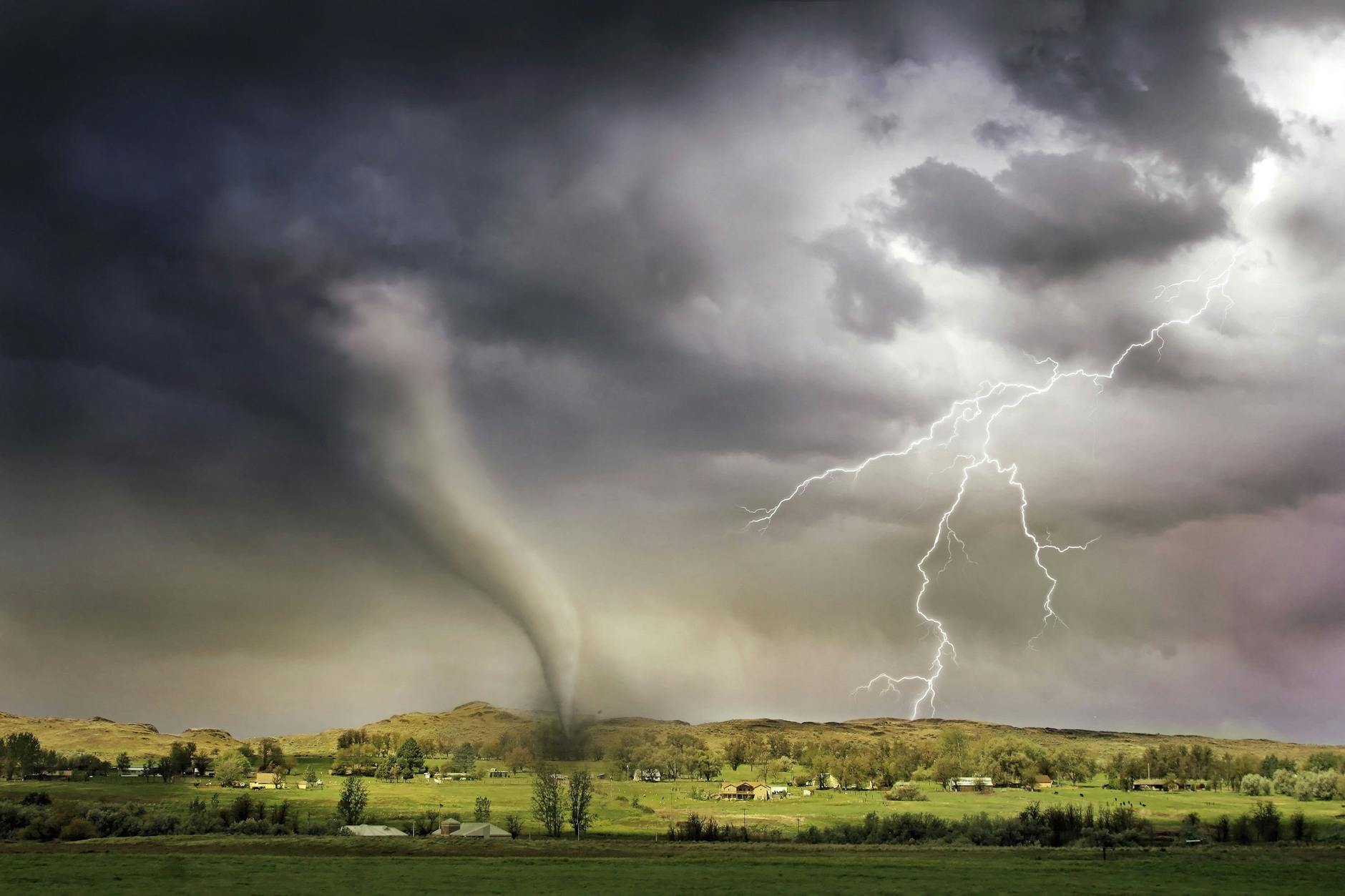
Maryville, MO is not part of Tornado Alley, but you would never guess that with the weather we’ve been having for the past couple weeks.

Last week, we were in the basement waiting out tornado warnings two days in a row. Tonight, we’ll be in an enhanced risk area with the possibility of being in the basement one more time. Makes me wish we had a fully finished basement, preferably with a wet bar. Not that I drink, but it sounds cool.

I’ve been prepping for a class called Disaster Psychology, which I will teach this fall. The first module is all about defining disasters as opposed to smaller-scale emergencies. Disasters involve large to mass-scale injuries and often deaths. They overwhelm a locality’s emergency services, and often require state and federal response. The media responds with on-the-scene missives, often lamenting about the lack of response when the emergency response is actually robust. On the individual level, people’s lives are upended and touched with tragedy.

Photo by Ralph W. lambrecht on Pexels.com

Knowing this makes it a little harder to feel reassured going into that basement. Knowing the strength of emergency response makes it easier. As a CERT-trained individual, I may be part of that response. Most likely, I would be a Red Cross volunteer in sheltering (I have a certification) or a disaster case manager (I have a certification there as well, at least in another county that offered them).

Most of our tornado damage here, however, has been slight, and I hope for our sakes it stays that way.

Christmas in … May?

It’s already time for me to start planning my next Kringle novel. Why? It’s only May!

This is my 2023 Kringle novel cover.

The Kringle novel I write for this year will be for Winter 2025, so it’s even more ahead of time. A year and a half for a novel?

The ideas start in May so I have a while to play around with them in my head while I work on other things. Plots often come up on car rides with my husband, and there are more of those in the summer season (which, in my academic calendar, starts about May 1).

There are so many tropes to play with in romance — two of my Kringle books so far have mystery elements, two are enemies to lovers, a couple are friends to lovers, one involves second love, but no boy next door, snowed in at an inn, billionaire, bad boy or mafia yet. (I don’t foresee doing the latter three, to be honest. I like cinnamon roll guys myself.)

Friday, on one of those car rides, we decided that the next novel would be another second love with a touch of snowed in at an inn, where a divorced woman goes for a lone Christmas retreat at a great lodge, only to meet a local bar owner who hasn’t met the right woman in town.

The actual writing doesn’t happen till the Christmas season, November 1st-to be exact. That’s the season for NaNoWriMo, National Novel Writing Month. I won’t get it done then, but I will be well on my way. The benefit of this schedule is that I’m in the mood for Christmas, surrounded by the trappings of Christmas and immersed in Christmas carols, while I’m writing.

January through May is when I’m reworking the story, editing and refining. That needs to be done by October 1, which is publishing time. The cover gets finalized by the end of summer, and August is when I’m doing the mechanics of getting the novel uploaded onto the Kindle Direct Publishing site.

Other things are happening at the same time, of course. Teaching college from August – May, writing on other books and publishing them. I tend to keep busy, and I think it’s a blessing that I cannot be idle for too long. And that I love to write, and that there’s a Starbucks nearby.

My next Kringle-related activity is to go one more round through the 2024 novel, Kringle Through the Snow, which I actually wrote in January of this year because I thought I would never write another Kringle novel. But I can’t quit, because it’s now one of my Christmas rituals.

So Merry Christmas in May, and watch for Kringle Through the Snow on October 1!

What gives me direction in life?

Daily writing prompt
What gives you direction in life?

Motivation needs direction, or else people waste their energy. There are several things that give me direction in life, honestly. Some are lofty; some mundane. I need to talk about both.

One thing that gives me direction is love. Love of people becomes an evident focus in my relationships, and it’s the answer people expect when I say “love”. But what loving what I do? That’s at least as strong a guide for direction in my life. I think about two activities I term as “flow” activities in my life, moulage (casualty simulation, otherwise known as making victims for emergency training) and writing. The love of the activity and the stimulation they give me gives me direction.

Photo by Mark Arron Smith on Pexels.com

Another thing is striving to be better. This points me toward improvement activities, such as reading about my writing craft and practice, practice, practice. Related to this is the desire for recognition. Although I don’t like to talk about my need for external validation, it’s there. It’s definitely there.

Sometimes, it’s duty that gives me direction. That I get up in the morning on days when I’m depressed, and go to work even when I am hypomanic, is the power of duty. Duty to myself and to my husband and cats. The need to provide food, clothing, and shelter; safety and security, and emotional support. I also do these things because I love all of them, but the daily things fall under the category of duty.

This list is pretty prosaic, more of an essay answer for my positive psychology class than a creative piece. But these are the places and the reasons I focus my energy.