Role Stress

There are many types of stress we experience in life. I want to talk about a type of stress I suspect many writers with day jobs (i.e. so many of us!) have, and that is role strain.

Photo by energepic.com on Pexels.com

Role strain is when the duties of one role conflict with the duties of another. For example, if the requirements of being a writer conflict with those of the regular job. I’m feeling this right now; I want to have a topic to write on, but I’m absorbed with the work duties and there’s no room in my brain for creative writing at the moment.

Both roles are important to me; the work role has higher priority, however, because that’s how I feed my family. Right now, the work role is especially pressing because it’s the beginning of the semester and I need to start the semester strong, which for me means focus.

I’ve scheduled some time today for the other role after my second class today. I can postpone class work for Tuesday when I have a long block of time to do it. This is what’s going to alleviate my work stress: scheduling time for both and minimizing off-task time that doesn’t fit in either roles. Wish me luck!

Getting into the Swing of Things

The above is a very American phrase meaning something like “getting into the rhythm of what’s currently happening.” It’s such an ingrained phrase in American English that it’s hard to define without using the phrase itself.

Photo by KATRIN BOLOVTSOVA on Pexels.com

“Getting into the swing of things” is a descriptor of where I am right now. My fall semester starts tomorrow, and it will take a few days before I fall into the rhythm of life as a professor again. My schedule is much less flexible, I add more necessary tasks for my job, and i have much less free time. Writing time will become scarce and scheduled secondarily to my work tasks.

The challenge is to allow at least a couple hours a day writing, with three hours being optimal for flow. I can look at the schedule right now and see where that will be difficult. Mondays will be the most difficult, as I have meetings after my afternoon class lets out. Meanwhile, Wednesdays and Fridays will be easier — I can schedule 2:30-5 as writing time and maybe even go to Starbucks to write. Tuesdays and Thursdays I work at home, and I can do what I did over summer — get my work done first, and spend that later afternoon block writing. Weekends will be as always. So it’s doable.

The challenge will be to switch gears (another Americanism) from work brain to writing brain. They’re two different modes. Seldom does my work life demand creativity. (My creative life demands a certain amount of critical thinking, though.) Right now I have an afternoon to write before fall semester begins, but I’m not feeling inclined to write because I’m in work brain mode.

I’ve done this transition before — for many years, in fact; I don’t know why it’s a struggle this year. Maybe because I’m in-between projects, and there’s not a writing project currently obsessing me. This, too, will change when I get into the swing of things.

A Round-up of Writing (and Layout) Tools

I haven’t written about writing tools for a while. I haven’t written about them all in one place. Here’s a round-up of tools that take me from first draft to publication-ready. (Note for all my International readers — these are all English language programs):

Photo by RDNE Stock project on Pexels.com
  • Scrivener. This is the program I use to compose my writing. Think of it as a writing environment that organizes your work by chapters, allows a way to outline your work, take notes on it, set goals, and many other things. Even those people who compose using pen and paper will eventually have to transcribe their work on the computer, and this program is the one you want to use. Competitors in this function are programs like Storyist and online services such as Campfire. Skip those; use this full-featured program. You can find Scrivener here; they also have versions for your iOS gadgets.
  • ProWritingAid. ProWritingAid will point out your misspellings, your poor comma usage, and much more. I have learned many writing habits over sixty years, some of which I didn’t know were bad habits. For example, I sometimes use too many adjectives, rely heavily on adverbs instead of the perfect verb, or write subjects and objects that don’t agree. All of those grammar rules I failed to absorb in grade school come back to haunt me in my writing. ProWritingAid has matured my writing these past couple years, and I don’t regret getting a lifetime membership. You can find ProWritingAid here.
  • Atticus. Although you can use Atticus for composing your text, that’s not its strength unless you find Scrivener too complicated. Where Atticus shows its strength is in formatting for publication. You can import a Word document from Scrivener into Atticus, and give it proper page size, section breaks, and chapter titles. It takes a Word document and turns it into the look and feel of a proper book. You can find Atticus here.
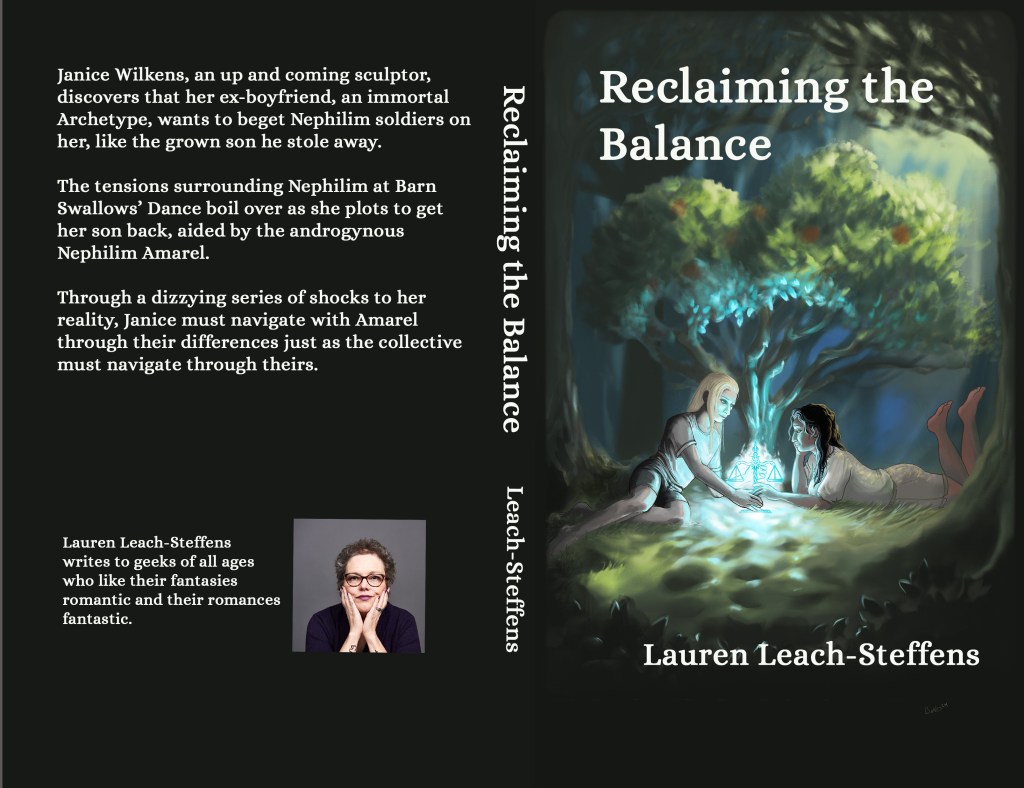
  • Photoshop. As an indie author, I design my book covers. I use either stock photos (and pay for them) or original pieces by my talented niece (I pay for those as well). I need to design these into a 5×8 book cover with a front cover, a side spine with book information, and a back cover with a blurb and author information. Adobe Photoshop does this very well. There is a bit of a learning curve, because Photoshop has so many features that are beyond my skill set. But it also does what I need to do. Photoshop is expensive, so maybe you’d be better off hiring someone for cover production, but that adds up after a while. Here’s the link to Photoshop.
  • Amazon KDP. Publication platforms will depend on what publishing platform you wish your book to be on. I use Amazon KDP, which means I place my books on Amazon and occasionally other platforms. I find their interface pretty easy as long as I have done my due diligence on Atticus and Photoshop. The biggest challenge has always been tweaking my book cover to fit the number of pages/width of the book. Here’s a link to Amazon KDP.

Buying these at once can get expensive; I recommend prioritizing these and deciding based on your budget and needs. Scrivener only costs $60 US and KDP is free; the others are priced with annual fees and, often, lifetime purchases. In the US, these are eligible as work-related tax deductions if you are working to sell your books, so you save roughly 25% of your expenditure in taxes.

After publishing eight books (mostly the Kringle romances), I don’t know where I’d have gotten without these.

Hopeful Thinking

I have discussed writing as a flow activity often enough that I’ve made the case that writing for the sake of writing is a worthy pursuit. Even so, I like to get recognition for my writing. I want to know that I am an interesting writer and have some skill.

Photo by Anna Shvets on Pexels.com

Right now, in society, wanting external validation is a weakness. We call it “attention-seeking”* and that’s considered bad. However, external validation shapes our self-esteem, according to sociometer theory. When we don’t get it, we shape our behavior in order to get it.

In some ways, I get the validation I need. My friends know to ask me how the writing is going. That’s appropriate and my sociometer registers positive.

What I wish I had, though, is the readers. This is something most indie authors struggle with. There are so many writers out there, and so many books, and some people use traditional publishing as their judge how worthy a book is to read. What traditional publishing signals, in reality, is how well the idea sells. There are good writers in independent publishing. But they’re hard to find, and there’s a catch-22 that dogs indie writers: People read books that are read by others.

How to get readers? I wish I knew. I advertise mine on Facebook and Threads and Instagram. But the ads are not tempting readers to read, and I don’t know what to do about that. It’s hard sometimes, but I persist in hopeful thinking that I will get a following someday.

* Not all attention-seeking is good, and I can explain this in terms of sociometer theory. The bad form of attention-seeking is that which violates one of the social norms of a group, and that is attention-hogging. We don’t approve of one person getting all the attention, but are often too polite to signal that directly. Wanting positive attention in and of itself is not bad, however; it’s something we’re programmed to do.

What Motivates Me?

Daily writing prompt
What motivates you?

I wish I could write an inspirational answer to this question, because it’s ripe for a motivation expert to make money from. Alas, I will not be inspirational, only honest.

I had a very productive summer on both the writing and the work fronts. I paced myself so that my work didn’t fall due at the last minute. From this, I learned what motivates me.

Photo by Prateek Katyal on Pexels.com

First, boredom motivates me. There’s only so much scrolling on the Internet I can stand without being bored. I don’t like being bored. I could have slept all that time, I suppose, because I don’t find sleep boring; however, day sleeping is not good for me. That left me with needing something to do, and work and writing helped.

Second, flow motivates me. I get flow from productive writing. Not so much from putting together classes; designing course sites and planning lessons doesn’t promote that seamless experience. I want to experience flow, so it’s motivating.

Third, blocking out time motivates me. I had whole days to waste all summer and work that I could do later. Instead, I told myself daily, “I will do three chapters first, then follow that up with writing time.” I put the less motivational classwork first. I scheduled everything in-between my intern visits (which broke up the monotony of having the same classwork daily).

There are some things, however, that I find so unmotivating that I avoid them. Housework is one of these things. I seem so overwhelmed trying to clean a cluttered house that I just break down. Our house is messy and cluttered as a result. Not dirty, just messy and cluttered. I think I will not be motivated for that until my husband and I decide to tackle the clutter together.

We can use the following professionally recommended strategies: 1) Break it down into smaller tasks; 2) Do the hardest stuff first; 3) Reward ourselves; 4) Quit if we’re not into the task after 15 minutes. That last part is the challenging one: I am never into housework. Is anyone?

I am obviously not a motivational expert, because I have not conquered my house. I hate the thought of the house taking away my precious writing time. So I hope my readers got something out of this anyhow.

A Rejection

I got a submission rejected yesterday. I knew I would, because it was a “first chapter” call, and I submitted my obviously genre fiction first chapter to an outfit likely looking for literary fiction. They let me down easy, of course.

Do I feel bad about it? Of course. I had fantasies about at least being longlisted, if not actually winning.

I’ve been rejected a lot. I suspect that much of the time, it’s because I have entered works into the realm of literary journals when I’m a genre writer; my stuff “doesn’t fit”. I’ve been told this. Much of the time, although I don’t like to admit it, my work probably doesn’t fit their quality standards either. I don’t know why I keep trying, except that one of my “doesn’t fit” stories got an honorable mention in a clearly literary contest.

I could take my rejections as not being “good enough”, or I could keep trying. I no longer query agents for my novels, instead choosing to self-publish. My reasons for this are less about rejections and more about the horror stories I’ve heard about traditional publishing these days. I go through periods of submitting on Submittable, and occasionally I get published. I’m not universally rejected, and nobody has begged me never to publish anything else again.

Rejections don’t spoil my flow time, nor do they destroy my inspirations. I do hope I get a major acceptance someday, because external validation is something I crave. But I’m still writing.

At the Risk of Sounding Repititous …

What do you enjoy most about writing?

My favorite thing about writing is getting totally absorbed in the process, a process called “flow”. I am a flow evangelist; I believe that everyone should find a flow activity. Flow contributes through well-being by engaging our brains in something outside ourselves.

Now that I got that out of the way, I will talk about other things I enjoy about writing. One of the biggest is watching my progress. When I was younger, I used a lot of adjectives, and my writing had a lot of “adjective noun, adjective noun” construction. This got a bit sing-songy. Now I write with just enough adjectives to get my point across, and not always paired with a noun directly. I used to use a lot of adverbs, with the same monotony of language. Now I use them sparingly and with more interesting nouns. I think this is an improvement; at least when I read my work over, it sounds better.

I enjoy watching my characters develop. It’s interesting how I have the bare idea of a character at the beginning, and once I start writing, their conversations flesh them out as a real character. I sometimes write conversations with them (which I call interrogations) to develop their characters and help me write.

But all of this comes back to the ability to sit and write, finding the words and going into an altered state where the words flow on the page and I lose track of time. It all goes back to flow.

A New Project!

I think I have a new project to write. I was going mad dealing with no motivation for writing more short stories, having written three this summer.

I will write the sequel to Kel and Brother Coyote Save the Universe, which is a serial novel on Kindle Vella. In Kel and Brother Coyote, the shipper for hire Kel Beemer gets hired by the monk Brother Coyote. She gives him three rules before agreeing to the hire — no passengers, no politics, and no restricted planets. Brother Coyote, however, breaks all three rules within fifteen minutes. They embark on an adventure that involves a plot to conquer a beauty planet, a psychic symbiont, and the two’s pasts intertwined.

The serial can be found here.

I’m not sure where I’m going to go with this, but I’m going on a writing retreat this weekend! I will spend my writing time hashing out the basic plot and other fine points; it looks like Broadway Coffee in Kansas City will be the venue.

Positive Emotions Then and Now

Daily writing prompt
What positive emotion do you feel most often?

Fifteen years ago, I would have answered the question, “What positive emotion do you feel most often?” with elation. A perpetual high doesn’t make for a sustainable life, and in fact, I wavered between elation and despair (often in the same day). This was life with untreated bipolar disorder, fast cycling version.

Photo by Jonathan Cooper on Pexels.com

Maybe because of the medication, and maybe because of getting older, my most common positive emotion is contentment. When I was younger, I thought of contentment as something inferior, as a curse that the fairy who didn’t get invited to the christening would cast on the poor baby*.

Now I prefer contentment. It’s nice to not have to feel the extremes all the time. I do not get exhausted with my contentment as I did with my elation. The opposite of contentment on the spectrum is discontent, which is not a crippling feeling like despair.

I would not trade contentment for the overdose of elation ever again. I like small doses of elation, but I treasure the anchor of calm, peaceful emotion that is contentment.


* This is a common trope in Western fairy tales in which a family presents a royal baby to the court at large in a christening (baptism) ceremony. The family invites all the witches/fairies/aunts save one. The uninvited one shows up anyhow and curses the baby. Sometimes the curse seems innocuous but causes a lot of harm, at times hilarious, to the child (for example, the child who could not tell a lie).

An Excerpt from My Latest Short Story

This is an excerpt from my latest short story, Simon and the Gift. It happens in the Hidden in Plain Sight universe, about 10 years after the novel I will be publishing on January 1, Reclaiming the Balance.

Simon Albee had never eaten of the Apples. He had rejected the ritual of belonging to Barn Swallows’ Dance, the collective he had become the sysop for many years ago. He had fought the Apocalypse with them, a low-key event for humanity to hang in the balance. Simon had almost died answering a call from InterSpace, where the Archetypes who could end the Apocalypse came from.
What made me change my mind? Simon thought of the years he watched the others with their Gifts, from animal empathy to spinning illusions. He knew why he didn’t choose to eat from the Trees. It wasn’t just that he didn’t trust things people referred to in capital letters.
He rejected the Gifts because he was afraid they would reject him.
I have always been weird. Neurodivergent was the official label these days; although that included people like Gideon, whose differences lay in the stability of his emotions. Simon’s differences were in how he dealt with the information flowing into him from all channels. He had come to terms with the sometimes overwhelming world, taking refuge in his office when he couldn’t take any more input.
Josh, the keeper of the Trees, had asked Simon earlier that week why he hadn’t gotten a Gift from the Trees. “I don’t like losing control,” Simon said, which was both true and a lie. He didn’t like losing control; he also didn’t see gaining a gift as losing control. A Gift was like any other new competence, and one worked to get better at it. But he, in his strangeness, would not get a Gift.
“I want to go in by myself,” Simon said to Josh as they stood at the edge of the food forest, an oasis of fruit trees and edible plants with a secret in the middle.
“We can arrange that.” Josh paused for a moment, and Simon wondered if he talked to the Trees in that moment of silence. The skeptic in him thought not.

Photo by mali maeder on Pexels.com


As he walked through the trees toward the Garden, he heard a screech as a woodpecker flew overhead, then the clear, melodic note of a yellowthroat. Various birds chattered, and Simon wondered how anyone would think the orchard was silent.
Until he reached the clearing at the center, surrounded by the food forest. He had been there before, in the Garden with its two Trees, but only in a group. Once, the collective played an improvised concert in the Garden, and once or twice, they sought it in a group for solace. The place was as verdant, green upon green, as he remembered.
Now, the clearing stood in a stunning silence. He thought it glowed faintly, which he accepted without trying to explain. If he didn’t question, just accepted it in the way he accepted the noisy world, it didn’t disturb him. It just was.
He sat cross-legged in front of the Trees, thinking about how he didn’t move as easily as he did when he first arrived at the collective. It had been ten years, and he was almost forty. It was bound to happen. He stared at the Trees for some moments, capturing the improbability of ripe apples in May, one peculiarity of the space. One yellow and one red, hanging from branches as if waiting for him. That gave him goosebumps, because it was not rational. He dismissed it as another thing that just was.
He stood, slowly, and walked to the Trees. The ritual, which everyone at Barn Swallows’ Dance knew, was to pick one apple from each Tree and take a bite of each. One bite was all it took. He wondered if he would like the apples.
One apple in each hand. They seem on the small side, but they didn’t need to be large for one person. He sat back down with his back against one tree. He had forgotten, he realized, to ask the names of the Tree from Josh — their names always changed — and hoped that he didn’t spoil part of the ritual.
He took a pocketknife out of his pocket and peeled the yellow apple. From a young age, he had rejected apple peel; it was tough and had a bitter taste in his mouth. He took the peeled apple and cut it into slices, then took one bite. He remembered the first time he had eaten an apple; he was three years old. His parents despaired of him ever eating healthy food until they discovered he would eat apples without the peel. The apple tasted sweet and tart and juicy, and his teeth made a satisfying crunch as he bit into it. This yellow apple was that apple, that first apple.
He did the same with the second apple, the red one. The second apple reminded him of haroseth, the apples and honey and cinnamon of Passover. But then other things: it tasted the way mint smelled, and violets, with a touch of wood smoke. All things that he liked, but in odd combinations. He hugged to himself the experience.
Then, he took a deep breath.
He didn’t feel any different.