Just Do It

I’m having trouble writing this blog today.

I’m struggling with inertia when it comes to writing the blog today. Inertia is, so far, winning. To the point that I stare at this vista of screen space and … blank.

I try to write this blog as a show and tell — I show you what I do today and tell you the practical underpinnings. Not “You should do this” as much as “I’m trying this and this is how it’s working for me.”

At this point, I can abandon the blog till later — a practice we call procrastination.

So what do I do about my blog-writing woes?

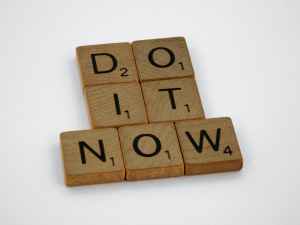
I’m going to address this in terms of procrastination advice, which goes beyond “just do it” (thank you, Nike) and into practical advice. Procrastination breakers I’ve learned are as follows:

  • Break the job into smaller parts — this gives you motivational boosts in small doses when you need them
  • Put a reward at the end of the task
  • Do five-ten minutes of the task, promising yourself you’ll quit if you’re still unmotivated.

So, how’s it working?

Photo by Brett Jordan on Pexels.com

You might notice I have headers. Not just because it makes it easier for you to read, but because it makes it easier for me to write. This is my breaking up the job into the smaller parts. (Yay, I’m done with two parts so far!)

My reward at the end of the blog? Another cup of coffee, because I can be motivated by caffeine, always. Coffee, tea, it doesn’t matter.

Doing five to ten minutes of the task — I always work like this, and for some reason I never quit tasks after that 10 minutes. Why? Because once I’m into the task, my brain wakes up and I end up finishing the task.

I’m almost done with this blog, and I didn’t know if I would abandon it at the beginning of the writing. Now time for coffee!

Now for you

Tell me what your go-to procrastination!

Just one more thing

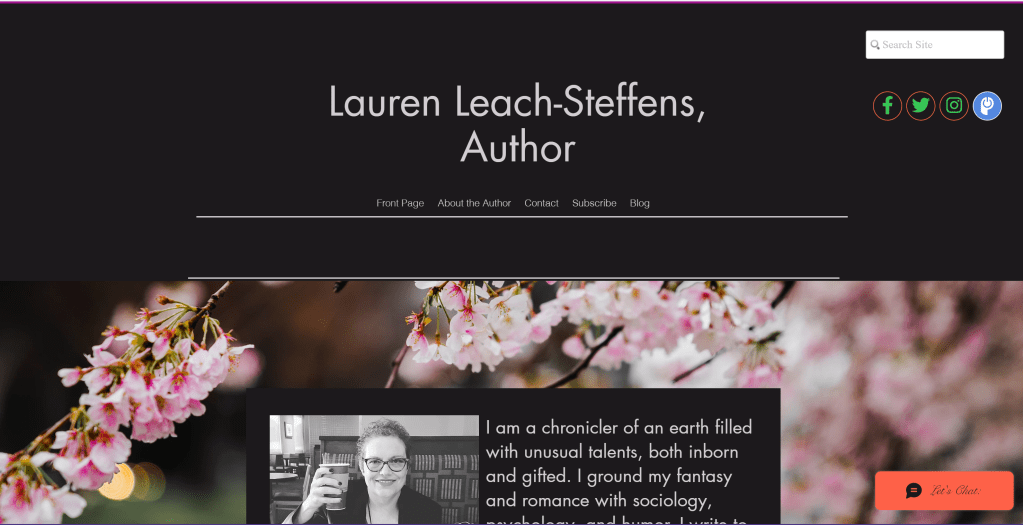
I finally have my professional website updated for the spring and highlighting the Christmas in July deal I have for The Kringle Conspiracy. There are blog entries there too, but they’re more professional writer type things — book plugs, cover reveals, logos, that sort of thing. You can find my professional blog here.

Stop by and say hi!

Imagination Living Beside Reality

When I was a child …

When I was a child, I was an imaginative sort, and my imagination lived beside reality. I knew the tree wasn’t sentient when I spoke to it, but at the same time I had an attachment to it as if we had a relationship. The tree wasn’t and was sentient. I was and wasn’t a human.

I didn’t put away childish things

As I grew older, I discovered creative writing and received lots of encouragement from my English teachers. I mostly wrote poetry back then, prosy poems that tried to communicate emotions, and to this day I’m not enamored of my poetry.

Photo by Pixabay on Pexels.com

But I wrote stories. My stories tended to involve imagination living beside reality — Santa Claus as a young toymaker in a small town (see my romance novel for how that worked out),an anthropologist who discovers a collective of otherworldly beings (which has been written and now needs a home), an unstable woman who meets the ghost of the boy she killed in a car wreck — or did she?

What I developed in college and later was the concept of world-building. I had to show people that there was a reason why the trees were talking telepathically, why the titans struggled with their too-human longings and why the humans struggled with their sudden preternatural gifts. The basis of my writing is the tension between the hidden and ordinary worlds, the stories hidden in plain sight.

My world today

My world is one where I keep my foot planted in both worlds. No matter what genre I start in, two things will show up: 1) that other world hidden in plain sight; 2) relationships between people who are coping with that “other” world, whether they be from the hidden or ordinary worlds.

I would love to share this world with you

Please let me know in the comments if you would like to know more about my writing!

Looking for Inspiration in the Hiatus

As time expands, inspiration goes down.

It’s practically end of semester at Northwest Missouri State. We’re in the middle of Prep Week (often called “dead week” by the number of faculty who are overwhelmed by the end of the semester) and I have nothing coming in until Friday to grade. I’m in t-shirt and sweats mode, only because I have a student appointment over Zoom today; otherwise it would probably be PJs. In other words, I have three more days of Nothing. To. Do. But. Write.

Photo by Tobias Bju00f8rkli on Pexels.com

I have a massive amount of time to write. Am I writing? No. I’m looking for more work to do. I’m halfway to the end of the Internet. I’ve fallen in love with three Internet cats and could dissect the modus operandi of successful cat influencers (photos plus merchandise plus charity). The inspiration to write is nil.

On the other hand, when I’m grading midterms, I suddenly explode with inspiration. If I have deadlines to meet, I feel like writing a novel. NaNoWriMo, the international writing event in November, is perfectly nestled between surviving midterms and prepping for finals. I write the beginnings of novels during that time.

But now? I’m staring at the screen drooling on myself.

Making a plan for summer

My whole summer is wide-open. Although I have interns to supervise, I can work around them pretty readily, and will probably do most of my meetings on Zoom. But the thing that takes up most of my summertime, the online class, isn’t happening. I need to write this summer to keep me sane.

I can make some plans to increase my inspiration:

  • Write this blog daily as warm-up
  • Spend allocated times at the Cafe for discipline and change of scenery
  • Work on outlines for short stories
  • Sketch brainstorming notes on paper with fountain pen (this slows thoughts down)
  • Find a muse (hopefully he’s a-muse-ing too)
  • Only surf the Internet for 5 minutes an hour
  • Find a writing sprint timer

Some of these are writing rituals, meant to separate writing from the mundane world. I’m all about ritual and its ability to make space for important things.

A question for you

If anyone out there has some ideas for getting inspiration (especially some fantasy-based prompts) please tell me in the comments!

My Longest Hobby

I have spent my life developing “project obsessions” where I completely immerse in a hobby and then, inexplicably, give it up. I hit a moderate level of proficiency, and then I get stuck, and then I give up. I did this with embroidery, beadwork, gardening (I couldn’t keep up with the weeds and my gardens didn’t look beautiful. I hit the wall.

Photo by Pixabay on Pexels.com

Writing has been an exception. I have been writing for — six? seven? years, and I don’t seem to be ready to stop. I learn, and I improve, and I don’t seem to hit the wall. I’m not sure why; possibly because it doesn’t take hand-eye coordination (which I’m severely lacking) or lots of money (which I don’t have). Writing for me is at the optimal level of challenge with opportunity to improve.

With writing goals. it’s best to set internal goals. I’ve made the mistake of setting the goal of getting traditionally published which is an external goal I have little control over, especially in the overloaded publishing market. If I set internal goals, I’m much more motivated. Not that I’ve given up being traditionally published; I’ve just decided that I have to set it as a secondary goal.

I guess writing is with me as a part of my life.

Read Me!

I have a friend who happily beta-reads all of my writing. This, of course, makes me very happy in return. She’s very sharp at picking out things that need to be clarified or rewritten, and she likes my work, no matter how low-key strange it is. In fact, the more low-key strange it is, the more she likes it.

Photo by Liza Summer on Pexels.com

The way I got this friend to read was pretty simple: I asked a bunch of my friends if they’d like to beta-read a novel, and she was the one who answered. I didn’t single anyone out and ask, because I didn’t want to pressure anyone to say yes. Some people don’t read, and they don’t want to be singled out as non-readers. Others aren’t reading what you’re writing. It would be nice to have more than one beta reader so we could discuss what’s happening, but it’s okay.

If you have a friend who’s a writer, one of the best gifts you can give them is to read their stuff. Even if they haven’t hit it big — especially if they haven’t hit it big! Writers need readers to feel like they’ve accomplished something. We may write for ourselves, but we know that writing/reading are a transactional model, and we crave being read. So give us a present!

What I’ve Learned from Failure

I didn’t have to deal with failure in my childhood (except for those crushes that were never requited). I wasn’t quite a child genius, but I was gifted. I managed to get to college almost entirely on scholarships including a National Merit Scholarship. I got on the honor roll despite the most perfunctory study habits.

I came to failure late and hard. Particularly in submitting my writing, particularly novels. I have received enough rejection to paper my room.

Photo by Anete Lusina on Pexels.com

What I have learned about rejection:

  • Don’t take it personally. If I have given my best, after reading guides on how to write, writing, editing, beta-reading, revising, and the like, it’s probably that my writing doesn’t fit the agent’s list or the journal’s theme I have learned, for example, that my poetry is not High Concept, as it doesn’t get published in high concept journals. This doesn’t surprise me because my Ph.D. is not in English/Creative Writing. My short stories are also not High Concept, being firmly lodged in the category of fantasy, romantic fantasy, and space opera. There are some places I’m more likely to get published in than others.
  • See what you can learn from it. I have had to grow as a writer by asking myself, “What is the takeaway from this?” I had to get rid of my perfunctory habits once I realized that one didn’t turn in one’s first draft (in my defense, it had very few grammatical or spelling errors). I read a lot of material on writing because of rejection.
  • Try again. Always try again.

What I’ve Learned From Editing

Sorry I’ve been gone for almost a week, but I’ve been busy with Camp NaNo. I’ve been putting 3 hours a day in editing Reclaiming the Balance, which means almost no free time to journal. Today I will make my 30k goal for camp, but I will likely continue editing once I’m done with the goal, because I haven’t yet gotten Reclaiming the Balance where I think it can be.

I’ve done a lot of editing lately between Gaia’s Hands and Reclaiming the Balance, but these are a couple of my first books, so it’s expected.* I’ve learned much about writing novels from editing previous novels and don’t want these past novels to go to waste because their characters deserve to see the light of day.

So what have I learned about writing from editing? Let me think …

  • Structure really helps guide the reader and satisfies their expectations. I use two systems now:
  • Save the editing for later — get the ideas down
  • Don’t repeat first names in your characters (there are some exceptions, such as Senior and Junior)
  • Don’t make people follow too many characters in a third person omniscent**
Photo by Steve Johnson on Pexels.com

And some things I’ve learned about editing from editing***:

  • Sometimes I have to cut one of my favorite scenes or chapter because it didn’t fit the flow of the book. This happens more if I didn’t use a structuring scheme
  • Sometimes a sentence that made perfect sense to me when I wrote it makes no sense when I read it later
  • I need help — developmental editors, sensitivity readers, beta readers.****


* I’ll admit that both novels are basically romances with somewhat “non-standard-reality” plots. I really don’t know how to classify the fantasy version. Contemporary fantasy? Magical realism? I certainly don’t write elves, sword and sorcery, or vampires. I like to think of my stuff as anthropological fantasy.

** The collective featured in Apocalypse, Gaia’s Hands, and Reclaiming the Balance has 60-70 members given the time period. Apocalypse was a third-person omniscient point of view. I had to pare point of view characters to about 9.

*** I’ve learned more than I’ve written here (action verbs, some description, because vs since, transitions) but those are more about words than writing

**** I proofread really well after the second or third pass, so copy editors and proofreaders are not on my list. They might be on yours.

PS: If anyone can help me with the footnote add-in (Easy Footnotes), I would greatly appreciate it!

Remaking Myself

I want to remake myself. This is the reason I think I try so hard to get published, because I want to think of myself as an author. It would give me an identity beyond the one I have currently (professor) that I will lose when I retire.

It’s not a good reason to write, but I think it’s a fine reason to try to get published. I think remaking oneself is a noble pursuit, unless one is trying to remake oneself as Harley Quinn (As opposed to Harley Quin, for all you Agatha Christie fans).

Photo by Sunsetoned on Pexels.com

I admire people who make themselves and remake themselves, flowing with the changes in the world. On the other hand, I believe that my writing is good and worthy of publishing, but I’m not apparently writing what agents want. Changes to flow with. Do I learn how to promote myself better and self-publish? Do I try to tailor my writing to the market — no. Then it would not by my writing. I will not remake myself by becoming someone else.

Have I already remade myself? I have written five or so books — Kringle in the Night, The Kringle Conspiracy, Apocalypse, Gaia’s Hands, Reclaiming the Balance, Whose Hearts are Mountains, and Prodigies. Ok, that’s seven, not five. I have put them through developmental editors and (most of them) through beta/alpha readers. One of them (The Kringle Conspiracy) has been self-published. Maybe I am already an author. Maybe I have remade myself.