Making my Space More Motivating

I have trouble motivating to write in my house, preferring Starbucks and its optimal level of distraction. But, as the temperature outside is getting up to 94 today, I’m stuck at home. I’m now working on how to make motivating space at home.
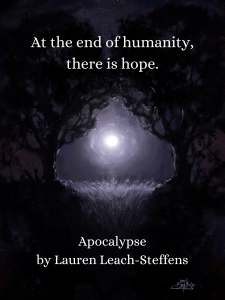
My writing nook is the loveseat in the living room, because our office is a claustrophobic experience with too many bookshelves and not enough room to think. The library table is right in front of and facing a wall. Even though I’ve put posters on that wall based on book covers my niece has designed, I’m staring at a wall. Maybe they’re too high on the wall, I don’t know. To the right is one of these posters; my niece is rather talented. If it weren’t for that? I still doubtless wouldn’t write well in the space, because it’s too isolated as well. I enjoy having people in my space, even if I ignore them.
The living room has its advantages. I have a table for my laptop that scoots up to the couch. I have control of my music on iTunes on my laptop and send it through Apple TV to decent speakers. I play modern classical and all the iTunes playlists that tout ‘focus’ and ‘concentration’. When my husband is around, I have that person distraction, and that helps. But sometimes there’s too much distraction, like when Chloe crawls all over me or tries to clean my nose.

I still feel distractions, though. I stare out the window less (my ‘thinking mode’), and slink off to Facebook and Reddit more, which cuts down on thinking time. If that’s the problem, I can focus my solution on staying on the current page. What would help me with that?

Or I could choose to do something else. There are promotion-related items I could always do. I could take a break from the novel to write a short story. Or I could just take a break. It’s Sunday, and I have the rest of my life to write.

Comic Relief

I have written some pretty dark stuff lately. Riots with body counts, bombings, scenes that traumatize my protagonists. The United States is falling into disorder, and in two years there will be no United States.

I may write dark, but I don’t write unrelieved grim. There is always humanity. There is always hope. And there is always humor. My characters shine in small moments where humor peeks out, and sometimes I go from subtle smirks to full-out silliness.

Take, for example, Nephilim cats. One of my Archetype characters created a passel of immortal Archetype cats that teleport and procreate. Their offspring, like human-Archetype crosses, fly. They also get into trouble flying around outsiders. The beauty is that most humans can’t believe their eyes, and they ignore the obviously flying cats. But when the outsider recognizes this cat is actually flying, and the ten-year-old girls are scolding him for letting the secret out … a tense moment of an outsider knowing secrets gets silly.

I worry sometimes about my sense of humor. On the other hand, I worry that my writing can get too dark. I wonder if I have the balance right. I would love feedback on this, so if you’re one of my readers, please let me know! Link to my books here.

What is the opposite of progress?

I continue to pants* this book (Carrying Light) and as I write, there’s so many questions I need to address in the edits**:

This represents the plot holes in the current draft.
  • Is the collective’s reaction to the chaos outside too much, too soon?
  • Will they really invest in self-sufficiency when Luke, an Archetype who has seen collapse before, suggests they empty the coffers to buy items that will help them be self-sufficient?
  • Will they then realize that they can’t be entirely self-sufficient, that they can’t grow all the foods they need to survive given the amount of land they own?
  • Does the stalemate at the college’s gates last too long?
  • Do Sage and Forrest do enough drifting apart before they join forces again?
  • Is all their looking for alternatives to their current lifestyle filler or necessary world-building? (I’d say necessary world-building; otherwise their adaptations seem like magic)
  • Are there enough fantastical elements in this story?

* Pantsing: writing by the seat of one’s pants.

**This story is taking about two months to write. It will take about forever to edit.

Writing about Writing about Writing

Sometimes I write about writing. I donโ€™t do this nearly as often as I should, because I donโ€™t have meta-thoughts about writing that often.

I could write about exposition, for example. What wisdom do I have about exposition? Only the big one: Show, donโ€™t tell. And the not so big one: Conversations can be a form of exposition if youโ€™re not writing things like โ€œDid you hear about Betty? She ran off with the milkman last week.โ€

I could write about writing characters. Where do my characters come from? They come from an amalgam of people and stories I have known. Then I โ€œinterrogateโ€ the character to see if they feel consistent in who they are. I have conversations with the characters, I put them in situations. I talk to my husband about characters โ€” for example, โ€œWould they talk back to the police?โ€ Gideon would; he tends to be human and somewhat anti-authoritarian. Most of my Archetypes and Nephilim would never talk back lest they be discovered. Theyโ€™re not quite immortal, after all, and they would alarm the authorities. Luke would talk around the cops, though. Heโ€™s a lawyer, after all.

I want to write about this guy next.

I could write about publishing. There are many steps to publishing yourself; some of them go surprisingly smoothly, like most of the process on Kindle Direct Publishing (KDP for those in the know). Others become a great source of frustration, like putting my book cover up on KDP.

I could write about hitting it big as a writer. No, I canโ€™t, because I have not hit it big. Nor is it likely that I will, but thatโ€™s okay. I have a story to write, and it nags me at night. My characters (Sage Bertinelli and Forrest Gray at the moment) demand to be written.

I need to write more about writing, because there are so many topics โ€ฆ thank you, Hannah, for obliquely suggesting this!

Pantsing

Photo by Thirdman on Pexels.com

Pantsing refers to a style of writing whereas one makes the story up as they go along. It’s part of the trinity of methods, the other two of which are planning and plantsing. Planning the story is just what it sounds like — from using an outline of each chapter to setting up scenes and documented world-building. Plantsing is somewhere between the chaos of making it up spontaneously and organizing everything.

Normally I am a plantser — I have “note cards” (a feature on Scrivener, the program I recommend for writing novels) for each chapter denoting what should happen in the chapter, and I see where those directions and the characters take me. But this time around, I have diverged from the note cards enough that I am most definitely pantsing.

For example, I was writing about how my characters in their collective (think commune, sort of) were going to cope with the potential for communications and shipping breakdown in the oncoming breakdown of American society, and I thought about replacement parts and fuel for the farm. While I was in the middle of writing that, I thought, “Oh my god, what are they going to do about the staple goods they don’t grow themselves?” The collective eats a certain amount of bread, for example, but they don’t raise the wheat themselves because only the wrong type of wheat grows in the Midwest. In addition, they’re vegetarian and bought rather than grew their legumes. They use their farm land for more suitable items for the collective, like fresh fruits and vegetables, as they could always buy the staples through the local food co-op. So they suddenly figured out they could have a food crisis. In striving to be self-sufficient, they blinded themselves to the fact that they were not self-sufficient, any more than other humans. They discovered this at the same point where I thought about it, of course.

I may edit this later, putting the food crisis before the capital goods crisis chronologically. But I may not, because if it occurred to me in that order, maybe it would have occurred to them in that order. Maybe the capital goods crisis they envisioned was the one the collective saw most clearly* and therefore first. Part of the process of pantsing is the harder job of editing down the line.

Photo by u0410u043du043du0430 u0420u044bu0436u043au043eu0432u0430 on Pexels.com

It’s been a wild ride writing this novel so far. I feel like I’m climbing a rock wall without a belayer. If I felt a lot better about my rock climbing skills, I would not feel like I needed belaying.** Ah, well. See you at the edit.


* This is known in cognitive psychology as the availability heuristic, whereas we believe the most readily imagined scenario is the most likely or important one. This heuristic is why young people buy life insurance and not disability insurance despite being 7 times more likely to die than to become disabled.

** I just about used the word ‘balayage’ here, which is a hair-dyeing technique. Oops.

What jobs have I had? Fun!

What jobs have you had?

My first paying gig was as an elf for the Marseilles, IL school district my junior year of high school. I donโ€™t put that on my resume.

My first real job was the summer before my freshman year of college, where I was a fast-food worker. My co-workers once locked me in the walk-in freezer.

Jobs during my undergraduate years: kitchen help at Papa Delโ€™s Pizza; storeroom supervisor for Bevier Hall Cafeteria, all at University of Illinois.

Jobs during my graduate years: Teaching/Research/Administrative Assistant, Family and Consumer Economics Department, University of Illinois (various years); 2nd cook, Y Eatery (Thai/Italian eatery); typist for a Psychology computer lab.

This is what we ate at family-style lunch on Fridays at Y Eatery.

Professional career post-grad: Assistant Professor, Consumer Economics, SUNY Oneonta; Assistant/Associate Professor, Human Services, Northwest Missouri State University.

And I suppose I can count โ€œwriterโ€, even though Iโ€™ve made very little money on that so far.

Back Home

About my trip, all I have to say is “Everything that could go wrong, did go wrong, but I presented my poster and got home”. It involved paying for another ticket to keep my husband and I on the same flight home, a delay causing us to miss our connecting flight, and me passing out the morning of my presentation. And I caught up on my sleep all day yesterday, which my psychiatrist would caution against, but the late nights traveling took a toll on me.

Photo by cottonbro studio on Pexels.com

Now to get back into writing. I had a weird dream which almost turned into a book, but I thought it would be too cheesy because the fantasy angle was a bit thin and there was a vampire. And a court full of potential victims under a geas to stay and not kill the vampire. And the chosen girl revenging her father masquerading as a adenoidal, unintelligent servant girl. And at least three romance tropes: fake relationship, enemies to friends, and time travel. I don’t know if I could write her without her becoming a Mary Sue, at least in part because she’s the only one without the geas. And there were Edsels. And jousting. Did I mention the vampire? Not all dreams should become stories. (Spoiler: She does not fall in love with the vampire. The vampire is the bad guy, not just misunderstood.)

I’m back from the break feeling somewhat discombobulated, which is how air travel leaves me. I traveled through an airport once that had a “recombobulation room”, and I now wish all airports had them. San Francisco had a “quiet room” which I wished I had time to spend in. Now I need to be recombobulated before I write again. The goal is to do Starbucks and writing tomorrow. And to luxuriate in doing nothing today.

Twelve Years of Writing

I’ve been writing for twelve years. I started, strangely, three months after being diagnosed with bipolar 2, which I hadn’t realized till today. I know I didn’t start writing as a coping mechanism or as character insertion (my first characters were not me) and I didn’t write about being bipolar. I think I started writing because being treated for bipolar helped me focus on continuous tasks instead of pouring all my energy on the whim of the moment.

I was not a good writer at first — I wrote each chapter as if they were separate episodes, like short stories strung together. I didn’t feel like I wrote an overarching plot. The novels (I use the term loosely) I wrote then I have had to revise several times such that only the characters are the same. I learned a lot from revising them.

Things I have learned over the past few years:

Photo by Pixabay on Pexels.com
  • My first draft is not my novel. Over the years, the novels have needed less and less rewriting, but there are always things to fix in second and third (and fourth, and …) drafts.
  • Developmental editors are an important part of your writing toolbox. It is worth paying for them.
  • There are three ways to write a novel: Plotting, pantsing, and plantsing.
    • Plotting: an organized outline at the beginning, and following the outline.
    • Pantsing: writing it as one goes along, without the outline.
    • Plantsing: writing with a rough outline but pantsing through the chapters.
    • I am a plantser.
  • Scrivener is a great program for composing my work, especially plantsing.
    • Scrivener arranges itself around a chapter format and a synopsis form that I use to guide my chapters. I use it like pantsing with training wheels.
    • One can get templates for Scrivener novel-writing that incorporate plotting frameworks, such as Save the Cat and Romancing the Plot.
  • ProWritingAid was another investment I don’t regret โ€” my grammar has improved in ways I hadn’t considered before. I have lessened my passive verb structure massively.
  • Writing is the easy and fun part. I still don’t think I have the hang of promotion (and this blog is part of my proof of that.)
  • My favorite novel is always the one I just finished.

The most important thing I learned? That I can write. The second? That there’s a whole lot of luck in being discovered, and luck hasn’t come to me quite yet.

I feel like I could have learned more in 12 years, and maybe I have, but these are the biggest things I can think of. I hope they’re helpful to someone!

Christmas in โ€ฆ May?

Itโ€™s already time for me to start planning my next Kringle novel. Why? Itโ€™s only May!

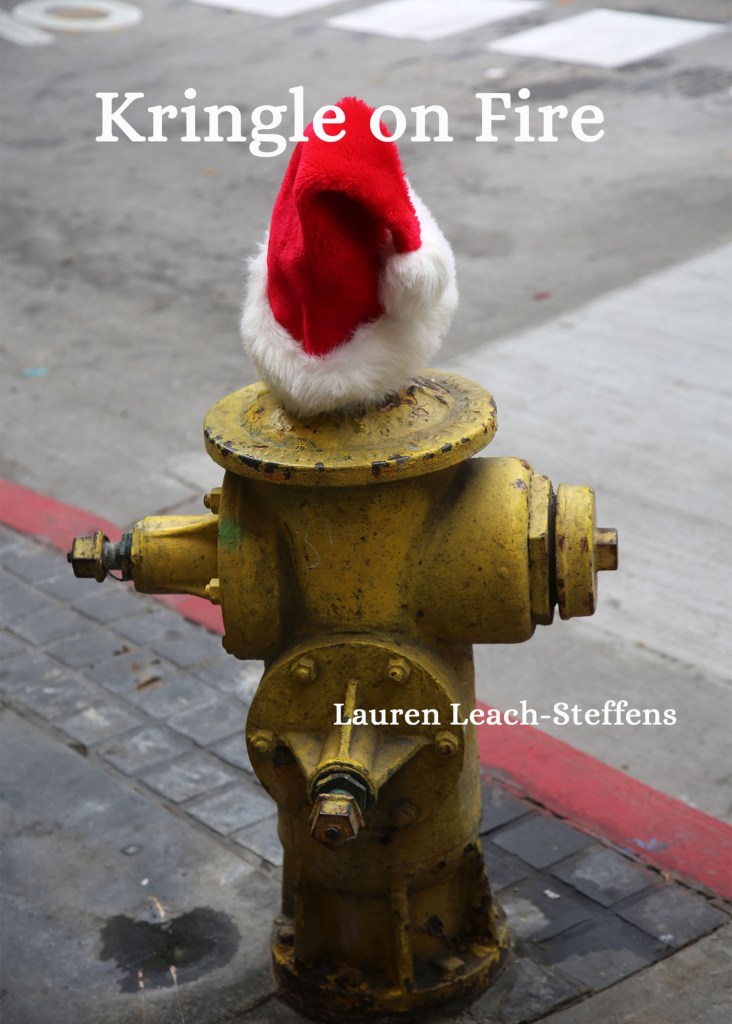
This is my 2023 Kringle novel cover.

The Kringle novel I write for this year will be for Winter 2025, so itโ€™s even more ahead of time. A year and a half for a novel?

The ideas start in May so I have a while to play around with them in my head while I work on other things. Plots often come up on car rides with my husband, and there are more of those in the summer season (which, in my academic calendar, starts about May 1).

There are so many tropes to play with in romance โ€” two of my Kringle books so far have mystery elements, two are enemies to lovers, a couple are friends to lovers, one involves second love, but no boy next door, snowed in at an inn, billionaire, bad boy or mafia yet. (I donโ€™t foresee doing the latter three, to be honest. I like cinnamon roll guys myself.)

Friday, on one of those car rides, we decided that the next novel would be another second love with a touch of snowed in at an inn, where a divorced woman goes for a lone Christmas retreat at a great lodge, only to meet a local bar owner who hasnโ€™t met the right woman in town.

The actual writing doesnโ€™t happen till the Christmas season, November 1st-to be exact. Thatโ€™s the season for NaNoWriMo, National Novel Writing Month. I wonโ€™t get it done then, but I will be well on my way. The benefit of this schedule is that Iโ€™m in the mood for Christmas, surrounded by the trappings of Christmas and immersed in Christmas carols, while Iโ€™m writing.

January through May is when Iโ€™m reworking the story, editing and refining. That needs to be done by October 1, which is publishing time. The cover gets finalized by the end of summer, and August is when Iโ€™m doing the mechanics of getting the novel uploaded onto the Kindle Direct Publishing site.

Other things are happening at the same time, of course. Teaching college from August – May, writing on other books and publishing them. I tend to keep busy, and I think itโ€™s a blessing that I cannot be idle for too long. And that I love to write, and that thereโ€™s a Starbucks nearby.

My next Kringle-related activity is to go one more round through the 2024 novel, Kringle Through the Snow, which I actually wrote in January of this year because I thought I would never write another Kringle novel. But I canโ€™t quit, because itโ€™s now one of my Christmas rituals.

So Merry Christmas in May, and watch for Kringle Through the Snow on October 1!

Daily writing prompt
What is your favorite holiday? Why is it your favorite?

Christmas* is my favorite holiday. It’s strange writing about Christmas in April, but then again, I have a Christmas tree still up in my parlor, and I turn the lights on now and then. And I just got done writing a Christmas romance. (It’s my sixth). No other holiday comes close to me.

Christmas lasts an entire season, and that’s one thing I love about it. I get to celebrate from post-Thanksgiving to New Year’s Day. It comes when I need it, toward the end of a very busy Fall semester at the college. It livens things up against the leaden skies and frozen ground waiting for snow that doesn’t come till January.

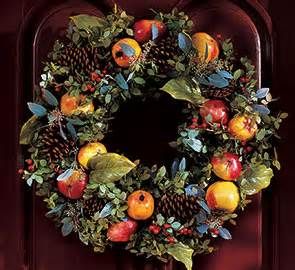
Christmas also has traditions handed down from many cultures (mostly Western) to give it a rich color and flavor. Red and green, silver and gold, touched by Hanukkah blue and white (it is part of the season), ribbons and blown glass ornaments and Della Robbia wreaths (my mother had a particular fondness for them, as do I) and twinkly lights.

We have special Christmas foods from many cultures as well. Pfeffernuse (ginger cookies) and springerle (anise cookies) from Germany, Mexican wedding cakes/Russian tea cakes, sugar cut-out cookies, Christmas goose, plum pudding, KFC (in Japan) …

Christmas remains my favorite holiday, even though I’m too old for Santa. But given I write about a secret society of Santas, am I really too old?


*I am talking about the secular parts of Christmas here. I am of a “spiritual but not religious” bent, best described by “omnist“. Or maybe “panentheist”. I’m not sure. My beliefs are very personal, and I don’t want them hijacked by the “one true religion” crowd.