Progress!

Now, finally, as the summer winds down, I’m feeling motivated! The book and cover for It Takes Two to Kringle are almost done. I have brushed up my query letter and synopsis of Apocalypse in case I get motivated to query it. I have done little with Avatar of the Maker, but I have reconciled myself with the fact that Leah is going to be a pregnant eighteen-year-old.

Photo by Miguel u00c1. Padriu00f1u00e1n on Pexels.com

I think I’ve said this before — my mind needs to be split between two things for me to be productive in writing. I’ve proven this every summer, when the first half of the summer is free, while the second half sends me chasing down interns and expecting the beginning of fall semester.

It’s possible that this is what it takes to be distracted from my perfectionism. Maybe it’s inertia taking over during free times. Perhaps I just need the dichotomy of work and writing to turn my mind toward writing. The best use of my time is all or nothing. But at least I’m making progress.

Characters First

When I write a story, I begin with the characters, because without them there would be no story. The story is theirs; it’s my responsibility to get the characters and story on paper.

In the current story, Avatar of the Maker, there are three main characters: the sheltered but headstrong eighteen-year-old Leah Inhofer; her devoted half-Archetype boyfriend Baird Wilkens; and Luke Dunstan, a six-thousand-year-old Archetype.

From there, I want to know what their motivations are. Leah’s is to be independent, which seems contradictory to having a child on the way. Baird’s is to support Leah, however possible; another goal is to find his way into a human adulthood. Luke’s goal is to keep a calamity in the Archetypes from happening, weighing potential harm to Leah and her unborn child with harm to humanity if she doesn’t act.

Photo by Daria Shevtsova on Pexels.com

It’s necessary to get their speech cadence, their mannerisms, their word choice, all the things that make the characters distinctive and alive. Luke keeps pulling his blond hair back in a ponytail and letting it loose. Baird ducks his head sometimes because he’s shy. Leah talks emphatically; Baird talks in a slow drawl. Leah braids her hair tight. Luke’s accent is Yankee.

When I feel comfortable with these, I feel much more comfortable putting in the plot.

Stopping in the Middle

When you’re unhappy with your first draft

The good news is that I have been writing more on my latest novel, which makes me very happy.

The bad news is that I’m dissatisfied with what I have written. Such is the lot of writers.

Photo by Kat Smith on Pexels.com

Why am I dissatisfied? (This should be cathartic!):

  • Reveal of Leah’s talent too quick
  • Not enough of the relationship between the main characters
  • Overall, unremittingly dreary

The bones of the story seem sound, but some of the surrounding structures (the muscles?) aren’t holding up the promise of the story.

What to do now

Many writers at this point would tell one to keep plowing through and wait to revise until one has completed the first draft. I am ignoring this advice.

I am distracted by what is missing in my characters. I am bummed out with a story without laughter in-between the heavy stuff (and there’s plenty of heavy stuff in this one). If one’s feelings about the content impede the writing, I think rewriting those so many chapters is not only wise but necessary.

This means my progress will not be going forward, but rippling outward. I can accept this.


In the meantime, I’m trying to promote my work. It’s hard for me because I’m not the sort of person who feels comfortable with self-promotion. But here is my author’s website, which has a blog post about all the writing I have out there. Here’s the page.

Happy reading!

That Stuff

My confession

“I don’t write THAT stuff.”

I could hear the inflection in the writer’s voice, even though she had typed and not spoken the words.

What stuff was she talking about? Sweet (as opposed to sexual) romance books. This attitude is not uncommon with the romance writers I have encountered, to where I have left a group of writers because of words dripping with disdain.

I don’t write the opposite extreme — Christian romance — either. I want sexuality to be important to my characters, just not necessarily on the page.

I obviously haven’t found my tribe.

Here’s my confession: I don’t write sex scenes. No steam, no lemon, no insertion, no moaning, no dirty talk, no bodily fluids, no humping.

Black and white image of female buttocks on black bacground

Why don’t I write sex scenes?

If you have preconceived notions about me, these might contradict your thoughts:

  • I have a perverse sense of humor and an open mind.
  • I enjoy reading sex scenes, as long as they’re not over-the-top or badly written.
  • I’m fascinated by my characters and wonder how they’d react sexually.

Some data which might explain things but I doubt will:

  • I’m almost sixty, which probably means I’m slowing down. But nah …

Why I write fade to black, closed-door, no explicit sex romance/romantic fantasy:

  • I’ve seen too many sex scenes that have taken me out of the book, i.e. miles of orgasms, heroic stamina, characters whose prowess becomes their dominant character trait. I’d read that for humor, not for a straightforward love affair.
  • I don’t want to get distracted from the relationship piece. I want to focus on the beginning of enduring traits rather than the short-term lust.
  • I don’t want to feel voyeuristic. I know they’re imaginary characters, but I’ve formed a bond with them and I feel this sense of respect toward them.
  • I like to use my imagination and assume my readers like the same.

I stew about this

My dilemma about writing explicit sex scenes may go back to a distinction I ran into a couple weeks ago between escapist romance and literary romance. I want to write compelling fantasy-romances/romantic fantasies about complex people in a world not quite like the one they entered. To do that, I have to write the way I write and hope it catches on.

I used to have a mystique. Honestly. Back in college, I hung out with a rather fanciful group of people who were into alternative spiritual paths and science fiction, and they painted me in equally fanciful terms. Now, mind you, I was about as overweight then as I am now, so my persona wasn’t beautiful. But being a little older than most of them, they regarded me as a wise woman. (I was not that wise either.) I definitely had a mystique: Where did all that knowledge come from?

Now that I’m about 30 years older and finally wiser, I no longer have this persona, a self that conceals as well as reveals. A cloak of otherness is not something I possess. Instead, I am a rather plain, overweight college professor who doesn’t even have the mystique of a college professor. I appear as a woman in her late 50s who either smiles too much or not enough depending on where you encountered me. Often, I say “wow” and get excited about what people are talking about. It’s the anti-mystique: This is who I am.

I mention this because this would be a great time to have a persona, especially one with a certain mystique. I’m a writer, and I think people expect this from their writers. Writers are not like the rest of us, the reasoning goes. They are creative. They are Something Else. A fantasy writer like myself should have one foot firmly in the fantasy realm, teasingly inscrutable. Instead, I’m like a seven-year-old in a candy shop.

Ok, maybe that’s a persona, but a writer’s persona? A fantasy writer’s persona? The seven-year-old in the candy shop is probably closer to how I see my writing as anything. Look at the miracle that just happened! See the storms on the horizon! How are they going to get out of this?

But it’s not … mystical enough.

Oh well.

On a Trip to Kansas City as a Writer

Why am I in KC?

I’m on an internship trip overnight, getting some away time in. I saw three interns yesterday, and will see another this morning. It’s part of the job of being their internship director. It’s fun seeing where my students are working.

I’m thinking about writing as I sit in a coffeehouse (Opera House KC) waiting for one of my favorite stores to open. I need some spices at Planters, and to look at gardening gadgets. I will also shop for Asian foods and eat Ethiopian for lunch. Life is good.

Photo by Igor Haritanovich on Pexels.com

Thinking about writing

As I think and drink lavender latte, I realize that, for me, thinking about writing isn’t thinking. It’s more like a sense of interest that envelops me, and I feel like following that interest in writing. Maybe that’s been my problem, thinking that thinking about writing was what I needed. No, I need to be a writer and follow that up with what I need to do to write.

It sounds bogus. First, be a writer; second, write. It’s not, in a way I have trouble explaining.

But it’s that way.

Sunday Afternoon

This morning started with a discovery

Apparently, according to some reading about ADHD I stumbled across, people with ADHD have trouble with non-verbal working memory (referred to in one article as visuospatial working memory). I probably have ADHD given my family history. In addition, I struggle with visual and spatial stuff. I can’t remember what someone looks like very well. Maybe after 50 times. This includes my husband — I didn’t know for a couple of years if I could recognize him in a crowd. I let him walk toward me before I approached him.

Apparently, people with non-verbal memory problems have trouble visualizing, including visualizing what a successful result looks like. Does this relate to my writing crisis, where I’m not sure if I’m doing “well enough”?

Planting thyme

Photo by Nadi Lindsay on Pexels.com

I segued from analyzing my mind to planting herbs. We have a hill of rip-rap, upon which the past residents laid a bare layer of dirt on top of. I planted herbs there; the mint loved the bottom of the hill but the top killed off whatever was planted there. So my husband and I laid soil at the top and planted herbs. I love to cook, and I like fresh herbs.

I’m a little tired now, but closer to the completion of the planting season. Looking forward to lovage in my soup and mint in my namya (Thai noodle dish).

Music in the evening

Listening to a new singer-songwriter playlist as I type this. It’s a good day. All I have to do is sort out the writing thing and try to figure out how to visualize success to motivate myself. Any ideas?

Taglines

What to say about a book

Photo by Caio on Pexels.com

I’ve written this fantasy book that hasn’t been “discovered yet”. Part of the reason it hasn’t is that I haven’t done a good job of selling it. Maybe it’s impostor syndrome; maybe it’s my inability to write good taglines. But here goes:

Gaia’s Hands

  1. Professor Jeanne Beaumont designs oases of edible plants. Josh Young, English instructor, sees visions of danger approaching Jeanne and her talent for making plants grow inches overnight. Josh’s visions prove true as Josh and Jeanne install her dream garden — to face trial by fire.
  2. Professor Jeanne Beaumont’s plants grow impossibly lusher and taller when she talks to them. Josh Young sees visions of Jeanne surrounded by a vast garden with a violent storm on the way. Josh and Jeanne must weather dire events and their eerie adversary — and they will face fire in Jeanne’s most ambitious garden.
  3. Josh Young sees a vision of horticulturist Jeanne Beaumont standing in a lush garden, facing a deadly storm. He must work with her to help her face her talent of making plants grow inches a day. Soon they face an ever-increasing threat which will try them by fire.

So, any of these? None of these? I’ll try longer ones later.

Writing Retreat

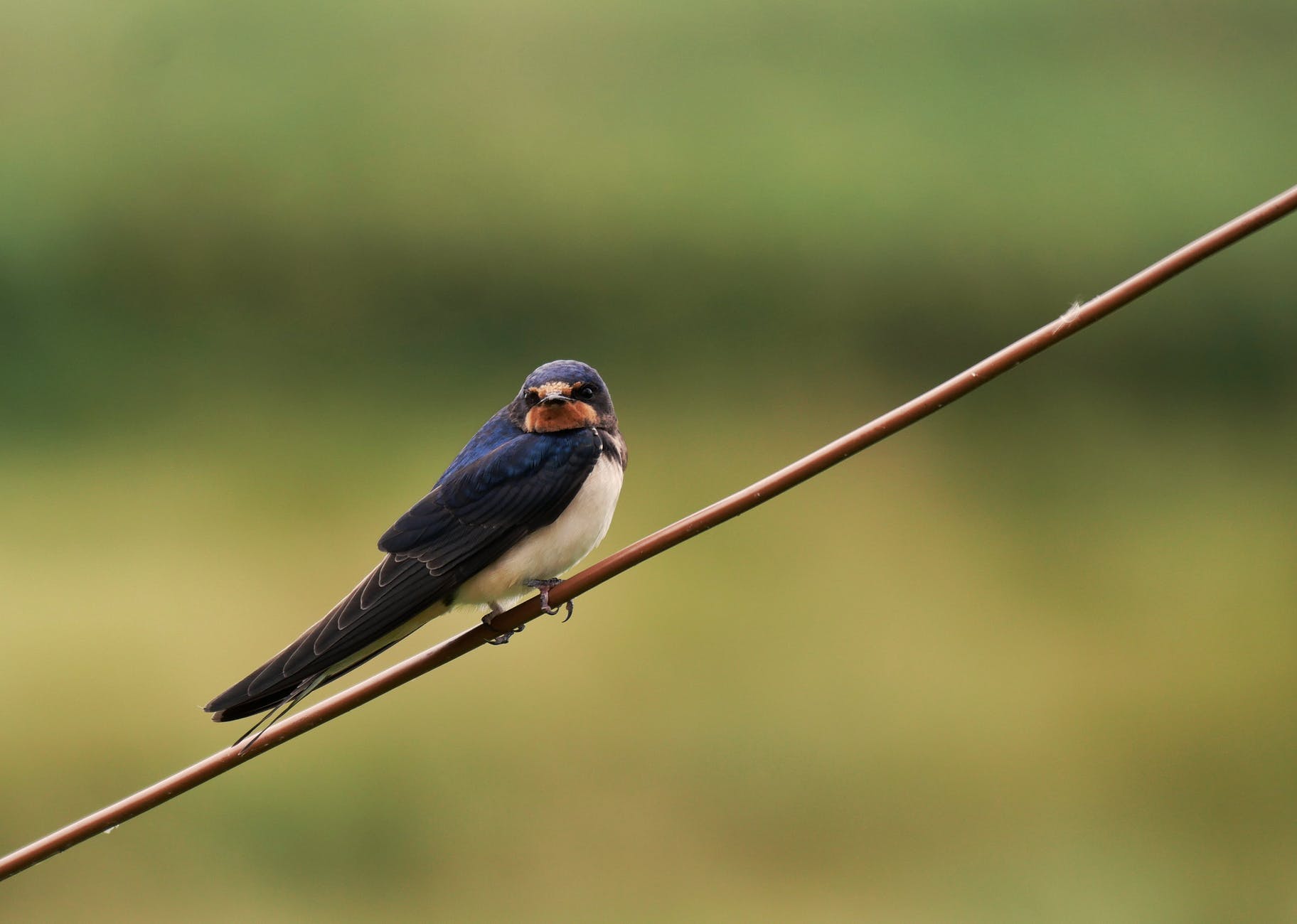
Barn swallows dance

Out the window of the cabin, I watch the barn swallows preen themselves. Blue-black shoulders and rusty chests. They soar and flutter to catch their daily quota of bugs, and then they preen.

Photo by Mirko Ott on Pexels.com

A big guy has arrived to weed whack in the backyard, startling the swallows. He’s wearing a Bearcats Football t-shirt. He’s probably a football player. Football players don’t get cushy jobs here in Bearcat Nation. That’s part of why we have the best Division II football program in the US —

Richard is not here — he’s at work. I’m at work, too, if you count the emails I have been answering. It’s hardly a job; I’m down to about 3-5 per day from the 40-some during the school year. Hence the mini-vacation.

Hence the writing retreat.

I will only be here a day or so; I relish a mini-vacation, a writing retreat, a hope that I will reclaim myself as a writer. Small steps, this blog first. A cognitive exercise if I need to dissipate my feelings of mediocrity. And at least a few words of writing.

Photo by Pixabay on Pexels.com

The writing is the hard part

Inertia is the supreme force of human nature. Remain still, and one will find the couch incredibly tempting. Force oneself off the couch, and movement and industry flow. I am not a vegetative sort; I enjoy making things happen.

Right now, I am facing my nightmare of inertia: I am away from my other time demanding activities, the gardening and the researching thereof, and I don’t know if I want to get off the couch. It’s like being tired of the thing that gives one identity.

One of those procrastination tricks.

I will now trick myself into writing. Richard says I only need to write a little, so I will promise myself 15 minutes. If I can’t write more than that, I’ve done my bit of writing. If I can write longer than that, then I’m breaking the barrier of inertia.

Gang Aft Agley

(Bonus: What does the above line come from and what does it mean?)

My plan is not working

I put prompts in my calendar to remind me to write in this blog every other day and post a TikTok every other day. So far, I’m three blogging days behind, although I did my TikTok this morning, after a fashion. This self-promotion thing is not going very well.

Next to tackle — my fears

I know what’s impeding my writing — any of my writing. All of my writing, from books to blogs to Facebook posts — the fear that I’m not good enough at writing. The fear that I am, in fact, boring.

Photo by MART PRODUCTION on Pexels.com

Therefore, the block to my writing is psychological, and since I teach in a behavioral science department at the local college, this should be easy. Except that my discipline is not psychology. And I don’t do well psychoanalyzing myself. Oh, and things that hinder me erect roadblocks that make it harder to resolve them.

For example, I think I don’t write interestingly enough. In my heart, I feel it. The lack of sales/readership seems to support my feelings. I know I don’t promote enough, and I know that focusing on the bad is confirmation bias, but my mind still fixates on the failure and my suspected reasons for it.

What my psychology friends would tell me to do

I don’t consult my psychology friends at work, because 1) Most of them aren’t clinical psychologists, or psychologists who see patients; 2) It’s not cool to ask psychologists for therapy for free; and 3) I would end up with messy dual relationships — therapist AND friend? Ugly. So, truly, they would tell me to F* off if I asked. (You didn’t expect this paragraph to go like this, did you?)

But I know better, because I’ve had Therapy with a capital T, owing to the lifespan of baggage that comes from childhood trauma and bipolar disorder. And, as therapy at its best provides a set of tools one can use to manage themselves, I can go back to the learning experiences of therapy and find a tool to use with myself.

Today’s tool is called cognitive-behavioral therapy, specifically the journaling piece. The aim of the journaling is to contradict what are called cognitive distortions, which are thought processes that do not make logical sense. I will illustrate below:


Thought: “I must be a boring writer.”

What I would have said before: “You’re not a boring writer. Some people have read you. It’s just a matter of marketing. You’re really not a terrible writer.” I can counter-argue everything I just said because it’s a combination of opinion and not-very-comforting facts.

Placation doesn’t work. Try demolishing the illogical:

“I must be a boring writer.”

  • This is an all-or-nothing statement: There’s a lot between boring and best-seller. Are you saying everyone thinks you’re boring?
  • This is a mind-reading statement. How do you know how people think about your writing?
  • This statement is “awfulizing”. Is “boring” a realistic assumption regarding your writing?

Note that I’ve argued the merits of the statement this time, not perceptions of reality.

Now, I replace these thoughts with new thinking:

  • I have come a long way since I started writing and have clearly gotten better.
  • The people who haven’t read my book can’t call it boring.

And finally, a call to action:

  • I will make a promotion/marketing plan and stick to it.
  • I will continue to write.

It’s been pretty therapeutic to type this out, suggesting that I could use this more often. Maybe I’m ready to write today.