There are several types of social media I use to try to drive readers toward my books. This, my blog, is one of the primary ones. It doesn’t seem to succeed very well. I don’t plug my books very often on my blog (Look here if you’re interested) so that might explain my lack of success.
I also promote my books through Loomly, a social media manager. With Loomly, I can schedule blurbs in Threads, Facebook Pages, and Instagram at the same time. I plug my books much more often on Loomly. This also doesn’t seem to succeed very well.
I don’t do a great job at plugging my books. Maybe it’s because my books are one in a million — literally. Just one in a market of indie books that grows exponentially by the year. I think people are innundated with ads for indie books, and there’s no way to know whether they’re good or not. I can’t seem to make mine stand out. I’m not sure anyone can.
It’s not so bad. I think I do a good job writing this blog, which is a reward in its own right. I don’t have too many readers, but they’re increasing. Thank you for reading.
I’m at the Broadway Cafe in Kansas City, hoping my seedlings upstate are doing well. I’m drinking a latte and absorbing a real coffee house ambiance, which I have needed for a while.
Not that I dislike my local Starbucks, because it fills in for the real coffeehouses we’ve had in town, and is better than the current place that serves coffee downtown, which is a defeated pile of go-cups. But it’s not a real coffeehouse experience because of its corporate nature.
Coffeehouse thoughts: It’s about three weeks till the end of the semester, for which I am really thankful. Summer will have interns, but that means a much more flexible schedule with some rest. That sounds good to me.
I feel exceptionally calm right now, like I will make it to the end of the school year without the disturbances of the past, without unfinished projects with looming deadlines. It feels good not being manic or depressed or both.
Writing is going slow; I haven’t quite found the rhythm of the story yet. It hasn’t developed into enough of a story. I need to get there and not run away from another novel.
I need more coffee. I could fall asleep in my latte right now.
Did I mention that I’m working on another book? I don’t remember whether I did.
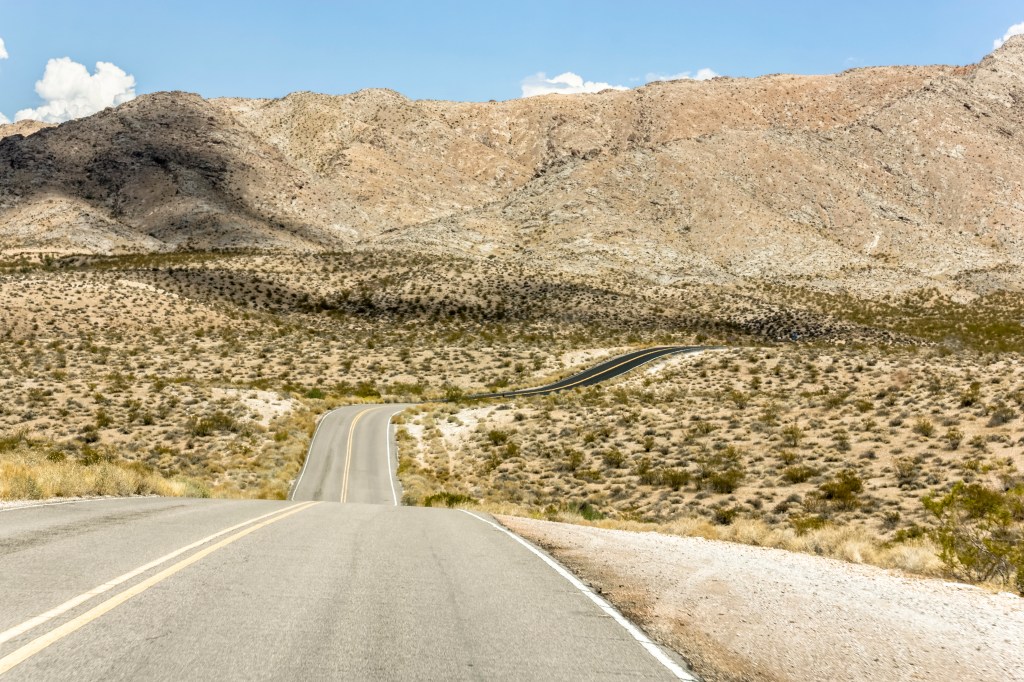
Anyhow, it’s another book in the Hidden in Plain Sight series, which is already full of stories, but I thought I’d write another. This one, which does not have a title yet, happens in 2015, before any of the other books so far. It is the setup for the collective Hearts are Mountains featured in Whose Hearts are Mountains, which has not been released yet. It’s an origin story about how a bunch of Archetypes, beings who are usually solitary, form a commune in the Nevada desert.
It’s going slow, especially as there are necessary conversations that have to drive my main characters to where they actually contemplate such a crazy thing. I feel like I’m doing too much talking as I write, but I’m in the “getting the words down” stage. I’m thinking, though, I’m thinking of how to get more action in the first three chapters.
There’s also a love affair between an archetype and a human, which results in a Nephilim who is not brought up to understand her heritage, who also becomes important to the plot of Whose Hearts are Mountains. So the events of twenty years later have their roots in this story.
I love the process of watching a story take shape, even one that presents a struggle such as this one.
One thing you can do when writing a book is to skip to another chapter when you’re stuck on the one you’re currently writing. This is done so you can continue to write the book rather than bog down into writer’s block. I’m doing this right now, because I feel my first three chapters (or maybe just the latest chapter) are writing the same thing over and over. Not much action, too much expository.
Wouldn’t it be nice if real life were that way? If you could just skip over a day gone wrong and go to the next activity? If you could slide past the boring parts and get to the more interesting ones? I could skip a work week and make it to the weekend early.
It doesn’t work that way. The work still needs to be done. The boring parts are necessary to enjoy the good parts. Life is supposed to flow rather than happen in fits and starts. We can’t skip any of it — not the aggravation nor the grief. No skipping chapters in real life.
When I was five, I wanted to be a doctor. I think that’s because doctors seemed so different than anyone else I had encountered at that age. They had their own offices, they wore white coats, and they talked to little kids instead of over their heads.
When I was eight, I aspired to be a poet. My third-grade teacher taught an ambitious unit on poetry where we actually wrote in different forms (my diamante was less than desirable, but my limerick was pretty good). She had posted my Groundhog Day poem (free-form) on the door of the classroom. I told my mother I wanted to be a poet and she asked, “Do you like to eat? Poets don’t make enough money to eat.” That was the end of my vocational aspiration, because I did like to eat. I went back to wanting to be a doctor.
When I was ten, I saw a lot of doctors for a stubborn malady. At that point, I had had enough of doctors, and that cured me of wanting to be one. My career aspirations were on hold until I hit high school. When I was sixteen, I wanted to be a dietitian because I had lost a significant amount of weight. I was what they would call nowadays an orthorexic, someone who followed a strict diet and lost more weight than advisable. I held that aspiration until my sophomore year of college, when I started gaining the weight back and feared the organic chemistry classes I would need to take. I changed to Foods in Business, a corporate foods career.
By the end of my sophomore year, I wanted to be a professor. I didn’t know what I wanted to be a professor of, but I had a friend whose father was a professor and I wanted a lifestyle that would keep me in academia. It took me till my first semester senior year to find the answer. I took a family economics class as an elective, and I fell in love with the class. We talked a lot about why women earned less than men, and I found the discussion intriguing. After class one day, I asked the professor if grad school was a possibility. She escorted me down the hall to the department office and introduced me to the department chair. Thus, I got into graduate school in Family and Consumption Economics pretty easily.
Once I got my PhD, my jobs have been only slight detours in my field. I teach a few psychology classes, due to my many hours in Psychology along the way. I teach human services classes, which in my case are akin to what I trained in. At one point, I wanted to be a winemaker when I retired, but I now think that would be too much physical labor. Now, I want to be a writer when I retire.
So I’m writing a new book, or at least I think I am. I’ve gotten past the layout (which I will revise, I’m sure) and into the actual writing. I have gotten one chapter written and already I find myself out of ideas at the moment. It’s the part of the book where the writer sets up the premise and I already feel like I have that sewn up. And there are three more chapters to develop the premise. I hate when that happens.
I use a template when writing because I feel somewhat impaired by linear storytelling. There is an expectation of when things are supposed to happen in a book, and a template helps with that. For example, in the next part of the book, there’s supposed to be a debate over the future action in the plot: “You should not do the thing.” “Why should I not do the thing?” “Bad things will happen if you do the thing.” (And the protagonist does the thing, and everything goes wrong, and the protagonist’s hubris gets them killed. This is known as a tragedy. I don’t write tragedies. Yet.)
By the end of this book, the intrepid protagonists will gather together, fight against the Council of the Oldest who are trying to keep them from congregating, and start a commune in the desert of Nevada. I hope that’s enough plot to keep the book going. The problem with this story is that it’s writing out a historical event I know happens to my protagonists, but I don’t know if there’s enough there to write. Wish me luck; I need to get some writing in.
I’ve been officially on Spring Break since Friday, so I don’t have to work this week. I have plans to spend the week doing absolutely nothing but editing a book and watering my seedlings. Maybe napping, since I feel like Daylight Savings Time has screwed up my sleep cycle. A bit of dreaming about Spring.
It doesn’t feel like Spring Break. I feel like I could go to work today and college would be in session and I would have office hours today. If I went into work today, I would find myself the only one, facing a locked building. So it’s really Spring Break.
I don’t do nothing well. I hope I can occupy myself with things to get through my Spring Break.
I think I have an idea for a book. The problem is, creeping doubts are entering my brain again. I don’t know how I wrote as many books as I have given these doubts are my long-time companions. What if I’m subjecting the world to mediocre, or worse, bad writing? What if there’s a reason nobody is reading my books?
This question is about flow. Flow is the state during an activity where we lose all track of time while doing it. The activity engages us completely, and it challenges us at an optimal level. Flow provides us with feelings of mastery and an active state much like meditation, and increases our well-being. It’s a psychology term first proposed by Mihaly Csikszentmihalyi.
Writing is my flow activity. This is why I have been alarmed these past few weeks with my writing slump. Flow is necessary for my well-being, and I don’t have another flow activity as a backup. I felt a bit lost these past few weeks.
For the last week or two, however, I have been editing previously written works as a way to get through the slump. This has been a flow activity to me, and I am back to beating the tyranny of feeling the passage of time. It is also giving me ideas for a new novel. Back to flow!
It’s in the Hidden in Plain Sight universe, and it takes place before any of the other books. It concerns some characters of Whose Hearts are Mountains, the last book in the series. I don’t really have the plot, but here goes: MariJo Ettner is the main character, and she is an eminent anthropologist. She is also an Archetype, an immortal being who has lived for millennia. By the end of the book, she will help to start the collective Hearts are Mountains. She will play matchmaker with Alice Johnson and William Morris, another Archetype, who will have a Nephilim child. That Nephilim child will become the protagonist of Whose Hearts are Mountains.
It’s still in its fledgling stages. One thing the book needs is a plot; another is a theme. I am experimenting with this group of Archetypes and their isolation, fear of being discovered, and status as Archetypes not born in InterSpace. It’s going to take a bit of work.
To prepare, I am rereading/editing Whose Hearts are Mountains. It’s been a while since I’ve looked at it, and as I now have ProWritingAid, I am finding a plethora of grammar quirks. (It’s already been edited for awkward sentences and plot holes).
It’s nice to be writing again, although I’m not really writing yet.