Daily writing prompt
What’s your favorite thing about yourself?

I just about avoided this prompt. I have fallen back into what I like to call “Midwestern Female Syndrome” — the internal need to be perfect and the external seeming of mediocrity. Don’t promote yourself, deflect all praise, don’t draw attention to yourself. I don’t know why I’ve fallen back there, except I think it might have to do with my upcoming 60th birthday. Women my age are supposed to be (according to society) invisible.

I decided to answer this question precisely because of the discussion above. I need to fight being invisible. I need to have a favorite thing about myself.

So here goes: My favorite thing about me is my sense of humor.

My sense of humor is dry. And sardonic. And silly. And quirky. And sometimes snarky. In rare moments, a bit dark.

Humor helps me cope through rough times. I find laughter reduces both physical and emotional pain and takes my mind off things that disturb me.

Sometimes I laugh for no apparent reason. I’m laughing at the ludicrous moment that has just passed — an accidental pun, a facial expression, a droll witticism. I find humor in places other people miss.

Sometimes I make people laugh to break the tension that fills a room. It has to be done carefully, so as not to offend anyone or make them self-conscious. Humor does not exist to avoid communication, but to make it easier. Best things to joke about in this situation: 1) myself; 2) something in the surroundings. When I joke in class, 3) something about the class material.

My husband is my partner in humor. We throw funny things at each other, and find things funny that nobody else would because of the context. This is a thing possible among friends.

I don’t know what I would do without my sense of humor. Life is, above all, really funny.

Mostly Harmless

Daily writing prompt
If humans had taglines, what would yours be?

If I had a tagline, it would be the tagline for humans in the book The Hitchhiker’s Guide to the Galaxy, which is “mostly harmless”. I’m pretty innocuous, being almost 60 and overweight and thus doubly invisible to the general public. I write relatively light romantic fantasy (If I weren’t female I don’t know if it would register as romantic at all, given gender biases). I have a silly sense of humor. My only vice is sweets.

I didn’t say entirely harmless. That suggests there is some small fragment of dangerous in me. After some soul-searching, I’d have to say that it’s my ability to argue. I have logic, metaphors, and a great bullshit detector on my side.

I consider my ability to argue dangerous because it can change minds. Sometimes. There are some people who don’t want their minds to be changed, who cling to falsehoods and spurious sources. They want to argue to convince themselves they’re right. I will find the truth in their statements and abridge my arguments, and if they’re right, I will change my mind.

Truth is dangerous. This is why little old me is “mostly harmless”.

The Ideal Place to Write

I am, as you might have guessed from my content, a writer. As a writer, I have favorite places to write, and not-so-favorite places to write. I don’t pretend to be representative of all writers, but I think I have commonalities with many other writers.

I have three criteria when it comes to writing: comfort, space, and activity level. I look for optimal levels of each, not necessarily maximum level. And when I find an optimal place, I really can write better.

Comfort

I look first at comfort. There is an optimal level of comfort that is neither too little nor too much. That may sound counterintuitive, but there is such a thing as too much comfort. Too much comfort and I fall asleep in my chair, which is not conducive to writing. I find the chairs at my local Starbucks, especially the ones at the round tables, friendly to my back. The other corporate coffee place in town has chairs that are at best indifferent, while the booths are downright hostile. Nothing says “Grab your coffee and get out” quite like those booths. At home I have a Serta desk chair (used; love those bargains!) that makes my office very comfortable, and a couch downstairs that’s slightly less comfortable.

Office Desk” by Bench Accounting/ CC0 1.0

Space

My second criterion is space. This refers both to the confines of the room and the physical atmosphere. Despite the Serta desk chair and the dual large screens, I have trouble writing in my office for very long because of the space. The office is a small, cluttered room where one can’t stretch out without hitting something. The desk (actually a library table) abuts the wall and I find myself staring at the wall when I need to think between words. My eyes take up the clutter and it makes me grumpy. I’m just not going to warm up to the office to write unless this is fixed. The living room loveseat is a far better place to write space wise. I am not crowded unless I let too many books pile up. Coffeehouses have wonderful space, neither too crowded nor too spacious. There is art on the walls, textures in wall coverings and furniture.

Activity Level

Third, I pay attention to activity level, the stirrings of things around me. At home, on the loveseat, there are cats to help me write and short breaks to check the mail or drink hot beverages. The office is quiet and no cats allowed. Music helps, but it gives me nothing to look at during breaks except the Internet, which is a black hole my attention gets sucked into. Writing in public — cafés, hotel lobbies, libraries — usually gives me the right balance of activity level to quiet. Public places, such as my aforementioned Starbucks, can get too noisy at times but overall are just busy enough.

Conclusion

First off, I need to do something with the office to make it more conducive to writing. I’m talking with my husband right now about this. Working with the door open (which increases perception of space and allows cats inside) may be helpful. Playing music may help. Getting a coffee machine in there might be asking too much.

Second, Starbucks will be a regular destination for me as long as they have comfortable seats and coffee drinks (which is part of their corporate mission, so forever).

Finally, I will need to keep going on writing retreats (to places with excellent coffeehouses or lobbies with computer tables).

There are ways around the disaster of an uncomfortable place to write: fix up the place or go elsewhere. I can do some of both.

After the Three-Day Weekend (in the US)

Repeat after me: “It’s Tuesday.”

Everyone I’ve run into today has struggled with today being Tuesday. They must have had a good Memorial Day weekend.

Mine was restful. Almost too restful, as I slept in and read all day. I got a blog post done, some writing, a bit of fretting about writing. I ate grilled bison burgers and some roasted Brussels sprouts. Hence a Tuesday that feels like Monday.

A little kid at the next table in Starbucks just asked “Today is Tuesday?” So it’s even happening to the younger generation. What day is it? It’s Tuesday, isn’t it?

But isn’t it great to discover that it’s Tuesday, and the work week is one day shorter? That extra day off gives an extra bonus at the end of the week when Friday should be Thursday. It’s a new, happy kind of math.

I’m going to go home and get some work done, with an internal smile that today’s Tuesday and not Monday.

Having it all (If all means “not all”)

What does “having it all” mean to you? Is it attainable?

One of the things I have taught and researched is well-being. Studies in economic well-being explain that when people are asked whether they’re satisfied with their income, they respond that they would like (on average) ten percent more. I suspect that if the researcher would ask them in terms of material wealth, that 10% more would hold. So money and material goods — can we have it all? Apparently not.

And if it’s not money that becomes the confining resource, it’s time. As we only get 24 hours in a day, we find ourselves making decisions on where we put our time — work, relationships, hobbies and side hustles, family obligations, relaxation. We can buy substitutes for our time: restaurant meals, nannies, maids, time-saving appliances, but they only go so far.

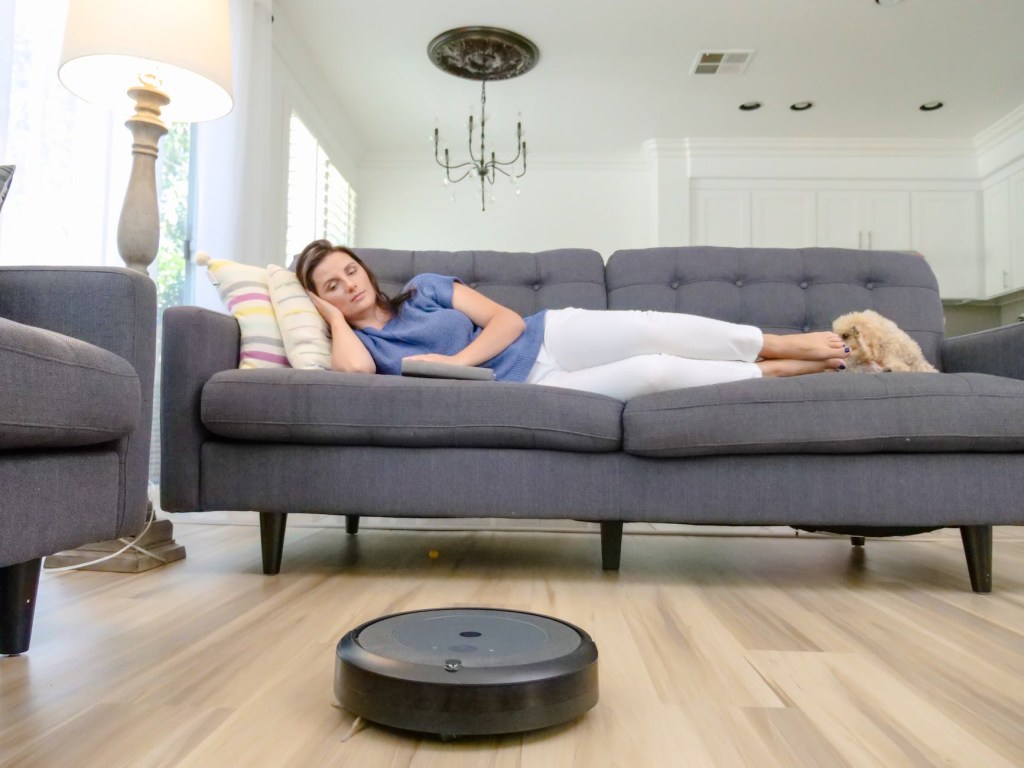
In other words, our expectations expand with our acquisitions. If we don’t have a car, we want one. If we get a car, we want a new or better car. A new set of dishes. A bigger house to put all the things we’ve bought into. A Roomba. A hot tub. An RV. Jewelry and paintings. A professional level kitchen …

We can’t have it all unless we define our own “all”, which will require us to go against what might be our innate human nature. Can we decide we’ve acquired enough? There’s lots of advantages to this. Less stress, more room in the house or apartment, fewer things in landfills, less need to have yard sales. Some would argue more time with people because we have to work less to buy things.

Publications List (Personal)

Poetry/Short Stories:

Leach-Steffens, L. (2020). Thirty Years. Sad Girls Pub Lit. Available: https://www.sadgirlsclublit.com/post/thirty-years-lauren-leach-steffens

Leach-Steffens, L. (2020). Come to Realize. The Daily Drunk. Available: https://thedailydrunk.com/f/come-to-realize?blogcategory=Short+Story

Leach-Steffens, L. (2020. )Wasn’t/Was/Is. Riza Press. Available: https://rizapress.com/2020/01/09/wasnt-was-is/

Leach-Steffens, L. (2019). Slush Pile. Submittable Content for Creatives. Available: http://discover.submittable.com/blog/2019-rejection-horror-stories-part-1/

Leach-Steffens, L. (2019). Flourish. Cook Publishing Short Story Contest. Available: https://lleach.me/wp-content/uploads/2022/01/0ad2a-flourish.pdf

Self-Published Novels:

Leach-Steffens, L. (2022). Gaia’s Hands. Available: https://www.amazon.com/Gaias-Hands-Lauren-Leach-Steffens-ebook/dp/B09DBRN7XW/ref=sr_1_5?crid=25TC9AGIGJWQY&keywords=Lauren+Leach-Steffens&qid=1641131151&sprefix=lauren+leach-steffens%2Caps%2C75&sr=8-5

Leach-Steffens, L. (2022). It Takes Two to Kringle. Available: https://www.amazon.com/Takes-Two-Kringle-Lauren-Leach-Steffens-ebook/dp/B0B7GQLG82/ref=sr_1_1?crid=15G6GO2WRH6ND&keywords=It+Takes+Two+to+Kringle&qid=1683897739&s=digital-text&sprefix=it+takes+two+to+kringle%2Cdigital-text%2C100&sr=1-1

Leach-Steffens (2021). Kringle in the Night. Available: https://www.amazon.com/Kringle-Night-Chronicles-Book-ebook/dp/B09DBS4JX4?ref_=ast_author_dp

Leach-Steffens, L. (2020). The Kringle Conspiracy. Available: https://www.amazon.com/gp/product/B08KFBLCPC?ref_=dbs_m_mng_rwt_calw_tkin_0&storeType=ebooks&qid=1641217948&sr=8-1

Serial Novel:

Leach-Steffens, L. (2021). Kel and Brother Coyote Save the Universe. Kindle Vella. Available: https://www.amazon.com/Kel-Brother-Coyote-Save-Universe/dp/B09B1CKVL2/ref=sr_1_1?crid=24TPNCO0NGU4L&keywords=Kel+and+Brother+Coyote&qid=1641218295&sprefix=kel+and+brother+coyote%2Caps%2C82&sr=8-1

I’m sitting in the multipurpose building at MOERA during a lull in the action. The action is Atlantic Hope, a humanitarian training exercise for emergency and disaster management students.

The scenario of Atlantic Hope is an earthquake in a second-world country on the brink of civil war. The setting includes tense relations between northern and southern factions, gunshots, and paramilitary forces.

I’m the moulage coordinator for the exercise, which means I manage and run the casualty simulation with the help of my husband. In other words, I turn volunteers into victims. Gunshot victims, victims of illness, impalement victims, victims with cuts and contusions and bruises. This takes a combination of theater makeup, homemade prosthetics and a bit of know how.

When I do moulage, I’m in the zone. Time flows, and I find I have put makeup on 20 people without really noticing it. Gunshot wounds are new to me, so they present a bit of challenge. The challenge is part of the experience.

The lull will be over soon and more people will come in to be made up. I am in my element.

A Cup of the Perfect Coffee Drink

My husband knows I’ve been cranky. Yesterday was a frustrating day as I prepped for Atlantic Hope, a humanitarian simulation to train students in Emergency and Disaster Management. My job in this simulation is Moulage Coordinator. I make the magic happen, if by magic you mean turning volunteers into casualties using stage makeup and props.

Prep for a major event like this includes making skin-colored gelatin for burn effects, inventorying impalement prosthetics and making new ones, making fake blood from liquid starch and food coloring. Yesterday’s prep, unlike most years, was disastrous. I couldn’t find the impalements. I couldn’t find the sponge applicators I use as a base for new impalements. I couldn’t find the makeup for making the skin-colored gelatin. I couldn’t find the red food coloring, and it turns out that we’d finished the last bottle (a quart) because fake blood takes a lot of food coloring, a cup per half gallon of starch. This made me very cranky.

I made do on making the impalements. I bought cheap makeup to set up the burn gelatin. Then, our event caterers had a 3/4 full bottle of red food color.

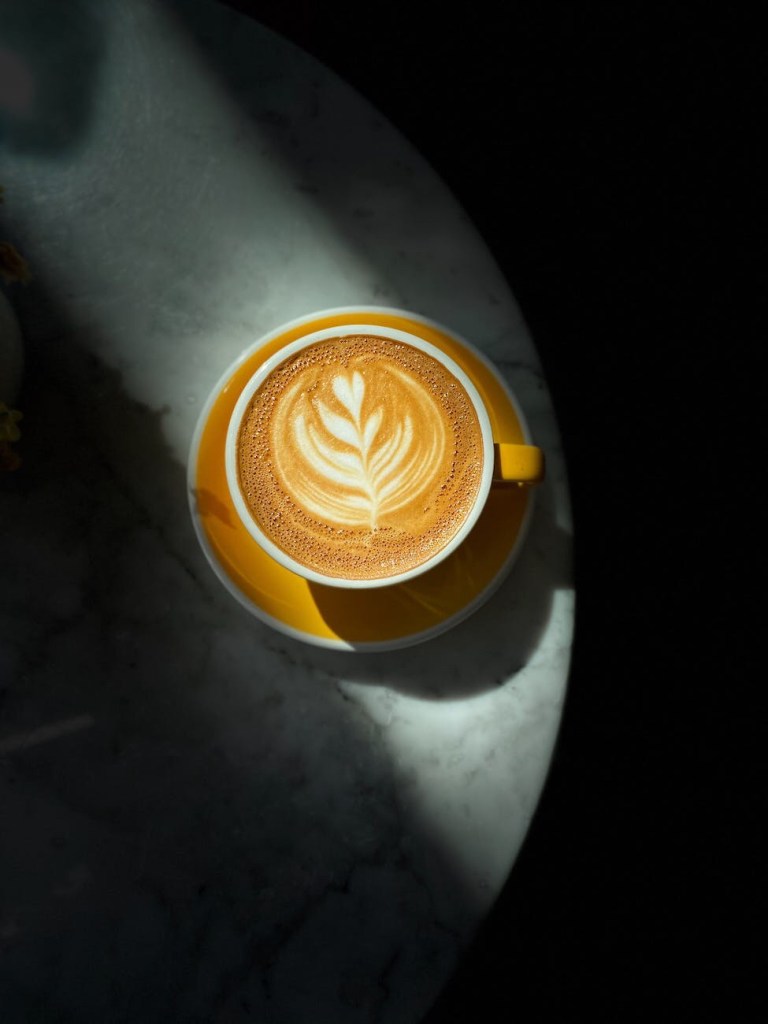
This morning, after packing the car, Richard came back from an early morning errand with “emergency coffee”, which was my favorite: flat white with chocolate malt powder.

That coffee just made everything better.

I think all will be okay.

Feeling the Flow Again

I have been writing on Avatar of the Maker after a hiatus (with other projects) and I am glad I’m revisiting it. Writing is once again a flow activity!

I’ve talked about flow before, but I might as well talk about it again. Flow is a concept originating with Mihalyi Csikmentmihalyi, and it involves being so engrossed in an activity that time flies by, yet one’s perception is of timelessness. Flow happens when the activity is neither too challenging nor too easy, but at an optimal level of difficulty. To experience flow, one must have mastery over the activity and be able to grow while doing it.

Photo by Aleksandr Neplokhov on Pexels.com

Flow is one type of engagement, and engagement is one aspect of well-being, according to the PERMA model. So, literally, when I engage in successful writing, I feel better, more complete. When I do not achieve flow in my writing, I am grouchy and unfulfilled.

What are your flow activities?

What Can I Give You?

I write this blog every other day, and I hope you enjoy it. My topics are a variety of musings, memories, and meaning. I write from the perspective of an almost-sixty-year-old writer, professor, and fellow human being. And one with a very insistent inner child. Not very sexy, I know.

Photo by Polina Tankilevitch on Pexels.com

I wonder what my readers are looking for when they read this blog. Should I pick one topic and write about that? Should I continue writing about what’s on my mind? Maybe I should write more about my books, or less. Do my wellness (mostly positive psychology) posts grab people? What about my melancholy tableaux?

If you’re reading this, let me know what you enjoy. What you want to see more of. Alternatively, let me know what you want to see less of. Because I want to be interesting on these pages, and I’m not an expert judge of myself (I’m convinced my lectures are interesting, after all.)

Let me know — what can I give you in this blog?