One thing you can do when writing a book is to skip to another chapter when you’re stuck on the one you’re currently writing. This is done so you can continue to write the book rather than bog down into writer’s block. I’m doing this right now, because I feel my first three chapters (or maybe just the latest chapter) are writing the same thing over and over. Not much action, too much expository.
Wouldn’t it be nice if real life were that way? If you could just skip over a day gone wrong and go to the next activity? If you could slide past the boring parts and get to the more interesting ones? I could skip a work week and make it to the weekend early.
It doesn’t work that way. The work still needs to be done. The boring parts are necessary to enjoy the good parts. Life is supposed to flow rather than happen in fits and starts. We can’t skip any of it — not the aggravation nor the grief. No skipping chapters in real life.
My morning starts with waking up at five AM, usually before the alarm rings. I sit in bed and read till twenty after, and then get upright, do my bathroom activities, and get dressed. Richard gets up at about the same time, although more reluctantly.
We wander downstairs and Richard makes breakfast, which is cereal, milk, and bananas. I then move to the loveseat, where my computer is, and I write this blog over coffee. When I’m done with writing and coffee, I go down to the basement and tend to the seedlings. Then I come back up and check the internet and talk until 7:30, at which point I ride with Richard to work, where he drops me off before he goes to work.
On Wednesdays and Fridays I work from home, so no going to work on that day. On weekends, we play music over coffee. Today it’s baroque, but often it’s modern classical and classical-adjacent.
So those are my morning rituals. I never thought about them as rituals, but they don’t change much. This morning I didn’t get up until seven, and I feel like everything is thrown off. Off to water the seedlings…
I have never, in my fantasies, wanted anything named after me. If I were rich, I’d donate money for a building to be named after someone else who actually accomplished something other than accumulating money. My favorite revenge fantasy was to name a building after a colleague who greatly disliked me, so she would have to take the honor remembering where it came from. But, alas, I haven’t come up with any money.
Mental illness is no big deal when it’s under control. There are lifestyle changes — for example, I can no longer stay up late with my bipolar (II) disorder. I have to have a set sleep schedule every night and sleep for about 9 hours a night. This is necessary not only to help monitor changes in sleep (which could be mood swings) but to keep from creating mood swings. I also monitor my energy levels for the same reason, and I don’t push myself beyond my limits.
I would not say my mental illness is horrific, but the potential consequences of mood swings are great. So far, hypomania has yielded some tension in relationships, incomplete projects, and somewhat risky behavior. My examples of the latter are going fishing in a deserted park at 2 AM and getting in the car with a drunk driver. It could be so much worse. Depression on the other hand is not only unpleasant, but can lead to suicide.
My bipolar is a lifetime thing controlled by medication and taking care of myself. I have not had either a depressive or hypomanic state for many years, so it’s mostly maintaining medication and good health practices. I regularly talk to my psychiatrist to monitor my moods and meds. I can live with my disorder; it’s neither trivial nor horrible.
I laugh at quirky circumstances. There was the time in high school when a classmate started his announcement on the PA three times, thinking he wasn’t being heard. The third time, he started his spiel with “My name is X, and if you don’t know by now …” I was the only one laughing.
I laugh at silly things. My husband and I act silly toward each other — making faces, making silly noises — and I laugh when that happens.
I laugh at really dark humor. I grew up with a sick sense of humor. I can’t give examples of what I laugh at, because I’m a little ashamed of this. Let’s just say I laugh at a lot of the depressing humor coming out of this political cycle.
Kittens. Kittens make me laugh. My husband shows me pictures of kittens all the time so I can laugh. And otters. And baby sloths. Cute things make me laugh. The latest thing was an AI video of kittens in Starbucks aprons making cappuccino. I could watch that for hours.
I laugh at clever wordplay. Especially bad puns. Okay, I groan at those, but close enough. ‘What is the difference between ignorance and apathy? I don’t know and I don’t care.’
I think laughter is a great way of getting through life.
When I was five, I wanted to be a doctor. I think that’s because doctors seemed so different than anyone else I had encountered at that age. They had their own offices, they wore white coats, and they talked to little kids instead of over their heads.
When I was eight, I aspired to be a poet. My third-grade teacher taught an ambitious unit on poetry where we actually wrote in different forms (my diamante was less than desirable, but my limerick was pretty good). She had posted my Groundhog Day poem (free-form) on the door of the classroom. I told my mother I wanted to be a poet and she asked, “Do you like to eat? Poets don’t make enough money to eat.” That was the end of my vocational aspiration, because I did like to eat. I went back to wanting to be a doctor.
When I was ten, I saw a lot of doctors for a stubborn malady. At that point, I had had enough of doctors, and that cured me of wanting to be one. My career aspirations were on hold until I hit high school. When I was sixteen, I wanted to be a dietitian because I had lost a significant amount of weight. I was what they would call nowadays an orthorexic, someone who followed a strict diet and lost more weight than advisable. I held that aspiration until my sophomore year of college, when I started gaining the weight back and feared the organic chemistry classes I would need to take. I changed to Foods in Business, a corporate foods career.
By the end of my sophomore year, I wanted to be a professor. I didn’t know what I wanted to be a professor of, but I had a friend whose father was a professor and I wanted a lifestyle that would keep me in academia. It took me till my first semester senior year to find the answer. I took a family economics class as an elective, and I fell in love with the class. We talked a lot about why women earned less than men, and I found the discussion intriguing. After class one day, I asked the professor if grad school was a possibility. She escorted me down the hall to the department office and introduced me to the department chair. Thus, I got into graduate school in Family and Consumption Economics pretty easily.
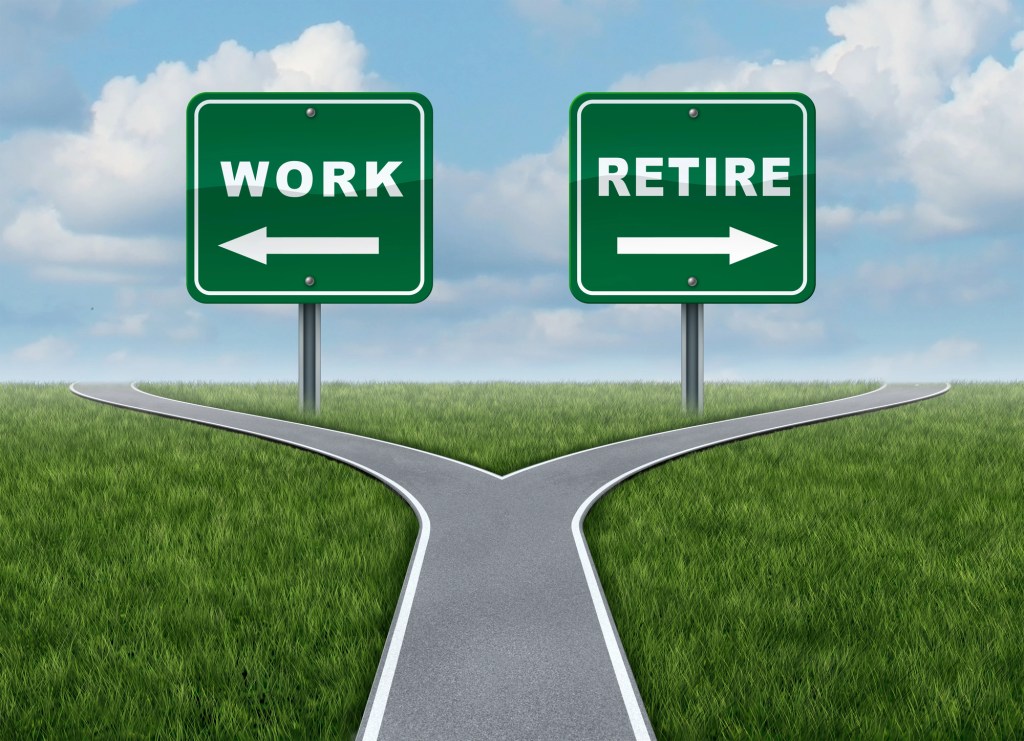
Once I got my PhD, my jobs have been only slight detours in my field. I teach a few psychology classes, due to my many hours in Psychology along the way. I teach human services classes, which in my case are akin to what I trained in. At one point, I wanted to be a winemaker when I retired, but I now think that would be too much physical labor. Now, I want to be a writer when I retire.
Two inches of snow with blizzard conditions. That’s our weather forecast for Wednesday. It’s almost calendar Spring, and we’re faced with a blizzard. Today, the high is going to be seventy-five. Tomorrow, blizzard conditions. You may wonder how we can have two inches of snow that’s a blizzard. Blizzards are all about the blowing, not the snowing. We’ve been getting some pretty fierce wind gusts lately, one of which took out a tree in our side yard.
We talk about weather here in Missouri, mostly because our weather is strange. Tornadoes in February? We’ve had them. Snowstorms in April? That too. Thundersnow? Of course. Seventy-five degrees followed by blizzard conditions? That’s the next couple of days. This is the only place I’ve seen that can simultaneously have floods and fire warnings.
I need to prep for the weather. How? Short sleeves? A snow shovel?
I started my research career in the realm of DOS PCs, card catalog library searches, and statistical computing on mainframes. Today I have a computer where I can see what I type in full color. I can search my library catalog from home and run statistical analyses. The change is enormous, because I can now work from anywhere I have wi-fi. I hardly even need to set foot in my library because I can download articles from the Internet. If I wanted to, I could compose articles and lectures on my phone. A pretty dramatic change in technology right there.
Technology also allows me to create graphics-filled slide shows for students that I can show on my computer with a projection unit. Before, I was using typed overhead sheets and an overhead projector. I can use a color copier for handouts, where once I was using a mimeograph. I produce clear and attractive documents with little effort. A couple of weeks ago, I produced a 3×4-foot poster with graphics and sections for a research conference I will soon go to.
Because of the technology, we do more ourselves. It doesn’t bother me to compose my work instead of sending it to the secretary; I have more input into the process and I can change things instantaneously. We also expect to have a level of sophistication in our products we weren’t able to achieve before. Research papers are more complex, document design more exacting, and with the expectation of quicker deadlines.
I am so much more productive, having the means of production in my hands. Despite the faster pace, I prefer this era of technology.
So I’m writing a new book, or at least I think I am. I’ve gotten past the layout (which I will revise, I’m sure) and into the actual writing. I have gotten one chapter written and already I find myself out of ideas at the moment. It’s the part of the book where the writer sets up the premise and I already feel like I have that sewn up. And there are three more chapters to develop the premise. I hate when that happens.
I use a template when writing because I feel somewhat impaired by linear storytelling. There is an expectation of when things are supposed to happen in a book, and a template helps with that. For example, in the next part of the book, there’s supposed to be a debate over the future action in the plot: “You should not do the thing.” “Why should I not do the thing?” “Bad things will happen if you do the thing.” (And the protagonist does the thing, and everything goes wrong, and the protagonist’s hubris gets them killed. This is known as a tragedy. I don’t write tragedies. Yet.)
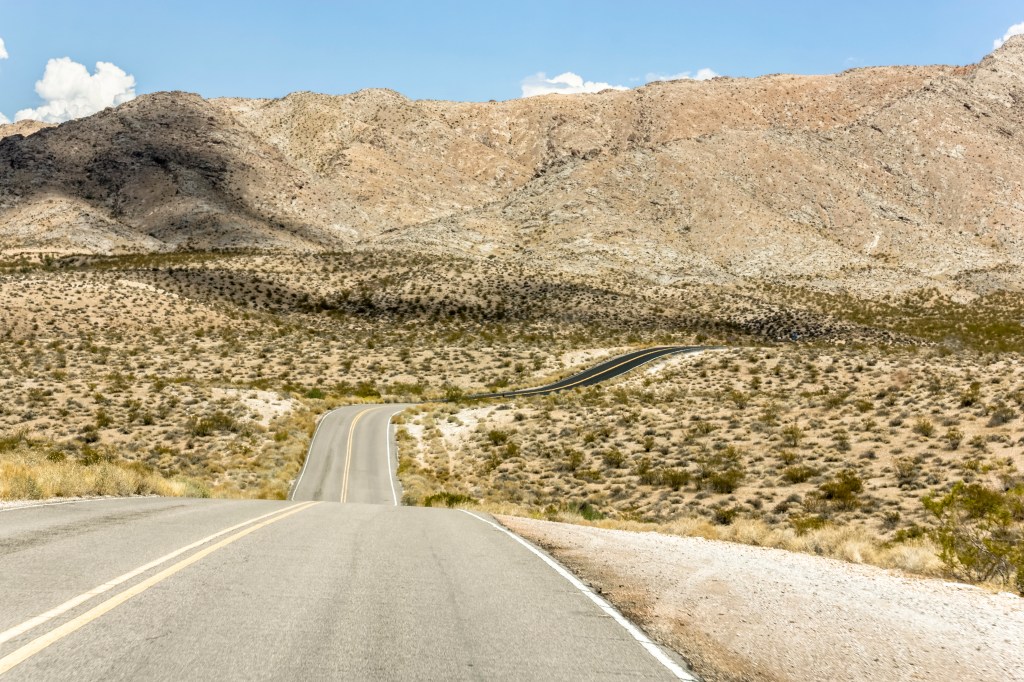
By the end of this book, the intrepid protagonists will gather together, fight against the Council of the Oldest who are trying to keep them from congregating, and start a commune in the desert of Nevada. I hope that’s enough plot to keep the book going. The problem with this story is that it’s writing out a historical event I know happens to my protagonists, but I don’t know if there’s enough there to write. Wish me luck; I need to get some writing in.
What’s a secret skill or ability I wish I had? By secret, I am assuming there’s a reason I’m keeping it secret. That makes me think it’s a superpower or something, although the original question says “you have or wish you had”, which sounds more like a mundane activity. Why would I keep a mundane ability secret? If I could build cabinetry I would not be keeping it secret; I would go into business. So I will assume superpower for the sake of this question.
I wish I could teleport. I wish I could blink and end up somewhere else. Travel would be insanely easy with this talent. Ireland could be a weekend excursion. Going to work would be an instantaneous action. Around the world in eighty hops? I’m game.
It wouldn’t be that easy, though. If I wanted to be undiscovered, I would have to teleport into hidden places. I would have to know where I am going before I got there, which would necessitate having been there before. So, in reality, I would not be teleporting to Ireland unless I have visited before and I had a storage closet in mind.
Another downside would be energy expenditure. Dissolving into one’s component molecules and reforming would have to take a lot of calories. Not that I think eating whatever I want would be an onerous task. It could be, though. How much can one really eat in a day?
Teleporting would be a great talent. And a great burden, which is a given for any superpower. Maybe I’d rather try carpentry.