I’m going to depart from this prompt and cover both my first and middle names, because the origin of my first name is hilarious.
I was named Lauren after my Uncle Larry. My reprobrate Uncle Larry. My Uncle Larry who would start drinking at 8 AM. The one who collected rents with a gun strapped to his thigh. THAT Uncle Larry. I’m not sure what kind of message this sent to me; I turned out to be a good girl despite that unusual namesake.
Photo by Dan Cristian Pu0103dureu021b on Pexels.com
My middle name is Jean, named after my father John. That probably was a bit better of a namesake; my dad was everything Uncle Larry was not. Hard-working, responsible, for the most part calm.
Not a very exciting story, I know. But that’s the story.
I learn so much in a day. I read the news, informational websites, and cereal boxes. I almost compulsively seek out information. So much of what I learn, though, isn’t of great import.
How, what, where? – gears concept – 3D illustration
For example, this morning I found out that Gene Hackman, movie star, died with his wife and dog. I didn’t know Gene Hackman and I don’t watch many movies. The event was of great import to him and his family, but not to me.
Last night I learned someone had put a hand-held electric espresso machine on the market. For 150 dollars, I could own my very own gadget. Again, not of great import because although I love coffee, I drink little espresso.
Sometimes what I learn has a more immediately pressing character. Tuesday, I learned that the remote for the DVD player in my classroom was not working. This caused me to revise my lesson on the fly, and I gave a presentation on Flow that I had not prepared for. It didn’t go to the end of the class, but at least I presented something.
As humans, we are always learning. Without learning, we will die, because learning helps us make sense of the world surrounding us. But most of the time we learn, it’s something we hardly notice, because we do it so much.
My readers may wonder why I write little about the political situation in the US. I admit I feel overwhelmed by the current political situation. New abuses of power occur daily, and I don’t recognize this as my country. There is little I can do, and I hate that.
The leaders of my state, all Republican, think the coup is a good thing, even as the government cuts off funding for vulnerable citizens and people’s rights are being trampled. Even as our country alienates our former allies. Even as people are attacked for being different.
The coup has a way of making me uneasy about espousing the things I believe in. When I was teaching a class on cultural competency the other day, I wondered if it was a wise thing to do. I taught the lesson, hoping that the powers that eliminated the DEI program at our university wouldn’t come down on me. That’s what the fomenters of an oppressive regime want, the fear.
I will fight the fear as I stand up for what I believe in. I need to find a niche to fight in and fight there. I see so many injustices.
I don’t believe in destiny. Or, rather, I believe in something destiny-adjacent. Not the deterministic concept of fate delivering us to our inevitable outcome, but a leading we could be taking.
Leading is a Quaker concept, the belief that God (or whatever divine presence you believe in) is leading us toward an action we need to make. These often point toward right action, or ways in which we can do God’s will. (Keep in mind that God’s will in this case is not the evangelical/supremacist vision, but defending people’s rights, feeding and clothing them, bringing the peaceable kingdom to earth. Pacifist and progressive.)
Leadings can be life disrupting, although I have never had one that defines as that. Quakers have clearness committees so that they can tell whether a leading is divine or just a whim or mistaken desire. Clearness committees are not perfect — I had a clearness committee for my first marriage and it blew up in three years.
I sometimes think writing is a leading. Why else would I write for no monetary recompense and very few readers? I may be called to put on paper the adventures of an agricultural collective and its preternatural visitors, dealing with topics like pacifism and discrimination. I don’t know — it’s been years since I’ve been to meeting and I don’t have a meeting to seek clearness with it. It’s also not disruptive enough to my life — if I wanted to quit work for writing full-time, I would certainly ask for a clearness committee.
I don’t believe in destiny, the belief that we have no control over what happens to us and we’re dragged kicking and screaming into our future. But I believe in leadings.
I have posted in my blog for 200 consecutive days. I have learned something from the process, mostly that if it weren’t for the post topic prompts in WordPress, I would never have written in my blog for 200 consecutive days. My mind doesn’t have that many topics to write about, especially in a busy semester.
I have also learned that the badge that I get daily: “You’re on a 200 day streak on Words Like Me!” is a far better motivator than I had guessed. Gamification is real. The tyranny of this little message drives me to post another day.
I don’t know how much longer I am going to write daily. I feel sometimes like I have nothing to say, or that people don’t care what I’m saying. Writing is a lot like that, though, sending words out into the world not knowing what impact, if any, they will have. On the other hand, 200 days is an awesome streak, and who wants to ruin that?
It has never occurred to me to write an autobiography. I don’t have a hook, or a reason people would want to read it. I’m not famous or infamous. I don’t have an exceptionally inspiring or tragic story, although I have overcome a childhood of abuse and bullying, and live successfully with bipolar disorder. I am pretty ordinary.
What I do have is joy. My day is filled with small joys — talking to people, being silly with my husband, playing with my cats. Nothing to write a memoir about, but joy is my natural state and my story.
The first sentence of any novel, any memoir, any written document is important. It grabs the reader and pulls them in. So my first sentence would have to be about joy. Something like:
‘When reflecting on my life, what stands out are moments of joy, with a feel that settles on me like a silver mist.’
I’ve concluded that my writing is not commercially feasible (traditional publishing) because it’s too short for fantasy. At 70,000 words on average, it’s not long enough for agents to be interested in it. It would be short enough for romance, but my writing is really fantasy (or to be more accurate, magical realism is more likely) which is not written short. However, I write tightly and don’t need all those words.
If I’m not selling in indie (self-published) markets, it’s because I can’t get enough traction with marketing. I have tried several things, and none of them seem to work. I feel like, if I wrote romantasy (heavy on traditional romance, lots of spice) I’d have a better chance, but I don’t feel moved to write about those things. I have a niche, but I can’t seem to get introduced to those people.
The saying “Do what you love, the rest will follow”? It does not seem true in my personal situation. I write because I’m possessed with ideas, and what possesses me is shorter novels. People have told me I’m a good writer. I think I’m a good writer.
I’m just trying to convince myself to keep writing, even though I don’t have a readership. It’s a hard sell, because I don’t do things just for myself; rather, I look at what they produce and whether they’re useful. Right now I am starting a garden; I don’t grow the seedlings for their own sakes. I grow them because they’ll give me food someday. My books will never give me food, and I have to figure out whether that’s okay.
I want to ban a word from general usage — ‘family’.
Hear me out. I’m not talking about the word family defined as people who are related. I’m not even talking about found family, where we surround ourselves with people we love. Those are both legitimate uses.
I would like to see ‘family’ in the business sense eliminated. Businesses these days don’t have employees, they have family. Colleges have family. The word is used to denote closeness, kinship, a homey feeling about the institution or business, especially from the workforce side. It feels good working for a family who will be there for you.
Which works right until layoffs. Then people are thrown out of the family without any support. The metaphor breaks down. “Did we say family? We’re a business and hard decisions need to be made.” The business is only family when it works in their favor to increase morale. Layoffs in academia are particularly brutal, because those laid off often have to stay until the end of the school year, surrounded by people who are no longer family. I have seen layoffs, and they make a mockery of workplace as family.
I would eradicate the business use of the word ‘family’ for all those who have been thrown out of their workplace.
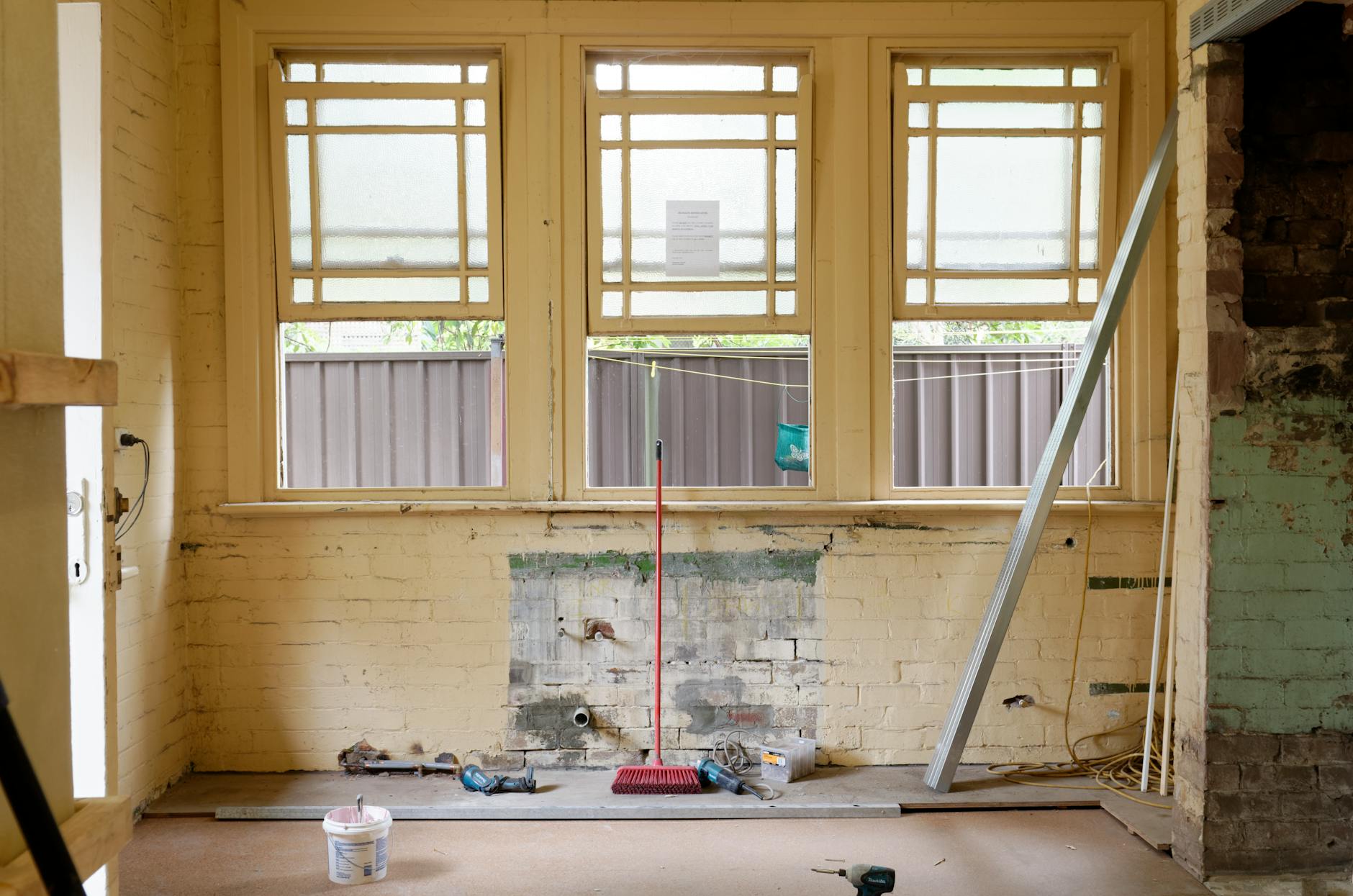
I don’t do do-it-yourself. Or rather, I do sometimes, but the project often becomes complicated due to human error. My error.
One of the DIY projects I had many years ago was to redo the bathroom in my house. Not even an ambitious project, just painting the room and installing a ceiling vent fan that worked.
First, the ceiling fan. I stood on the rails of the tub with my tools in pocket and the hardware, juggling a phone because my dad was coaching me on installation. My dad, an electrician, told me I didn’t need to throw the breaker and could do the installation as long as I was careful. I was looking for the live wire, and the plethora of wires I was faced with didn’t correspond to what my father told me — there were too many, and what does this black wire mean? My dad told me to test them by tapping them together, so I tapped the black ones together. A big *snap* resounded and a fireball drifted past my face. “That’s the live wire,” Dad said. “Good to know, Dad.”
Then came the part where I was to paint the room. I decided on a gold sponge paint, which would liven up the pale cream of the walls. Sponge painting was very popular at that time. So I painted the walls with the help of a chair to get to the high places. I had gotten to the point where I had to paint the ceiling right over the bathtub/shower. I had one foot on the tub and one on the chair, not realizing that when I put pressure on the chair, it would move. The chair indeed moved, and I ended up doing the splits and then falling off the chair. Nothing much hurt but my pride.
These days, I do not do home renovation projects. No need to wonder why.
Daily writing prompt
Describe a phase in life that was difficult to say goodbye to.
Living in my home town was a particular sort of hell. I had only one friend, and we didn’t have much in common. I was no longer being bullied (much) in high school, but it was still a lonely, aggravating time.
I attended the University of Illinois for 11 years — four years of undergraduate and seven of graduate school. It took me a couple more years to get out of graduate school because of a pesky car accident in the middle of the process, but I didn’t mind. My college years were some of the best of my life.
My undergraduate years were the years of discovering myself, of finding out there were others like me out there. I was a quirky person with lots of enthusiasm and nerd credentials. I did not do well in a small town high school where I was the only one like me, but in my undergrad I discovered a D&D group I fit in with. I found other friends on the PLATO computer system. I started having actual escapades with my newfound friends.
Graduate school was when I came into my own. I discovered a peer group of people, an eclectic bunch, who spent every Saturday night together watching Star Trek: The Next Generation and hanging out. We celebrated holidays like May Day in medieval costume with probably the only portable May pole in the world. We were quirky as heck and I loved it. We were close enough that sometimes we got into arguments with each other, but that was good. It felt good to have a bunch of people I felt close to.
When I left to go to my first faculty job in upstate New York, I knew I would miss these people terribly. We had a packing and pizza party to commemorate our leaving (I was married at the time) and a couple of us drove toward New York the next day.
In New York, I was 900 miles away from my people. I survived, though, with the help of some new friends I made. I spent five years out there, making a new world for myself. Without those years in Champaign-Urbana, however, I would never have known how to.

















 Words Like Me