Three Books

Daily writing prompt
List three books that have had an impact on you. Why?

There are probably more than three books that have had an impact on me, but the prompt tells me to pick only three, so I will. These books are very different from each other (and I’m cheating on one of them).

Photo by Pixabay on Pexels.com

The first book, which I read in eighth grade, was The Dark is Rising, by Susan Cooper. This book, the second in a series of five, is a fantasy novel set in contemporary Britain in the 70s. It’s definitely juvenile fantasy, of which there was not much during that time period. The depth of the fantasy totally captured me, with its Arthurian and fae undertones set at Christmastime. I totally escaped through that book. I read the series again last Winter, and it read just as well to a 60-year-old adult.

The second book, which I read probably 20 years ago, was The Four Agreements by Don Miguel Ruiz. Although I worry this book is considered New Age pap marketed to those of us who grooved on Carlos Castaneda, those four agreements pack a psychological punch. The agreements are: “Be impeccable with your word”, “Do not take anything personally”, “Do not make assumptions”, and “Always do your best” (Wikipedia, 2025). These could fit comfortably into cognitive journaling (and do make for good contradictions to cognitive distortions). I live by these now, and they offer me a different way of living.

The third book fits the prompt, even though it’s one that I wrote, because it impacted my life. That was the first book I wrote, The Kringle Conspiracy. That book was impactful because I didn’t think I could write a book until I wrote it, and I didn’t think I could publish a book until I published it. I came up with the story when I was in high school, and published it in my fifties.

There are my three books. I would highly recommend all of them.

Over and Over

Daily writing prompt
What book could you read over and over again?

I wish I could say the book I would read (and have read) over and over was a high-brow book, like The Return of the King. I wish it was a staple of fantasy, something that would give me geek cred. But the book is as mass-market as any book selling at the grocery store, and it still captures me every time.

Photo by Engin Akyurt on Pexels.com

The novel is Origin in Death, by JD Robb. JD Robb (alternative pen name for Nora Roberts) writes futuristic crime novels. She’s written a lot of these, perhaps 40. Reading them is like eating popcorn — tasty, addictive, and a little more nutritious than you might think. Her protagonist is a police lieutenant, Eve Dallas, who runs the murder squad at Cop Central. She’s excellent at what she does, and she’s a bit curmudgeonly. She’s married to one of the richest men on earth, a former jewel thief who goes by the name of Roarke. Roarke, with his larcenous ways, makes a perfect partner in fighting crime.

The specific story, Origin in Death, involves a father-son pair of doctors who are killed within a day of each other. The murder trail leads to a network of underground hospital wards and a conspiracy to supply men with the perfect lover/wife. How the doctors manage this is part of the light science fiction that JD Robb trades in. There are twists to surprise, and a big chase scene at the end that made me wish for a version for the screen.

I read this novel now and again. It’s quick to get through, and I know all the plot twists. But it remains entertaining, and perhaps the best of JD Robb’s In Death series.

What I Write

I want to remind my readers that I write books. I don’t mention that much.

I write romantic fantasy and fantasy romance. The difference between those is the emphasis; fantasy romance is mainly romance and romantic fantasy mainly fantasy.

The fantasy romance novels concern the Kringle Society, a secret society of Santas that infiltrate towns with good deeds. Quirky people fall in love and become involved in the community. You will find Santa scholars, Renaissance re-enactors, toymakers, college professors, and the occasional accountant among the people featured. These are sweet romances; ‘closed door’ in romance parlance.

The romantic fantasy novels feature an agricultural collective, what some might call a commune. The residents are hard workers; they are pacifists, back-to-nature sorts, and people who seek community. Add to the mix immortals, the earth-soul Gaia, and the possible demise of humanity, and you have a people with life-changing secrets hidden in plain sight.

You can find my novels here. Just click on this sentence.

So I gutted the Kringle book and started it again. My female protagonist is now a writer who can spend a bit more time at the lodge and start her stay early enough that they might actually progress to a “breakup” before Christmas.

Photo by Andrea Piacquadio on Pexels.com

The romance novel has a structure. I use a Scrivener template called “Romancing the Beat” based on Gwen Hayes’ book of the same name. This lays out the romance in terms of four parts: Set up, Falling in love, Retreating from love, Fighting for love. Each of those parts has five steps that progress the reader through the story. (If you think that romance novels are too formulaic, there are beat sheets for your favorite form of literature as well. We have expectations when reading a story).

The problem with my original story is that the happy ending has to happen by Christmas (it’s a Christmas romance, after all). As the romance started less than a week before Christmas, the plot had no time for them to pass through the stages between doubt and breakup. I suppose I could have collapsed them, but part of the fun for the reader is to pass through those stages. It’s not only part of the plot, but gives the reader a satisfying emotional roller coaster.

So I am rewriting the story with a protagonist who can stay a little longer. Not even that much longer — she’s got two more days to be there. The days are important, not only for the timing of the novel, but for what can happen during those days. Because their getting together time is not as close to Christmas, they have time to do things together before the male lead (an executive chef) has to buckle down for the Christmas Eve/Christmas Day buffets. This is in closer keeping with the original plot. It’s not romantic if they don’t get to enjoy some courtship.

I wrote the first thousand words yesterday. I think this will be a better book, although I won’t be done by the end of November. At least I won’t spend all my writing time grumbling about how it’s not working.

A Touch of Darkness

I shy away from writing about dark subjects in my blog. It’s strange because I’ve had several dark times in my life. I don’t want people to think I’m pandering for attention, even though the reason writers post their works in the first place is to get attention.

 I won’t write dark for dark’s sake, nor will I use gratuitous trauma as a shortcut to character development. Yes, someone’s past will contribute to their character. But I won’t use trauma as the only character trait or even the main one, and only if it’s pertinent to the story. (See also the “fridging” phenomenon—killing a girlfriend character to motivate the main male character.)

Photo by Pixabay on Pexels.com

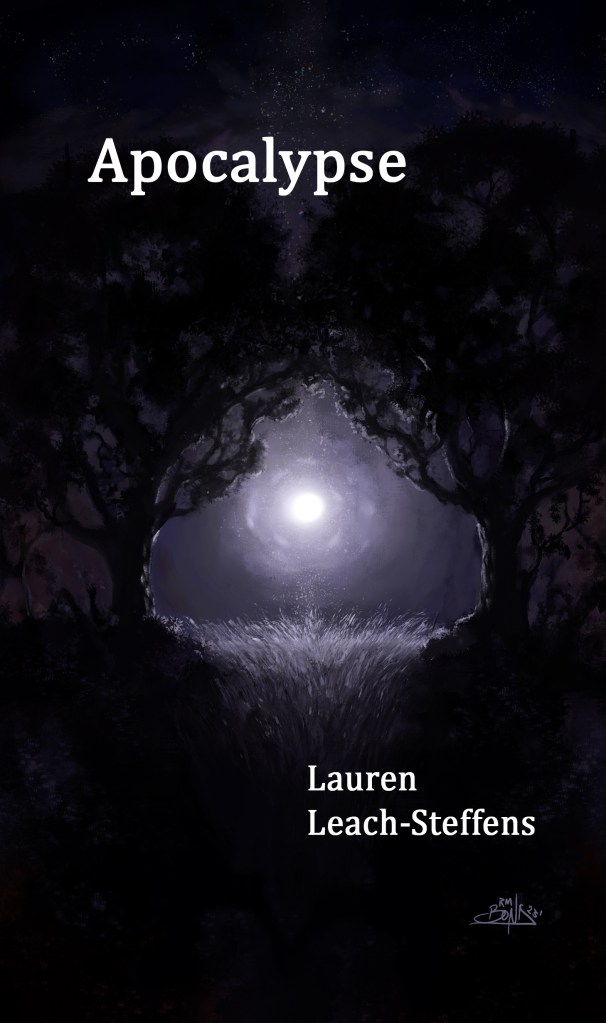
Writing about dark topics in my stories is something I must work my way up to every time. For example, the body count in Apocalypse. I had trouble killing anyone, but a developmental editor told me that the last battle had to look hopeless, so I killed eight characters. I also, ironically, edited that book for gratuitous darkness because I had tried the cheap way to make it darker.

Sometimes an entire book is dark. Carrying Light, one of the two I’m currently writing, is a dark novel, being that it’s written at the cusp of the collapse of the United States. Apocalypse is dark, because the fate of humanity hangs in the balance. But it was hard to write these dark enough at first.

In the end, I think darkness needs to balance light. That’s just me; I know there are people who write dark all the time, with lots of death, depersonalization, and alienation. I can’t write there, because all my writing adopts a quote from ee cummings: “The single secret will still be man.”