Talking About the Weather

I know that talking about the weather is the smallest of small talk, the type of inoffensive speech that makes it safe to talk to total strangers. I hate small talk, preferring to talk about people’s passions, as I am passionate about mine. But look at the freaking heat index!

We’re under a heat advisory here in Northwest Missouri. The heat index (a measure of how heat and humidity get together to cause misery) is 108 degrees Fahrenheit. The temperature without the heat index will be 98 degrees F. People die of heat stroke at these temperatures. I won’t be going out today because I take medications that make me prone to the consequences of high temperatures. (Of course, human nature being what it is, I desperately want to go to Starbucks to write.)

I think about climate change a lot when the weather gets like this. It’s not just my imagination; scientists note an increase in weather incidents like this. On average, our world is getting hotter. I think about this from the viewpoint of someone sixty years old: I remember when we didn’t worry about this. I don’t want to worry, but I am worried. How will this affect the world’s people?

As a Midwesterner (United States), I’ll be far away from the flooding and some of the extremes as they come. But how will people in poverty fare? People without air conditioning? There are ways of living, but do we still know them? Do we remember how to do them? What will we have to give up of our 21st Century values to enact them?
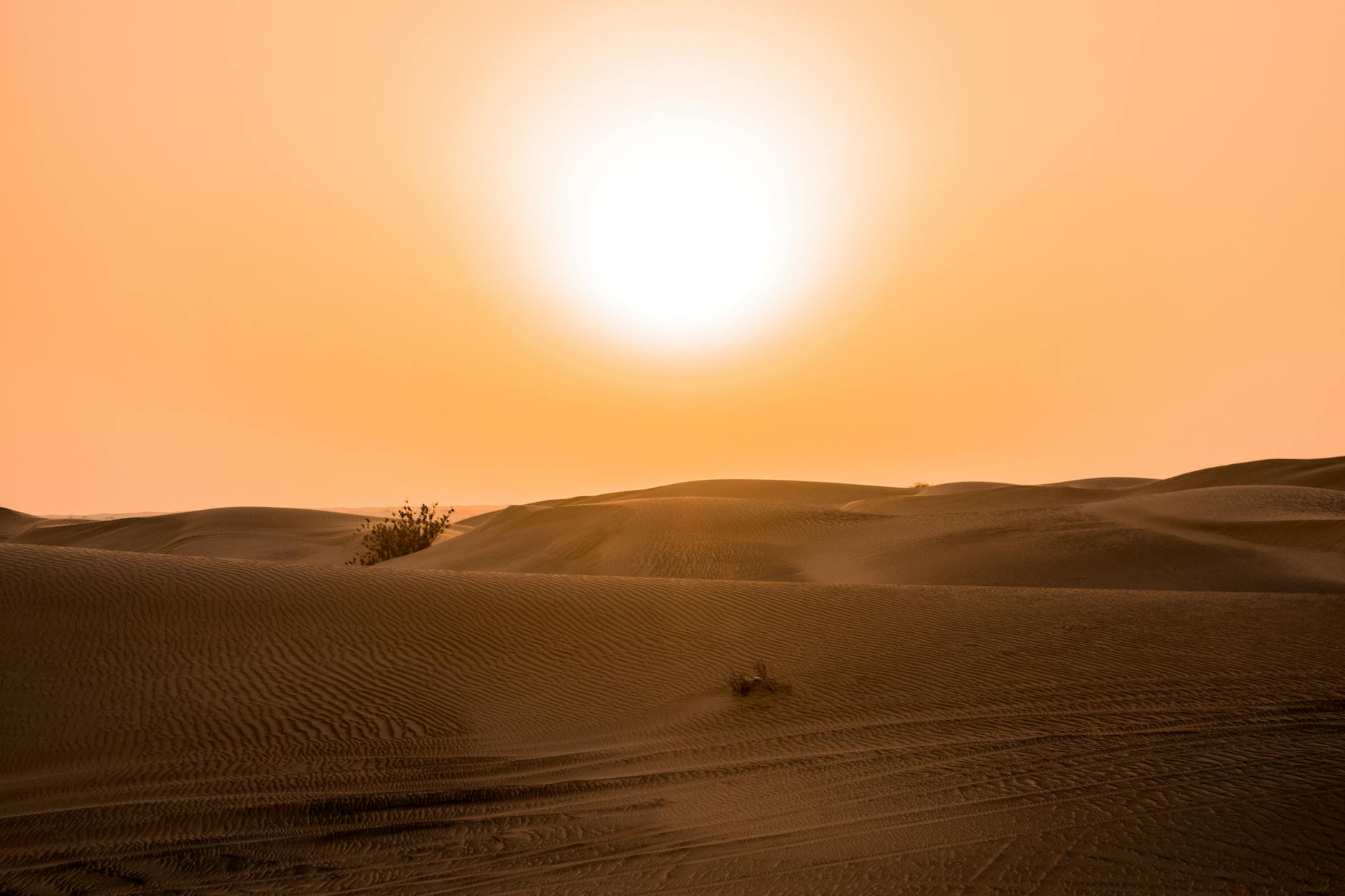
Photo by Fabio Partenheimer on Pexels.com

I wonder how life will change. I wonder if I cannot change my life enough to make any difference in the slide into turbulent weather. Thinking this as I sit in my writing spot is a lonely moment, because it’s sobering to think about a future I can’t control. To think it all goes downhill from here.

I could be wrong. We are always on the brink of great innovation. Change is always possible. Maybe someday, riches will be measured in how we relate to others. I do not feel optimistic at this moment in 98 degrees F.
Action = Opposite Reaction

Actions might have unexpected results that are the opposite of the intended results. Milton Friedman, renowned neoclassical economist, would say that the unexpected results would be probabilities, not possibilities.

Romania tried the “no birth control, no abortions” laws (and Clarence Thomas has signaled for birth control to be on the axing agenda). Even with the threat of death, birthrates did not go up. Romania couldn’t legislate birth. The fear of raising a child in an oligarchy prevailed over the fear of death.

Photo by Matthis on Pexels.com

China legislated a one-child policy. This led to a nation of unacknowledged daughters in the country and a shortage of females. Matrimony is a woman’s market; men are finding themselves short of money to captivate a woman’s heart. An unintended consequence.

In the US, angry voters who feel disenfranchised will overwhelm the gerrymandered conservatives. People vote for the status quo unless it sneaks forward to destroy the rights they have become used to, and then they will fight back. More people will vote, having an issue to fight for. Anti-choice states like Missouri may lose much of their populations, which will lose House seats. Companies may boycott Missouri, losing much of its revenue.

Maybe this will lead to National Healthcare, to stymie all those who want to box children and families into an impoverished circle. The grass roots women’s networks will exist again. Women will fight together. We may even see the Equal Rights Amendment passed.

All the tense “good faith” of politicians has crumbled. From this, although I grieve, good things can begin.

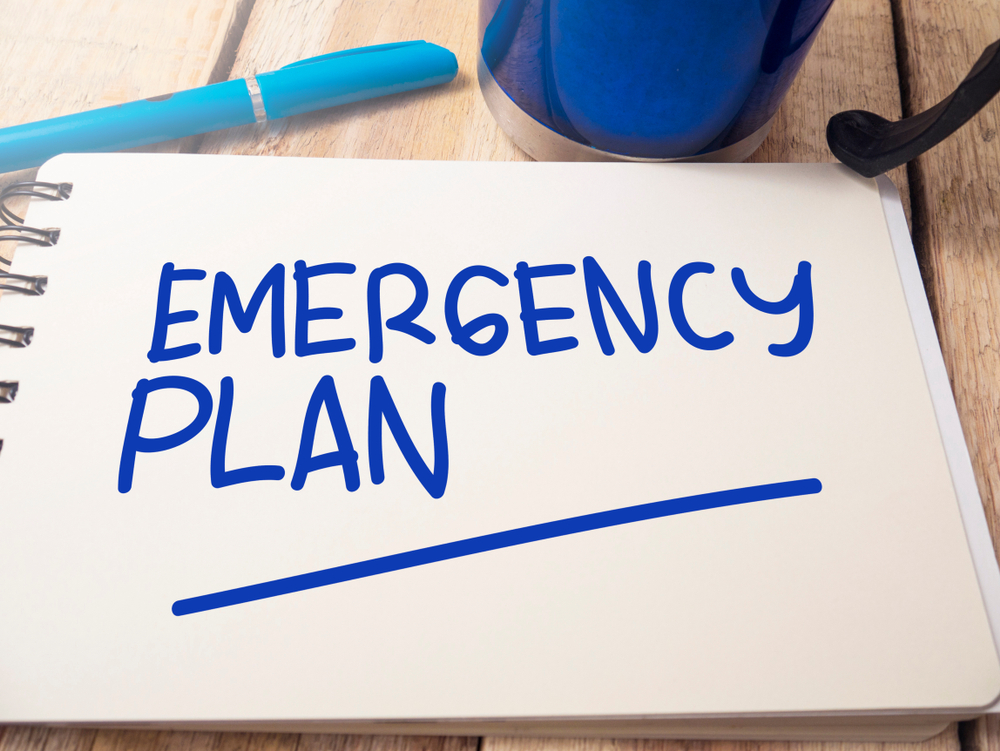
Your life could change in an instant — preparedness

Your life could change in an instant.”

People always think of the worst when they say this — a dire diagnosis, a car wreck, murder.

It also means, however, that our lives could change for the better in an instant — a windfall of money, a job offer, a baby in the family. Is it a sign of pervasive pessimism that we can only think of the negative implications of the phrase? 

Yes, I think people are born pessimists. I think it’s a survival mechanism, because without the belief that bad things can happen unexpectedly, we won’t prepare for them. Disaster preparedness (knowing where the fire exits are, packing a “bugout bag” in case of evacuation, having a plan for tornadoes) is a good example of preparing for the unexpected. Insurance is another example. Without the belief that one’s life could change for the worst, would people invest the time and money to mitigate the unexpected calamity.

But people have to prepare for good things as well, although we don’t think about it. If one wins the big lottery, one must have in place plans like investment, legal issues, and dealing with family members. An unexpected baby requires a reallocation of money. One can’t place the plans unless the good thing actually happens, but one can set in the first steps — finding a good lawyer and accountant, allowing for savings to mitigate the financial effects of a baby, agreeing to rules about how to deal with the surprise discovery.

The key is to anticipate possible events, both good and bad, and set things in place. There’s always an event that will surprise people, but setting in place the acknowledgment that surprises need plans will help deal with the unexpected — even the good unexpected.

Day 20 Lenten Meditation: Change

Right now, the buzzword is “social distancing” in order to slow the spread of COVID-19. We didn’t know how ingrained our habits were — going shopping, going to classes, meeting with friends — until we were advised not to do them. 

Our discomfort is palpable, mingled with the fear of the unknown contagion. The hesitation when we think for a moment of our habits, then realize that we’ve had to change the way we look at our everyday routine.

Change, even anticipated change, hits us this way: discomfort, disorientation. A feeling like walking in the wrong direction, like we are uneasy in our own bodies. Fear of the unknown.

Because of this, we often avoid change. We avoid the messages that we need to change, such as in this COVID-19 pandemic, we avoid making beneficial changes because the status quo is so comfortable. 

How do we make change easier? Information — the more we can penetrate the unknown, the more we know what the change will create. An analysis of pros/cons or risk/benefits for each option, change or no change.

We need to choose change by testing that it is the best option, whether it reduces harm or increases good. 

Thoughts and Prayers and Results and Change

Well, I had a disaster with my course site for People, Money, and Psychology that took out two weeks of lesson plan. Any attempts at restoring the previous files failed, so I had to recreate these two weeks from memory.

Not a good day. I have to admit I was tempted to indulge in a few minutes of “I’ve been good, God, where’s my cookie!?” This is a childish thought pattern of mine, a plea to God to get me published in compensation for trials and tribulations I have suffered:

  • as if God throws trials and tribulations at me
  • as if God has control over my becoming published
My notion is that praying to God to make things happen is at best futile. For example, praying that your football (soccer in the US) team wins. The other team’s fans are praying as well. Whose team is God going to choose? The one with the most people praying? The one with the loudest fans? 

I don’t think prayer works that way. I don’t think prayer works in any way that directly makes external change in the world.

Let me explain. The athletes pray that they’ll win, and this helps motivate them to do their best. They may win as a result of this focus. I may pray that something good happens, and I will be focused on this good outcome and find it. I may even pray to get published. Will it get me published? I don’t think so. Will it open me to knowledge that I can use to improve my chances? That’s what I suspect happens.

So I don’t think “thoughts and prayers” reduce the amount of mass shootings in this country unless it: 1) keeps praying gun owners from using their guns in human violence or 2) affects the praying populace to push toward gun control. I don’t think the people throwing thoughts and prayers are open to either change.
  

Getting from goals to accomplishments

Sometimes I write in this blog when I don’t seem to have a lot to say. It’s not because I love to hear the sound of my “voice”, although some would argue I do. Rather, it’s to keep a routine going so I don’t lose a good habit.

Routine is what helps us develop good habits. That, and a reward for doing them, since in the short run doing what we’ve always done feels better. Habits, as unglamorous as they are, are what turn long term goals into accomplishments.

As a professor teaching positive psychology and behavioral economics, I have an interest in the whole idea of how to change habits. The behavioral economics idea behind behavior is that we’re naturally going to choose the immediate reward over the long-term benefit. There’s proof behind this; behavioral economists (including my favorite, Dr. Dan Ariely) do research to support their hypotheses, like any good professor.

I am trying out a program called Fabulous, which helps people develop good habits. It is based on behavioral economics, and Dan Ariely is one of its driving forces. The program uses environmental cues (such as putting your sneakers by the door if you’re training yourself to exercise), social cues (reminders on the app and encouragement), repetition, and rewards (praise and leveling up). I’m not necessarily going to recommend it, because membership costs $50 a year, but I think the reasoning behind it is sound, having read some of the research myself.

To go back to my blogging habit — I have writing on my daily to-do list, along with one hour of writing activities daily. I set aside some time each morning to write; my computer is my environmental cue.

And my reward? Reading the stats on my Blogger page to see people from many different countries reading this blog.

Courting Change

I don’t know what I want to write today. I’ve changed this topic three times since I’ve started. The first three topics were dirgelike, full of confessing my hubris.

That’s not where I want to be today. I’m sitting on the couch, a purring Girly-Girl beside me, drinking some truly magical coffee. Beginning-of-semester meetings start Wednesday; I have to start transitioning out of my vacation.

Things change, and there is always hope.

***********

My life hasn’t changed much lately. I embrace change; I’m at my best when I’m evolving. My frustration lately has been that I’ve been changing my manuscripts but still seeing the same results in query rejections. But tomorrow, or even today, could be different, and I may swim in change again.

I got a little nervous writing this, because changes can be bad as well. I’m aware of that, but I’m writing about GOOD change here.

Disillusionment

Disillusionment, in a way, is a positive thing.

Yes, it’s rough to believe in a thing or a person only to find out that what you believed to be real was mere illusion. We build all sorts of fantasies in our everyday life around things, and when we’re disillusioned, those fantasies fall like building blocks.

Disillusionment feels like a chill wind to our face. We can perceive that wind as bitterly cold, or we can perceive it as bracing.  Disillusionment brings clarity, the sharpness of a winter day with the greys of tree trunks and the white of the snow.

With the death of illusion comes the birth of possibility. The future hinted at by the illusion crumbles, leaving everything, every path, every direction. It can be overwhelming, because we like the predictability of our illusory future, but it’s possible that there’s a direction even better than the one freshly closed to us.

Thirty-six queries and a handful of change

I sent 36 queries out last night for Prodigies. It was time.

I am, as always, hoping some agent takes a nibble or a bite on my query. (Remember that I have one nibble on Voyageurs from a romance publisher and no other pending excitement.)

I have hope. Hope is not the belief that my desired outcome will happen, it is a belief that something advantageous will happen, maybe something I couldn’t even predict.

I was about to say one can’t have hope without taking a risk, but that’s not true. People who don’t like change can hope things stay the same, as those who try to make change can hope that they can make a change. But the person who hopes things stay the same has no influence on the change, while those who try to make change has an influence. Not complete influence, but still.

In addition, the person who tries to make change might find a result even better than they had expected, and being someone comfortable with change, they can take advantage of what they’ve been given.

The Stories We Tell: Oral Tradition

Before the development of writing systems, storytelling was one of the only methods of communicating the wonder of the world.  Storytellers would regale the gathered people with tales about gods, about successful or unsuccessful hunts, about their history. Someone in the next generation would memorize the stories so he could take the storyteller’s place around the fire someday.

The tradition continued around the world even after the invention of writing, with the Gaelic shanachie, family stories at holiday gatherings, sermons in churches all over the world. Even social gatherings have their share of swapped stories.

I grew up in a family with a rich oral tradition. My father’s side, a mix of Welsh, French Canadian, and Ojibwe, told stories about their lifestyle, which centered around the North Woods and hunting, reckless adventures growing up poor in Milwaukee, and a certain amount of bravado and subsequent error.  My mother’s family told stories with word play and puns, with my grandmother serving as the straight man.

A hunting story on my father’s side:

Grandpa had decided to teach his sons how to hunt pheasant. “Boys,” he said, “What we do is line up in this field here, and spread out aways from each other. The dog’ll flush up a pheasant, then each of us has a try to shoot the pheasant flying by.

“Unless it’s a hen pheasant — they’re the brown ones. You’re not supposed to shoot hen pheasants. So if you see a hen, shout down the line so that nobody else tries at it. Got it?”

All three boys nod.

It was a bad day hunting — the hunting dog stayed listless and quiet. The spirits of the hunters drooped, because the pheasant was to be their dinner.

Suddenly the dog yipped, running toward a tussock. A pheasant burst out of the grass.

The youngest, my Uncle Larry, who was no more than four and wasn’t even armed, yelled “Hen” in a quavering voice.

The middle son, my Uncle Ron, at 7, again not armed, yelled “Hen!” miserably.

My father, age 9, kept his shotgun down and sighed, “Hen!”

Grandpa thought for just a moment, raised his gun and shot —

“Hen! Heh heh heh.”

The family had supper that night.

A story from Mom’s side of the family:

Seventeen-year-old Aunt Marie approaches Grandma with a proclamation: “I’m going to marry Wayne.”

“I forbid it,” Grandma snapped.

“Then I’ll elope,” Aunt Marie countered.

“You can’t elope!”

“You watermelon!”

(If you don’t get this, read it aloud.)

I have changed these stories by writing them down. I have tried to use the language of the people involved, but my writing techniques have crept in.  In the spoken story, I could merely use tone of voice and gesture and not provided cues to emotion. However, these changes would have happened even in the transmission of the stories from generation to generation. For example, a Native American cautionary tale about white animals being sacred, one passed down in my family, has morphed into a story about a hunter shooting a white deer and being arrested by Wisconsin Conservation.

I have changed these stories by writing them down in a way that freezes them in time and place. When you read a written story like these, you read an “official” version of the story, and you will go back and read this again to get the story right. It has no way to adapt to the needs of the generations to come — a change in the settings, a change in the consequences.  Grandpa will always be the one to shoot the hen. The elopement story will always be between a mother and daughter.

This is why, when someone suggests I collect my family stories and save them so others can read them, I am reluctant to do so.