A Reminder of COVID

In my office today, I found a yellow mailing envelope. Inside I found two masks, cloth with clear plastic windows in the front so people could read my lips. This was a reminder of COVID from almost four years ago, when we spent the semester sending our live lectures over the Internet, disinfecting surfaces, wearing masks, and spacing our students six feet apart in a classroom. All challenges we survived as faculty, although I’m not sure to this day if anyone learned anything.

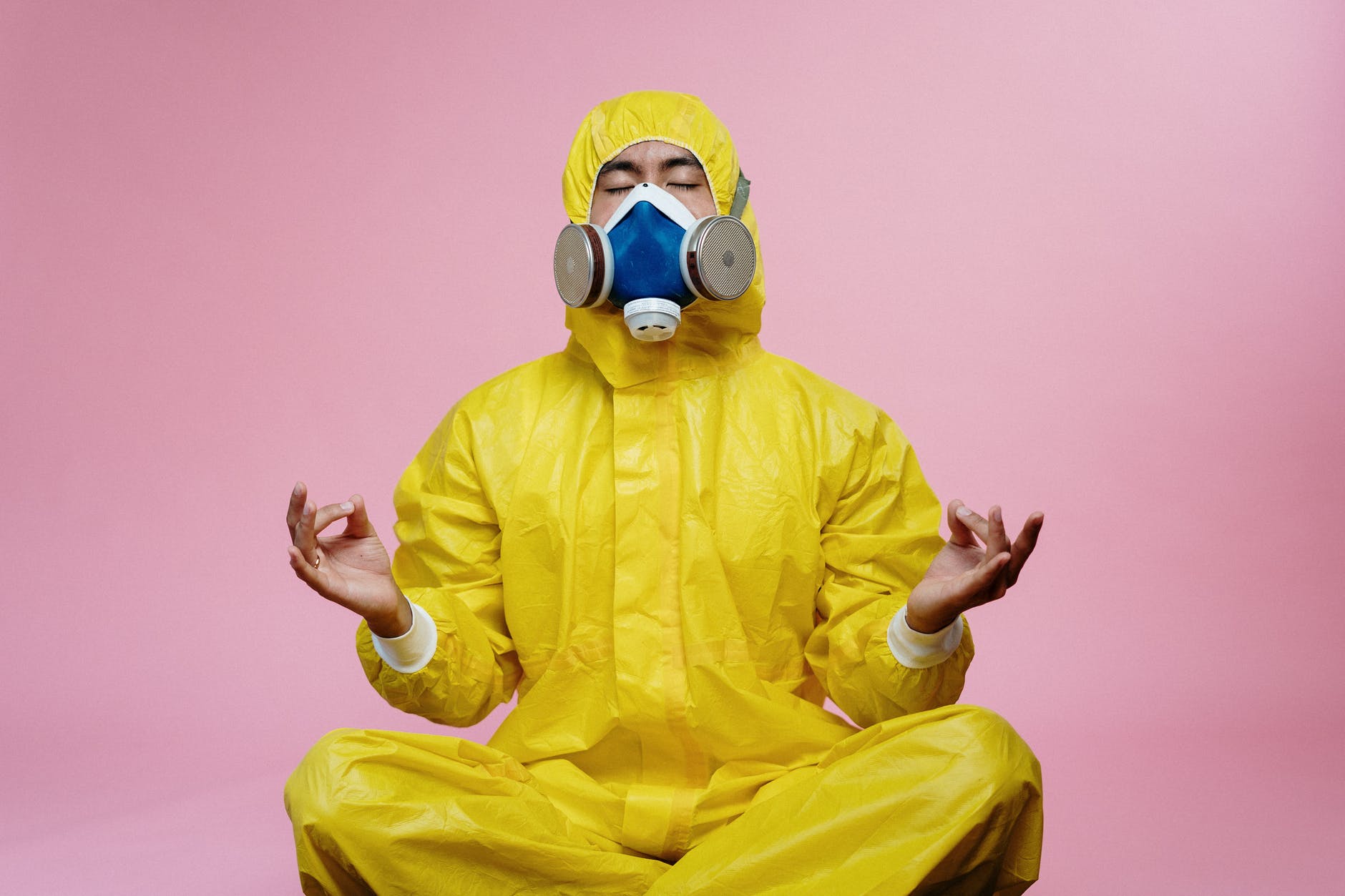
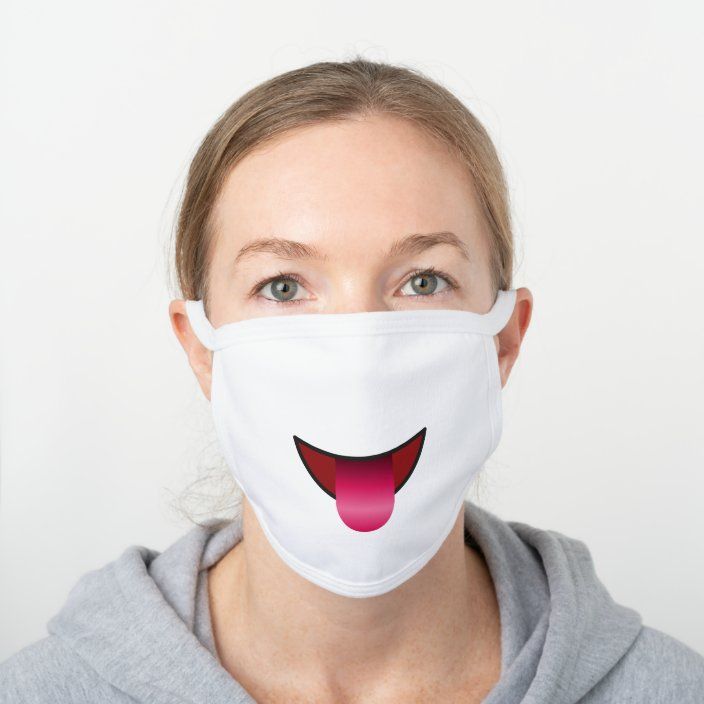
Photo by Anna Shvets on Pexels.com

I wanted these masks because I figured that if I couldn’t hear (I have a noticeable hearing loss and need hearing aids), my students couldn’t. I ended up not liking the masks because they weren’t flexible enough and I couldn’t wear lipstick with them. It took me a while to not wear lipstick while wearing masks, because the habit was so ingrained and I wanted to feel normal.

There was nothing normal about that time. I forget about it for months at a time, and then something reminds me, like a news article, or an old blog, or a mask, or the test kits we still keep around in case the cold feels more severe than others. I remember crying frantically in the kitchen because there was too much to deal with, or becoming obsessed with sourdough bread and catching my own starter, and not going anywhere for a long time. It never completely goes away, and when I sit at Starbucks writing, sometimes I remember when I couldn’t.

COVID Anniversary

Three years ago today is when the Centers for Disease Control declared COVID to be a pandemic. I was on Spring Break and the big question was whether the university was going to shut its doors and deliver its classes online. The CDC hadn’t declared shelter in place yet, but other universities had closed. It took two more days for our university to follow the others. An extra week of break for the students and for faculty to put together online classes, and then the new class format to get used to.

I spent a lot of that first couple of weeks frightened when I was not sitting at my computer frantically moving classes online. Luckily, one of my classes was online; another — the internship was a mess with students not being able to finish it. Some creative grading got them through and closer to graduation. The fear was widespread; after I had a meltdown in the middle of the kitchen, I called my psychiatrist and got through to his nurse. She reassured me that what I was going through was normal.

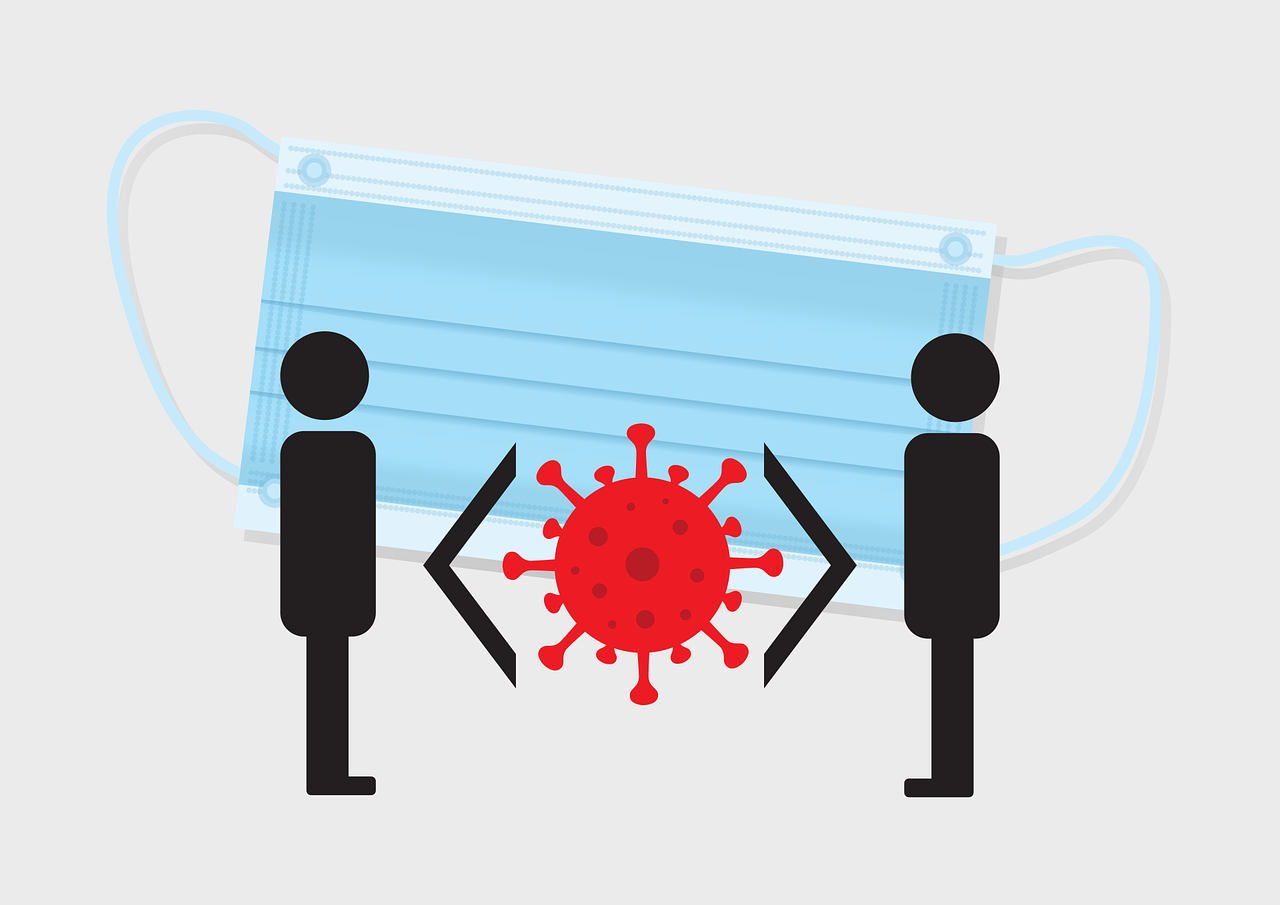
Photo by cottonbro studio on Pexels.com

Richard worked on library tasks at home; I spent a lot of time on the computer supervising my online classes. I also spent a lot of that time baking bread. I fed three sourdough starters, one of which I captured myself. The experiments made me feel more grounded, and we had the best bread in town. I also wrote a lot when the initial shock dissipated. The longer-lasting feeling was isolation as I sat on the porch swing, seeing nobody outside.

Eventually, the restaurants and less necessary stores opened up with precautions of distancing and masks. By some miracle — or more likely masking — Richard and I missed getting COVID (until a month ago, and the vaccine made it bearable). Activities like concerts and vacations were still on the forbidden list, and we missed Christmas with my family that year.

Finally, we came back to a new normal, one with the remnants of distancing signs on grocery store floors, masks at the hospital, wariness about crowds, and memories of a disruption of life unknown since World War II. One million dead in the US made those disruptions necessary until we had the vaccines in place.

Our memories fade. We take for granted our freedom to move, to go places, to shop, to congregate with friends. It wasn’t that long ago that we lost all those, if only for a while. And it could happen again. A mutation of COVID into a harsher bug could send us back into isolation. There are other organisms that we haven’t seen in humans before that could be the next COVID or worse. We have to remember how COVID made us adapt and survive.

Aaaaaaand I got COVID

It’s strange, but I made it through the pandemic without getting COVID. I managed to not get it despite standing in classrooms with thirty-plus students at a time. I credit this to COVID boosters, diligent masking and good decision-making about avoiding crowds during the worst of it. And not having children. Until today, however, I credited it to my uniquely amazing immune system, and yes, I do in fact have an amazing immune system.

This week my husband came home with some congestion, and we prepped him for a cold with all the usual cold medicines including guifenesin, nose decongestant, and hot chicken broth. I was surprised, then, when he got diagnosed with COVID, as his cold wasn’t that bad. I myself had cold symptoms, but I tested myself thoroughly and daily for COVID, and got negative results. I prided myself on my amazing immune system and fixed our morning oatmeal.

Photo by cottonbro studio on Pexels.com

Yesterday, I masked at work and got a raspy throat and a runny nose. A colleague of mine said “You’re sounding worse. You should get yourself checked for COVID.” I reassured her that I had an (stop me if you’ve heard this before) amazing immune system. She said, “I know, but check yourself anyhow.”

I checked myself this morning, using the state of the art COVID tests we’ve been hoarding (“Fold the card flat on the table. Keep the card flat or else a false negative will result. Hold the dropper straight up and down. Do not hold it at an angle. Drop exactly 6 drops into the well. Dropping more than six drops may result in a false negative.”) I had tested myself for the last couple days and found no double line indicating that I had COVID, Today, however, I saw a bright pink line — in the sample area, to mirror the line in the control area.

So much for my amazing immune system.

I immediately got on email to alert my bosses that I have COVID and therefore will be staying home for the next five days. And then I slept. I didn’t know I was that tired. Then I woke up and checked my email, and then slept again.

I’m doing all right. Suffering a loss of pride about that amazing immune system, but doing all right. I do have symptoms, but they feel a lot like a sinus infection. I hope it doesn’t get worse than this.

Wish me luck.

Coming on Two Years of COVID

Two years ago next week

Two years ago, it was late February and we in the United States had just started hearing of a virus called SARS-CoV-2 that was spreading through China, then Europe. As I read the Internet accounts, part of me dreaded the inevitable pandemic; another part of me became convinced that it would stay across the ocean and peter out, as other SARS infections had. Then, when it reached the coasts of the US, I still monitored the news while assuring myself it was a big city infection that would not reach the rolling hills of Northwest Missouri.

During my spring break (I teach at a university), I watched my emails to see how the university would react to the looming threat, all the while panicking at the virus creeping ever closer, a quickly advancing threat which left in its wake so many people making inexorable slides toward death, kept alive on ventilators until their bodies gave out.

Then, halfway through Spring Break, while universities hustled to continue education online as a brave new experiment, my university sent emails warning us we might follow in their footsteps. Then, a day later, we were told we had a week and a half to move all our instruction online, and that students would not come back to campus from break.

Isolation

The state’s shelter in place order fell into place, and I panicked. I hyperventilated while trying to clean our chaotic kitchen, and I worried I was having a relapse of my bipolar from all the stress. I called my psychiatrist’s nurse, and she told me many people were having the same symptoms.

So many changes bombarded us: the working from home (which didn’t affect me as I was already working from home), the precautions of shopping, the prohibition on social activities. My life shrunk to the walls and window of my living room. My husband masked up and braved the grocery stores with their six-foot distancing.

Photo by cottonbro on Pexels.com

I decided that, instead of spending all my time in a panic, I would learn to make sourdough bread with a starter I captured myself. The starter made a fine whole-wheat sourdough, and I bought 50 lbs of white whole-wheat flour because the stores were out of it.

We picked up our restaurant meals curbside, and it was not quite the same eating a steak out of styrofoam go containers.

Closer to normalcy

After a while, the shelter-in-place orders expired and my college started meeting again (with distancing guidelines). The restaurants opened up, and the stores started getting more food in stock. The mask ordinances evaporated, although my university required them and most of my colleagues and friends continued to wear them in public, as I did. Slowly, even these restrictions faded. Until this week my university has made mask-wearing suggested rather than required.

I don’t know if I’m ready to go maskless yet, given that I have been masking for so long. But when I’m free of a mask, there will be things I can do, like wear makeup and be heard in class without yelling.

A life post-COVID

I don’t know what a life post-COVID looks like. I know that, over the past couple of years, we in the US hadn’t suffered as much as other countries with crowding, with less advanced medical systems, with fewer preventative measures. But we suffered, if mostly in our day-to-day routines. And we are not done with the pandemics — another round of COVID may be in our future, or another microorganism we didn’t count on. It’s inevitable with access to other countries and terrains, where we don’t have natural immunity. Maybe I will never lose my mask, or only have it off for short periods of time. Maybe we’ll have another shelter-in-place. But what I don’t think we’ll have is a post-COVID celebration, because we’ve lived with it so long that it seems normal.

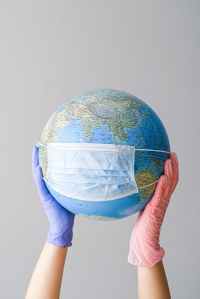
The One Year Anniversary of COVID

Today is the one-year anniversary of the World Health Organization declaring COVID-19 a pandemic. And from here, our lives changed.

The day that happened, I sat at home during my Spring Break for the meaning of this proclamation to develop. It developed quickly, starting with shelter in place notices, businesses shutting down, and toilet paper shortages at the store. The leadership at my university deliberated on whether they would open back up for the students coming back for Spring Break or move all classes online. When they declared that everything would go online, I was already in the middle of making that adjustment.

Masks became a normal part of our lives, along with avoiding public places and standing six feet away from each other. Group meetings were strongly discouraged, even with masks. All our precautions, however, seemed to be not enough as we watched the cases with COVID, and the deaths, tick upward in reports from the County Department of Health. Too many people got sick; too many people died, particularly (but not always) the elderly. Because of my husband’s preexisting condition, I worried quite a bit. However, I should have worried about myself, as a little-known study found that people with severe mental illness (such as my bipolar) have increased chances of both contracting and dying of COVID.

Photo by CDC on Pexels.com

Now, a year later, businesses have been open for a while with precautions, but many are still (as in the case of restaurants) not necessarily safe. The first tier of vaccination (over 65, those with severe obesity or diabetes, some other disorders, medical personnel) is close to done, with teachers and essential workers next. Even so, vaccinated persons are being instructed to continue to wear their masks in indoor spaces. So COVID is not gone from our lives yet.

I still look forward to getting vaccinated so I can go to restaurants without (much) fear and have a vacation like I haven’t had for a whole year. I dream of a writing retreat somewhere, my favorite place being The Elms. Most of all, I dream of life as normal, which it will be, but not normal as it was last year. It will be a new normal.

More COVID in the Neighborhood


We’re having a worsening bout of COVID here in Missouri at the same time the state has loosened its restrictions on classrooms such that the classroom doesn’t have to quarantine if everyone wore masks. Kansas City has gone back to restrictions in public places, and it would be a good thing if Maryville, with its booming rates of transmission among the students, followed suit. At least we’ve renewed our mask ordinance till January.

Our students will be off campus for the last couple weeks of the semester and will take their finals online. I hope this reduces the contagion we’ve seen.

Planning for Spring semester, I will be teaching the way I did last Fall — through in-person and online at the same time. It’s hard to do this, and I don’t feel as effective a teacher as I have been. This whole year has been hard. But it’s been hard for everyone, and I don’t mean to gripe. 

I guess I can’t wait till Winter Break.

Adapting to Adversity


We got snow in October. Ask me how I feel about it.

This is a year to feel cheated. COVID has cheated us of extended family and friends, our old routines, and recreation. And now, my outraged brain shouts, “Autumn has been canceled due to snow!”

But it’s not as simple as that, for COVID or for Autumn.

The snow will melt soon and we’ll have Autumn again — maybe the dreary, rainy sort, but nonetheless Autumn. And we will have life with a more controlled COVID, although not for a while unless a proper vaccine is available. 

In the meantime we will become resilient, adapt to the new situation, using the greatest strength we have as humans. We will joke about snownados in December and curse 2020 as the most calamitous year ever. But we will adapt as we have been adapting, for the first rule of the universe is “Adapt or die”. 

Acedia

 Staring at the blank page, wondering what I’m going to write …

I’ve felt a lot like that the past couple of days. Very undermotivated, at a time where I should be accomplishing a lot. I’m getting all the necessities done, but writing (and even promoting) seems to be slogging down in a morass of procrastination. I’m having trouble focusing on anything.

What I’ve read on the Internet suggests that this is a result of COVID and its resulting isolation. Acedia, according to one article, refers to this strange combination of lethargy and uneasiness. 

My plans for Christmas and New Years are canceled, so I have nothing to look forward to except more isolation at home. The dread of being surrounded by an uptick in cases in the community takes hold. The days become a dreary routine: Work, home. 

I need to find a way around this — more cafe time (the cafe is generally not crowded so I feel safe there), a change of scenery in the house, engineering something to look forward to. 

I can’t make COVID go away, but I must be able to do something about these blues.

Stressful Times

 These are stressful times.

The presidential election is looming, and there’s so much at stake. I do not exaggerate when I say I don’t know if our democracy can stand four more years of Trump. There’s been reported efforts of Russian interference through stirring up tensions and voter suppression in red states, and I fear that Trump will steal this election. 

COVID cases are on an uptick again, and some of my fellow faculty members have had COVID in their families. I’m not in close enough contact with people  so I haven’t gotten it yet. I worry about getting COVID; I worry more for my husband with Type 2 diabetes. Social distancing is starting to get to me. We have canceled both Thanksgiving and Christmas plans to socially isolate. 

This is a time of tension. I need to find refuge. In the fiery leaves of the season. In the rain patter of my words. In the spicy scent of a candle. In the music of my childhood. 

Within myself.

A Snippet of Autumn

Yesterday afternoon, I looked out the window to see a maple tree striped with fire. 

Astronomical autumn came quickly. Soon, leaves will tumble and be brushed into piles smelling of dust and bark. Evenings will grow dark sooner, and the motif will change from flip-flops and seashells to pumpkins and dried corn stalks. It’s time to reap the harvest and prepare to settle in our homes to wait for winter. Our schedules will not allow us that rest, but our bodies long for it as the days get shorter.

I will feel the temperatures drop, and I will wear a jacket against the chill. I will drink hot, smoky tea with cream to chase away the cold. I will feel the change of the seasons, even though my summer was spent inside and working due to the COVID-19. I will wish for a huge leaf pile, one that will accommodate my big, old bones. 

Soon, the snap in the air says. Soon.