200 Days in a Row

I have posted in my blog for 200 consecutive days. I have learned something from the process, mostly that if it weren’t for the post topic prompts in WordPress, I would never have written in my blog for 200 consecutive days. My mind doesn’t have that many topics to write about, especially in a busy semester.

Photo by Alexander Grey on Pexels.com

I have also learned that the badge that I get daily: “You’re on a 200 day streak on Words Like Me!” is a far better motivator than I had guessed. Gamification is real. The tyranny of this little message drives me to post another day.

I don’t know how much longer I am going to write daily. I feel sometimes like I have nothing to say, or that people don’t care what I’m saying. Writing is a lot like that, though, sending words out into the world not knowing what impact, if any, they will have. On the other hand, 200 days is an awesome streak, and who wants to ruin that?

Old Tunes and Nostalgia

Daily writing prompt
What makes you feel nostalgic?

The music of my childhood makes me feel nostalgic. I was born in 1963, and my childhood was the 60s and 70s, with high school graduation in 1981.

To be specific, though, it’s not just any music of my childhood. The Beatles, surprisingly, don’t make me feel nostalgic, nor does hard rock or disco. The Top 40 radio format doesn’t make me sentimental, nor does easy listening. 80s and later music doesn’t make me nostalgic. Specifically, it’s singer-songwriter music from the 60s and 70s, as defined by Apple Music, that makes me nostalgic.

Singer-songwriter music comprises folk music and rock well-known for its lyrics. Its instrumentation often involves acoustic instruments, sometimes augmented by instruments like harmonica. Bob Dylan, Neil Young, Janis Ian, and Judy Collins are examples of the genre. Not all singer-songwriters give me nostalgic vibes — I was not exposed to John Prine or Leonard Cohen as a child, for example.

If I had to pick one song that makes me nostalgic, it would be Helpless by Crosby, Stills, Nash, and Young. The song is about nostalgia, so that makes sense. Neil Young’s voice keens over the fiddle and piano singing about his childhood and how “the chains are locked and tied across the door”, because we can’t go back.

In a way, I literally can’t go back. I have aphantasia, or an inability to visualize in my mind. Visually, my memory is a series of snapshots which I only get to look at for a split-second, and they’re blurry. I remember from a narrative, where I tell myself the story, and by the feelings in my body. Nostalgia is a clutching of my heart, a longing.

My First Computer

Daily writing prompt
Name the most expensive personal item you’ve ever purchased (not your home or car).

This question is altogether too easy for anyone who has bought a laptop or a smartphone in their lives. Other than a house or a car, these are likely to be the most major expenses, at least in the US.

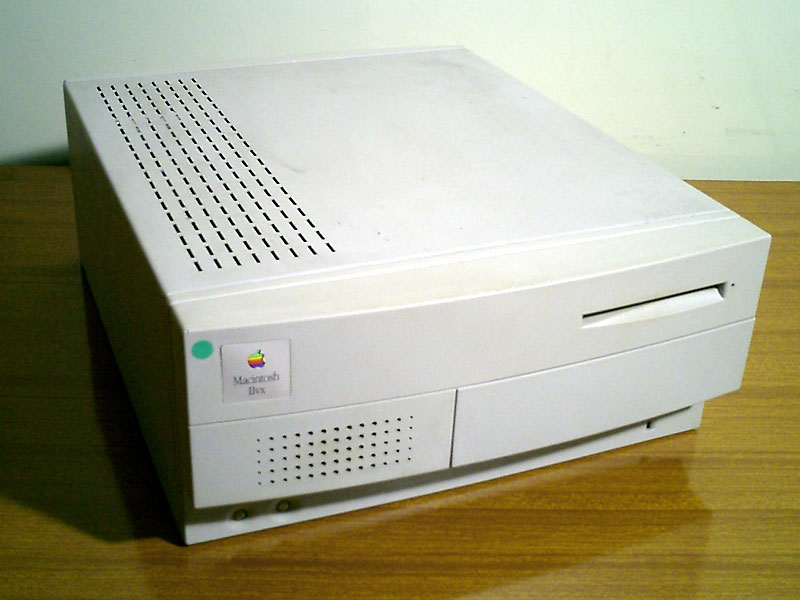
I was relatively late to computer ownership, having gotten my first computer as I was finishing graduate school. As a grad student in the late 80s — early 90s, it was not assumed we would have our own computers. There were computer labs all over campus, and I availed myself of those when typing up my dissertation. Knowing that computer labs would not be part of my future as a professional, I bought my first computer, a Macintosh IIvx. In 1993 the computer cost me $2500, which is almost $5k in today’s dollars. I bought it with part of the proceeds from getting hit by a car, otherwise graduate student me would not have been able to afford it.

CC BY-SA 3.0, https://commons.wikimedia.org/w/index.php?curid=31318

Technology has gotten more powerful and less expensive. I could buy a Mac Mini today for $500, and this little puck of a computer is much more powerful than the IIvx I bought in 1993. The only reason I haven’t bought it is because the form factor isn’t convenient, and I already have a powerful laptop that cost me $1300.

Even today, my computers are the most expensive purchases I make outside of a car or house, even though they have gone down in price. But their utility makes them worth the price.