In high school I learned that sometimes your crush will pay attention to you and that’s enough.
Back then, 44 years ago, I had a crush on Mark. This was painfully (and I mean painfully) obvious to Mark, his girlfriend, and everyone else in high school. He took it well, however. And sometimes he would open up a little sunshine into my life.
Once we were caroling: me, him, his girlfriend, and the rest of the chamber singers. I dropped behind, mostly because the two lovebirds were lovebirding but also because I was cold and tired and depressed. He walked back to find me and ask if everything was okay. He held my unmittened hand briefly and told me it was cold and scolded me for going without mittens.
I wrote a poem for him once. It made fun of him because that was my undying declaration of love. (It ended with the words “you stupid klutz”.) He told me he would keep it in his billfold the rest of his life. I knew he wouldn’t, but the image was enough to make me laugh.
He married his girlfriend and as far as I know they’re still together. I went on to have many more unrequited crushes and eventually married. But I learned the little gifts of moments we receive from people can last in memory forever.
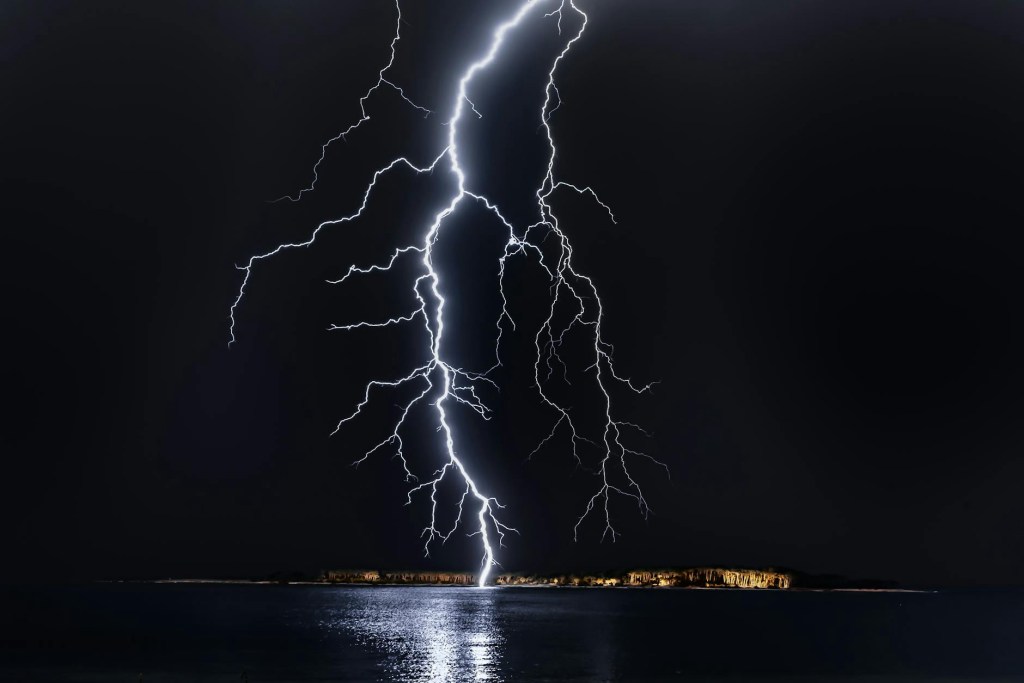
I love thunderstorms. I live in the Midwest, which has a fine number of thunderstorms each year. The pounding rain, the flashes of lightning that hit all too close to the house, the ringing thunderclaps are all dear to me.
When I was younger, I had the perception of walking through a bolt of lightning. I did not really walk through lightning because I had no charring or lightning trees on my body. But I found myself completely surrounded by a hot white light, no clap of thunder. I always felt from that point forward that lightning had claimed me.
I like the drama of thunderstorms. I am not dramatic; I have aged into a pretty staid person. But I claim thunderstorms as my alter ego.
What do you wish you could do more every day?
I wish I could write more. That doesn’t mean I never have enough time to write. Sometimes, something else gets in the way.
Sometimes it’s my focus and I find myself taking a detour on the Internet. Sometimes it’s negative self-talk that makes me not want to write. Sometimes it’s too much to think about.
Today it’s my iPad is down to zero and is recharging very slowly. I can’t always do something about it.
Every now and then a WordPress prompt compels me so much that I have to answer it. This one I couldn’t resist, and now submerged in it, I don’t know if I can do it justice.
What’s the thing I’m most scared to do? Knowing me, it’s something that will get me rejected. I still have a lot of baggage over rejection. Despite that, however, I have managed to survive 30 years of course evaluations, hundreds of rejections of my novels, and too many unrequited crushes. In other words, when I look at an opportunity for rejection, I dive right into it. It could be that this time I will not be rejected.
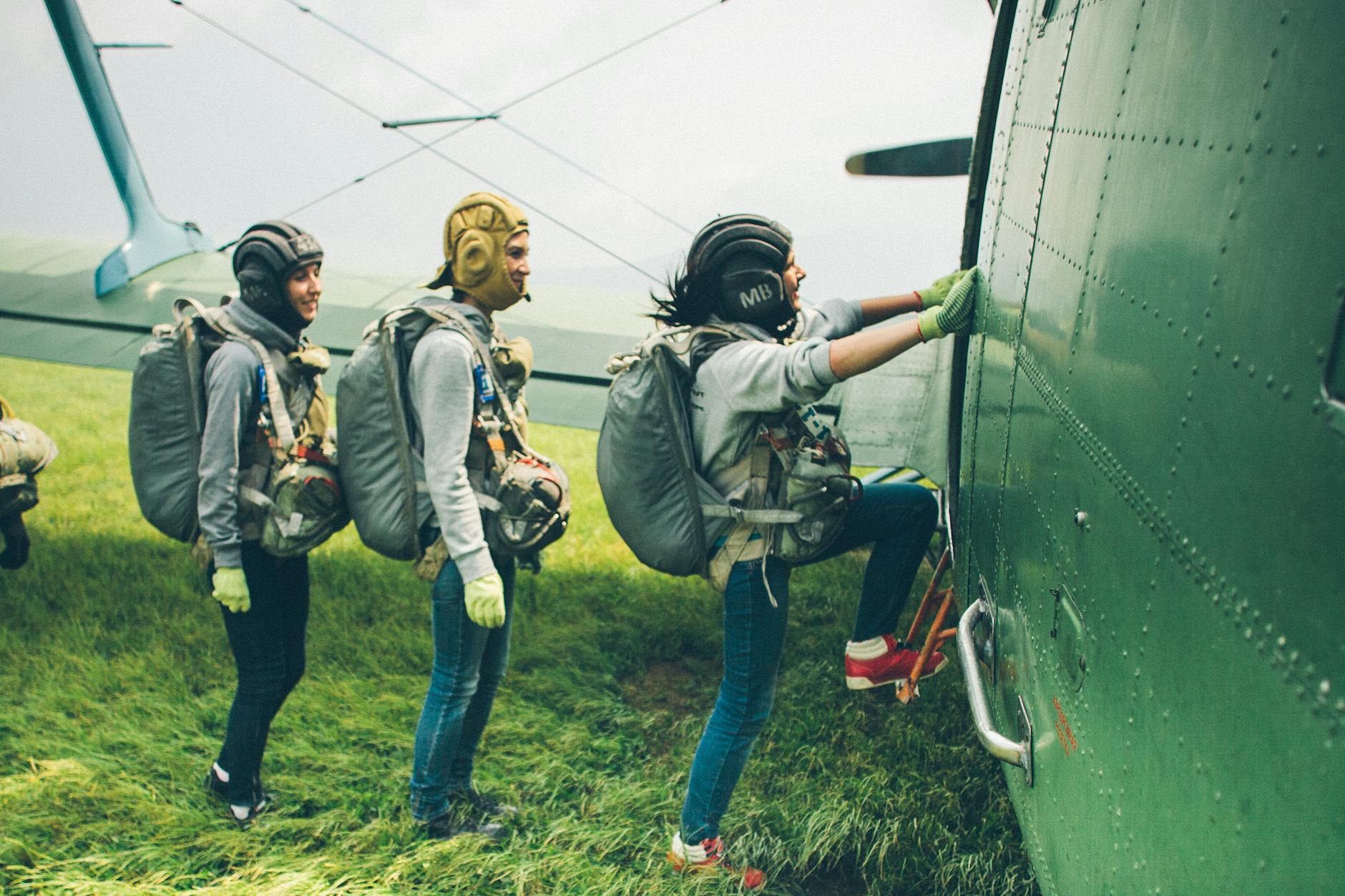
That brings me to daredevil stunts like skydiving, bungee jumping, and juggling chainsaws. First, I can’t juggle, so eliminate that. I have no desire to bungee jump, and I’ve experienced a controlled free-fall simulator. The only thing that will get me to do daredevil stunts is peer pressure, and I think I’ve aged out of peer pressure. I’m also a low-adrenaline person, so I seek naps more than thrills.
Back to rejection. There are things I’m scared of right now that fit under “rejection”. I’m afraid of reading my work aloud in front of strangers. I am afraid of selling my books at a real conference (but this is my Big Audacious Goal for the year). By facing the fears, fears become Big Audacious Goals. What’s the worst that could happen?
What was the hardest personal goal you’ve set for yourself?
The prompt above leads me to two different answers. What was the hardest personal goal I’ve set to myself?
The first: In 2000, I participated in the Susan G. Komen 3-Day Walk. To do this, I first had to raise $1000 for the organization. For the walk itself, I had to walk 20 miles a day for three days. This meant I had to train for the event by walking further every day. I started at two hours a day to a two day 13/14 mile event.
I survived the walk with a few blisters and a lifetime experience. The fundraising was the hard part, with a chunk of the money provided by Walter Cronkite. Yes, the most trusted man in America Walter Cronkite. (Anyone younger than boomers should look him up). No, I didn’t know him. But a friend of a relative of his called in a favor. Sometimes, I guess, the stars align.
The second: I wrote my first novel. I’ve been writing since third grade, when a teacher (who didn’t realize she was teaching 3rd-graders a high school curriculum) taught poetry. I remember doing well in haiku, struggling a bit with diamanté, and being totally overwhelmed with sonnets. I wrote my first published poem that year, if the classroom’s front door was a publication. I went on to write descriptions, short stories, a short play, more short stories … But never a novel. I thought I had irredeemable problems with plotting a long story.
Many many years after that, my husband is responsible for my writing my first novel. I was writing several stories around the same characters. I was almost obsessed with them. Richard said to me, “If you’re going to keep writing short stories, you might as well write a novel.” My instant response was “I can’t write a novel. I have irredeemable problems with plotting a long story (or something like that).
I started writing, and admittedly I did have problems with plotting at first. My novel read like a bunch of short stories at first, and I rewrote it three times until I came up with a result I liked. My other novels didn’t have the same fault as I learned the narrative shape of a novel. The first novel (not the first published) was Gaia’s Hands, which has been published on Kindle.
For honorable mention, I should mention learning how to drive. I didn’t learn to drive till I was 32. The first time I took drivers’ ed in high school I failed for stopping the car in the middle of the railroad tracks to check for trains. (It’s not incomprehensible if you take into account I have a learning problem with spatial and sequential relationships.) The second time, I barely passed but didn’t feel comfortable enough to drive. I learned for real at 32 with the most talented drivers’ ed teacher there ever was. There is talent involved in teaching people to drive. There’s patience, there’s talking someone out of quitting, and there’s the ability to explain things in a way that someone who processes things differently will understand.
I appreciate the goals I’ve struggled with more deeply than the ones that came easy to me. They built more of my character. They became the accomplishments I judged myself by. It’s strange, because I have a PhD and I don’t weigh that among my greatest accomplishments. My greatest accomplishments have been the hardest.
Why do you blog?
Sometimes I don’t know why I blog. I do not have very many readers, so few would miss it I stopped writing. But I still blog.
I could blog because I love writing, but I have 4 books published, two on the way, three waiting for publication and two in the process of writing. I have plenty of writing in my life.
I think I blog because of hope. I hope to have more readers, and I will never have them if I give up hope.
For those who are reading me now, you give me hope.
I just about avoided this prompt. I have fallen back into what I like to call “Midwestern Female Syndrome” — the internal need to be perfect and the external seeming of mediocrity. Don’t promote yourself, deflect all praise, don’t draw attention to yourself. I don’t know why I’ve fallen back there, except I think it might have to do with my upcoming 60th birthday. Women my age are supposed to be (according to society) invisible.
I decided to answer this question precisely because of the discussion above. I need to fight being invisible. I need to have a favorite thing about myself.
So here goes: My favorite thing about me is my sense of humor.
My sense of humor is dry. And sardonic. And silly. And quirky. And sometimes snarky. In rare moments, a bit dark.
Humor helps me cope through rough times. I find laughter reduces both physical and emotional pain and takes my mind off things that disturb me.
Sometimes I laugh for no apparent reason. I’m laughing at the ludicrous moment that has just passed — an accidental pun, a facial expression, a droll witticism. I find humor in places other people miss.
Sometimes I make people laugh to break the tension that fills a room. It has to be done carefully, so as not to offend anyone or make them self-conscious. Humor does not exist to avoid communication, but to make it easier. Best things to joke about in this situation: 1) myself; 2) something in the surroundings. When I joke in class, 3) something about the class material.
My husband is my partner in humor. We throw funny things at each other, and find things funny that nobody else would because of the context. This is a thing possible among friends.
I don’t know what I would do without my sense of humor. Life is, above all, really funny.
If I had a tagline, it would be the tagline for humans in the book TheHitchhiker’s Guide to the Galaxy, which is “mostly harmless”. I’m pretty innocuous, being almost 60 and overweight and thus doubly invisible to the general public. I write relatively light romantic fantasy (If I weren’t female I don’t know if it would register as romantic at all, given gender biases). I have a silly sense of humor. My only vice is sweets.
I didn’t say entirely harmless. That suggests there is some small fragment of dangerous in me. After some soul-searching, I’d have to say that it’s my ability to argue. I have logic, metaphors, and a great bullshit detector on my side.
I consider my ability to argue dangerous because it can change minds. Sometimes. There are some people who don’t want their minds to be changed, who cling to falsehoods and spurious sources. They want to argue to convince themselves they’re right. I will find the truth in their statements and abridge my arguments, and if they’re right, I will change my mind.
Truth is dangerous. This is why little old me is “mostly harmless”.
List three books that have had an impact on you. Why?
Three books that have had an impact on me. Hmm… I’m glad the prompt is not “THE three books that have had an impact on you” because there have been many more than three.
The three I’m thinking about right now are all in the fantasy genre because that’s what I’ve been reading most of my life, and because I write in those genres. Keep in mind that I’m almost sixty years old, and so are some of these books. I consider them foundational in my life.
The first book is not just a book, but a series: The Dark Is Rising sequence by Susan Cooper. Before we had categories like young adult and middle school, these books appeared in my small town junior high library. Our librarian recommended them to me, and my life changed. People my age facing mythological beings, trying to stop the forces of evil — I know, it sounds like a thousand stories. But dressed in British folk custom, with evocative descriptions, I could read it again as an adult.
The second book was one I was turned on to in college, and it has stayed with me as if I’d read it yesterday. The book is Godbody by Theodore Sturgeon, in which an itinerant man leaves interpersonal miracles in his wake. Is he the second coming of Jesus? The parallels of the narrative suggest so. The book advocates a less hierarchical, more personal relationship with God, and a view of love that transcends the restrictive culture of man. This book has informed my view of religion and spirituality and continues to do so.
The third book is, again, a series, and a lengthy one. The series is Darkover, by Marion Zimmer Bradley, and I cannot post this without mentioning the serious and credible allegations against Bradley made by her daughter Moira Greyland. It’s with some uneasiness that I put Bradley’s books on my list.
Darkover isn’t just a series, it’s a world. Not a perfectly realized world, but one where characters recur from book to book, where the reader can trace a family tree over a few hundred years. There’s lore and reputation and conflict — this has been as attractive to its fans as its sword and sorcery, with psychic powers substituted for the magic. Darkover fans have done genealogy with the characters, developed persona in the world, and made a role-playing society of it. I have taken my love of character development, convoluted relationships, and my dream of creating an all-absorbing world from Darkover.
So there are my three books. As I’ve said, there are many others. But these are perhaps the most influential of the fiction items.
What does “having it all” mean to you? Is it attainable?
One of the things I have taught and researched is well-being. Studies in economic well-being explain that when people are asked whether they’re satisfied with their income, they respond that they would like (on average) ten percent more. I suspect that if the researcher would ask them in terms of material wealth, that 10% more would hold. So money and material goods — can we have it all? Apparently not.
And if it’s not money that becomes the confining resource, it’s time. As we only get 24 hours in a day, we find ourselves making decisions on where we put our time — work, relationships, hobbies and side hustles, family obligations, relaxation. We can buy substitutes for our time: restaurant meals, nannies, maids, time-saving appliances, but they only go so far.
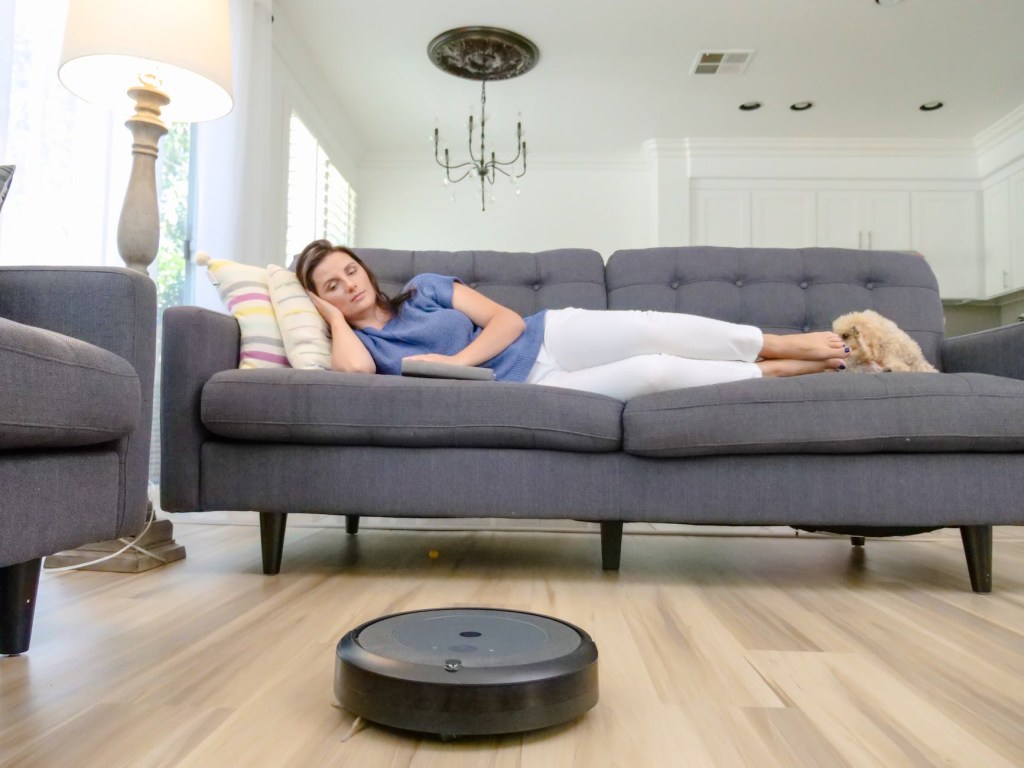
In other words, our expectations expand with our acquisitions. If we don’t have a car, we want one. If we get a car, we want a new or better car. A new set of dishes. A bigger house to put all the things we’ve bought into. A Roomba. A hot tub. An RV. Jewelry and paintings. A professional level kitchen …
We can’t have it all unless we define our own “all”, which will require us to go against what might be our innate human nature. Can we decide we’ve acquired enough? There’s lots of advantages to this. Less stress, more room in the house or apartment, fewer things in landfills, less need to have yard sales. Some would argue more time with people because we have to work less to buy things.







 Words Like Me