I am passionate about many things; that’s just what kind of person I am.
I am passionate about hope. I think hope is one of the most powerful forces of the universe. It is my natural way of meeting with the world.
I proselytize about flow. This is Csikszentmihalyi’s concept, that there are activities that take us out of ordinary space and time, completely captivate our minds, and give us a sense of well-being. I tell my students that they need to find a flow activity eventually to help them deal with stress.
Then there’s coffee. It’s a small thing to be passionate about, but we roast and grind our own coffee in this household, and make it in a very good coffeepot. I am passionate about good coffee, and occasionally share the home-roasted stuff with others.
I have passion for my goals. I keep Big Audacious Goals on my list of things to do because they motivate me not just to act, but to be better. My BAGs for the moment are to lose weight and to get back into writing. (Although those are not SMART enough for goals, I am working on making them so.)
That’s enough to feel passionate about for now. If I were passionate about everything, would it really be passion?
One of the things about being over 60 is that the big good things are likely not to fall into one’s lap. They’re not likely to happen under 60, either, but younger people don’t know that. My younger years were brimming with possibility. Now that I’m older, I’m doing pretty good at work but not to the point of winning any awards, I know I’m not going to win the lottery, and I’m not getting a new kitten because I already have three.
Bad things, on the other hand, seem part and parcel of one’s 60s. Am I going to develop another health problem? Is social security going to be dismantled? Is my roof going to fall on my head? Those things would also be worthy of note, but I don’t want them to happen.
I don’t know when I became a pessimist, but I think it was when I started getting arthritis. So nothing of note will happen today, and I will be grateful.
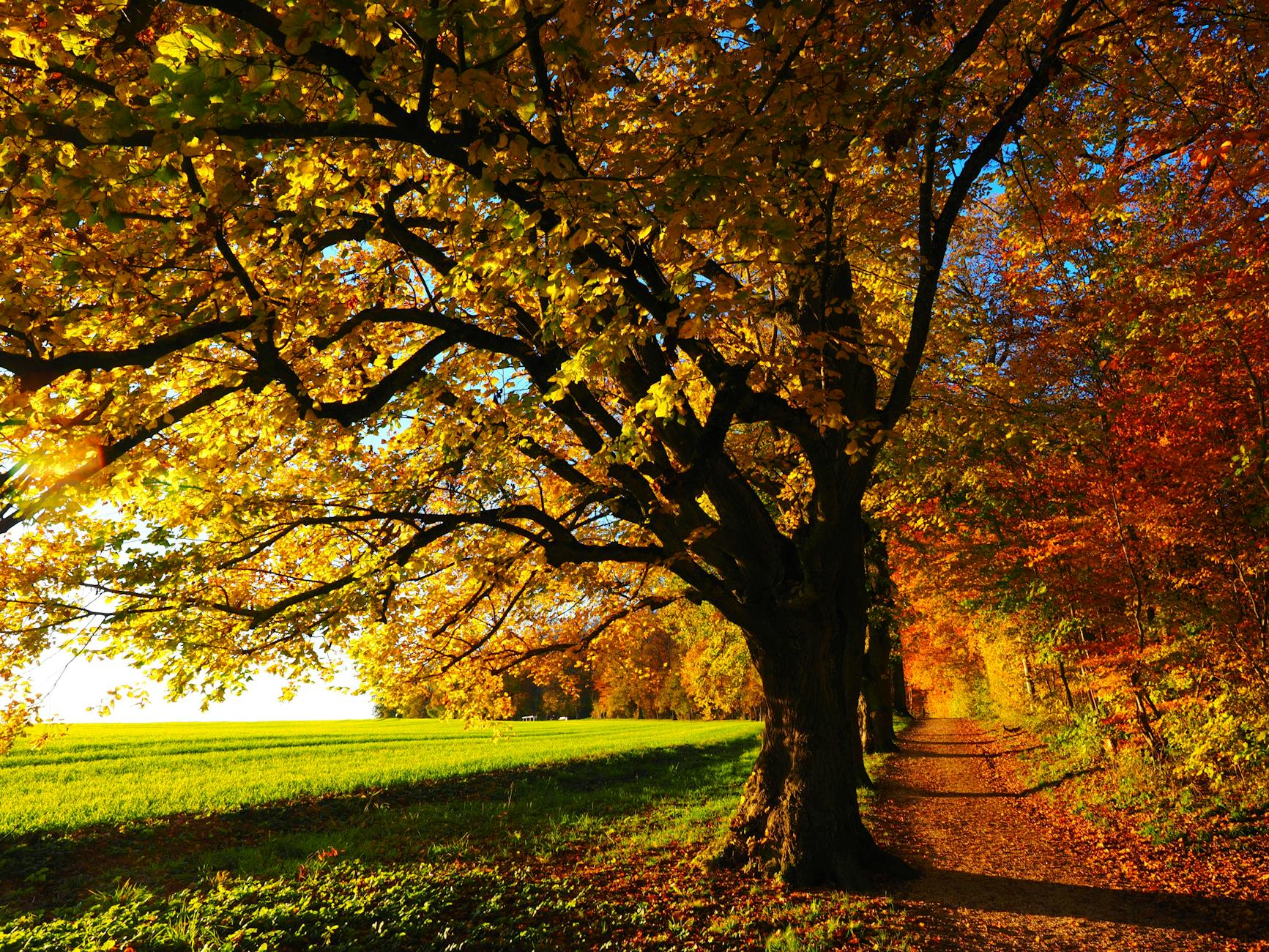
In the midwestern United States, winter brings cold and snow and dirty slush, summers are too hot, and spring nearly nonexistent. This leaves Autumn, a glorious time which starts in late September and goes on until November.
Autumn is a glorious season, with days in which trees in flaming red and orange stand against cloudless blue skies and soppy evenings with tumbled leaves tugging at people’s feet. Autumn sun brings with it the sense that the moment will last forever, while the thunderstorms bring memories of past loves.
Autumn is deep. It doesn’t flirt like Spring, or stupefy like Summer. Nor does it oppress like Winter. It delivers crisp afternoons for delight and cool evenings for shelter. It stays with us.
This is a hard question to answer, because the one thing I “can’t live without” is my iPhone, and I don’t know whether that is a luxury or necessity these days. I use it for work, I use it for entertainment, I use it to record my carbs every day. I read and compose email, I keep up with people I know — it’s a tool that’s no longer a luxury to me.
At the same time, it’s a luxury. I pay a decent amount of money for my iPhone, although I only replace it after several years. I have lived without a smartphone, but I used to have a Palm Pilot back in the days before the iPhone. (I remember the Palm Pilot for its tendency to regurgitate all its data and become useless until synched on the computer.)
I suppose I could live without my iPhone, but it would have to be a different world, one in which I didn’t get daily emails from my students or have to fill out paperwork for them. One where I don’t need a handy reference for counting carbs. One where my life was a lot slower than it is now.
My tagline would be ‘a simple woman’, which is meant with a bit of irony. For example, I think I’m very simple. I’m a Quaker, which is almost the definition of simple. I live an ordinary life. Simple, right?
My friend Les (rest in peace) thought I was anything but simple. I suppose, what with my active spiritual life, my bipolar disorder, and my musings about the world, I am anything but simple. One might even say I’m complicated. I don’t think so.
I wish I had a better tag than that. But “mostly harmless” has already been taken.
I don’t think my answer to ‘what are the most important things needed to live a good life?’ would be as good as Martin Seligman’s, so I will talk about his definition of ‘a good life’. Seligman is a professor of psychology, and the father of positive psychology, which I teach a class in every spring.
Seligman’s definition of ‘a good life’ incorporates not just pleasure, but a practice of identifying one’s signature strengths and seeking out activities that realize them. For example, if your top signature strength is a sense of humor (as mine is), one gets happiness from doing things that allow for your sense of humor, like using humor to defuse tension or telling humorous stories.
These signature states include a long list of virtues (or signature strengths). To find yours, access https://www.authentichappiness.sas.upenn.edu/testcenter and click on the survey called VIA Survey of Character Strengths. You will need to register on the site, but the security is good.
Seligman has another, higher level of happiness which he calls ‘the meaningful life’. It incorporates the above plus finding meaning in one’s life. It may be through religion, through ethics, or through appreciation of nature. Just a seeking of transcendental experience.
I try to seek as meaningful a life as possible, although some days aren’t as meaningful as others. According to Seligman, these are the things we need to be truly happy.
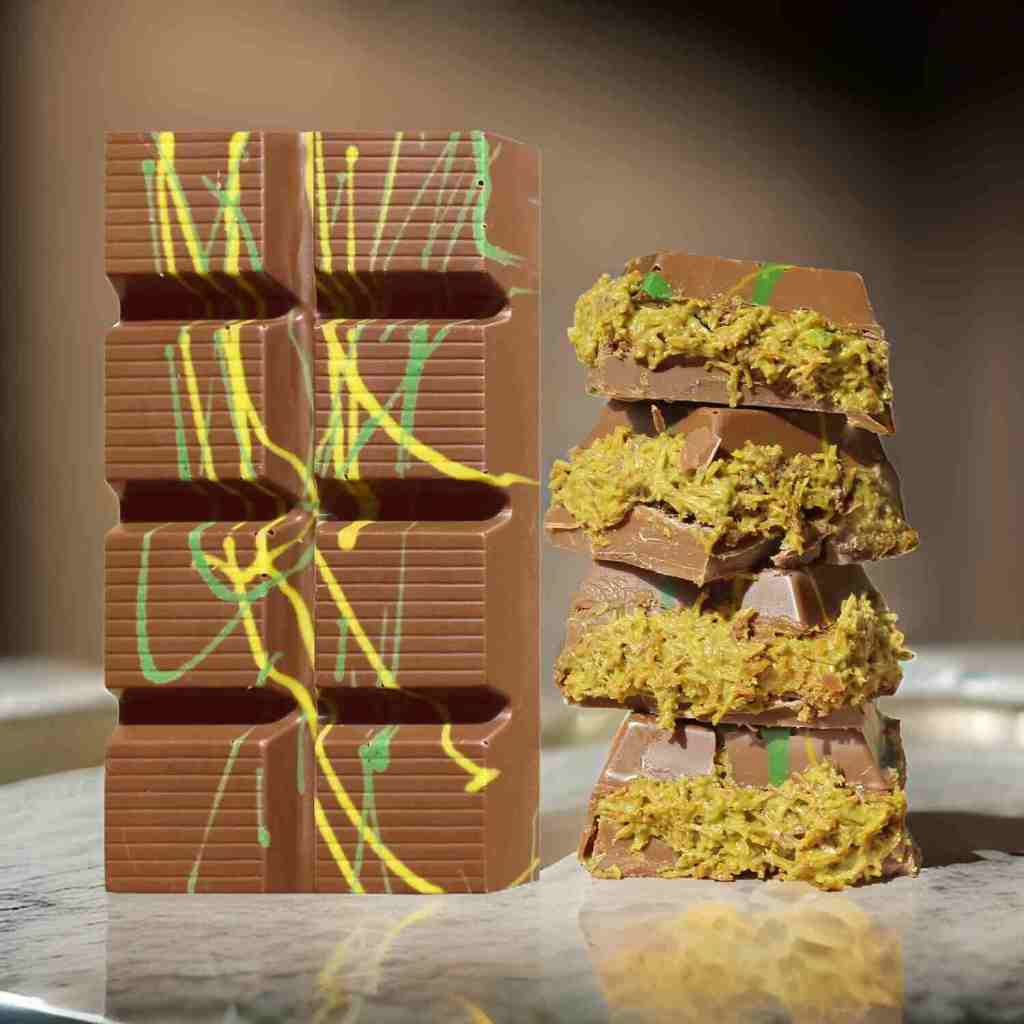
Dream chocolate bar? That has to be a Dubai chocolate bar. I can think of little so decadent as a milk chocolate bar stuffed full of pistachio butter filling. If I was allowed only one chocolate bar for the rest of my life, I would have a Dubai chocolate bar.
A Dubai chocolate bar from the outside looks like any other chocolate bar, although a bit thicker. When you break off a piece, a green paste oozes from the chocolate, and anyone who has seen pistachio butter will know what to expect. But still, that first bite is unexpected because the paste is textured, pleasantly crunchy to the teeth. This is the unexpected ingredient, which is a very fine shredded wheat.
The chocolate, very sweet, contrasts with the richness of the pistachio butter. It’s almost too much to eat, but almost too good to share. I suggest sharing it, though, because it’s a big candy bar and so maybe too much for one person.
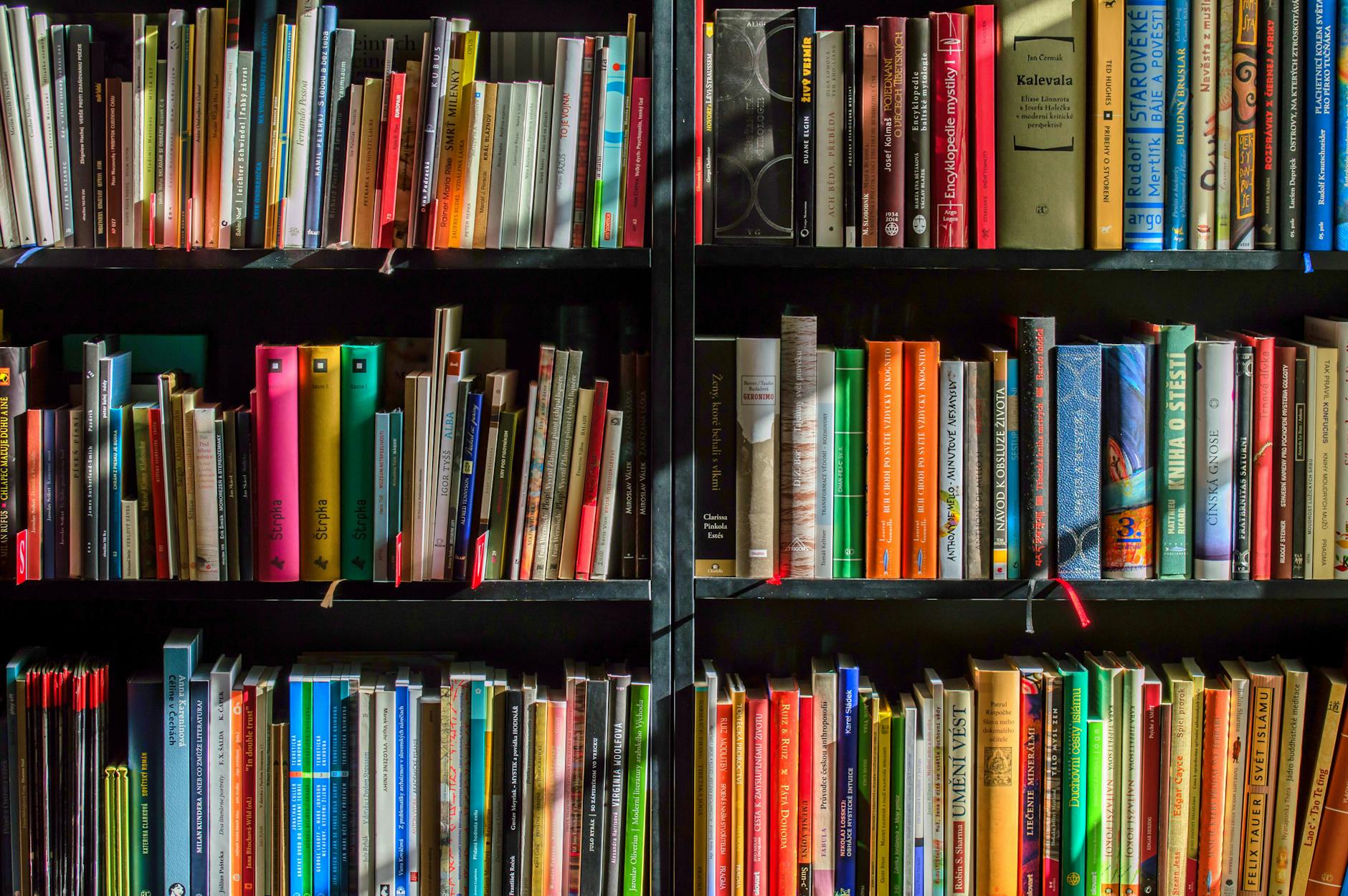
There are probably more than three books that have had an impact on me, but the prompt tells me to pick only three, so I will. These books are very different from each other (and I’m cheating on one of them).
The first book, which I read in eighth grade, was The Dark is Rising, by Susan Cooper. This book, the second in a series of five, is a fantasy novel set in contemporary Britain in the 70s. It’s definitely juvenile fantasy, of which there was not much during that time period. The depth of the fantasy totally captured me, with its Arthurian and fae undertones set at Christmastime. I totally escaped through that book. I read the series again last Winter, and it read just as well to a 60-year-old adult.
The second book, which I read probably 20 years ago, was The Four Agreements by Don Miguel Ruiz. Although I worry this book is considered New Age pap marketed to those of us who grooved on Carlos Castaneda, those four agreements pack a psychological punch. The agreements are: “Be impeccable with your word”, “Do not take anything personally”, “Do not make assumptions”, and “Always do your best” (Wikipedia, 2025). These could fit comfortably into cognitive journaling (and do make for good contradictions to cognitive distortions). I live by these now, and they offer me a different way of living.
The third book fits the prompt, even though it’s one that I wrote, because it impacted my life. That was the first book I wrote, The Kringle Conspiracy. That book was impactful because I didn’t think I could write a book until I wrote it, and I didn’t think I could publish a book until I published it. I came up with the story when I was in high school, and published it in my fifties.
There are my three books. I would highly recommend all of them.
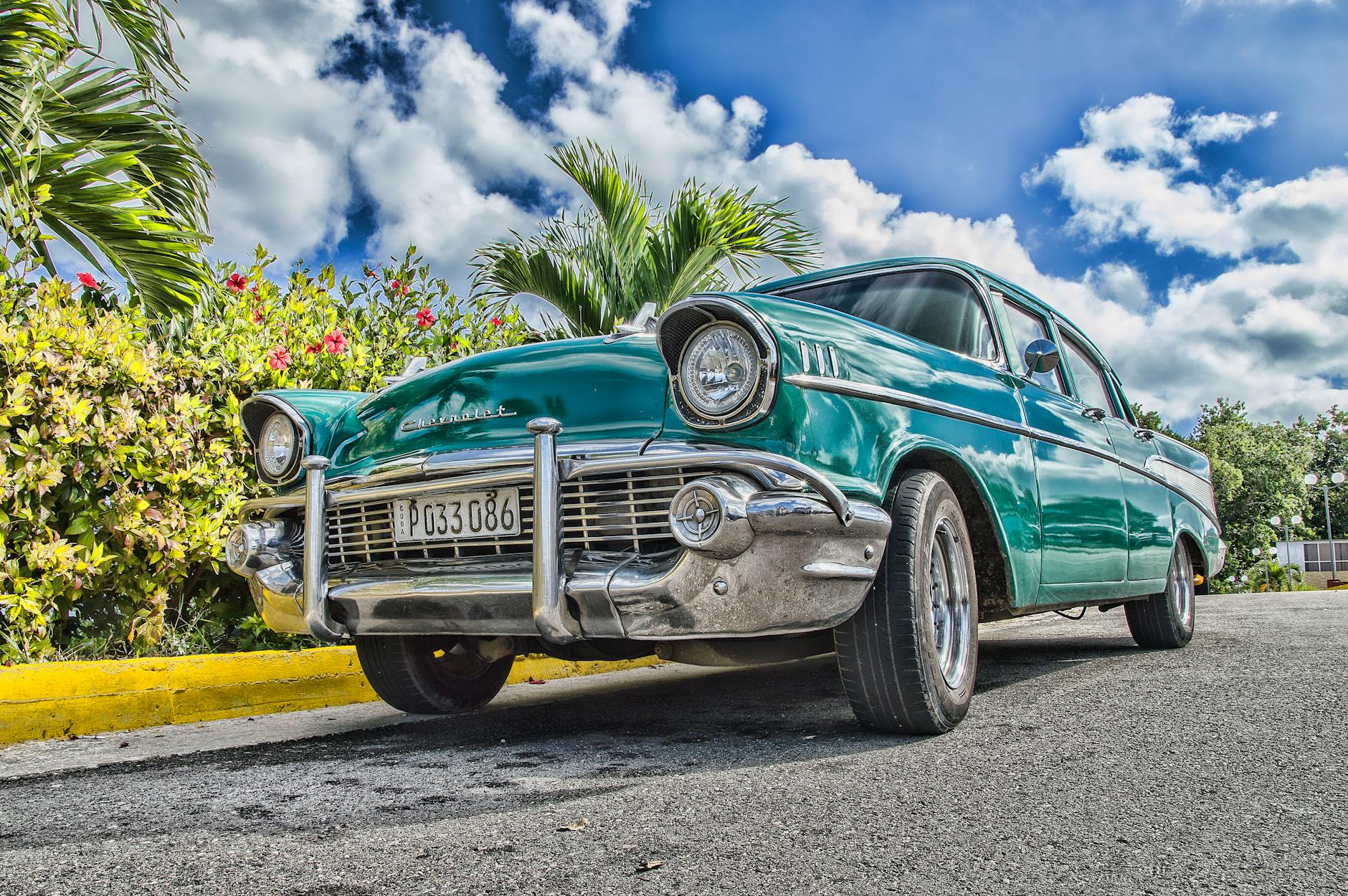
I do not have some of the typical fears — flying, public speaking, spiders. I have a fear of heights, but I consider that perfectly reasonable, like fearing something that’s about to tear your head off. The big fear that I harbored for many years was a fear of driving a car.
Cars are big and you can kill people with them. That was what was on my mind when I was sixteen and in driver’s ed. When I had to get behind the wheel of the car, I was a disaster. I could barely accelerate, oversteered the car, and hit the brakes too hard. Worse, I couldn’t figure out in what order I was supposed to do things, so I failed driver’s ed by stopping the car in the middle of the railroad tracks to check for trains. So I didn’t only fear being behind the wheel, I had a reason to. After a second time going through driver’s ed, I took my driver’s license test and barely passed. And then I never drove.
When I was 29, I got hit by a car, which didn’t help the fear any. All it did was break my leg, but it pretty much pulverized an inch of bone near the ankle. I now have a metal bar in that leg from knee to ankle.
A few years later, I lived in an area with a vibrant arts scene, except that the scene was spread over several towns. So one had to be able to drive to Franklin and West Kortright and maybe even Albany. I had just broken up with my husband, and the social engagement sounded nice to me. So I decided I needed to learn how to drive.
I took driver’s ed again, this time with a driver’s ed teacher who figured out the problem and helped me get over it. He made me check with him out loud anything I was about to do while driving. I talked myself through it. Then when I didn’t need to say it aloud anymore, I took my driver’s test and passed.
I got myself a car, and I was not a good driver at first. I got into a couple fender-benders, one with a rental car I had gotten while my car was in the shop. Some of the fender-benders weren’t my fault. I was suspended for 60 days for one of the accidents that wasn’t my fault. But I kept on driving.
I am still scared of driving sometimes. I am scared of driving in cities, especially with complicated splits in them. I am scared on crowded interstates. I keep seeing accidents in my head and they keep me from driving solo a lot of times. I don’t like it, but at least I can drive locally without fear.
I have a lot of quiet joy in my life. Largely because of gratitude. I feel grateful that I am living a calm life without the ravages of unmedicated bipolar disorder. I feel grateful that I live comfortably. I feel grateful that I have survived all the stupid things I have done in my life. I feel grateful that I have the husband I have instead of ending up with all the unsuitable people I dated.
Every day, when I think about it, I send a ‘thank you’ to the universe for the things I’m grateful for. Research in positive psychology shows that practicing gratitude is one way in which someone can increase their happiness. I find it works, but not so much when I practice gratitude journals (the recommended way). Practicing gratitude works best for me when I can do it spontaneously, make it a regular practice in life.














 Words Like Me